
Chef Lupita
Bollo de Plátano Relleno de Camarón Seco
Guerrero's Costa Chica bollos, ripe plantain pounded into dough, filled with dried shrimp and chile costeño, then fried until the outside turns dark and sweet.
A cooking platform built around craft, culture, and the stories behind what we eat.
Created by
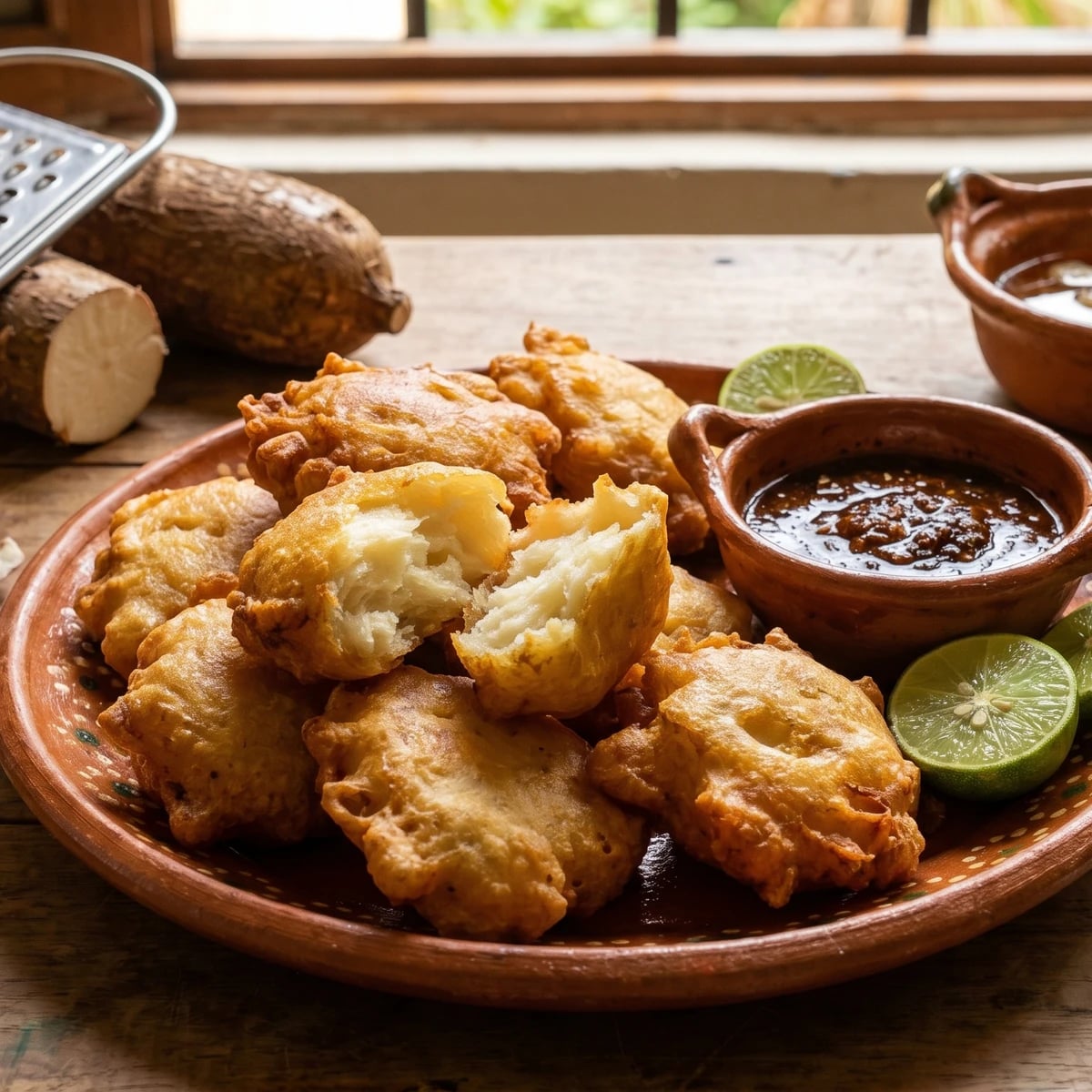
Veracruz's Coyolillo frituras de yuca, grated cassava bound with ajo and egg, fried in pork lard until crisp at the edges and tender inside.
Veracruz, Actopan, Coyolillo. Put it on the map before you heat the lard. This is an Afro-Mexican community dish from the central coast of Veracruz, where yuca, malanga, plantain, and pork fat belong to the kitchen the way corn belongs to the comal.
The yuca is grated raw, not mashed after boiling. That matters. The raw tuber gives starch, body, and a faint pull under the teeth that a boiled mash cannot give you. The ajo is not perfume. It is the backbone. Egg binds it, salt wakes it up, and manteca de cerdo fries it properly. La manteca es el sabor.
I learned this kind of fritura from women who cooked with one hand on the bowl and one eye on the oil, because yuca tells you when it is ready. It goes from pale and wet to golden and firm at the edge, with little strands crisping where the grater did its work. No me vengas con atajos. Use the box grater or the metate if you have one. A processor can help, but the texture must stay rough.
Coyolillo's cooking carries African memory inside Veracruz ingredients. The 2020 constitutional recognition of Afro-Mexican people was overdue. The cuisine had already been here for four centuries, frying in backyard kitchens, passing from hand to hand, without waiting for anyone's permission.
Coyolillo, in the municipality of Actopan, Veracruz, is one of Mexico's recognized Afro-descendant communities, shaped by enslaved Africans, free Black populations, and cimarrón settlements tied to the colonial Gulf coast. Yuca, originally domesticated in South America, moved through Caribbean and Atlantic food systems and became part of Afro-diasporic frying traditions across Veracruz and the Costa Chica. Mexico's 2020 constitutional recognition of Afro-Mexican people came long after communities such as Coyolillo, Cuajinicuilapa, San Nicolás Tolentino, and Chacahua had preserved their foodways in daily kitchens.
Quantity
2 pounds
peeled, woody core removed, finely grated
Quantity
2
beaten
Quantity
3
finely grated
Quantity
1/4 cup
finely minced
Quantity
1 teaspoon, plus more to finish
Quantity
1/4 teaspoon
Quantity
2 tablespoons
finely chopped
Quantity
1 1/2 cups
for frying
Quantity
4
stemmed, for salsa
Quantity
2
stemmed, for salsa
Quantity
1 small
roasted on a comal, for salsa
Quantity
1
roasted on a comal, for salsa
Quantity
1/4 teaspoon
for salsa
Quantity
2 tablespoons
as needed for salsa
Quantity
for serving
| Ingredient | Quantity |
|---|---|
| fresh yucapeeled, woody core removed, finely grated | 2 pounds |
| large eggsbeaten | 2 |
| garlic clovesfinely grated | 3 |
| white onionfinely minced | 1/4 cup |
| fine sea salt | 1 teaspoon, plus more to finish |
| freshly ground black pepper | 1/4 teaspoon |
| fresh cilantrofinely chopped | 2 tablespoons |
| pork lard (manteca de cerdo)for frying | 1 1/2 cups |
| dried chile de arbolstemmed, for salsa | 4 |
| dried chile moritastemmed, for salsa | 2 |
| plum tomatoroasted on a comal, for salsa | 1 small |
| garlic cloveroasted on a comal, for salsa | 1 |
| fine sea saltfor salsa | 1/4 teaspoon |
| wateras needed for salsa | 2 tablespoons |
| lime halves (optional) | for serving |
Peel the yuca with a knife, not a vegetable peeler. The skin is thick and stubborn. Cut the roots lengthwise and remove the woody center cord. Grate the yuca on the fine holes of a box grater into a wide bowl. You want wet, starchy shreds, not a smooth puree.
Gather the grated yuca in a clean cotton towel and squeeze firmly over the sink. Do not dry it completely. Press out only the loose liquid so the mixture fries instead of splattering. The yuca should feel damp and sticky between your fingers.
Return the squeezed yuca to the bowl. Add the beaten eggs, grated garlic, minced onion, salt, black pepper, and cilantro. Mix with your hand until the egg disappears into the starch and the mixture holds together when pressed. If it falls apart, knead it against the side of the bowl for one more minute. The starch is the binder.
Wet your hands lightly and shape the yuca mixture into small patties, about two tablespoons each and 1/2 inch thick. Keep the edges uneven. Those loose strands crisp in the lard, and that is the point.
Heat a dry comal over medium. Toast the chile de arbol and chile morita for a few seconds per side, just until fragrant. Roast the tomato and garlic until the tomato skin blisters and the garlic softens. Grind the chiles, tomato, garlic, salt, and a spoonful or two of water in a molcajete or blender until rough. This salsa is sharp and smoky, not sweet.
Melt the manteca de cerdo in a heavy skillet over medium heat. The fat should be about 1/2 inch deep. Drop in a tiny pinch of yuca mixture. It should sizzle steadily and rise, not sink and soak. If the lard is too cool, the frituras turn greasy. If it is too hot, the outside browns before the center cooks.
Slide in the frituras without crowding the pan. Fry 3 to 4 minutes per side, turning once, until the edges are deep golden and the centers feel firm when pressed with a spoon. Listen to the frying. At first it sounds loud because the yuca is releasing moisture. When the sound settles and the edges darken, they are close.
Lift the frituras onto a rack or brown paper. Salt them while the surface is still glossy from the lard. Serve warm with the chile de arbol and morita salsa and lime halves. Eat them with your fingers. This is market food, kitchen food, Coyolillo food. Así se hace y punto.
1 serving (about 50g)
Culinary guides, cultural storytelling, and the editorial depth that makes cooking meaningful.
Discover Culinary Explorer
Chef Lupita
Guerrero's Costa Chica bollos, ripe plantain pounded into dough, filled with dried shrimp and chile costeño, then fried until the outside turns dark and sweet.

Chef Lupita
Guerrero and Oaxaca's Costa Chica empanadas fold fresh masa around dried shrimp, chile costeño, tomate, and epazote, then fry them until the edges turn crisp and golden.

Chef Lupita
Central-coast Veracruz empanadas built from ripe plátano macho, folded around epazote black beans or jarochos picadillo, then fried until the edges turn dark and sweet.

Chef Lupita
From Coyolillo, Actopan, Veracruz, these malanga fritters carry the Afro-Mexicano kitchen in grated tuber, ajo, egg, and manteca de cerdo, fried crisp for a weeknight table.