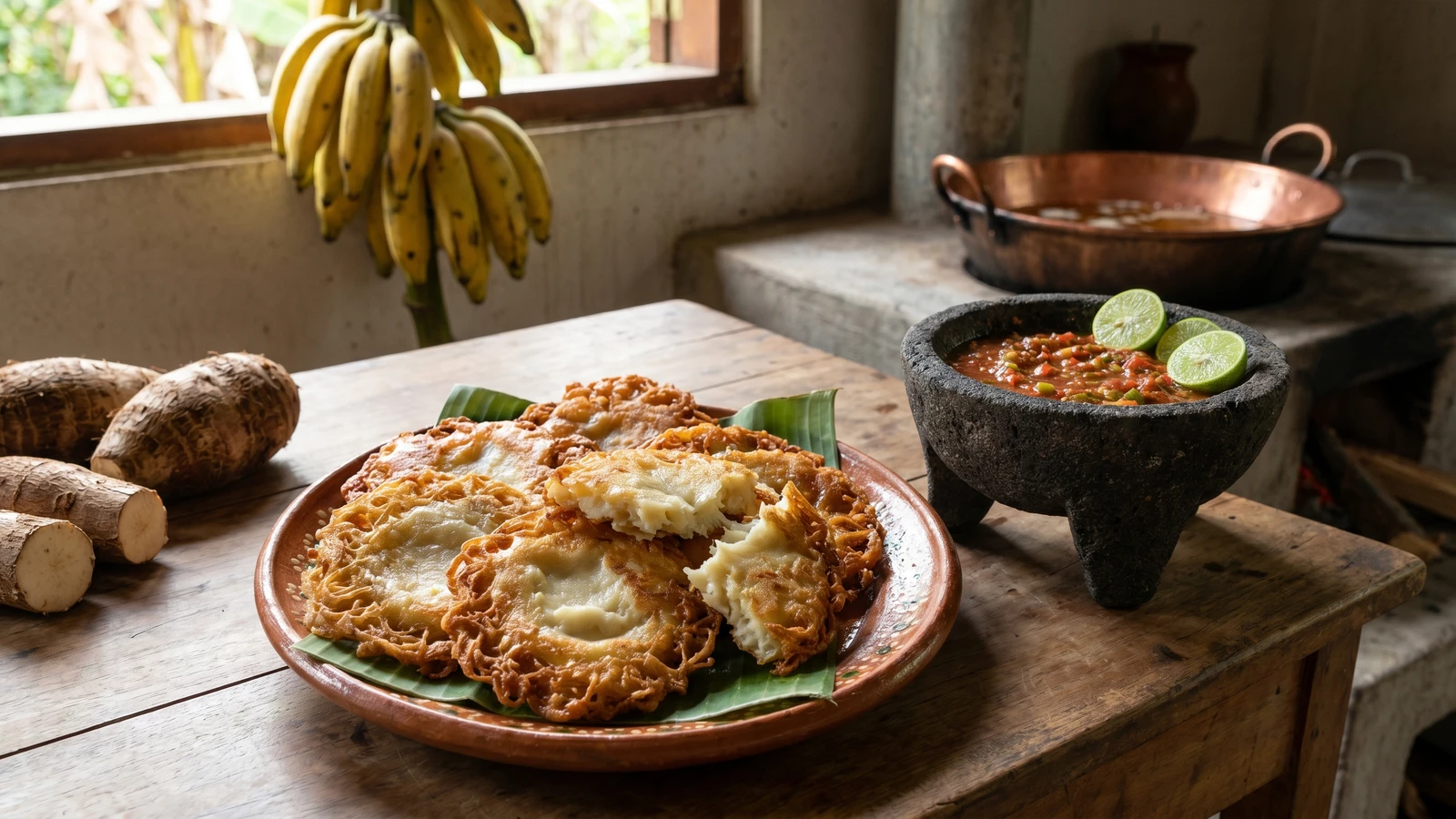
From Coyolillo, Actopan, Veracruz, these malanga fritters carry the Afro-Mexicano kitchen in grated tuber, ajo, egg, and manteca de cerdo, fried crisp for a weeknight table.
Appetizers & Snacks
Mexican
Comfort Food
Weeknight
Budget Friendly
25 min
Active Time
20 min cook•45 min total
Yield18 to 20 small frituras
Veracruz, central coast, Coyolillo in the municipality of Actopan. This is where these frituras live, in an Afro-Mexicano town that has cooked its history longer than Mexico has been willing to name it properly. Malanga, ajo, egg, epazote, manteca de cerdo. Not complicated. Not small.
Coyolillo, in Actopan, Veracruz, is one of Mexico's best-known Afro-Mexicano communities, shaped by Africans and their descendants who lived near the Veracruz port corridor from the colonial period onward. Malanga, a tuber with African and Caribbean routes, took root in the humid kitchens of coastal Veracruz alongside yuca, plantain, coconut, and rice. Mexico's legal and census recognition of Afro-Mexicano people arrived only in the 21st century, but dishes like these frituras show a culinary presence that has been cooking in Veracruz for roughly 400 years.
The technique, the tradition, and the story behind every dish.
Heat a dry comal over medium. Toast the chile costeño for 15 to 20 seconds per side, just until fragrant and flexible. Do not blacken it. Roast the tomatoes, unpeeled garlic, and onion on the same comal until the tomato skins blister and the garlic softens. The salsa should taste of the comal, not raw tomato.
2
Grind the salsa
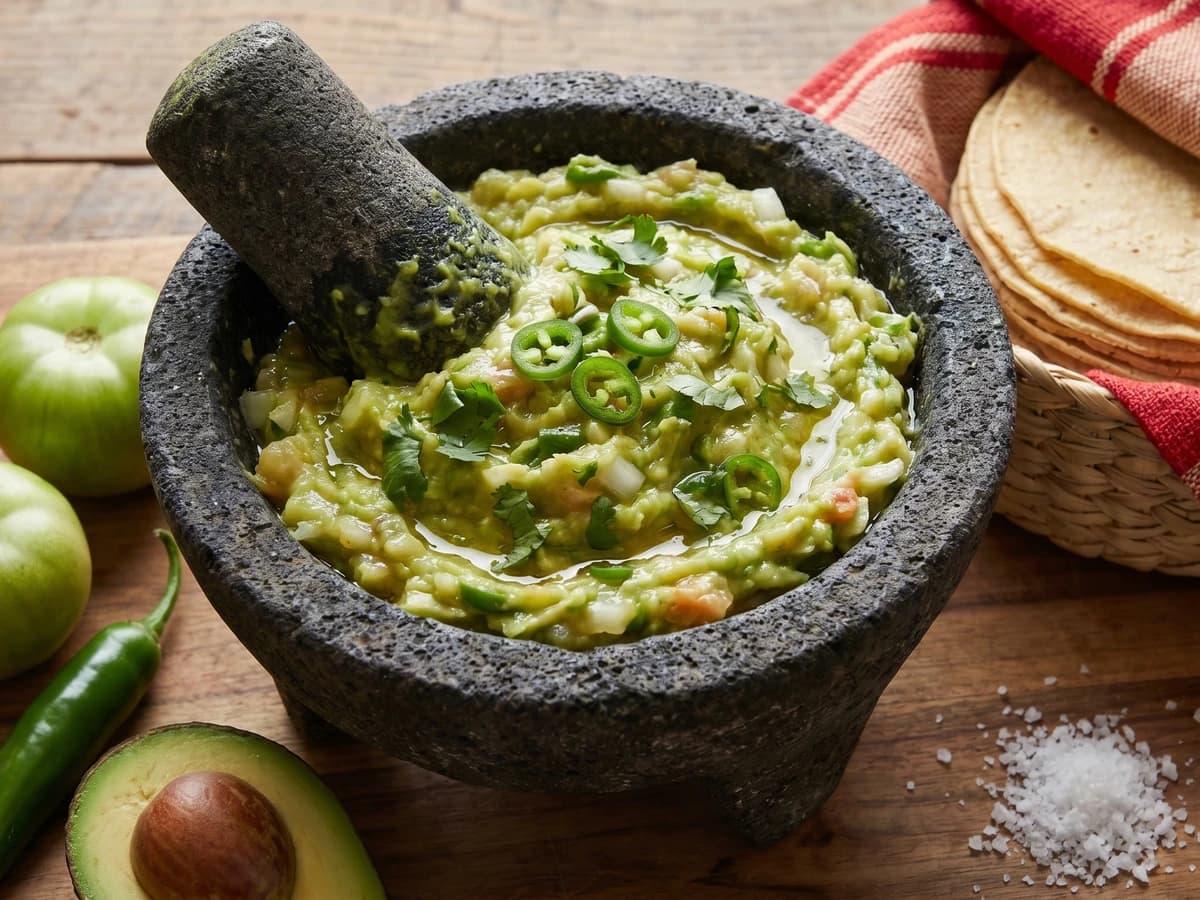
Peel the roasted garlic. Grind the chile costeño, garlic, onion, and salt in a molcajete until rough. Add the tomatoes one at a time and crush them into a spoonable salsa with texture. A blender works if you pulse it, but do not make it smooth. Coyolillo food has handwork in it. La cocina no es decoración, es trabajo.
3
Grate the malanga
Peel the malanga and grate it on the small holes of a box grater. Work over a bowl and keep your fingers careful, because malanga gets slippery. If the grated malanga throws off liquid, squeeze it lightly in a clean cloth. You want a damp paste, not a puddle.
4
Mix the batter
Stir the beaten eggs, grated garlic, chopped onion, epazote, salt, pepper, and masa harina into the grated malanga. The mixture should hold together when pressed in your palm. If it slumps apart, add one more tablespoon of masa harina. Do not bury the malanga under flour. The tuber is the body of the fritura.
5
Heat the manteca
Melt the manteca de cerdo in a wide heavy skillet over medium heat until it shimmers and a tiny bit of batter sizzles immediately when dropped in. You need enough fat to come halfway up the frituras. La manteca es el sabor. Vegetable oil will fry them, yes. It will not taste like Coyolillo.
6
Fry in batches
Scoop heaping tablespoons of the malanga mixture into the hot lard and flatten each one gently with the back of the spoon. Fry 2 to 3 minutes per side, turning once, until the edges are deep golden and crisp and the center feels set. Do not crowd the pan. Crowding drops the heat and gives you greasy frituras. No me vengas con atajos.
Malanga browns before it fully sets if the fat is too hot. Keep the heat at medium and adjust as you work. The sound should be steady, not violent.
7
Drain and serve
Lift the frituras out with a slotted spoon and drain them on a rack or brown paper. Salt them lightly while they are still glossy from the manteca. Serve hot with the molcajete salsa and lime halves. They should be crisp at the edge, creamy inside, and earthy from the malanga. Así se hace y punto.
Chef Tips
•Buy malanga that feels heavy for its size, with firm skin and no soft spots. At the mercado, ask the women who sell yuca and plátano macho. Pregúntale a las señoras del mercado.
•The chile costeño in the salsa gives a clean coastal heat without taking over the malanga. If you cannot find it, chile de arbol is sharper and less rounded. That is a compromise, not an upgrade.
•Epazote belongs here because it cuts through the richness of the lard and the density of the tuber. Cilantro will taste fresh, but it will not do the same work.
•Frituras are best eaten the day they are fried. Reheat leftovers on a comal or in a hot oven, never in a microwave, unless you enjoy ruining crisp edges.
Advance Preparation
•The salsa can be made one day ahead and refrigerated. Bring it to room temperature before serving so the chile costeño tastes alive again.
•The malanga can be peeled up to two hours ahead and kept covered in cold water. Grate it only when you are ready to mix and fry.
•The fritura mixture can rest for 20 minutes before frying, but do not hold it overnight. The malanga darkens and the texture weakens.
Frequently Asked Questions
Nutrition Information
1 serving (about 50g)
Calories
80 calories
Total Fat
4 g
Saturated Fat
2 g
Trans Fat
0 g
Unsaturated Fat
2 g
Cholesterol
25 mg
Sodium
200 mg
Total Carbohydrates
10 g
Dietary Fiber
1 g
Sugars
1 g
Protein
1 g
Where cooking meets culture.
Culinary guides, cultural storytelling, and the editorial depth that makes cooking meaningful.