
Chef Lupita
Arroz a la Oaxaqueña
Oaxaca's red rice, stained with tomato and fried in lard, steamed with carrots, ejotes, black beans, and epazote. The side that anchors a Oaxacan family meal and earns its place beside the main.
A cooking platform built around craft, culture, and the stories behind what we eat.

Created by
Guanajuato's Bajio refried bayos, worked in manteca de cerdo until the beans turn satin-smooth and pull from the clay cazuela, with xoconostle acid and the quiet bite of chilcuague.
Guanajuato, in the Bajio, is where these frijoles chinos belong. Think Dolores Hidalgo, San Miguel de Allende, Celaya, and the ranch kitchens that cook from the same dry highland markets as Queretaro and Aguascalientes. The bean is bayo. Beige-tan, creamy, patient. Not pinto. Not black. If your bag says flor de mayo, save it for another pot.
Chinos here does not mean Chinese. In the Guanajuato kitchen, it is the way the beans tighten as you work them in manteca, the surface folding into little ridges while the paste pulls clean from the cazuela. A senora near Dolores Hidalgo taught me to stop looking at the clock and watch the spoon. When the beans follow the spoon in one smooth wave, they are ready. La manteca es el sabor.
The Bajio does not need to borrow Sinaloa's frijoles puercos. Those are another dish, with chorizo and cheese and arguments of their own. Here the sharpness comes from xoconostle, the sour cactus fruit used by Otomi cooks of the semiarid center, and the small sting of chilcuague from the Sierra Gorda. Use them with discipline. They cut the lard, they do not cover the bean.
My mother did not write this one in her Jalisco notebook. I wrote it after watching women in Guanajuato work beans until their arms got tired and the cazuela shone at the bottom. That is the lesson. Frijoles are not filler. They are household economy, memory, and technique in one pan. Saber cocinar es saber vivir.
Frijoles bayos became one of the everyday beans of the Bajio because they suited the dry highland fields of Guanajuato, Queretaro, and Aguascalientes and held their shape through cooking before turning creamy in the refrito. Xoconostle, the sour fruit of Opuntia cactus, has long been used by Otomi and Chichimeca communities of the semiarid center as an acidulant, while chilcuague, Heliopsis longipes, from the Sierra Gorda was documented in early colonial sources including the Codice Florentino for its pungent root. Frijoles chinos should not be confused with Sinaloan frijoles puercos, a richer mash often made with chorizo, cheese, and pickled chiles; the Guanajuato dish is defined by bayo beans, manteca de cerdo, and the spoon work that tightens the paste.
Quantity
1 pound
picked over and rinsed
Quantity
as needed
for soaking the beans
Quantity
10 cups
for cooking
Quantity
1/2 medium
left in one piece
Quantity
3
peeled and lightly crushed
Quantity
2
Quantity
1
slit lengthwise
Quantity
1 1/2 teaspoons, plus more to taste
Quantity
2 medium
peeled, seeds and core removed, diced small
Quantity
1
stemmed and seeded
Quantity
1 small
roasted on a comal
Quantity
1/4 teaspoon finely grated
or 1/8 teaspoon dried chilcuague powder
Quantity
1/4 cup, plus more as needed
Quantity
6 tablespoons
divided
Quantity
1/2 medium
finely chopped
Quantity
1/3 cup
crumbled, for serving
Quantity
for serving
| Ingredient | Quantity |
|---|---|
| dried frijoles bayos from the Bajiopicked over and rinsed | 1 pound |
| waterfor soaking the beans | as needed |
| fresh waterfor cooking | 10 cups |
| white onionleft in one piece | 1/2 medium |
| garlic clovespeeled and lightly crushed | 3 |
| fresh epazote sprigs | 2 |
| fresh chile serranoslit lengthwise | 1 |
| kosher salt | 1 1/2 teaspoons, plus more to taste |
| xoconostlespeeled, seeds and core removed, diced small | 2 medium |
| dried chile anchostemmed and seeded | 1 |
| garlic cloveroasted on a comal | 1 small |
| fresh chilcuague rootor 1/8 teaspoon dried chilcuague powder | 1/4 teaspoon finely grated |
| reserved bean broth | 1/4 cup, plus more as needed |
| manteca de cerdodivided | 6 tablespoons |
| white onionfinely chopped | 1/2 medium |
| queso fresco de ranchocrumbled, for serving | 1/3 cup |
| warm hand-pressed corn tortillas | for serving |
Put the frijoles bayos in a large bowl and cover with water by at least 3 inches. Soak 8 hours or overnight. These are bayos, beige-tan and creamy, the bean of the Bajio table. Not pintos. Not negros. Cada estado, su propia cocina.
Drain the soaked beans and put them in a heavy pot with 10 cups fresh water, the onion half, 3 crushed garlic cloves, epazote, and the slit chile serrano. Bring to a gentle simmer, then lower the heat so the beans move lazily in the pot. Cook uncovered or partially covered for 1 1/2 to 2 hours, adding hot water if the level drops below the beans.
When the beans are tender enough to crush easily between two fingers, add 1 1/2 teaspoons salt. Simmer 15 minutes more, then turn off the heat and let the beans rest in their broth for 20 minutes. Salt needs time to enter the bean. If you salt only at the end, the broth tastes seasoned and the bean tastes empty. Remove the onion, epazote, garlic, and chile serrano. Reserve at least 3 cups of the bean broth.
Heat a dry comal over medium. Toast the chile ancho about 20 seconds per side, just until fragrant and flexible. Do not blacken it. Soak it in hot water for 10 minutes, then drain. In a molcajete, crush the roasted garlic with a pinch of salt, the softened chile ancho, the diced xoconostle, and the chilcuague. Work in 1/4 cup bean broth until you have a rough, sour, brick-red martajada. It should bite a little on the tongue from the chilcuague and cut through the richness of the lard.
Set a wide clay cazuela or heavy skillet over medium heat. Add 4 tablespoons manteca de cerdo. When it melts and looks glossy, add the finely chopped onion and cook until soft and golden at the edges, 6 to 8 minutes. The onion should sweeten the fat, not burn. La manteca es el sabor. Vegetable oil gives you a flat bean paste and then people wonder what went wrong.
Add the cooked bayos with about 1 cup of their broth. Mash with a wooden spoon or bean masher, pressing hard against the bottom of the cazuela. Add more broth in small splashes only when the beans are too stiff to move. You are not making soup. You are building a smooth paste by pressure, fat, and patience.
Keep stirring, folding, and scraping for 18 to 25 minutes. The beans will go from loose mash to satin-smooth paste. When the spoon passes through and the beans pull clean from the pan in one wave, they are becoming chinos. The surface will form small ridges and wrinkles as it tightens. Stop watching the clock and watch the spoon. Asi se hace y punto.
Fold half of the xoconostle and chilcuague martajada into the beans. It will loosen the paste. Keep cooking 3 to 5 minutes more until the beans pull clean again. Beat in the remaining 2 tablespoons manteca de cerdo at the end for shine and body. Taste for salt. Spoon the remaining martajada across the top and scatter with queso fresco de rancho. Serve from the cazuela with warm corn tortillas.
1 serving (about 200g)
Culinary guides, cultural storytelling, and the editorial depth that makes cooking meaningful.
Discover Culinary ExplorerChef Lupita
Oaxaca's red rice, stained with tomato and fried in lard, steamed with carrots, ejotes, black beans, and epazote. The side that anchors a Oaxacan family meal and earns its place beside the main.
Chef Lupita
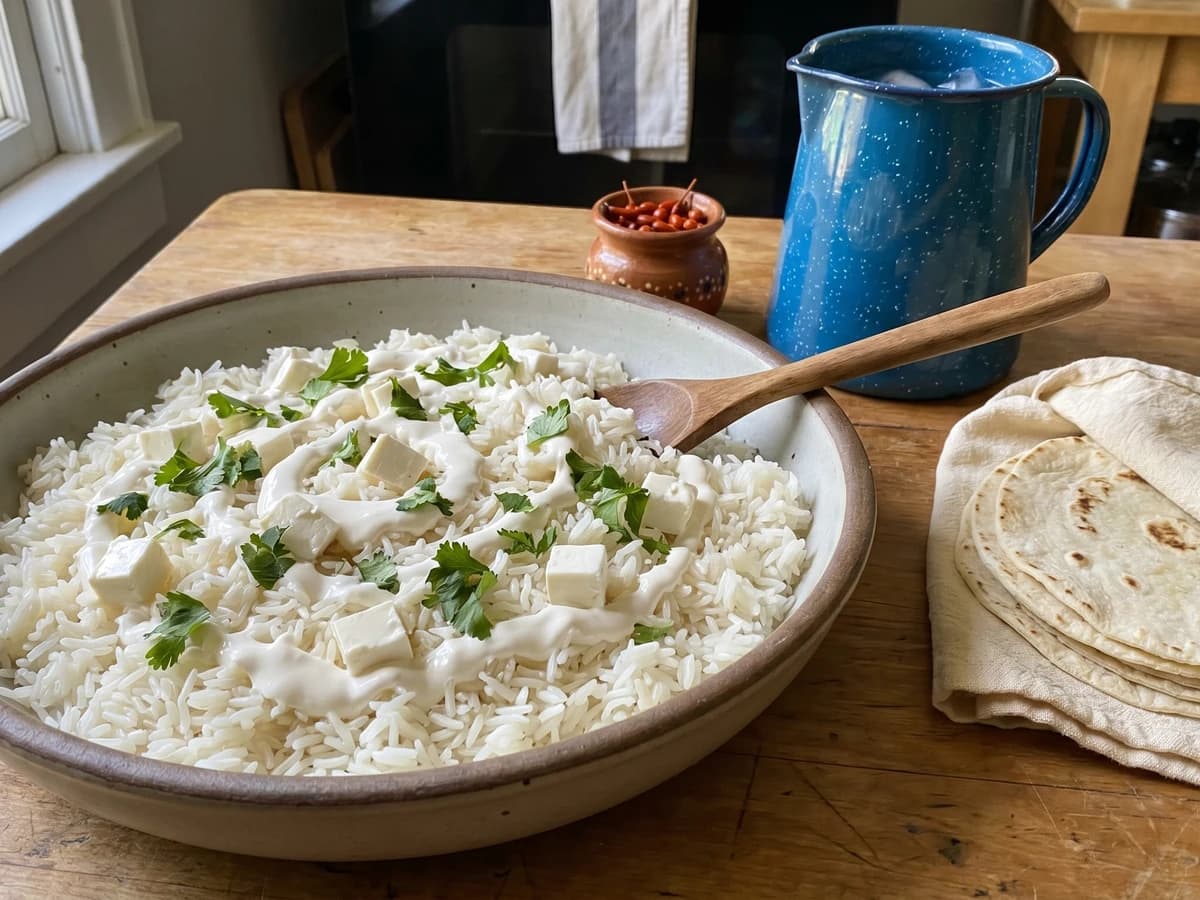
Sinaloa's home-cook white rice topped with cold cubes of cream cheese that soften into the warm grain, finished with crema and a sprinkle of chiltepin at the table. The trick that makes a side dish feel like a small luxury.
Chef Lupita
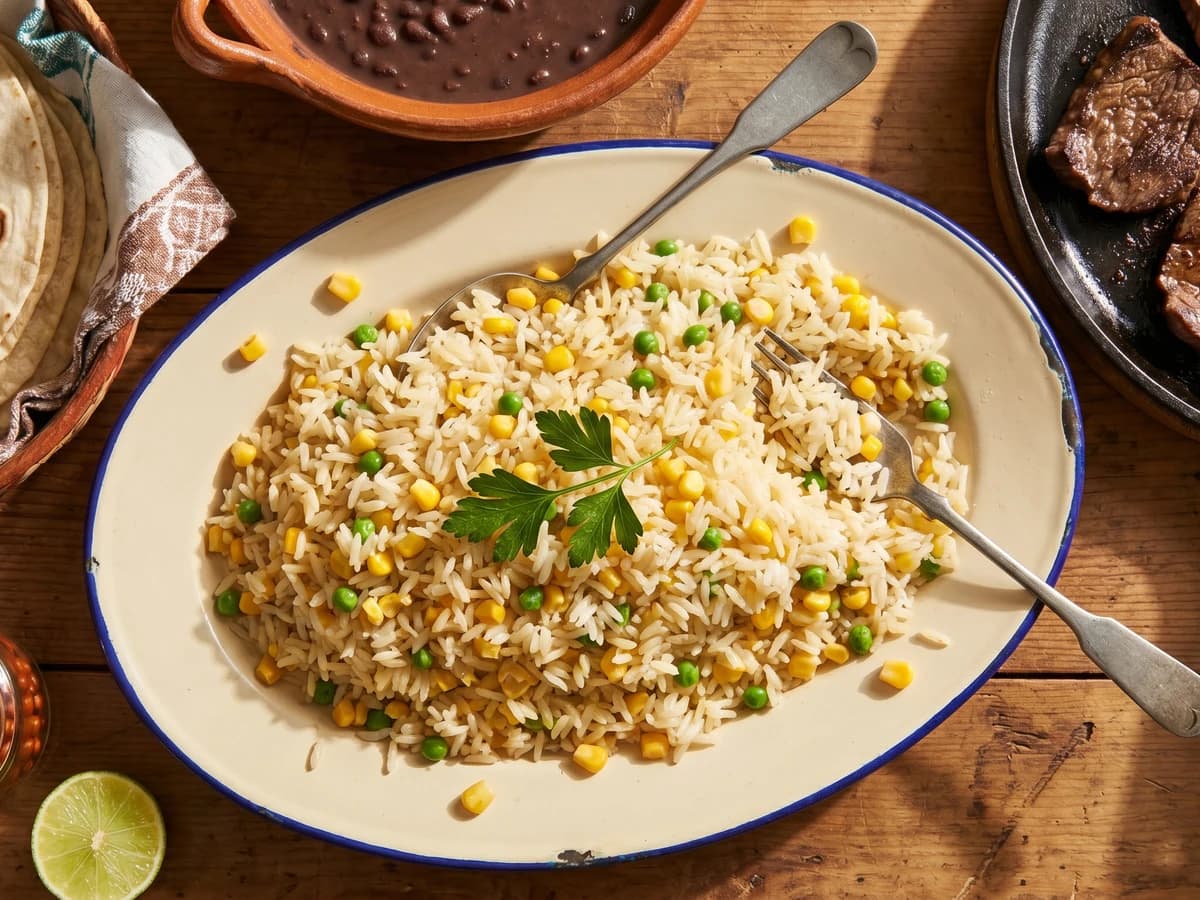
Sonora's white rice, toasted in butter and steamed with sweet corn and tender peas. The clean, quiet partner to a plate of carne asada, not the red rice of central Mexico.

Chef Lupita
Yucatán's white rice with sweet corn kernels, toasted in lard with garlic and onion. The quiet base that holds up against the peninsula's bold achiote-stained stews.