
Chef Lupita
Arroz a la Oaxaqueña
Oaxaca's red rice, stained with tomato and fried in lard, steamed with carrots, ejotes, black beans, and epazote. The side that anchors a Oaxacan family meal and earns its place beside the main.
A cooking platform built around craft, culture, and the stories behind what we eat.
Created by
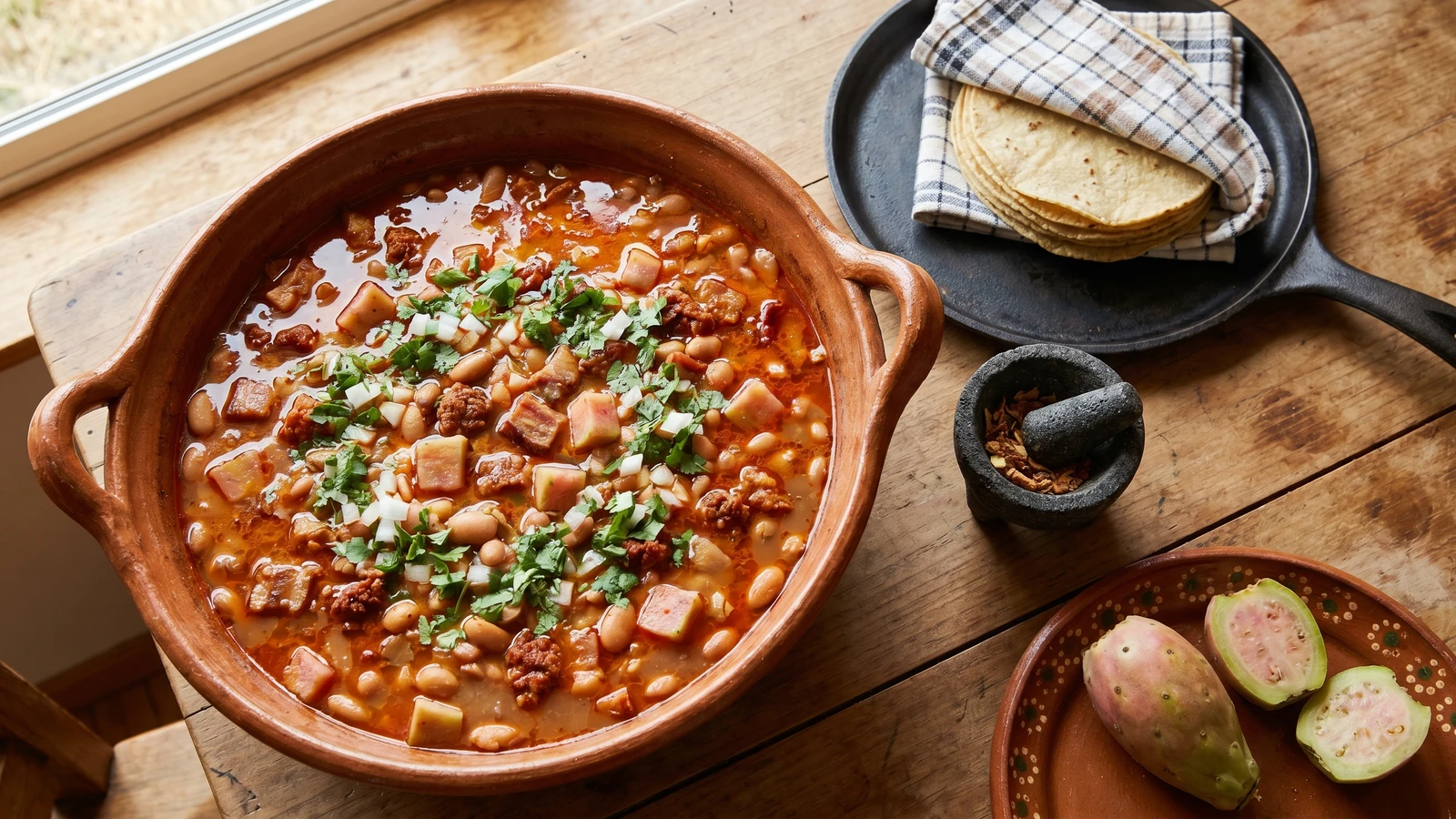
Guanajuato and Querétaro's Bajío charro pot, beige bayo beans with tocino, chorizo, xoconostle, and a pinch of chilcuague, brothy enough for the clay cazuela and sober enough to leave the beer out.
Guanajuato, in the Bajío, is where I place this pot first, with Querétaro standing beside it. Think Dolores Hidalgo ranch kitchens and the Mercado de la Cruz in Querétaro, not Monterrey cantinas with beer in the beans. The bean is bayo, beige-tan and creamy, the acid is xoconostle from nopal country, and the little spark at the back of the tongue comes from chilcuague of the Sierra Gorda.
This is the hacienda lechera charro pot: tocino, chorizo de puerco, manteca de cerdo, and enough bean broth to keep it generous. Not a stew so thick the spoon stands up. Not frijoles puercos mashed into a skillet. Brothy, porky, tart at the edges. Cada estado, su propia cocina.
The women who taught me this in Bajío kitchens were strict about order. Cook the bayos until tender first. Fry the pork in manteca until the fat turns red from the chorizo. Add xoconostle only after the bean skins have softened, because acid too early keeps them stubborn. This is not superstition. This is kitchen memory tested over generations.
My mother was Jalisciense, so this was not her daily pot, but in her notebook she wrote one line next to a Querétaro bean recipe: 'el ácido va al final.' The acid goes at the end. She was right. Saber cocinar es saber vivir.
The Bajío, centered on Guanajuato, Querétaro, Aguascalientes, and nearby highland corridors, became a cattle, dairy, and grain region as Spanish haciendas expanded through the 16th and 17th centuries; its bean pots reflect that ranch economy, with pork fat, chorizo, and beans from dry fields. Xoconostle, the sour fruit of Opuntia cactus, was used by Otomí and other semi-arid central communities as an acidulant before vinegar became common, and chilcuague (Heliopsis longipes) from the Sierra Gorda was documented in Bernardino de Sahagún's 16th-century Florentine Codex, the Códice Florentino. Frijoles puercos hidrocálidos from Aguascalientes are a separate mashed, lard-heavy preparation and should not be collapsed with Sinaloa's own frijoles puercos or with this brothy charro pot.
Quantity
1 pound
picked over and rinsed
Quantity
10 cups, plus more for soaking
Quantity
1/2 medium
left in one piece
Quantity
4
lightly crushed
Quantity
2
Quantity
2 teaspoons, plus more to taste
Quantity
3 medium
peeled, seed pockets removed, and diced
Quantity
2
stemmed and seeded
Quantity
2 tablespoons
Quantity
6 ounces
diced small
Quantity
6 ounces
casing removed and crumbled
Quantity
1 large
finely chopped
Quantity
3
minced
Quantity
3
roasted on a comal and chopped
Quantity
2
finely chopped
Quantity
1/2-inch piece
lightly toasted and finely ground
Quantity
1/2 cup
Quantity
for serving
Quantity
for serving
warmed
| Ingredient | Quantity |
|---|---|
| dried frijoles bayospicked over and rinsed | 1 pound |
| water | 10 cups, plus more for soaking |
| white onion for the bean potleft in one piece | 1/2 medium |
| garlic cloves for the bean potlightly crushed | 4 |
| fresh epazote sprigs | 2 |
| kosher salt | 2 teaspoons, plus more to taste |
| xoconostlespeeled, seed pockets removed, and diced | 3 medium |
| dried chile anchostemmed and seeded | 2 |
| manteca de cerdo | 2 tablespoons |
| tocino de cerdodiced small | 6 ounces |
| chorizo ranchero de puercocasing removed and crumbled | 6 ounces |
| white onion for the recaudofinely chopped | 1 large |
| garlic cloves for the recaudominced | 3 |
| Roma tomatoesroasted on a comal and chopped | 3 |
| fresh chile serranofinely chopped | 2 |
| dried chilcuague rootlightly toasted and finely ground | 1/2-inch piece |
| chopped fresh cilantro (optional) | 1/2 cup |
| diced raw white onion (optional) | for serving |
| hand-pressed corn tortillas (optional)warmed | for serving |
Put the picked-over frijoles bayos in a large bowl and cover with water by three inches. Soak 8 hours or overnight, then drain. Bayos are beige-tan, creamy, and right for the Bajío. Pintos are not the same bean. Black beans are another kitchen entirely.
Put the drained beans in an olla de barro or heavy pot with 10 cups fresh water, the half onion, crushed garlic, and epazote. Bring to a steady boil for 10 minutes, then lower to a gentle simmer. Cook until the skins soften and the centers turn creamy, 1 1/2 to 2 hours. Add the salt after the first hour. Keep the beans covered with liquid; the broth is part of the dish.
Trim the ends from the xoconostles, peel away the tough skin, halve them, and scoop out the seed pockets. Dice the flesh into small cubes. Taste one piece. It should be tart and clean, not sweet like tuna roja. That sourness is the Bajío speaking.
Heat a dry comal over medium. Toast the chile ancho for about 20 seconds per side, just until the skin softens and smells fruity. Do not blacken it. Cover the toasted chiles with hot water for 15 minutes, then blend them with 1 cup of bean broth until smooth. Strain if the skins are stubborn.
In a wide cazuela, melt the manteca de cerdo over medium heat. Add the tocino and cook until its fat renders and the edges turn browned and firm. Add the crumbled chorizo and fry until the fat turns red and the chorizo smells toasted, not raw. La manteca es el sabor. Vegetable oil has no business here.
Add the chopped white onion to the cazuela and cook until translucent, scraping up the red fat from the bottom. Add the minced garlic, chopped serrano, and roasted tomatoes. Cook 8 to 10 minutes, until the tomatoes collapse and lose their raw smell. Stir in the ancho puree and fry it for 5 minutes, until it darkens slightly and the fat separates at the edges.
Add the cooked bayos and 5 to 6 cups of their broth to the cazuela. Stir in the diced xoconostle and the ground chilcuague. Simmer 20 to 25 minutes, uncovered, until the xoconostle softens but still holds its shape and the broth tastes tart, porky, and rounded. Taste for salt at the end. The beans should be brothy enough to ladle.
Let the beans rest 10 minutes so the fat settles into a red sheen on top. Serve family-style from the cazuela with chopped cilantro, diced raw white onion, and warm hand-pressed corn tortillas. No flour tortillas. Those belong to the north. No cheddar, no sour cream. This is Bajío food. Así se hace y punto.
1 serving (about 380g)
Culinary guides, cultural storytelling, and the editorial depth that makes cooking meaningful.
Discover Culinary ExplorerChef Lupita
Oaxaca's red rice, stained with tomato and fried in lard, steamed with carrots, ejotes, black beans, and epazote. The side that anchors a Oaxacan family meal and earns its place beside the main.
Chef Lupita
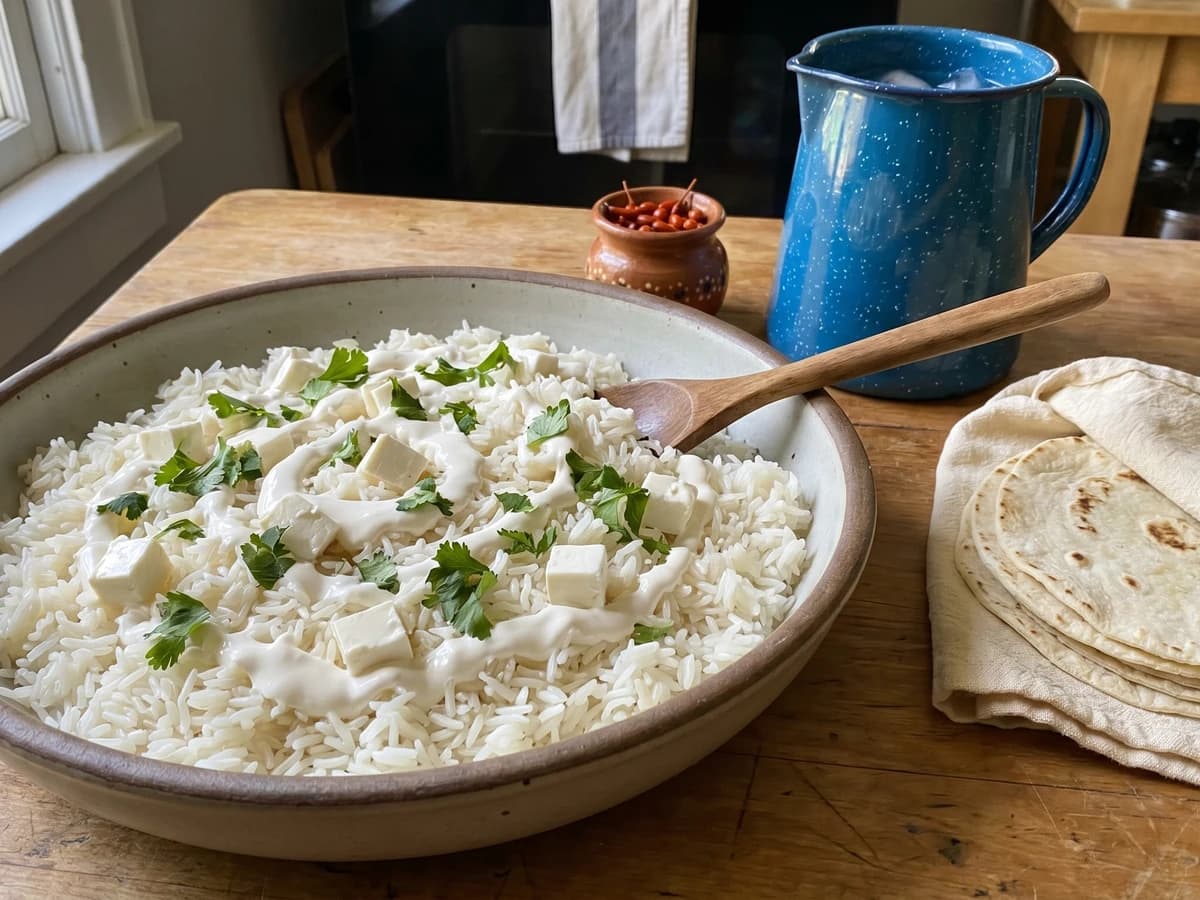
Sinaloa's home-cook white rice topped with cold cubes of cream cheese that soften into the warm grain, finished with crema and a sprinkle of chiltepin at the table. The trick that makes a side dish feel like a small luxury.
Chef Lupita
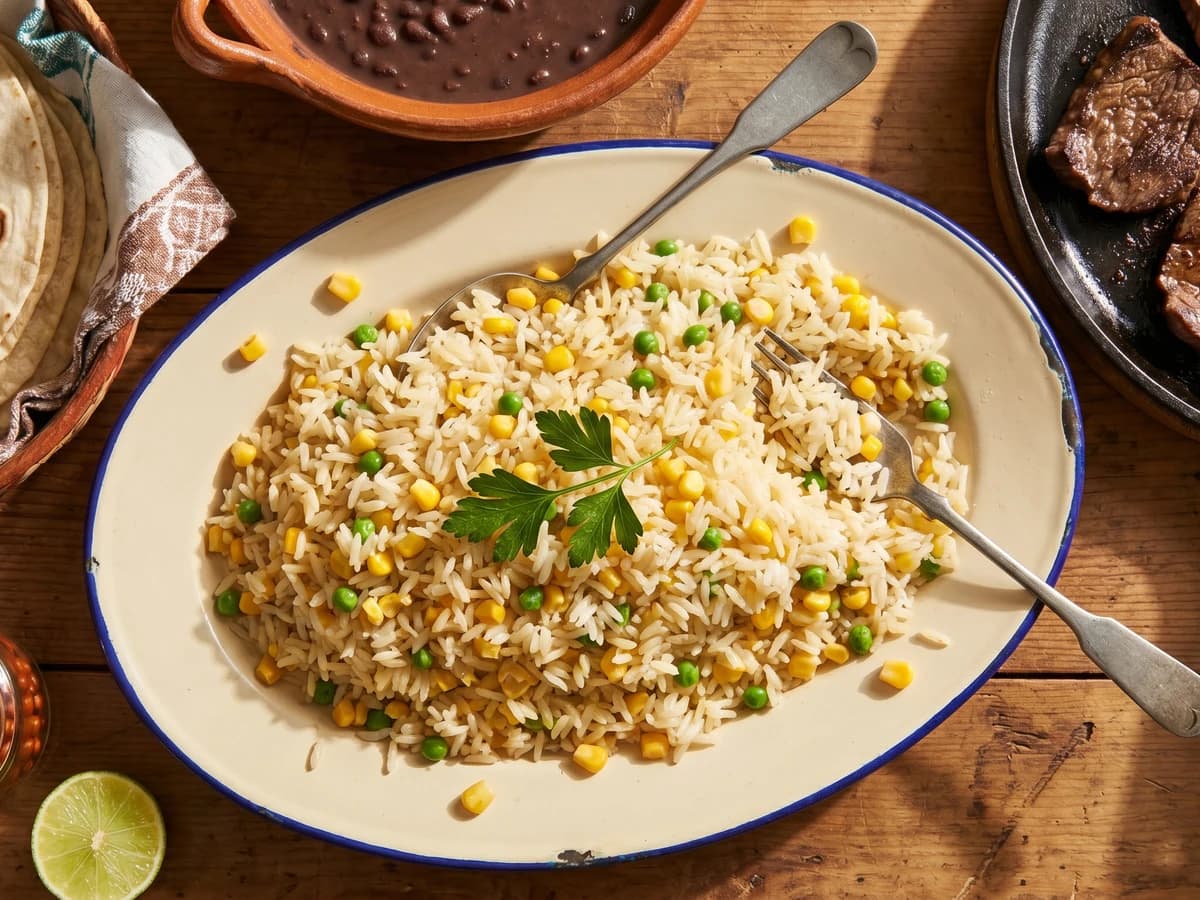
Sonora's white rice, toasted in butter and steamed with sweet corn and tender peas. The clean, quiet partner to a plate of carne asada, not the red rice of central Mexico.

Chef Lupita
Yucatán's white rice with sweet corn kernels, toasted in lard with garlic and onion. The quiet base that holds up against the peninsula's bold achiote-stained stews.