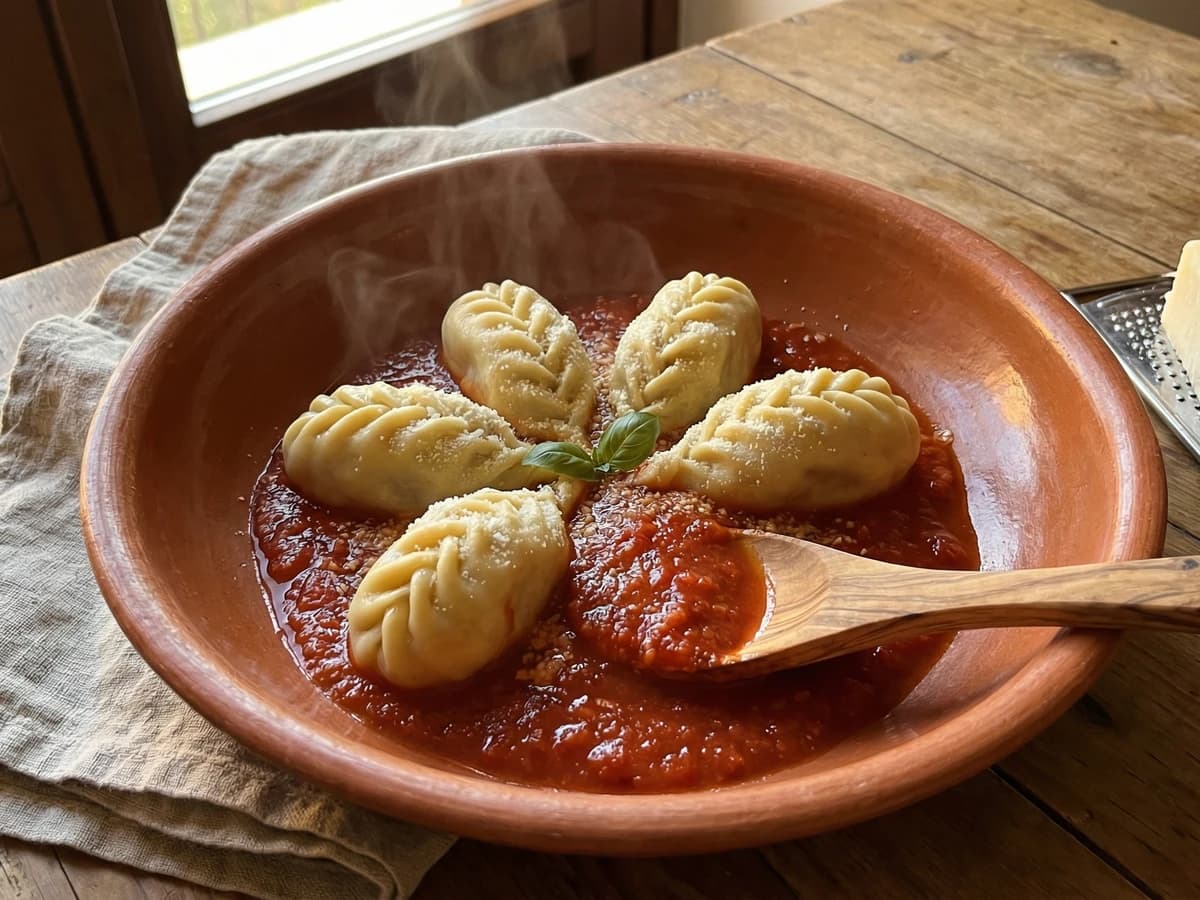
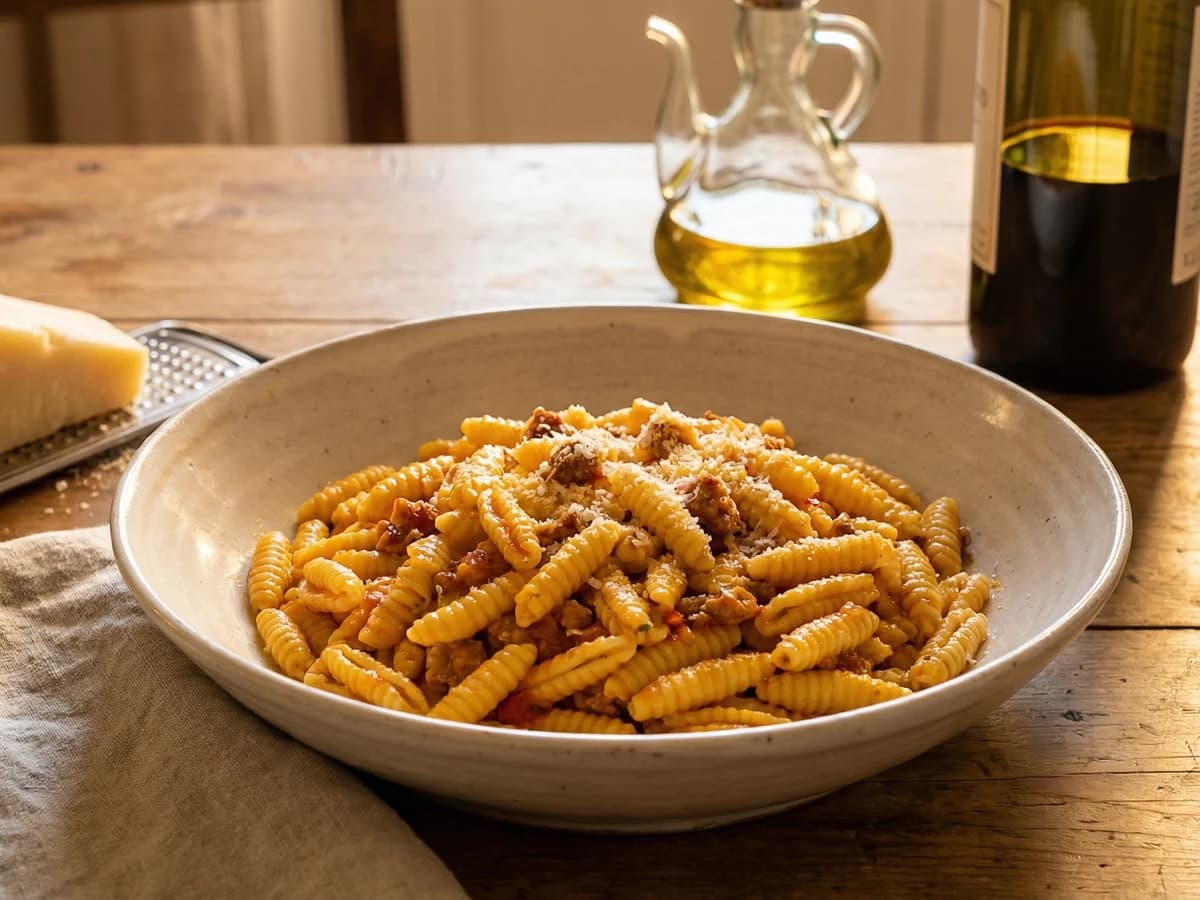
Sardinia's answer to pasta alle vongole: toasted semolina pearls that soak up briny clam liquor and white wine, each bite carrying the wild, windswept taste of the Mediterranean island.
Main Dishes
Italian, Sardinian
Date Night
Dinner Party
30 min
Active Time
25 min cook•55 min total
Yield4 servings
Fregola is not couscous, though Americans often confuse them. It is a Sardinian pasta made from semolina, rolled by hand into irregular pearls, then toasted until golden. The toasting gives it a nutty depth that no other pasta possesses. When cooked with clams, the fregola absorbs the briny liquor and wine, becoming something between a pasta dish and a soup, the grains swollen with the sea.
Arselle are the tiny clams harvested from the lagoons around Cagliari. They are sweeter and more tender than their mainland cousins. If you cannot find them, Manila clams or cockles will serve. What matters is size: small clams cook quickly and give up their liquor generously. Large clams turn tough before the fregola finishes cooking.
This dish requires no stock if your clams are fresh and plentiful. The liquor they release, combined with white wine and good olive oil, creates all the sauce you need. What you keep out is as significant as what you put in. No tomato. No cream. No cheese. The purity of the sea, concentrated.
Fregola has been made in Sardinia since at least the 10th century, predating similar pastas on the Italian mainland. Some scholars trace its origins to Arab traders who brought couscous techniques to the island. The Sardinians adapted the method, using local semolina and adding the crucial toasting step that distinguishes fregola from all its cousins.
The technique, the tradition, and the story behind every dish.
Place the scrubbed clams in a large bowl and cover with cold water. Add two tablespoons of salt. Let them sit for 30 minutes to expel sand. Lift the clams out with your hands, leaving the grit behind. Do not pour the water over them. Discard any clams that remain open when tapped sharply.
Arselle are the tiny sweet clams of Sardinia's lagoons. If unavailable, Manila clams or cockles work well. Large clams will not do. The proportion of shell to meat matters.
2
Toast the fregola
In a dry skillet over medium heat, toast the fregola, stirring constantly, until it deepens in color and smells nutty, about 3 minutes. Some brands come pre-toasted. Taste one: if it already has a pronounced toasted flavor, skip this step. Set aside.
3
Infuse the oil
In a wide pan or Dutch oven large enough to hold all the clams in a single layer, warm the olive oil over medium heat. Add the crushed garlic and peperoncino. Cook until the garlic turns pale gold and fragrant, about 2 minutes. Remove and discard the garlic. It has done its work.
The garlic here is perfume, not presence. You crush it, extract its essence into the oil, then remove it. This is the difference between Italian cooking and what Americans imagine Italian cooking to be.
4
Open the clams
Raise the heat to high. Add the clams and the wine all at once. Cover the pan immediately. The wine will hiss and steam. Shake the pan occasionally. The clams will open in 3 to 5 minutes. The moment they open, transfer them with a slotted spoon to a bowl. Work quickly. Overcooked clams become rubber.
5
Cook the fregola
Add the fish stock to the pan with the clam liquor. Bring to a simmer. Add the toasted fregola. Cook uncovered, stirring occasionally, until the fregola is tender but retains a pleasant bite, 12 to 15 minutes. The liquid should reduce and thicken slightly, coating the pasta. If it absorbs too quickly, add warm water a splash at a time.
6
Reunite and serve
Return the clams to the pan. Toss gently to warm them through, no more than 30 seconds. Remove from heat. Fold in the parsley. Taste for salt; the clams may have provided enough. Add black pepper. Serve immediately in warm bowls. There is no cheese. There is never cheese on seafood pasta.
Chef Tips
•Buy your clams the day you cook them. They should smell of the ocean, not of fish. A clam that smells fishy is a clam that is dying or dead.
•Save the liquor from opening the clams. If sand has settled at the bottom of the pan, pour carefully and leave the last tablespoon behind. Sandy fregola is a failed dish.
•Fregola comes in three sizes: fine, medium, and large. For this dish, use medium (fregola media). The fine cooks too quickly; the large takes too long and overwhelms the small clams.
•Do not be tempted to add Parmigiano or pecorino. Cheese on seafood pasta is an American habit that Italians find baffling. The sea provides all the salinity this dish needs.
Advance Preparation
•The fregola can be toasted up to a week ahead and stored in an airtight container.
•This dish must be made and served immediately. There is no reheating. Clams toughen, fregola turns mushy. Make it when your guests are seated and ready.
Frequently Asked Questions
Nutrition Information
1 serving (about 350g)
Calories
610 calories
Total Fat
27 g
Saturated Fat
4 g
Trans Fat
0 g
Unsaturated Fat
22 g
Cholesterol
30 mg
Sodium
650 mg
Total Carbohydrates
64 g
Dietary Fiber
2 g
Sugars
1 g
Protein
21 g
Where cooking meets culture.
Culinary guides, cultural storytelling, and the editorial depth that makes cooking meaningful.