Chef Joost
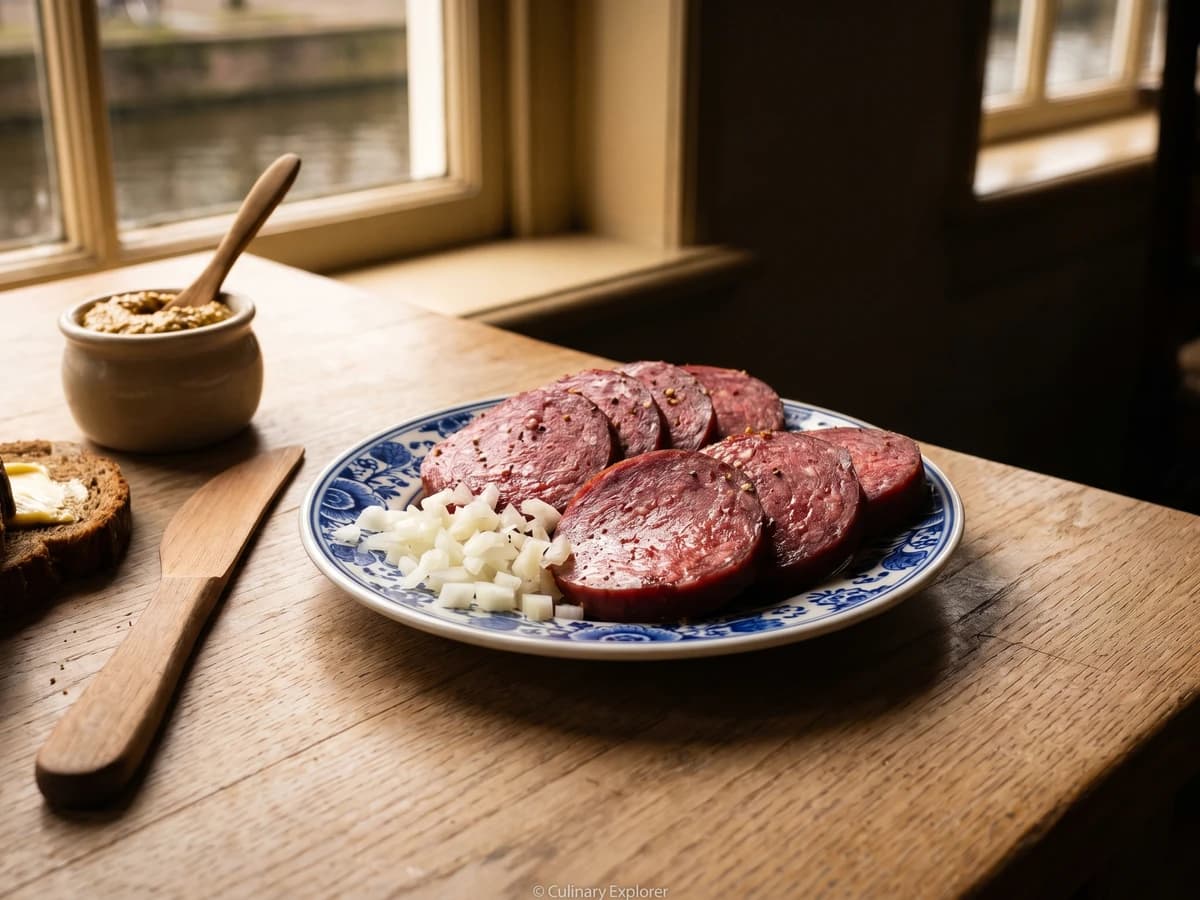
Amsterdamse Ossenworst
The name means ox sausage, but the real story is Amsterdam itself: cattle trade, Jewish butchers, VOC spices, and raw beef sliced thin with onion.
A cooking platform built around craft, culture, and the stories behind what we eat.
Created by
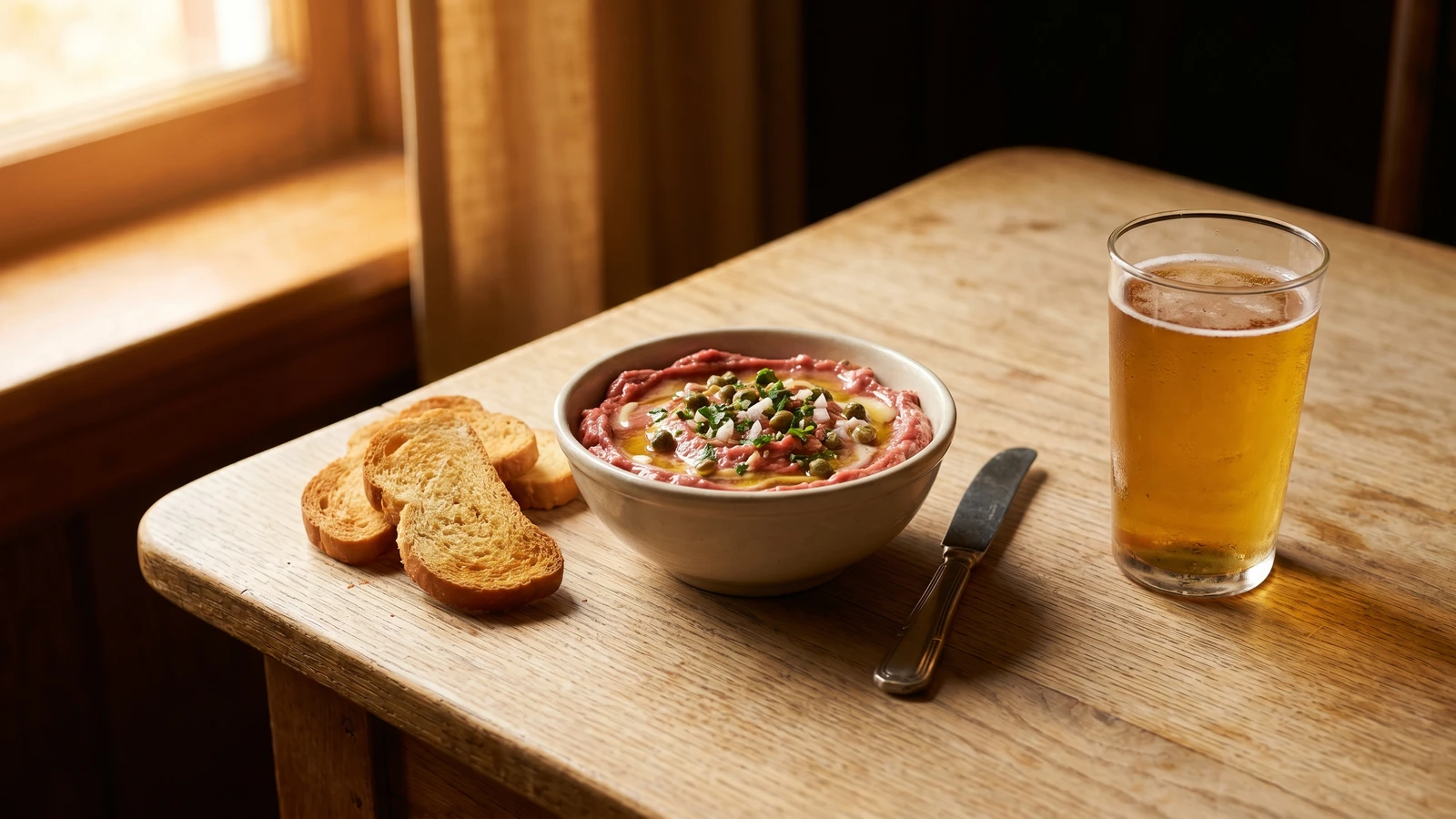
The 'American' that belongs to the Low Countries: raw lean beef chopped fine, sharpened with mustard and capers, and spread on toast before anyone can pretend the Dutch table is bland.
The first lesson filet américain teaches is that names have a sense of humor. In Dutch butcher shops, the slagerij, it sits in the cold case glowing a polite paprika red, beside bowls of egg salad and ossenworst, waiting to be spread on soft bread or toast. As a boy from Zeeland I understood fish that was eaten almost alive; raw beef felt more like city confidence, Amsterdam lunch counters and Brussels dining rooms, a knife tapping fast enough to make a steak become a spread.
But let me tell you a secret: the American in filet américain is hardly American at all. Its road runs through Belgium, through the old argument with steak tartare, then north into Dutch sandwich shops where we made it smoother, pinker, and absurdly easy to eat by the spoon. The name earns its little joke. It sounds foreign, but the habit is deeply Low Countries: buy the true ingredient, season it sharply, serve it cold, and don't pretend more work means more virtue.
The whole recipe rests on one piece of honesty. This is raw beef. Use a same-day whole cut from a butcher you trust, keep everything cold, and bind it with pasteurized mayonnaise or yolk so pleasure doesn't outrun sense. Hou het altijd simpel, always keep it simple: mince finely, sharpen with mustard, capers, shallot, and a little tomato-red sweetness, then let it rest just long enough for the seasoning to settle.
Filet américain is generally credited to the Belgian chef Joseph Niels, whose Brussels restaurant La Royale served a raw minced beef preparation with seasoned sauce in 1924. The dish belongs to the same family as steak tartare, but in the Netherlands it became a slagerij, or butcher-shop, spread rather than a plated restaurant dish. Dutch broodjeszaken, sandwich shops, made the broodje filet americain a standard lunch, often served speciaal with chopped onion, boiled egg, and pickle.
Quantity
350g
trimmed and very cold
Quantity
3 tablespoons
Quantity
1 tablespoon
Quantity
2 teaspoons
Quantity
1 teaspoon
Quantity
1 small
very finely minced
Quantity
1 tablespoon
rinsed and minced
Quantity
2 small
finely minced
Quantity
1/2 teaspoon
Quantity
pinch or 3 drops
Quantity
1/2 teaspoon, plus more to taste
Quantity
to taste
freshly ground
Quantity
1 tablespoon
finely chopped
Quantity
12 small pieces
for serving
| Ingredient | Quantity |
|---|---|
| very lean beef tenderloin, eye of round, or topsidetrimmed and very cold | 350g |
| mayonnaise made with pasteurized egg | 3 tablespoons |
| Dijon or sharp Dutch mustard | 1 tablespoon |
| tomato paste or ketchup | 2 teaspoons |
| Worcestershire sauce | 1 teaspoon |
| shallotvery finely minced | 1 small |
| capersrinsed and minced | 1 tablespoon |
| cornichons or Dutch augurkenfinely minced | 2 small |
| sweet paprika | 1/2 teaspoon |
| cayenne or hot sauce | pinch or 3 drops |
| fine sea salt | 1/2 teaspoon, plus more to taste |
| white pepperfreshly ground | to taste |
| parsleyfinely chopped | 1 tablespoon |
| toast points or good white breadfor serving | 12 small pieces |
Put a mixing bowl, knife, and grinder plate or food processor bowl in the refrigerator for at least 15 minutes. Raw beef gives you no heat to hide behind, so cold and clean are the whole discipline. Keep the meat covered and cold until the moment you cut it.
Trim away every bit of silverskin and fat, then dice the beef small. Chop it with a sharp knife until very fine, or pass it once through a chilled fine grinder. If using a food processor, pulse in short bursts and stop before it turns pasty. You want a smooth spread, not meat glue.
In the cold bowl, stir together the mayonnaise, mustard, tomato paste or ketchup, Worcestershire sauce, paprika, cayenne, salt, and white pepper. The sauce should taste sharp, lightly sweet, and a little peppery; it is there to wake the beef, not bury it.
Add the minced beef, shallot, capers, cornichons, and parsley to the sauce. Fold with a cold spoon until the mixture is even and spreadable. Taste with a clean spoon and adjust salt, mustard, or pepper. The capers and pickle need a few minutes to speak, so don't shout over them too early.
Cover and refrigerate for 20 to 30 minutes, just long enough for the seasoning to settle. Serve cold, spread thickly on toast points or soft white bread. A few extra capers, a little minced shallot, or slices of boiled egg make it speciaal, special, in the sandwich-shop way.
1 serving (about 100g)
Culinary guides, cultural storytelling, and the editorial depth that makes cooking meaningful.
Discover Culinary ExplorerChef Joost
The name means ox sausage, but the real story is Amsterdam itself: cattle trade, Jewish butchers, VOC spices, and raw beef sliced thin with onion.

Chef Joost
The little yellow onion on the Amsterdam borrel board looks modest, until vinegar, turmeric, and patience turn it into the sharp bite that wakes cheese, herring, and sausage.

Chef Joost
The bear's claw of the northern snackbar: a seasoned gehaktbal, Dutch meatball, cut into thick discs, skewered with onion, fried until the edges catch, then dragged through peanut sauce.

Chef Joost
The name points to the drink, not the mood: bitterballen are crisp little balls of beef ragout made for the borrel table, mustard beside them, fingers slightly burned by impatience.