Chef Graziella
Fileja alla Tropeana
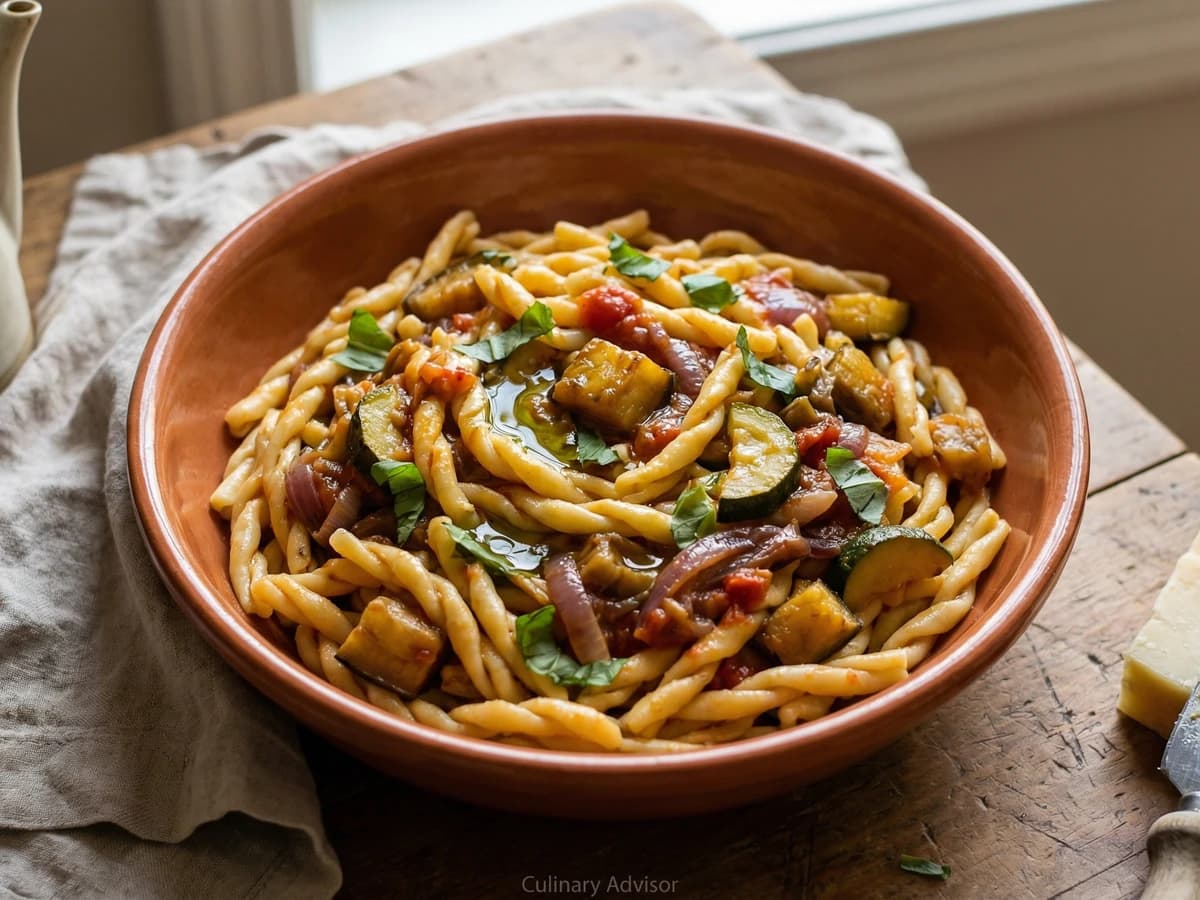
Hand-twisted Calabrian pasta dressed with the famous sweet red onions of Tropea, summer vegetables, and ripe tomatoes. This is what August tastes like on the Tyrrhenian coast.
A cooking platform built around craft, culture, and the stories behind what we eat.
Created by
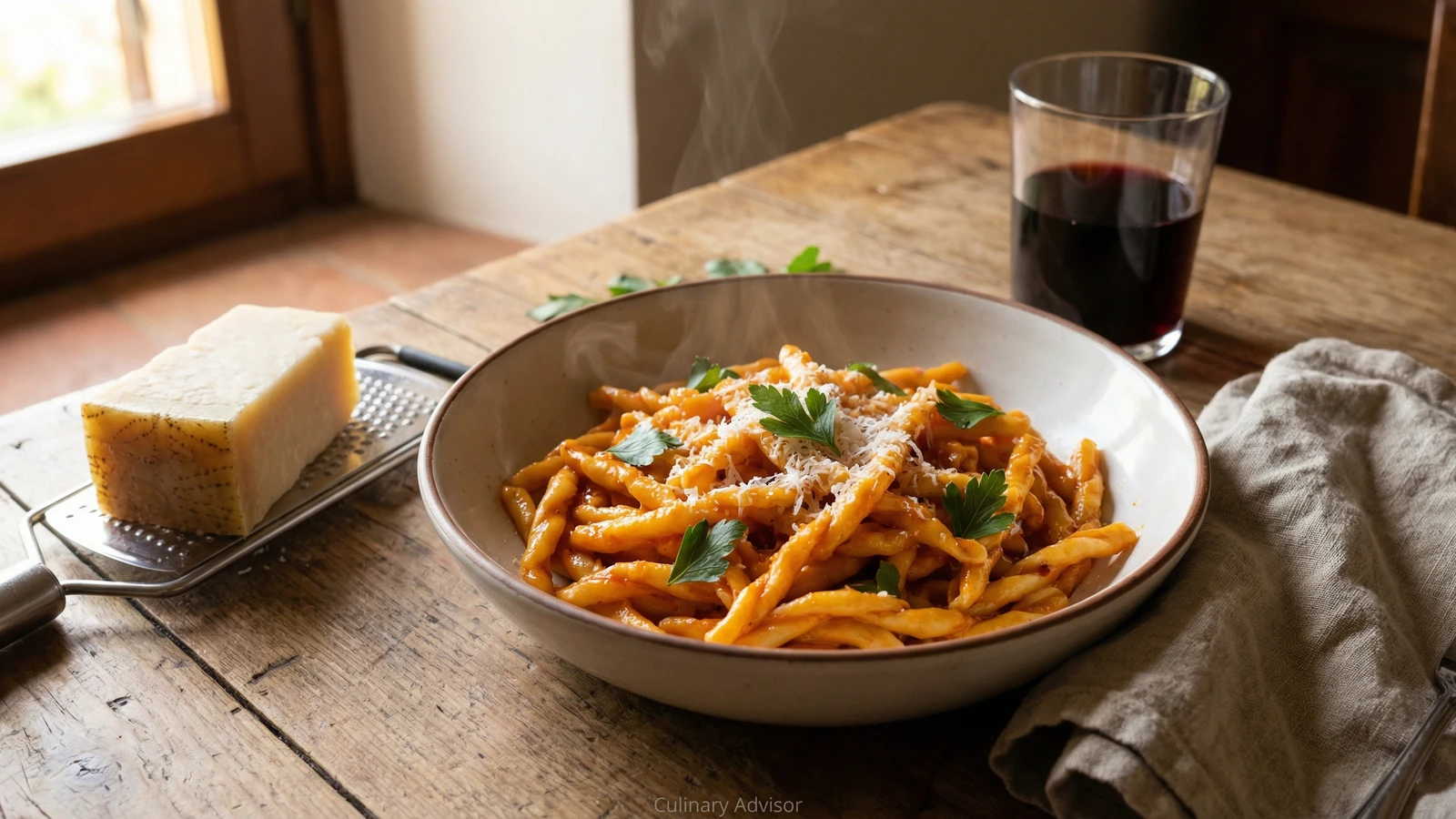
The fiery soul of Calabria in a bowl: hand-twisted pasta dressed in a sauce where 'nduja dissolves into tomatoes, releasing its slow-building heat and smoky depth.
Calabria is the toe of Italy's boot, a region of mountains and sea where the food carries the same fierce character as the landscape. The cooking here does not whisper. It declares. And nothing declares more loudly than 'nduja, the spreadable salame that has made the tiny village of Spilinga famous among those who understand such things.
'Nduja is pork fat and meat ground with an almost reckless quantity of Calabrian hot peppers, then cured until it becomes soft enough to spread on bread or, as here, to melt directly into a sauce. The heat is not immediate. It builds, accumulating at the back of the throat, warming you from the inside. This is not the sharp bite of fresh chili. This is something deeper.
The pasta called fileja belongs to Calabria as surely as the peppers do. Each piece is twisted by hand around a thin rod, creating grooves that catch the sauce. If you cannot find fileja, strozzapreti or casarecce will serve. But know what you are substituting, and seek out the real thing when you can.
This dish requires exactly six ingredients beyond salt and water. Do not add more. No onion, no basil, no cream. The 'nduja provides all the complexity you need. What you keep out is as significant as what you put in.
'Nduja likely arrived in Calabria during the Spanish domination of southern Italy, when pimentón and New World peppers transformed local charcuterie. The village of Spilinga, perched in the mountains above the Tyrrhenian coast, became the center of production. Peasant families made 'nduja to use the less desirable cuts of the pig, proving once again that necessity creates genius.
Quantity
1 pound
Quantity
4 ounces
Quantity
3 tablespoons
Quantity
2
lightly crushed
Quantity
1 can (14 ounces)
crushed by hand
Quantity
1/2 cup
Quantity
to taste
Quantity
for serving
freshly grated
Quantity
for serving
leaves torn
| Ingredient | Quantity |
|---|---|
| fileja pasta | 1 pound |
| 'nduja | 4 ounces |
| extra virgin olive oil | 3 tablespoons |
| garlic cloveslightly crushed | 2 |
| San Marzano tomatoescrushed by hand | 1 can (14 ounces) |
| dry white wine | 1/2 cup |
| kosher salt | to taste |
| Pecorino Romano or Pecorino Crotonesefreshly grated | for serving |
| fresh parsleyleaves torn | for serving |
In a wide skillet or sauté pan, warm the olive oil over medium-low heat. Add the crushed garlic cloves and let them perfume the oil gently, about 2 minutes. The garlic should turn pale gold, never brown. Remove and discard the garlic. What remains is its essence, not its aggression.
Reduce the heat to low. Add the 'nduja to the warm oil, breaking it apart with a wooden spoon. It will dissolve into the fat, releasing its color and heat. Stir constantly for 2 to 3 minutes until the 'nduja has melted completely into the oil, turning it a fierce orange-red. The kitchen will smell of smoke and pepper. This is correct.
Pour in the white wine and let it bubble until nearly evaporated, about 2 minutes. Add the crushed tomatoes with their juices. Stir to combine everything into one unified sauce. Raise heat to bring to a simmer, then reduce to maintain a gentle bubble. Cook uncovered for 15 minutes, stirring occasionally. The sauce will thicken and the raw tomato edge will soften.
While the sauce simmers, bring abundant salted water to a vigorous boil. The water should taste like the sea. Cook the fileja according to package directions until al dente, typically 10 to 12 minutes for dried pasta. Reserve one cup of the starchy cooking water before draining.
Add the drained pasta directly to the skillet with the sauce. Toss vigorously over medium heat for one minute, adding splashes of pasta water as needed to help the sauce cling to every twist and fold. The pasta should be coated, glistening, not swimming. Taste for salt, though the 'nduja brings its own.
Divide among warmed bowls. Scatter torn parsley over each portion and pass Pecorino at the table. Once the pasta is sauced, serve it promptly, inviting your guests and family to put off talking and start eating. The heat builds with each bite. Have bread and wine ready.
1 serving (about 350g)
Culinary guides, cultural storytelling, and the editorial depth that makes cooking meaningful.
Discover Culinary ExplorerChef Graziella
Hand-twisted Calabrian pasta dressed with the famous sweet red onions of Tropea, summer vegetables, and ripe tomatoes. This is what August tastes like on the Tyrrhenian coast.

Chef Juliette
John Dory has the delicacy of sole and the firmness of turbot. A light flouring, a quick butter sauté, and nut-brown beurre noisette show exactly why looks never mattered.

Chef Juliette
Fresh haddock proves its delicacy in the meunière pan: a fine flour crust, moist pearly flakes, and beurre noisette sharpened with lemon and parsley, ready from one skillet in half an hour.

Chef Juliette
Éperlans à l’Anglaise turns small fish into a lesson in disciplined coating: boned smelts under a close, crisp crumb, pan-fried in clarified butter and finished with bright, half-melted maître d’hôtel butter.