Culinary Explorer

A cooking platform built around craft, culture, and the stories behind what we eat.
Discover Culinary Explorer
Fideus a la Cassola

Fideus a la Cassola

Created by

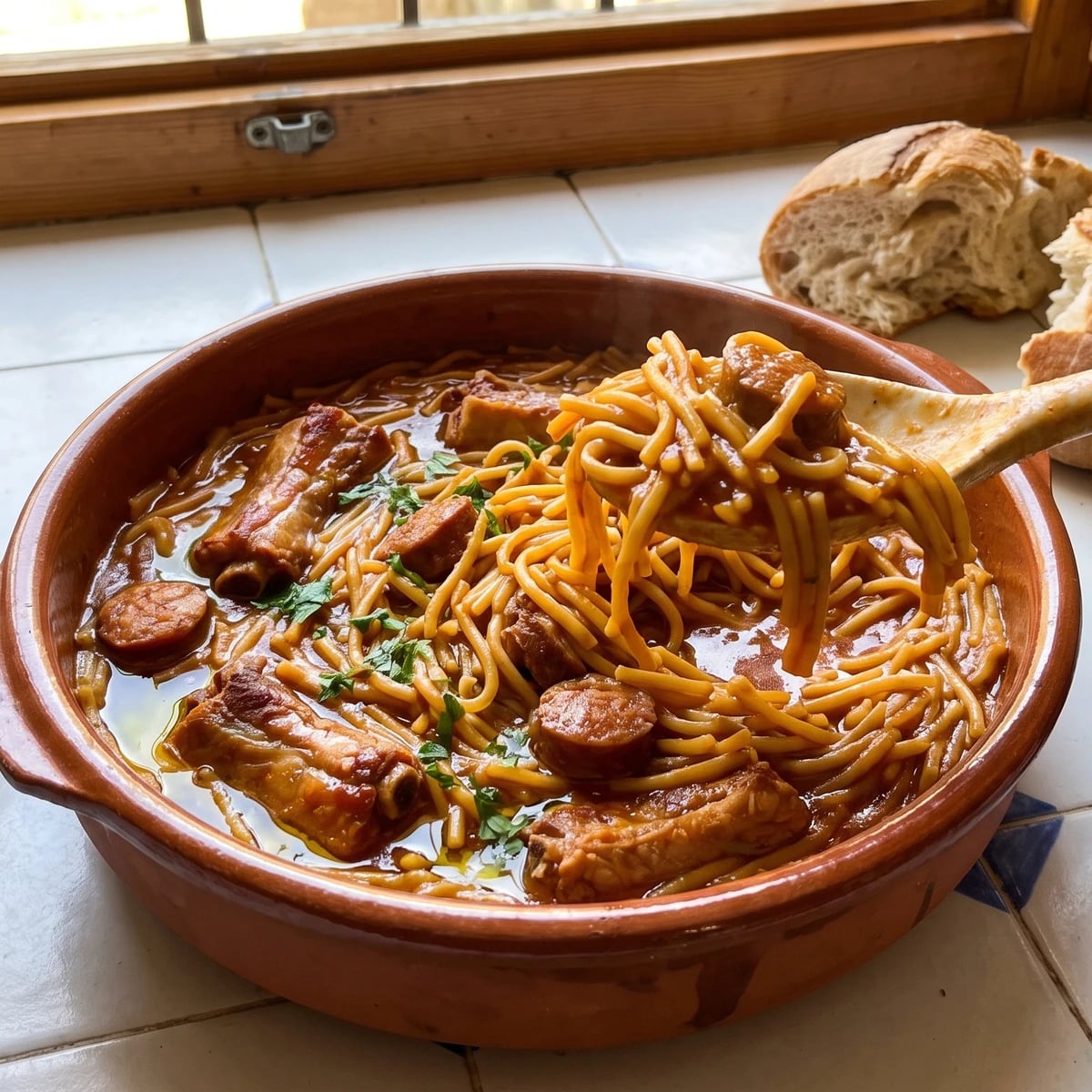
Fideus a la cassola are Catalonia's spoony cazuela noodles: pork rib, botifarra, a dark sofregit, and short fideos simmered in broth, then tightened with a garlic-parsley picada.

Main Dishes
Spanish
Comfort Food
One Pot
Weeknight
20 min
Active Time
1 hr 10 min cook1 hr 30 min total
Yield4 servings

Fideus a la cassola are Catalan, a cassola of short thick noodles stewed with pork rib and botifarra until the broth clings but still asks for a spoon. This is not Valencian fideuà, which cooks dry and flat, and it is not paella with noodles. It belongs to the earthenware casserole, to the sofregit, the slow onion and tomato base, and to the picada that tightens the sauce at the end.

The method that decides it is the sofregit. Cook the onion low until dark gold and sweet, then let the grated tomato lose its water and turn thick enough that the oil shows at the edge. Rush that part and the whole cassola tastes thin, however good the pork is. Do it patiently and the noodles drink in a broth that already has a floor under it.

If you can get botifarra crua, the fresh Catalan pork sausage, use it. If not, choose a plain fresh pork sausage with garlic and pepper, not smoked sausage and not chorizo; the dish will taste a little less of Catalonia, but it will still behave correctly. Thick fideos are best, number 4 or fideus gruixuts. Short macaroni works if that is what your shop has, though it needs a few extra minutes and a splash more broth. No hace falta haber pisado España.

Finish with the picada, garlic, parsley, toasted almond, and saffron pounded together, and give the cazuela five quiet minutes before serving. The noodles settle, the sauce turns glossy, and the spoon finds its way through meat, pasta, and broth without fuss. In the Margin beside this one I wrote only: "no lo seques," don't dry it out. Siempre sale, si lo sigues.

Fideus a la cassola belongs to Catalan cuina de casa, home cooking, where short dried noodles are cooked in an earthenware cassola with pork rib, botifarra, market vegetables, and broth for a filling family meal. It is inland and domestic in spirit, different from the Valencian fideuà of Gandia, where noodles cook dry with seafood in a wide pan. The Catalan finish is the picada, a pounded mixture of garlic, parsley, nuts, or saffron that thickens and perfumes the last minutes of many stews and casseroles.

The technique, the tradition, and the story behind every dish.

Discover Culinary Explorer

Ingredients

pork ribs

Quantity

500g

cut across into 4-5cm pieces

fresh botifarra crua or plain fresh pork sausage

Quantity

250g

cut into 4cm pieces

extra virgin olive oil

Quantity

60ml

yellow onion

Quantity

200g

finely chopped

garlic

Quantity

2 cloves

finely chopped

ripe tomatoes

Quantity

300g

grated, or use 250g canned crushed tomato

vi ranci or dry white wine

Quantity

75ml

bay leaf

Quantity

1

sweet pimentón (optional)

Quantity

1/2 teaspoon

thick fideos, No. 4 or fideus gruixuts

Quantity

350g

hot light chicken or pork broth

Quantity

1 litre, plus 100ml extra if needed

peas (optional)

Quantity

100g

fresh or frozen

fine sea salt

Quantity

8g, plus more only if needed

freshly ground black pepper

Quantity

1/2 teaspoon

toasted almonds or hazelnuts

Quantity

20g

for the picada

garlic

Quantity

1 small clove

for the picada

flat-leaf parsley leaves and tender stems

Quantity

10g

for the picada

saffron threads

Quantity

1 pinch

for the picada

cooking broth

Quantity

2 tablespoons

for loosening the picada

Equipment Needed

  • Wide 30cm cazuela de barro, cassola, or heavy casserole with lid
  • Mortar and pestle
  • Box grater

Instructions

  1. 1

    Brown the meat

    Pat the pork ribs dry and season them with 5g of the salt and the black pepper. Warm the olive oil in a wide 30cm cassola or heavy casserole over medium heat, then brown the ribs on all sides, 8 to 10 minutes. Add the botifarra pieces and colour them lightly, 3 to 4 minutes more. Lift the meats to a plate and leave the oil in the pan.

    If you use a clay cassola de barro, heat it slowly and use a diffuser if your stove runs fierce. Clay does not like a sudden shock.
  2. 2

    Build the sofregit

    Lower the heat and add the onion with 2g of the remaining salt. Cook it slowly, stirring often, until it turns dark gold, soft, and sweet, 15 to 18 minutes. Add the chopped garlic for one minute, then add the grated tomato and cook until its water is gone and the oil shows at the edge, another 15 to 20 minutes. This sofregit, the Catalan slow onion and tomato base, is the step that decides the dish. Rush it and the whole cassola tastes thin.

  3. 3

    Braise the ribs

    If using the pimentón, pull the cassola off the hottest spot and stir it into the sofregit for ten seconds, just until it smells sweet. Pour in the vi ranci or white wine and scrape the bottom of the pan. Return the pork ribs, add the bay leaf and 500ml of the hot broth, cover loosely, and simmer gently for 20 to 25 minutes, until the ribs are nearly tender.

    Keep the broth hot. Cold broth stops the cooking and makes the noodles take longer than they should.
  4. 4

    Add the fideos

    Return the botifarra to the cassola. Add the fideos and pour in another 500ml of hot broth. Stir once to settle everything into an even layer, then simmer uncovered for 10 to 12 minutes, stirring gently now and then so the noodles cook evenly and the sauce gains body. This is not paella; the cassola wants a spoon. If using peas, add them for the last 5 minutes. The noodles should be tender and glossy, with broth still moving between them, not dry.

  5. 5

    Finish with picada

    While the noodles cook, pound the toasted almonds or hazelnuts, small garlic clove, parsley, saffron, and a pinch of salt in a mortar until rough and pasty. Loosen with 2 tablespoons of cooking broth, then stir the picada into the cassola for the last 2 to 3 minutes. Taste before adding the last gram of salt; sausage and broth both speak loudly. Rest the cassola off the heat for 5 minutes before serving. Siempre sale, si lo sigues.

Chef Tips

  • Botifarra crua is the right sausage here: fresh pork, mild seasoning, no smoke. If you cannot find it, use a plain fresh pork sausage. Do not use chorizo; it takes the dish somewhere else.
  • Use thick fideos, No. 4 or fideus gruixuts. If your shop only has short macaroni, use it, but expect a firmer bite and add a little extra hot broth as it cooks.
  • For the tomato, good canned crushed tomato is better than a hard winter tomato. Sofregit forgives canned tomato because you are cooking it down, not eating it raw.
  • The cassola should finish spoonable, not soupy and not dry. If the noodles drink too fast, add hot broth in 50ml splashes. If there is too much liquid, rest it five minutes and let the pasta settle before you panic.
  • A young Catalan red from Montsant or Terra Alta is right with the pork. Bread on the table is not decoration; you will want it for the last sauce.

Advance Preparation

  • The sofregit can be cooked up to 2 days ahead and refrigerated. Bring it back to a gentle sizzle before adding the wine and meat.
  • You can brown and braise the ribs through step 3 one day ahead. Add the botifarra, noodles, and picada only when you are ready to eat, or the pasta will swell and lose its bite.
  • Leftovers keep 2 days covered in the refrigerator. Reheat gently with a splash of water or light broth, knowing the noodles will be softer the next day.

Frequently Asked Questions

Nutrition Information

1 serving (about 550g)

Calories
965 calories
Total Fat
54 g
Saturated Fat
15 g
Trans Fat
0 g
Unsaturated Fat
38 g
Cholesterol
105 mg
Sodium
1700 mg
Total Carbohydrates
80 g
Dietary Fiber
7 g
Sugars
8 g
Protein
39 g

Note: Chef personas and recipes are created with AI assistance. Cook with care: follow safe food-handling practices, check doneness with a thermometer when needed, and adapt for allergies and your kitchen.

Where cooking meets culture.

Culinary guides, cultural storytelling, and the editorial depth that makes cooking meaningful.

Discover Culinary Explorer

More from Fideuà & Fideos

Browse the full collection