Chef Isabel
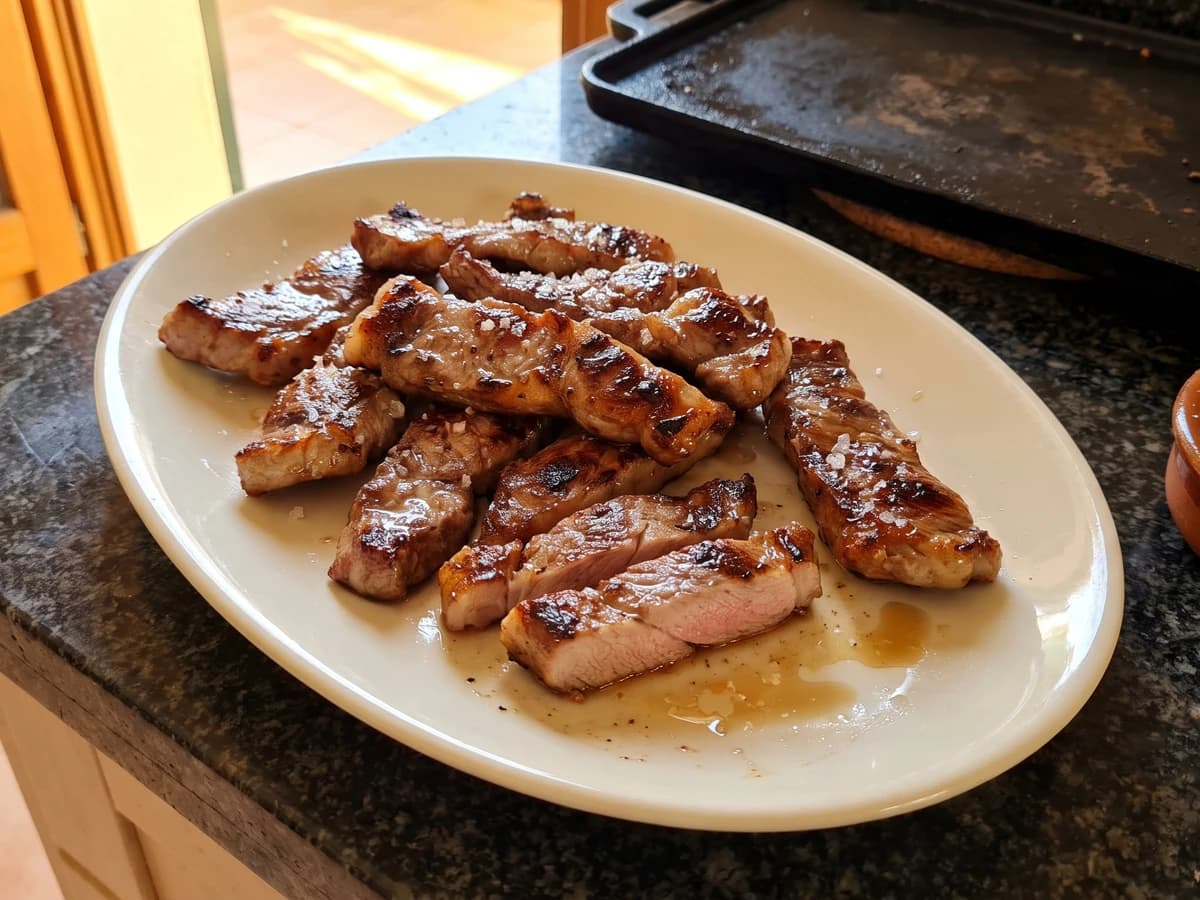
Abanico Ibérico a la Plancha
Extremadura's dehesa gives us this fan-shaped, marbled rib cut: salt it at the last moment, lay it on a fierce plancha, and count in seconds so the centre stays juicy.
A cooking platform built around craft, culture, and the stories behind what we eat.

Created by
Andrajos are Andalucía's dough-rag stew from Jaén and Granada: a slow rabbit guiso thickened with torn sheets of flour dough, rolled thin so they cook tender instead of gummy.
Andrajos Andaluces belong to the inland kitchens of Jaén and Granada: a guiso, a spoon stew, with rabbit or salt cod, and flat flour-and-water dough torn into ragged pieces right into the pot. Those rags are the dish. They are not packet noodles and they are not dumplings; they are thin sheets that drink the broth and stay soft at the edge.
The method that decides it is the dough. Roll it thin, no thicker than 2mm, then tear it by hand so every piece has an uneven edge. Too thick and it turns heavy and gummy. Thin enough, it cooks in the broth like tender pasta, with the sofrito, the slow onion base, clinging to it. The stew must taste good before the rags go in, because the dough carries whatever broth you give it.
If rabbit is hard to find where you are, use bone-in chicken thighs and a light stock instead of water; it will be milder, but still a real household answer. For the Lenten version, use soaked salt cod and add it near the end. No hace falta haber pisado España. You need thin dough, a patient sofrito, and a pot that is already worth eating before the flour touches it. Siempre sale, si lo sigues.
In the Margin beside this one I wrote only: "thin, then thinner." That is not poetry. That is dinner saved.
Andrajos belong to inland eastern Andalucía, especially the sierras and olive-growing towns of Jaén and Granada, where wheat flour, small game, garden vegetables, and olive oil made a filling pot from a modest larder. The name comes from andrajo, a rag, for the irregular torn pieces of dough cooked directly in the broth. Meat versions use rabbit or hare, while Lenten pots turn to bacalao, salt cod, so the same method serves a meatless table.
Quantity
250g, plus 30g more
for the dough and rolling
Quantity
3g
Quantity
130ml
Quantity
1 teaspoon
Quantity
750g
cut into serving pieces
Quantity
8g, divided, plus more to taste
Quantity
60ml
Quantity
1 medium, about 150g
finely chopped
Quantity
1, about 120g
finely chopped
Quantity
4
finely chopped
Quantity
300g
grated, or 250g canned crushed tomatoes
Quantity
1
soaked and scraped
Quantity
1 teaspoon
Quantity
100ml
Quantity
1.2L
Quantity
1
Quantity
1 pinch
crushed
Quantity
300g
peeled and cracked into 3cm pieces
Quantity
2 sprigs
| Ingredient | Quantity |
|---|---|
| plain flourfor the dough and rolling | 250g, plus 30g more |
| fine salt for the dough | 3g |
| warm water | 130ml |
| olive oil for the dough (optional) | 1 teaspoon |
| bone-in rabbitcut into serving pieces | 750g |
| fine salt | 8g, divided, plus more to taste |
| extra virgin olive oil | 60ml |
| onionfinely chopped | 1 medium, about 150g |
| green Italian frying pepperfinely chopped | 1, about 120g |
| garlic clovesfinely chopped | 4 |
| ripe tomatoesgrated, or 250g canned crushed tomatoes | 300g |
| dried ñora pepper (optional)soaked and scraped | 1 |
| sweet pimentón | 1 teaspoon |
| dry white wine or water | 100ml |
| hot water or light chicken stock | 1.2L |
| bay leaf | 1 |
| saffron threads (optional)crushed | 1 pinch |
| waxy potatoespeeled and cracked into 3cm pieces | 300g |
| hierbabuena, fresh mint | 2 sprigs |
Put the flour and 3g salt in a bowl. Add the warm water and the teaspoon of oil, if using, and mix until you have a firm, plain dough. Knead for 5 minutes, just until smooth, then cover and rest for 20 minutes. The rest matters because it relaxes the dough, and relaxed dough rolls thin without snapping back.
Season the rabbit with 5g of the salt. Warm the olive oil in a wide heavy pot over medium heat and brown the rabbit in batches, 3 to 4 minutes per side, until the outside takes color. It does not need to cook through yet. Lift the pieces to a plate and leave the oil in the pot.
Add the onion, green pepper, and remaining 3g salt to the pot. Lower the heat and cook slowly for 12 to 15 minutes, scraping the browned rabbit bits from the bottom, until the onion is dark gold and soft. Add the garlic and cook 1 minute. Stir in the grated tomato and the scraped ñora flesh, if you have it, and cook until the tomato is thick, dark, and almost dry, 10 to 12 minutes more.
Pull the pot off the heat and stir in the pimentón so it smells sweet but does not burn. Return the rabbit to the pot, add the wine or water, and let it bubble for 2 minutes. Add the hot water or stock, bay leaf, and saffron, if using. Bring to a gentle simmer, cover partly, and cook for 25 minutes.
Add the cracked potatoes and simmer uncovered for 12 to 15 minutes, until they are almost tender but not falling apart. Taste the broth now. It should be a little stronger than you think, because the dough will soften the seasoning.
While the potatoes cook, divide the rested dough in two. Roll each piece on a lightly floured surface until it is 1 to 2mm thick, as thin as you can manage without tearing it. Tear it by hand into rough pieces about 5 to 7cm across and shake off extra flour. This is the whole trick: thin rags cook tender, thick rags sit in the pot like wet cloth.
Raise the stew to a lively simmer and drop in the dough rags one by one, stirring gently so they do not stick to each other. Cook 8 to 10 minutes, uncovered, until the rags are tender and the broth turns slightly silky. Add the sprigs of hierbabuena for the last 2 minutes, then take the pot off the heat.
Rest the pot for 5 minutes so the broth settles around the dough. Remove the bay leaf and mint stems, taste for salt, and serve in deep bowls with rabbit, potato, broth, and plenty of rags in each one. It should be spoon food, cocina de cuchara, not a dry plate of pasta.
1 serving (about 620g)
Culinary guides, cultural storytelling, and the editorial depth that makes cooking meaningful.
Discover Culinary ExplorerChef Isabel
Extremadura's dehesa gives us this fan-shaped, marbled rib cut: salt it at the last moment, lay it on a fierce plancha, and count in seconds so the centre stays juicy.
Chef Isabel
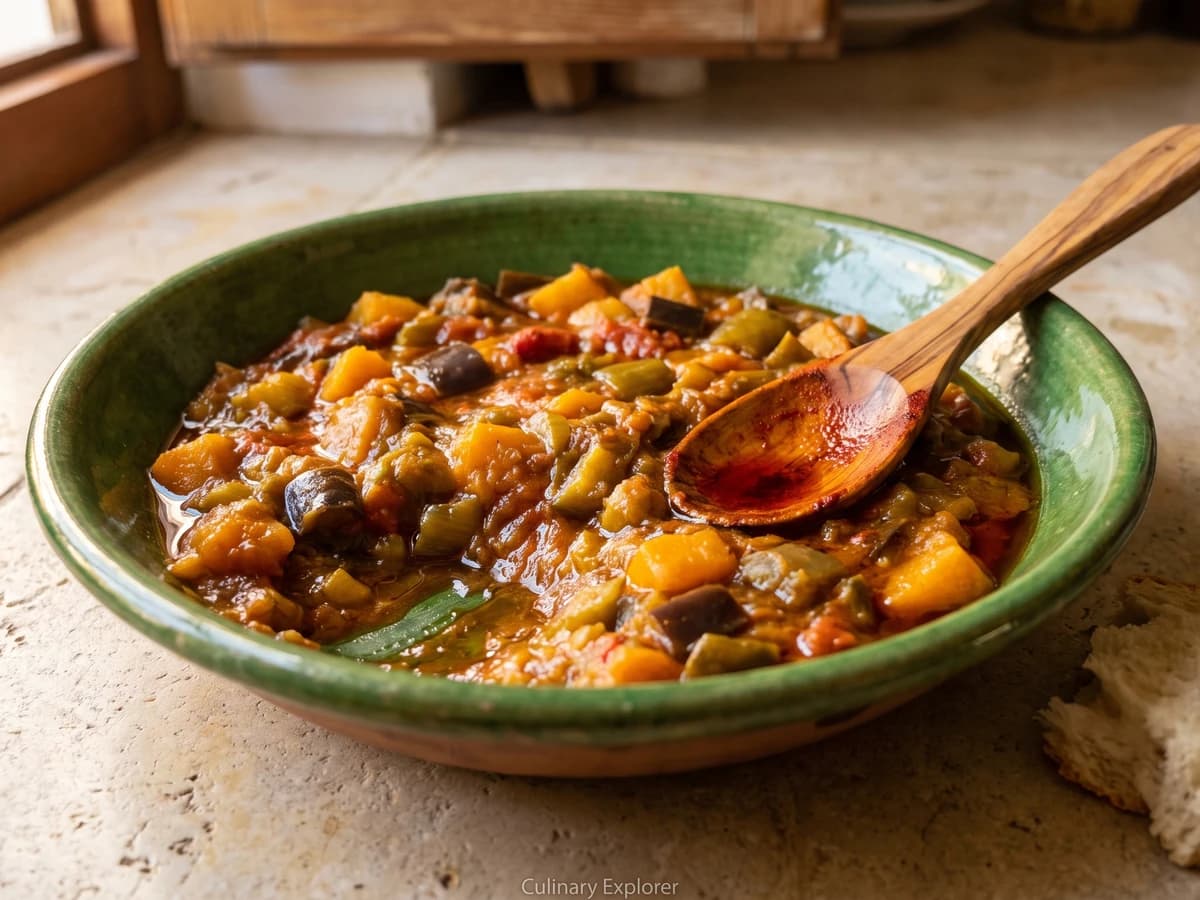
Alboronía is Andalucía's old pumpkin and aubergine stew, deepened with tomato, pimentón, and cumin, then cooked without hurry until the vegetables settle into a glossy, sweet, spoon-soft whole.

Chef Isabel
Aletría Murciana is Murcia's humble noodle guiso: fine fideos, pork ribs, potato, saffron, and a dark sweet sofrito. Get that base right and the pot knows where it's going.
Chef Isabel
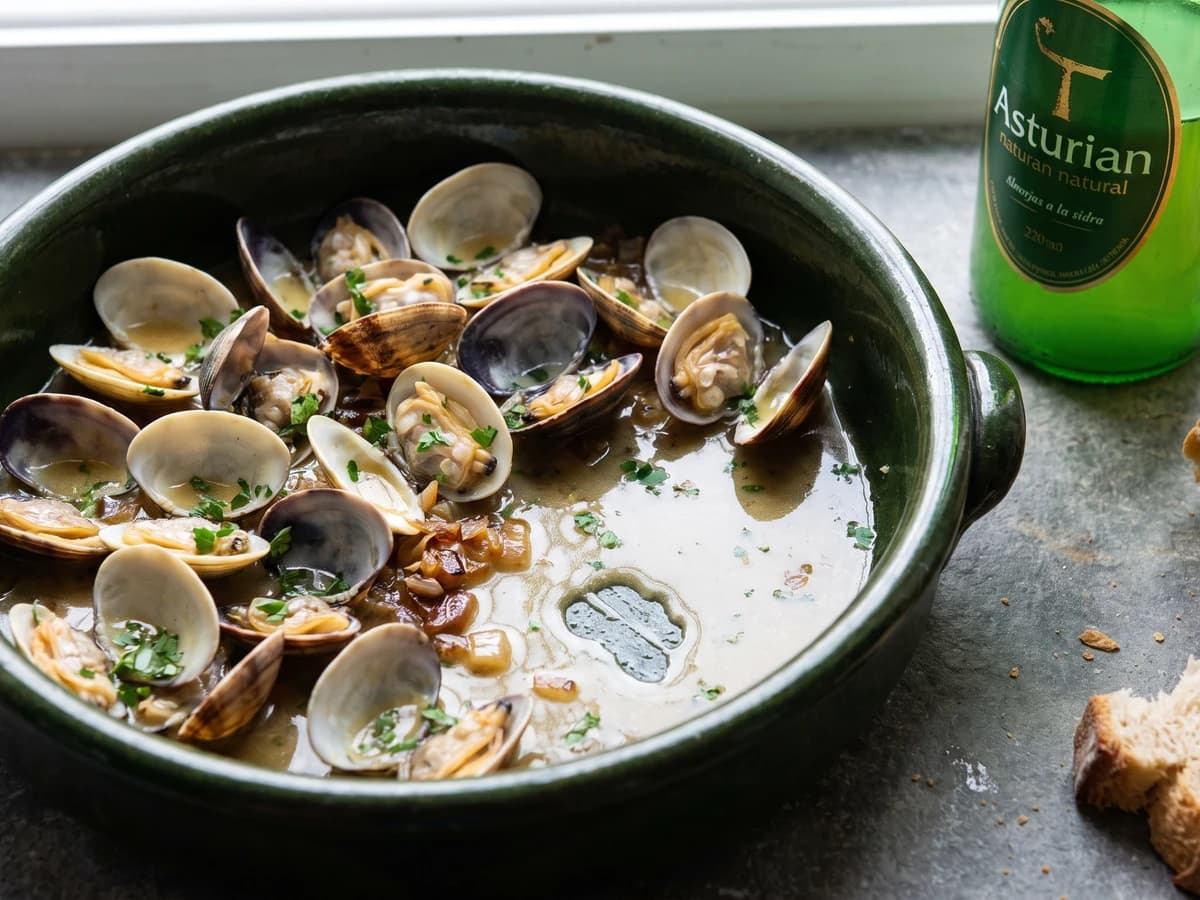
Asturias opens clams in tart natural cider over a slow onion and garlic sofrito, making a bright, briny sauce that asks for bread and rewards one rule: lift each clam as it opens.