Culinary Explorer

A cooking platform built around craft, culture, and the stories behind what we eat.
Discover Culinary Explorer
Fideuà Negra Valenciana

Fideuà Negra Valenciana

Created by

Fideuà negra is Valencian, born for the paellera but made with noodles instead of rice: sepia, cuttlefish ink, good fish stock, and the dry finish that makes it the dish.

Main Dishes
Spanish
Dinner Party
Special Occasion
30 min
Active Time
45 min cook1 hr 15 min total
Yield4 servings

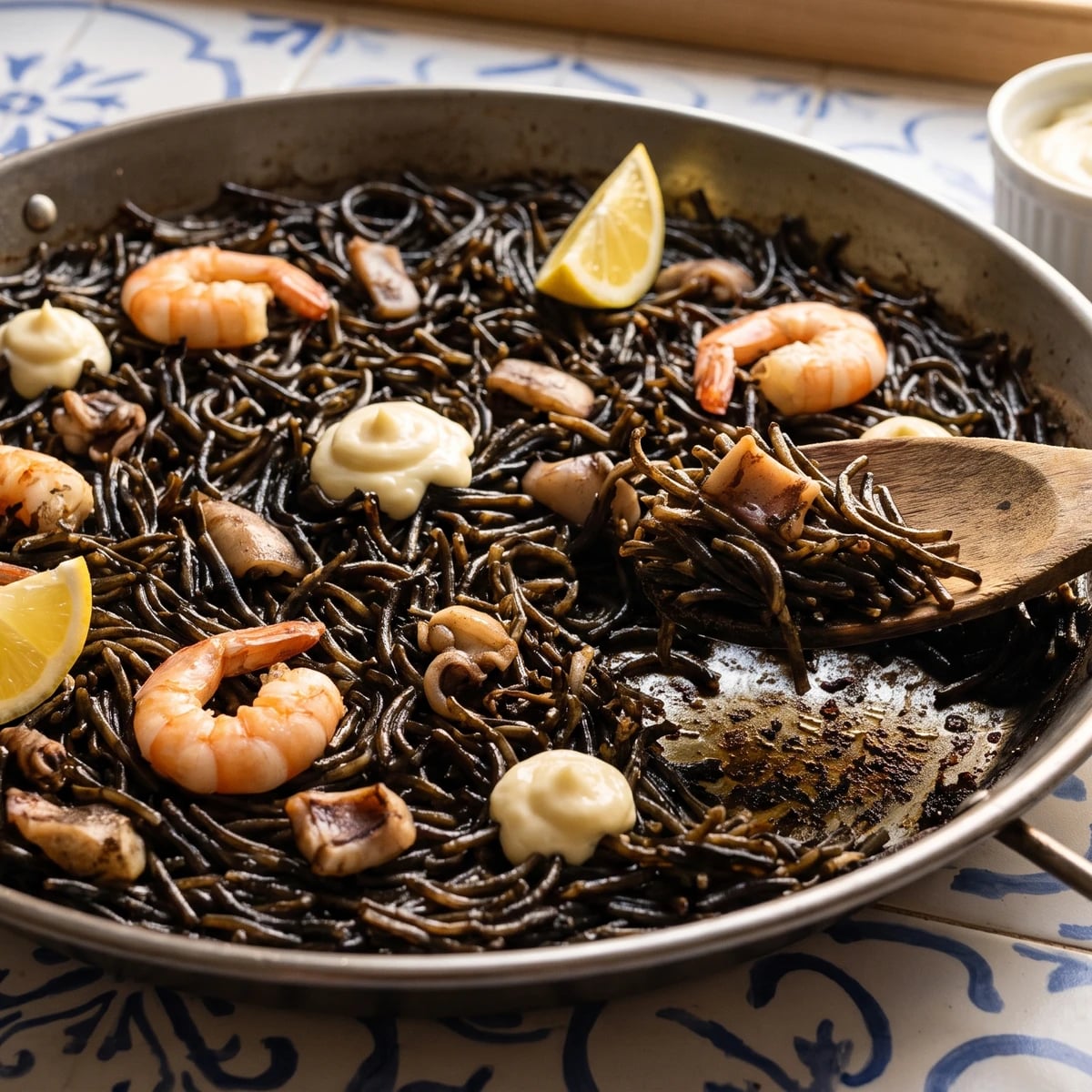
Fideuà negra is Valencian, a black seafood noodle dish cooked in the paellera until the noodles drink the stock and finish dry, glossy, and dark with cuttlefish ink. This is not pasta with sauce, and it is not a rice dish pretending. The short fideos cook flat in the pan, the sepia gives the sea, and the allioli on the side is not decoration. It is the bite that wakes the whole thing up.

The method that decides it is the dry cook. Build the sofrito, the slow onion and tomato base, until it is dark, sweet, and almost sticking to the pan. Toast the noodles in that oil, add the inked stock hot and all at once, then leave it alone. Stir now and you loosen starch, cloud the stock, and lose the clean, separate finish a fideuà wants. Let the paellera do its work.

If you are far from Valencia, no hace falta haber pisado España. Use good fresh squid if sepia is not at your fishmonger, and buy cuttlefish or squid ink in little packets from a fish shop or Spanish grocer. The flavour will be a little lighter with squid, less deep and sweet than sepia, but it will still cook properly. What you cannot fake is the stock. Make it from prawn shells and white fish bones, or buy the best unsalted fish stock you can and reduce it until it tastes of the sea.

Serve it straight from the pan with lemon wedges if you like, and allioli for everyone to spoon beside their portion. My Margin on this one is short: do not drown the noodles. Measure the stock, keep the heat honest, and stop before it turns soupy. Siempre sale, si lo sigues.

Fideuà belongs to the Valencian coast, especially Gandia and the fishing towns around La Safor, where the paellera was already the natural pan for cooking dry, communal dishes over a wide heat. The dish follows the logic of paella in its vessel and finish, but uses short noodles instead of rice, a fisherman’s answer when the catch and the stock were already at hand. The black version comes from the same coastal larder: cuttlefish and its ink, prized because the ink gives colour, salinity, and a deep marine flavour, not just drama.

The technique, the tradition, and the story behind every dish.

Discover Culinary Explorer

Ingredients

short fideuà noodles, fideo nº4 or short hollow fideos

Quantity

320g

fresh sepia or cleaned squid

Quantity

500g

cut into 2cm pieces

raw prawns, shells on

Quantity

150g

strong fish stock

Quantity

900ml

cuttlefish or squid ink

Quantity

12g

ripe tomato

Quantity

120g

grated

onion

Quantity

120g

finely chopped

garlic

Quantity

3 cloves

finely chopped

sweet pimentón de la Vera

Quantity

1 teaspoon

extra virgin olive oil

Quantity

80ml

fine sea salt

Quantity

1 teaspoon, plus more to taste

lemon (optional)

Quantity

1

cut into wedges

allioli

Quantity

to serve

Equipment Needed

  • 38 to 42cm paellera
  • Small saucepan for hot stock
  • Box grater for tomato
  • Wooden spoon or flat spatula
  • Clean kitchen cloth for resting

Instructions

  1. 1

    Warm the stock

    Bring the fish stock to a simmer in a small saucepan, then whisk in the cuttlefish or squid ink until it turns evenly black. Taste it. It should be well seasoned and marine, because the noodles will drink every bit of it. Keep it hot while you cook the base.

    If your stock is weak, reduce it for ten minutes before adding the ink. Water with ink is black, yes, but it is not fideuà negra.
  2. 2

    Sear the seafood

    Set a 38 to 42cm paellera over medium-high heat and add 40ml of the olive oil. Salt the sepia lightly, then sear it for 4 to 5 minutes until it loses its water and starts to catch in golden patches. Add the prawns for 1 minute, just until the shells turn pink, then lift the prawns out to a plate and leave the sepia in the pan.

  3. 3

    Cook the sofrito

    Lower the heat to medium, add the remaining 40ml olive oil, then add the onion with a pinch of salt. Cook it slowly for 10 to 12 minutes, scraping up the browned seafood bits, until the onion is dark gold and soft. Add the garlic for 1 minute, then the grated tomato, and cook until the tomato is thick, dark, and almost dry. This slow sofrito is where the sweetness comes from. Rush it and the whole pan tastes thinner.

  4. 4

    Toast the noodles

    Stir in the pimentón for a few seconds, keeping it moving so it smells sweet and does not burn. Add the fideos and turn them through the oil and sofrito for 2 to 3 minutes, until they look glossy and a shade darker at the edges. Pésalo, no lo adivines: the noodle and stock measure is what gives you a dry finish instead of a black soup.

  5. 5

    Add inked stock

    Spread the noodles and sepia evenly across the paellera. Pour in 850ml of the hot inked stock all at once, reserving 50ml only in case the pan runs dry too soon. Shake the pan once to level everything, then stop stirring. From here the noodles settle, cook, and form their little crusted bottom if you let them be.

  6. 6

    Cook it dry

    Cook over a lively medium-high heat for 8 minutes, then lower to medium and cook 6 to 8 minutes more, until the liquid has disappeared and the noodles are just tender. Lay the prawns back on top for the final 3 minutes. If the noodles are still chalky and the pan is dry, add the reserved 50ml hot stock around the edge, not over the top.

  7. 7

    Rest and serve

    When the pan is dry and you hear a faint crackle underneath, turn off the heat and cover the paellera loosely with a clean cloth for 5 minutes. The noodles finish settling in that rest. Serve from the pan with allioli on the side and lemon wedges if you like. Tal como se hace allí: the allioli sits beside the fideuà, not stirred through the whole pan.

Chef Tips

  • Use sepia if you can. It is sweeter and firmer than squid, and it gives the pan the right Valencian seafood depth. Squid is the honest substitute; cut it a little larger and sear it hard so it does not turn watery.
  • Buy ink in sealed packets if the fishmonger does not have fresh ink sacs. It stains everything and has real salinity, so season after tasting the inked stock, not before.
  • Short hollow fideuà noodles, often sold as fideo nº4, are the right shape. If you only find thinner fideo nº2, reduce the stock to about 780ml and start checking earlier, because they cook faster.
  • Allioli matters here. Garlic, olive oil, and salt, with egg if you make the easier home version. A spoon beside the black noodles is enough; mixing it into the whole paellera dulls the clean taste of the ink.
  • Do not add chorizo, cream, peas by habit, or a handful of herbs to make it cheerful. This is a Valencian seafood fideuà negra. Let it be black, glossy, and serious.

Advance Preparation

  • The fish stock can be made up to 2 days ahead and kept covered in the refrigerator, or frozen for up to 3 months. Keep it unsalted until you know how salty the ink is.
  • Clean and cut the sepia up to 1 day ahead, then keep it covered and cold. Pat it dry before it hits the pan or it will stew instead of sear.
  • Make the allioli a few hours ahead and keep it chilled. Bring it out 15 minutes before serving so the olive oil loosens and the garlic tastes rounder.

Frequently Asked Questions

Nutrition Information

1 serving (about 450g)

Calories
710 calories
Total Fat
34 g
Saturated Fat
5 g
Trans Fat
0 g
Unsaturated Fat
27 g
Cholesterol
360 mg
Sodium
1350 mg
Total Carbohydrates
64 g
Dietary Fiber
4 g
Sugars
4 g
Protein
35 g

Note: Chef personas and recipes are created with AI assistance. Cook with care: follow safe food-handling practices, check doneness with a thermometer when needed, and adapt for allergies and your kitchen.

Where cooking meets culture.

Culinary guides, cultural storytelling, and the editorial depth that makes cooking meaningful.

Discover Culinary Explorer

More from Fideuà & Fideos

Browse the full collection