
Chef Juliana
Açaí com Camarão do Pará
You think açaí belongs with banana and granola because that's the version that traveled. In Pará, thick unsweetened açaí sits beside shrimp, rice, and farinha. Anota aí: same fruit, different meal.
A cooking platform built around craft, culture, and the stories behind what we eat.
Created by
You think ritual food means you can't touch the pot. Respect says learn the cooking, know what isn't yours, and build black beans, meat, dendê, and hortelã properly.
You hear the name and the little voice starts: isso não é pra mim. Too sacred, too heavy, too much meat, too many rules. Listen. Respect is not panic. Respect is knowing what belongs to the terreiro, listening to the people who carry it, and still learning how a pot of comida de verdade is built without pretending you're performing a ritual.
In Afro-Baiana foodways, this black-bean feijoada belongs to Ogum, the orixá of iron, tools, roads, and work. I defer to the baianas de acarajé and the cooks of the terreiros for the sacred knowledge. Here a gente is making a home version: black beans, dried meats, costela, linguiça, azeite de dendê, and hortelã macerated at the end, the small green hand on the shoulder that says this is not the Saturday pot.
The method is not mysterious. Soak the beans so they cook evenly and sit easier. Desalt the meats so salt seasons the pot instead of attacking it. Brown in batches so the pieces douram, take color, and don't steam themselves grey. Then build a real refogado, onion and garlic in good fat, no packet, no powder, and mash a ladle of cooked beans into it so the caldo turns creamy instead of watery.
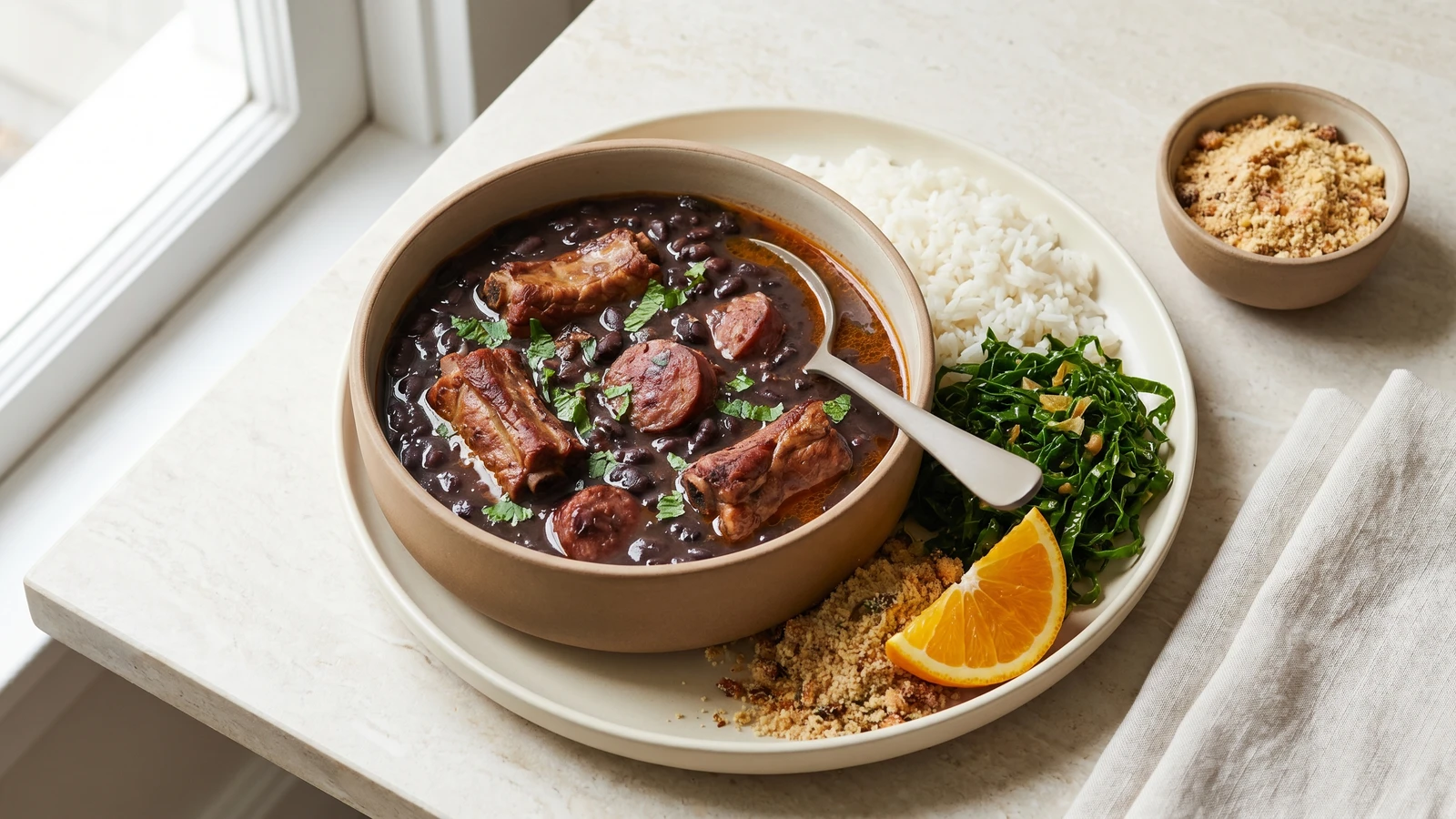
On the plate, it still comes back to the Brazilian arithmetic: arroz soltinho, feijão thick and glossy, meat cooked until it gives in, couve, farofa, orange. Sacred lineage on one side, home lunch on the other. Cozinhar não é dom, é um aprendizado. Anota aí and don't let fear do the shopping.
Ogum is the orixá associated in Candomblé with iron, tools, roads, and work; in Afro-Baiana ritual food, this black-bean feijoada belongs to him and is identified by black beans, meats, dendê, and macerated hortelã. The wider Bahia system that joins tabuleiro food and terreiro knowledge is carried by baianas de acarajé and by cooks inside the houses, and IPHAN inscribed the Ofício das Baianas de Acarajé in the Livro dos Saberes in 2005. This recipe teaches a respectful home cooking structure, not a ritual procedure, because the ritual belongs to the people and houses initiated into it.
Quantity
2 cups
picked over and soaked overnight
Quantity
10 cups, plus more as needed
Quantity
250 g, about 2 cups
desalted overnight and cut into 2.5 cm cubes
Quantity
250 g, about 2 cups
desalted if salty and cut into 2.5 cm cubes
Quantity
350 g, about 6 small ribs
cut between bones
Quantity
2 links, about 250 g or 2 cups
sliced 1/2-inch thick
Quantity
1 link, about 150 g or 1 cup
sliced 1/2-inch thick
Quantity
1 tablespoon
Quantity
2 tablespoons
divided
Quantity
1 large, about 1 1/2 cups
finely chopped
Quantity
6 cloves, about 2 tablespoons
minced
Quantity
2
Quantity
1/2 teaspoon
Quantity
1 packed cup
Quantity
1/4 teaspoon, plus more only if needed
Quantity
6 cups
for serving
Quantity
4 cups
for serving
Quantity
2 cups
for serving
Quantity
2
cut into wedges, for serving
| Ingredient | Quantity |
|---|---|
| dried black beanspicked over and soaked overnight | 2 cups |
| water | 10 cups, plus more as needed |
| carne seca (salted dried beef)desalted overnight and cut into 2.5 cm cubes | 250 g, about 2 cups |
| salted pork or smoked pork loindesalted if salty and cut into 2.5 cm cubes | 250 g, about 2 cups |
| pork ribs (costela)cut between bones | 350 g, about 6 small ribs |
| linguiça calabresasliced 1/2-inch thick | 2 links, about 250 g or 2 cups |
| paio (optional)sliced 1/2-inch thick | 1 link, about 150 g or 1 cup |
| neutral oil or lard | 1 tablespoon |
| azeite de dendêdivided | 2 tablespoons |
| onionfinely chopped | 1 large, about 1 1/2 cups |
| garlicminced | 6 cloves, about 2 tablespoons |
| bay leaves | 2 |
| freshly ground black pepper | 1/2 teaspoon |
| fresh hortelã leaves | 1 packed cup |
| coarse salt | 1/4 teaspoon, plus more only if needed |
| cooked white ricefor serving | 6 cups |
| sautéed couvefor serving | 4 cups |
| farofafor serving | 2 cups |
| orangescut into wedges, for serving | 2 |
Put the black beans in a large bowl and cover them with water by at least 3 inches. In a separate bowl, cover the carne seca and any salted pork with cold water, then refrigerate both bowls for 8 to 12 hours. Change the meat water 2 or 3 times. The bean soak helps them cook evenly and sit easier; the meat soak pulls out the excess salt so the pot tastes seasoned, not punished.
Drain the meats and pat them dry. Warm the neutral oil or lard in a heavy 6-liter pot over medium-high heat. Brown the costela, carne seca, and pork pieces in batches until they pick up deep brown patches, then move them to a plate. Brown the linguiça and paio last, just until the edges color, and keep them separate. Don't crowd the pot. If the pieces pile up, they release water, the pan cools down, and you're steaming grey meat instead of building flavor.
Drain the soaked beans and add them to the same pot with the browned costela, carne seca, pork pieces, bay leaves, and 10 cups water. Scrape the bottom as the water heats, because those brown bits are flavor you already paid for with patience. Bring to a boil, skim off any foam, then lower to a gentle simmer with the lid slightly open. The liquid should burble, not thrash around like it's angry.
Cook for about 1 hour and 15 minutes, stirring now and then and adding hot water if the beans peek above the surface. Add the browned linguiça and paio, then simmer 45 minutes to 1 hour more, until a bean crushes easily against the roof of your mouth and the ribs are tender. The sausages go in later because they need to season the pot, not surrender all their texture to it.
In a wide skillet, warm 1 tablespoon of the azeite de dendê over medium heat. Add the onion and cook until it murcha, soft and see-through, about 6 minutes. Add the garlic and black pepper and stir for 1 minute, just until you smell the garlic. This is the foundation, onion and garlic in real fat, not a packet pretending to be dinner. Burn the garlic and it turns bitter. Rush the onion and it tastes raw.
Scoop 1 cup of cooked beans and about 1/2 cup of their caldo into the refogado. Mash them right in the skillet with a spoon until they turn into a thick, dark paste, then scrape everything back into the big pot. Anota aí: mashed beans are what make the caldo creamy instead of watery. No powder, no trick, just the bean doing its own work.
Simmer the feijoada uncovered for 15 to 20 minutes, stirring the bottom so the thickened caldo doesn't catch. Taste only now before adding salt, because dried meats are loud and sometimes they keep talking. The caldo should look glossy and coat the spoon for a second before sliding off. If it's too salty, add a little hot water and simmer again. If it's thin, leave it uncovered and let the pot concentrate.
Put the hortelã leaves in a mortar or sturdy bowl with the coarse salt and 2 tablespoons of hot caldo from the pot. Mash until the leaves darken, bruise, and smell clean and sharp. Turn off the heat, stir in the remaining 1 tablespoon dendê, then stir in the macerated hortelã. Don't boil after this. Hortelã is the small herb that marks this pot, and boiling it flat would be a little kitchen crime.
Let the pot rest 15 minutes before serving so the fat settles, the caldo thickens, and the flavor stops running around. Serve with arroz branco soltinho, sautéed couve, farofa, and orange wedges. The sides aren't decoration. This is the pê-efe grown ceremonial for a day: rice, beans, meat, something green, and the orange cutting through the richness.
1 serving (about 635g)
Culinary guides, cultural storytelling, and the editorial depth that makes cooking meaningful.
Discover Culinary ExplorerChef Juliana
You think açaí belongs with banana and granola because that's the version that traveled. In Pará, thick unsweetened açaí sits beside shrimp, rice, and farinha. Anota aí: same fruit, different meal.

Chef Juliana
You think savory açaí is not for you. I understand. Then you taste the cold, dark bowl beside hot fried fish, rice, greens, and farinha, and dinner gets very quiet.

Chef Juliana
You think salted beef and rice sound like trouble. Anota aí: soak the charque, brown it properly, build the refogado, and this one pot resolves dinner.

Chef Juliana
You think a Maranhão green rice belongs to somebody else's clever hands. It doesn't. Wilt the vinagreira, build the refogado, fold it through arroz soltinho, and dinner gets bright, coastal, and yours.