Culinary Explorer

A cooking platform built around craft, culture, and the stories behind what we eat.
Discover Culinary Explorer
Farro con Miele e Noci

Farro con Miele e Noci

Created by

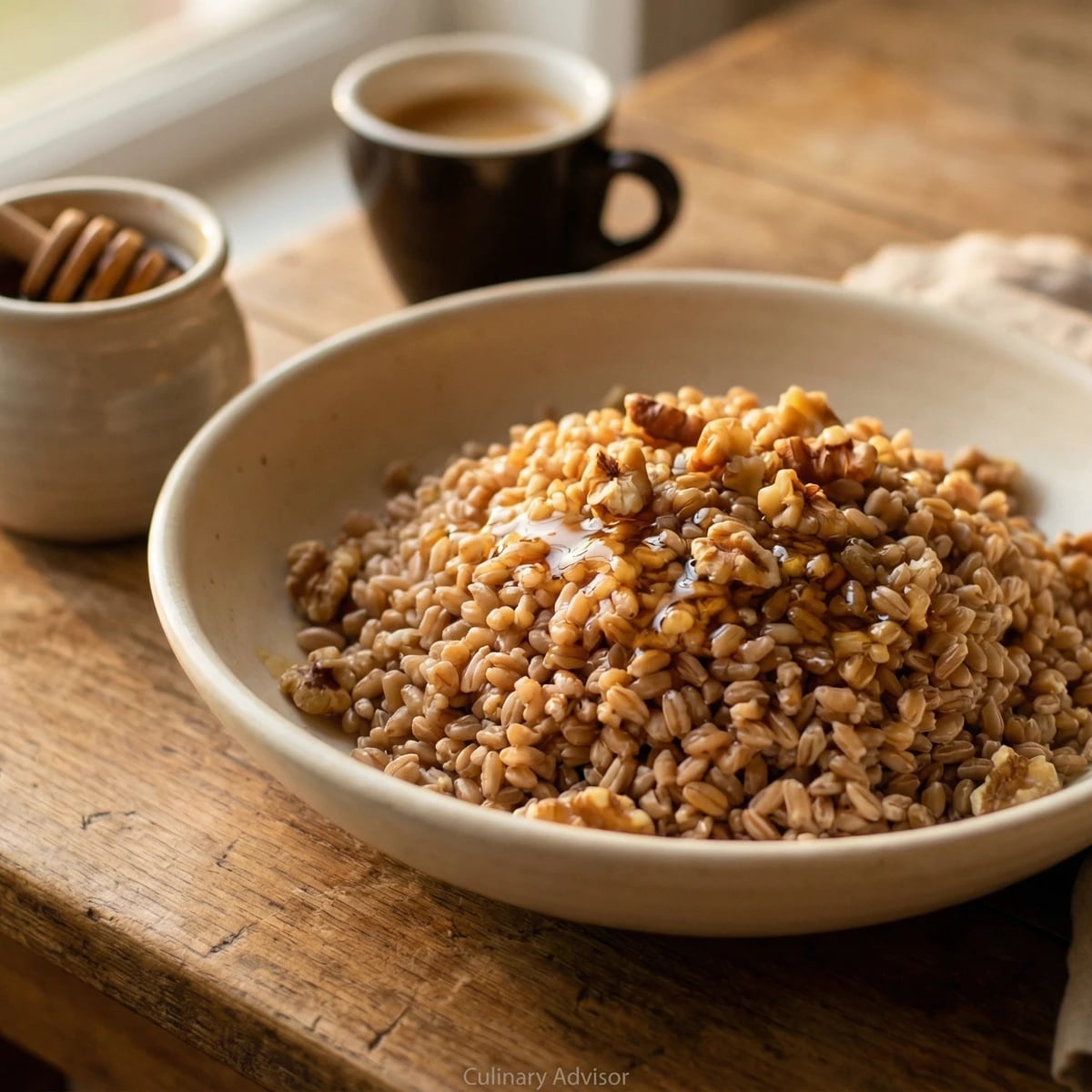
The grain that built Rome, simmered until tender with a pleasant resistance, finished with nothing but good honey and walnuts you have toasted yourself. Three ingredients. No pretense.

Breakfast & Brunch
Italian
Weeknight
Meal Prep
10 min
Active Time
35 min cook45 min total
Yield4 servings

Italian breakfast is not what Americans imagine. There are no stacks of pancakes, no elaborate productions. A caffè, perhaps a biscotto, bread with marmellata if you are hungry. This is how Italians have started their mornings for generations.

Farro is different. It is peasant food, the grain that sustained Roman legions and Umbrian farmers alike. Cooked simply in water until tender but never soft, it has a chewiness that oatmeal cannot match. The Italians call this texture 'al dente,' and it applies to grains as surely as to pasta.

I do not sweeten the cooking liquid. The honey comes at the end, drizzled over the warm grain so you taste it directly. The walnuts must be toasted. Raw walnuts are bitter and dull. Five minutes in a dry pan transforms them. This is not optional. What you keep out is as significant as what you put in: no cinnamon, no vanilla, no brown sugar. The farro tastes of the earth. The honey tastes of flowers. The walnuts taste of themselves. That is enough.

Farro sustained the Roman Empire. The legions carried it as their primary ration, boiling it into puls, a simple porridge that fueled the conquest of the Mediterranean world. The word 'farina' derives from farro, as does 'farine' in French. For centuries it was peasant food, nearly forgotten when wheat became dominant. Umbrian and Tuscan farmers preserved the tradition, and now the ancient grain has returned to Italian tables.

The technique, the tradition, and the story behind every dish.

Discover Culinary Explorer

Ingredients

semi-pearled farro

Quantity

1 cup

water

Quantity

3 cups

fine sea salt

Quantity

1/2 teaspoon

walnut halves

Quantity

1/2 cup

local honey

Quantity

4 tablespoons

milk (optional)

Quantity

warmed, for serving

Equipment Needed

  • Medium saucepan with lid
  • Fine-mesh strainer
  • Dry skillet for toasting nuts

Instructions

  1. 1

    Rinse the farro

    Place the farro in a fine-mesh strainer and rinse under cold running water for 30 seconds, agitating with your fingers. This removes surface starch and any dust from storage. Shake off excess water.

  2. 2

    Cook the grain

    Combine the rinsed farro, water, and salt in a medium saucepan. Bring to a boil over high heat, then reduce to a gentle simmer. Cook uncovered, stirring occasionally, until the farro is tender but retains a pleasant chewiness at the center, 25 to 30 minutes. The grains should not be mushy. They should have resistance when you bite them, the same quality you seek in properly cooked pasta.

    Semi-pearled farro has had some of its bran removed, which shortens cooking time. Whole farro requires soaking overnight and an hour of cooking. Pearled farro cooks in 15 minutes but loses flavor. Semi-pearled is the correct choice.
  3. 3

    Toast the walnuts

    While the farro simmers, place the walnuts in a dry skillet over medium heat. Shake the pan frequently. The nuts will begin to smell fragrant and turn golden in spots after 4 to 5 minutes. Remove them immediately when you smell toasting. They burn quickly once they begin. Let them cool slightly, then break them into rough pieces with your hands.

  4. 4

    Drain and serve

    When the farro is cooked, drain any remaining water. The grains should be moist but not swimming in liquid. Divide among four warm bowls. Scatter the toasted walnuts over each portion. Drizzle one tablespoon of honey over each bowl, letting it pool and run down the sides of the grain. Serve immediately. If you prefer a looser consistency, pour a little warmed milk around the edges.

Chef Tips

  • Seek out farro from Umbria or Tuscany if possible. Italian farro has more flavor than domestically grown varieties. Look for 'farro perlato' (pearled), 'semi-perlato' (semi-pearled), or 'decorticato' (whole). The semi-pearled balances convenience and nutrition.
  • Your honey matters enormously here. Industrial blends taste like sugar water. Find a local beekeeper, or buy honey that names a specific flower source: chestnut, acacia, millefiori. In Italy, chestnut honey with its slight bitterness would be traditional for this preparation.
  • The walnuts must be fresh. Stale walnuts are rancid and will ruin the dish. Store them in the freezer if you do not use them often. Taste one before you begin cooking.
  • This is not porridge. The farro should be distinct grains, not a thick paste. If your finished dish resembles American oatmeal, you have overcooked it.

Advance Preparation

  • Farro can be cooked up to three days ahead and refrigerated. Reheat gently with a splash of water. The texture holds better than most grains.
  • Toast the walnuts the day you plan to serve. They lose their crispness within hours.
  • For weekday mornings, cook a batch of farro on Sunday. Portion it into containers. Each morning, warm a portion, add fresh walnuts and honey. Five minutes from refrigerator to table.

Frequently Asked Questions

Nutrition Information

1 serving (about 160g)

Calories
295 calories
Total Fat
9 g
Saturated Fat
1 g
Trans Fat
0 g
Unsaturated Fat
8 g
Cholesterol
0 mg
Sodium
290 mg
Total Carbohydrates
51 g
Dietary Fiber
4 g
Sugars
18 g
Protein
8 g

Note: Chef personas and recipes are created with AI assistance. Cook with care: follow safe food-handling practices, check doneness with a thermometer when needed, and adapt for allergies and your kitchen.

Where cooking meets culture.

Culinary guides, cultural storytelling, and the editorial depth that makes cooking meaningful.

Discover Culinary Explorer

More from Chef Graziella's Breakfast and Brunch

Browse the full collection