
Chef Klaus
Ähzezupp (Kölsche Erbsensuppe)
The Cologne pea pot earns its depth from soaked peas and cured pork bone, simmered slowly until the soup thickens itself and the meat falls clean from the knuckle.
A cooking platform built around craft, culture, and the stories behind what we eat.
Created by
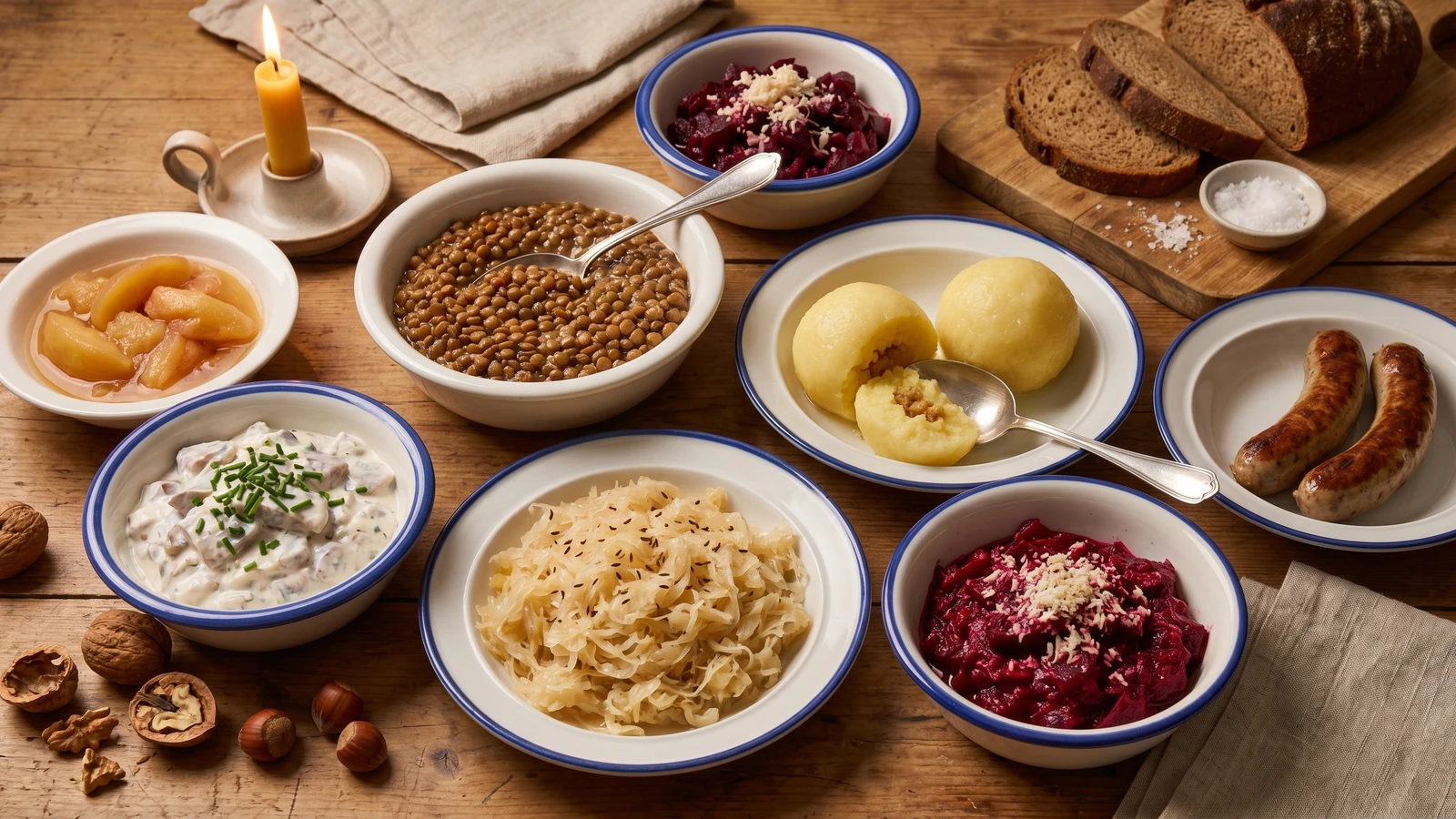
The Ore Mountain Christmas Eve table in nine small parts: lentils, kraut, dumpling, sausage, herring, beet, bread, apple, and nuts, each one a wish made from the winter larder.
Erzgebirgisches Neunerlei belongs to Christmas Eve in the Saxon Erzgebirge, the mining hills where winter food came from the cellar, crock, smoke, and pantry. It is nine foods, not nine courses: lentils, sauerkraut, a Knödel, meaning dumpling, Bratwurst, herring salad, beet, bread and salt, apple compote, and nuts here. Poverty made a feast, and the table counted luck in small bowls.
Every house argues about the list. Around Annaberg one family wants herring, another carp; one makes raw-potato grüne Klöße, another cooked-potato Klöße; celery appears in one valley and red beet in the next. Im Norden anders, im Süden anders, and in the Erzgebirge sometimes one village over is enough. Das ist kein Bierzelt.
The technique that decides it is order. Cook the lentils and kraut first because they improve as they sit, shape the dumplings only once the potatoes have cooled, and fry the sausage last because a held Bratwurst turns leathery while a rested lentil only gets better. Keep the cold things cold and the warm things warm. Mix everything in one pot and you've made confusion, not Neunerlei.
I watch the lentils for tenderness before acid, because vinegar tightens the skins; I watch the dumpling water so it trembles, not boils, because a hard boil knocks the starch loose; and I taste the kraut at the end, sour, apple-sweet, and salted properly. Weggeworfen wird nichts, the kraut liquor and lentil broth stay on the table. Schön ist, was schmeckt.
Neunerlei is recorded as a Christmas Eve custom of the Saxon Erzgebirge in 19th and early 20th century folk-life accounts, especially in mining towns where Heiligabend food drew from stored roots, cabbage crocks, preserved fish, sausage, bread, and nuts. The number nine, three times three, carried protective folk meaning, and each food held a wish for the new year: lentils or peas for small coins, dumplings for larger fortune, sauerkraut for health, bread and salt for enough in the house. There was never one official list; family and village versions still split over herring or carp, beet or celery, cooked potato dumplings or grüne Klöße.
Quantity
250g
rinsed
Quantity
1 small
finely diced
Quantity
1
finely diced
Quantity
1 tablespoon
Quantity
750ml
beef, pork, or vegetable
Quantity
1
Quantity
1 teaspoon
Quantity
1 tablespoon
Quantity
600g
drained but not rinsed
Quantity
1 small
thinly sliced
Quantity
1
grated
Quantity
1 teaspoon
Quantity
150ml
Quantity
50g
Quantity
800g
Quantity
100g
plus more if needed
Quantity
1
Quantity
20g
softened
Quantity
to taste
Quantity
4
Quantity
1 teaspoon
Quantity
200g
diced
Quantity
1
finely diced
Quantity
2
finely diced
Quantity
1 small
finely diced and soaked in cold water
Quantity
100g
Quantity
1 teaspoon
Quantity
1 tablespoon
snipped
Quantity
300g
diced
Quantity
1 tablespoon
Quantity
1 teaspoon
grated
Quantity
1 teaspoon
Quantity
4
cut into wedges
Quantity
100ml
Quantity
1 small
Quantity
1 tablespoon
Quantity
4 thick slices
Quantity
1 teaspoon
Quantity
80g
| Ingredient | Quantity |
|---|---|
| brown or green lentilsrinsed | 250g |
| onion for lentilsfinely diced | 1 small |
| carrotfinely diced | 1 |
| rapeseed oil or lard | 1 tablespoon |
| stockbeef, pork, or vegetable | 750ml |
| bay leaf | 1 |
| medium German mustard | 1 teaspoon |
| cider vinegar or white wine vinegar | 1 tablespoon |
| sauerkrautdrained but not rinsed | 600g |
| onion for krautthinly sliced | 1 small |
| tart applegrated | 1 |
| caraway seeds | 1 teaspoon |
| stock or water for kraut | 150ml |
| smoked pork rind or bacon end (optional) | 50g |
| floury potatoes | 800g |
| potato starchplus more if needed | 100g |
| egg | 1 |
| buttersoftened | 20g |
| salt and nutmeg | to taste |
| fresh pork Bratwurst | 4 |
| lard or rapeseed oil for frying | 1 teaspoon |
| cured herring filletsdiced | 200g |
| sour apple for herring saladfinely diced | 1 |
| pickled cucumbersfinely diced | 2 |
| onion for herring saladfinely diced and soaked in cold water | 1 small |
| sour cream | 100g |
| cucumber brine or vinegar | 1 teaspoon |
| chivessnipped | 1 tablespoon |
| cooked beetrootdiced | 300g |
| cider vinegar for beets | 1 tablespoon |
| fresh horseradishgrated | 1 teaspoon |
| rapeseed oil for beets | 1 teaspoon |
| firm storage applescut into wedges | 4 |
| apple juice or water | 100ml |
| cinnamon stick | 1 small |
| sugar | 1 tablespoon |
| dark rye bread | 4 thick slices |
| coarse salt | 1 teaspoon |
| walnuts or hazelnuts | 80g |
Set out the nine parts before you cook: lentils, sauerkraut, potato dumplings, Bratwurst, herring salad, beet salad, apple compote, rye bread with salt, and nuts. This is the discipline of Neunerlei. The warm dishes can wait gently, the cold dishes must stay cold, and the sausage comes last because its skin goes slack if you hold it too long.
Warm the oil or lard in a heavy pot and soften the diced onion and carrot until they smell sweet, not browned. Add the lentils, bay leaf, and stock, then simmer 30 to 35 minutes until the lentils are tender but not split. Keep the vinegar and mustard out until the lentils are soft, because acid tightens the skins and makes you wait for no good reason.
Put the sauerkraut, sliced onion, grated apple, caraway, stock or water, and the smoked rind if using into a second pot. Cover and simmer 35 to 45 minutes, stirring now and then, until the cabbage is soft and glossy. Do not rinse the kraut; the sourness is the point, and the apple gives it roundness without turning it sweet. Weggeworfen wird nichts, so the cooking liquor stays with it.
Boil the floury potatoes in their skins until a knife slides through cleanly, then peel them while hot and push them through a ricer. Spread the potato out and let it cool completely before the egg goes near it. Hot potato keeps cooking the egg and weeps starch, so the dough turns to glue. Cold potato holds its shape in the water.
Mix the cooled potato with the starch, egg, softened butter, salt, and a little nutmeg, then shape eight small Klöße, meaning dumplings, with damp hands. Drop one test dumpling into salted water that trembles but does not boil. If it holds, cook the rest 12 to 15 minutes; if it frays, work in another spoon of starch. A rolling boil beats the surface apart, and then the dumpling is not wrong, the water is.
Drain the soaked onion well, then mix it with the diced herring, sour apple, pickled cucumbers, sour cream, cucumber brine, chives, and black pepper. Keep it cold until the table is ready. The onion soaking matters because it pulls out the raw bite while leaving the crunch, so the herring stays the main thing.
Toss the cooked beetroot with vinegar, horseradish, rapeseed oil, and a pinch of salt. Let it stand at least 15 minutes. The acid sharpens the stored root and keeps the red clean, while the horseradish gives winter food a little bite without pretending spring has arrived.
Put the apple wedges in a small pan with apple juice or water, the cinnamon stick, and sugar. Simmer 8 to 10 minutes until the edges soften but the wedges still hold. Stored apples collapse quickly once they give up their juice, so stop before you have sauce unless sauce is what you meant to cook.
Cook the Bratwurst in a little lard or oil over medium-low heat, turning often, until the skins are brown and the centres are cooked through, about 12 to 15 minutes. Runter mit der Temperatur. High heat splits the casing before the middle is done, and then all the good fat runs into the pan instead of staying in the sausage.
Stir the mustard and vinegar into the tender lentils, then taste for salt; season the kraut only after it has cooked down, because its salt concentrates in the pot. Set down the lentils, kraut, dumplings, and sausage warm, with the herring and beets cold, the apple compote beside them, and rye bread, salt, and nuts to complete the nine. Würzen, Fett, Salz zum Schluss. Season at the end and the table tastes alive, not tired.
1 serving (about 1250g)
Culinary guides, cultural storytelling, and the editorial depth that makes cooking meaningful.
Discover Culinary ExplorerChef Klaus
The Cologne pea pot earns its depth from soaked peas and cured pork bone, simmered slowly until the soup thickens itself and the meat falls clean from the knuckle.

Chef Klaus
The Allgäu's Alpine cheese soup works only if the Bergkäse melts gently off the heat, where it turns smooth instead of stringy.

Chef Klaus
A firm egg dough, grated into tiny crumbs and cooked in clear broth: Allgäu kitchen thrift, warm in the bowl, and finished only when the Riebele keep their bite.

Chef Klaus
The Altmark wedding broth is a clear soup with no tricks: bones for depth, patient skimming for clarity, and small semolina dumplings that make it festive.