Chef Dimitra
Aegean Islands Ladolemono (Λαδολέμονο)
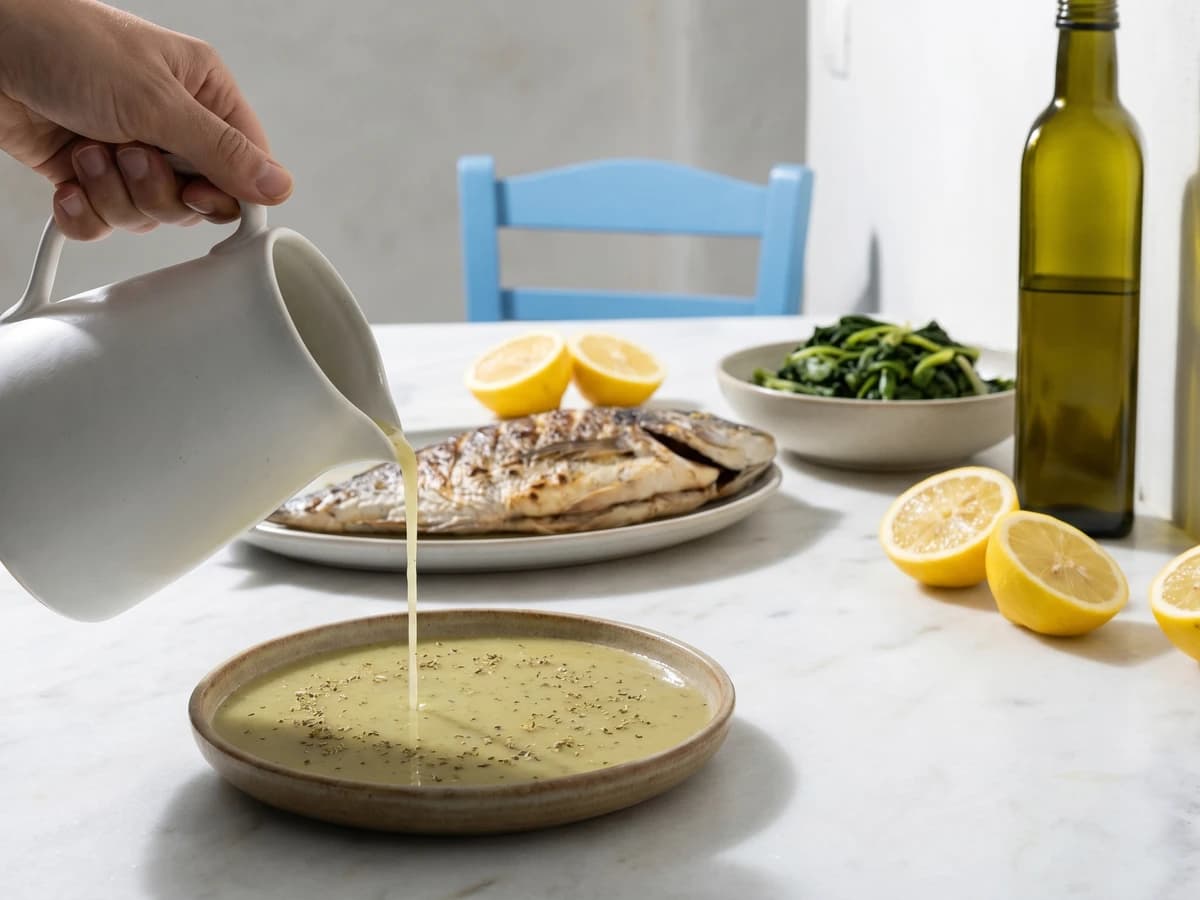
Aegean ladolemono is the quick oil-and-lemon sauce for grilled fish, boiled greens, and potatoes: cloudy when beaten hard, sharp enough to wake everything it touches on the plate.
A cooking platform built around craft, culture, and the stories behind what we eat.

Created by
Epirus avgolemono is egg, lemon and hot broth turned into a pale, silky sauce for dolmades, soups and fricassee. The whole dish depends on slow tempering.
Avgolemono in Epirus is the pale egg-lemon sauce that finishes stuffed vine leaves, cabbage rolls, chicken soup, and pork with greens. It isn't a garnish. It is the last movement of the pot, turning good broth into something bright, thick, and tender on the tongue.
The method is simple, and it is the one thing you must respect. Hot broth goes into the beaten eggs and lemon a ladle at a time, whisking all the while. Warm the eggs slowly and they thicken like silk. Pour them straight into a boiling pot and they scramble on contact. That's the whole trick.
Use broth that already tastes like something. Avgolemono doesn't hide a weak pot. It carries it. In my Thessaloniki kitchen I use it the way Epirote cooks do, over lachanodolmades or spooned into a clean chicken broth, and I write the amounts down because a sauce this delicate should not be left to luck.
Avgolemono is a Greek egg-lemon liaison found across the country, but in Epirus it is especially tied to stuffed leaves, cabbage rolls, and meat-and-greens stews, where it turns the cooking liquor into sauce. Egg-and-acid sauces also appear in the wider Byzantine, Ottoman, and Sephardic kitchens, which helps explain why similar preparations survived around the eastern Mediterranean under different names. In Greek homes, the defining point remained practical: eggs, lemon, and the broth already in the pot.
Quantity
2
at room temperature
Quantity
60ml
strained
Quantity
360ml
from chicken, vegetables, dolmades, or fricassee
Quantity
1/2 teaspoon
or to taste
Quantity
1/4 teaspoon
| Ingredient | Quantity |
|---|---|
| large eggsat room temperature | 2 |
| fresh lemon juicestrained | 60ml |
| hot broth or cooking liquorfrom chicken, vegetables, dolmades, or fricassee | 360ml |
| fine sea saltor to taste | 1/2 teaspoon |
| freshly ground white pepper (optional) | 1/4 teaspoon |
Bring the broth or cooking liquor just below a simmer, then take it off the heat. Taste it before you begin. If the broth is thin or flat, the avgolemono will be thin and flat too. Good olive oil, and patience, yes, but here the broth is the backbone.
Whisk the eggs in a medium bowl until the yolks and whites are completely joined and a little pale. Add the strained lemon juice and whisk again until the mixture is smooth.
Add one ladle of hot broth to the egg-lemon mixture in a thin stream, whisking constantly. Add two more ladles the same way. Hot broth into the eggs, not eggs into the pot. This slow warming is what keeps the sauce silky instead of scrambled.
Pour the tempered mixture back into the saucepan with the remaining broth. Set it over very low heat and stir constantly for 2 to 4 minutes, until the sauce coats the back of a spoon. Do not let it boil. The surface should look glossy and pale, with the lemon smell clean and bright.
Take the pan off the heat, season with salt and white pepper if using, and spoon the avgolemono over dolmades, lachanodolmades, chicken, fish soup, or pork with celery. Serve at once. It holds its grace while warm, not after a long wait.
1 serving (about 75g)
Culinary guides, cultural storytelling, and the editorial depth that makes cooking meaningful.
Discover Culinary ExplorerChef Dimitra
Aegean ladolemono is the quick oil-and-lemon sauce for grilled fish, boiled greens, and potatoes: cloudy when beaten hard, sharp enough to wake everything it touches on the plate.
Chef Dimitra
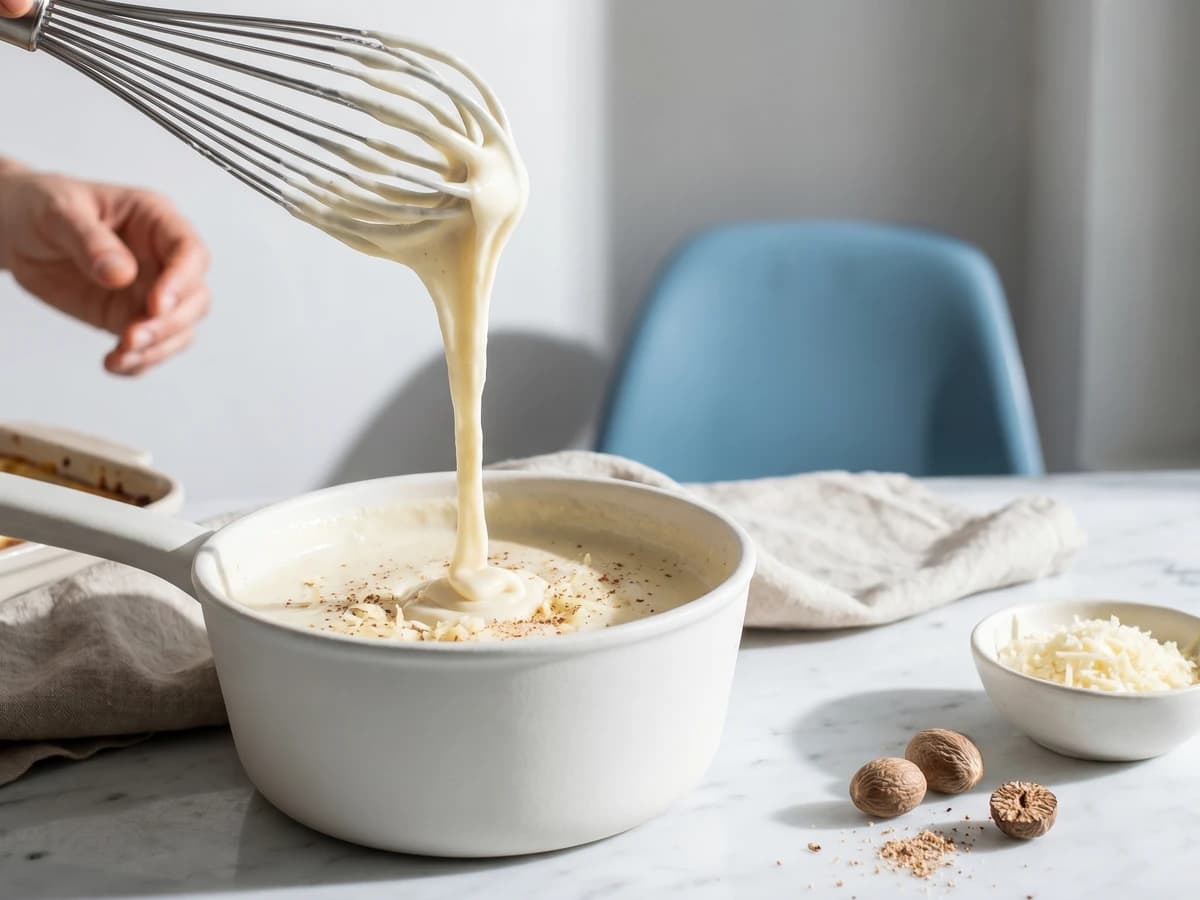
Athens gave Greek baking this thick white crown: a cooked butter-flour sauce enriched with eggs and cheese for moussaka, pastitsio, and the Sunday pan.
Chef Dimitra
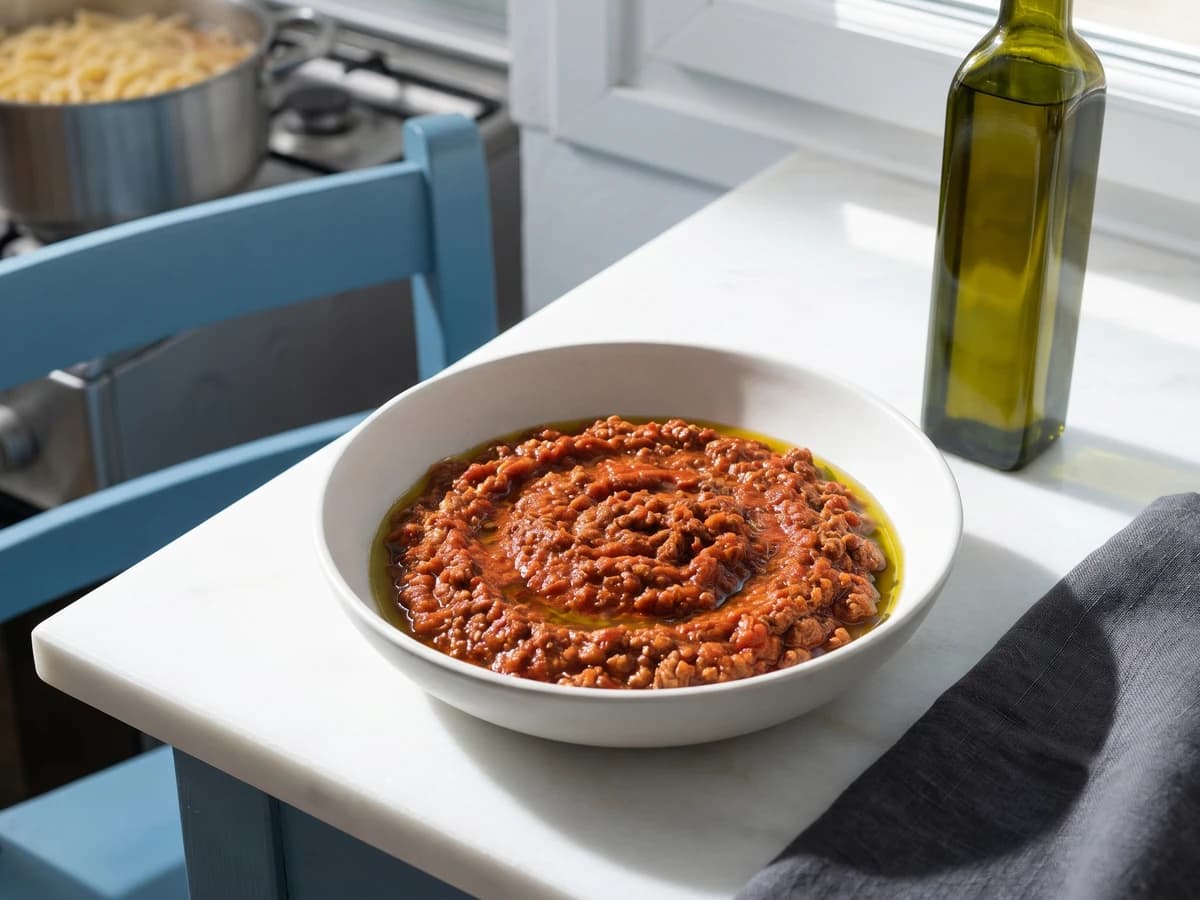
Athenian saltsa kima is minced beef, tomato, cinnamon, and allspice, cooked slowly until the sauce tightens and the green-gold oil pools at the top.
Chef Dimitra
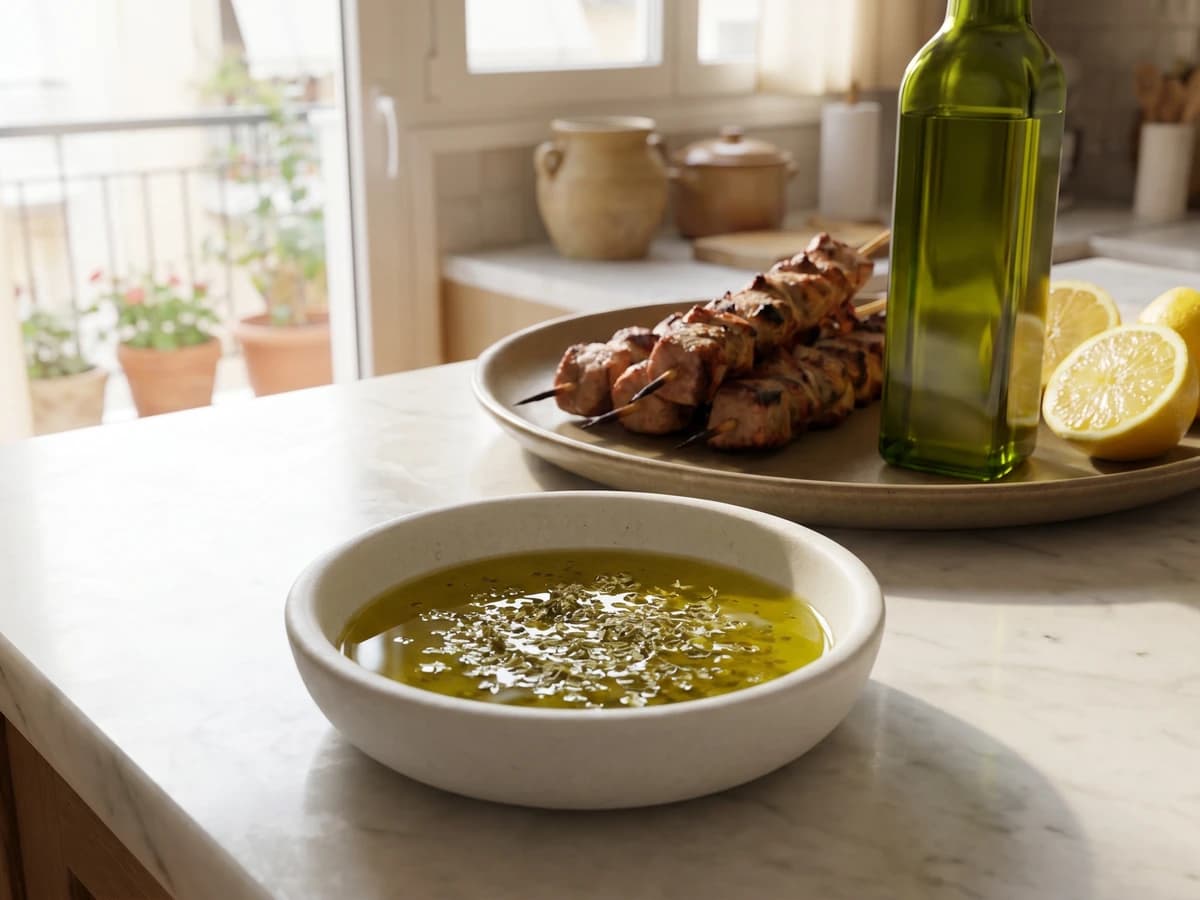
Attica's quick ladorigani is the oil, lemon, and oregano dressing that makes souvlaki taste like souvlaki. Bruise the rigani first, then let good olive oil do its work.