Chef Dimitra
Aegean Islands Ladolemono (Λαδολέμονο)
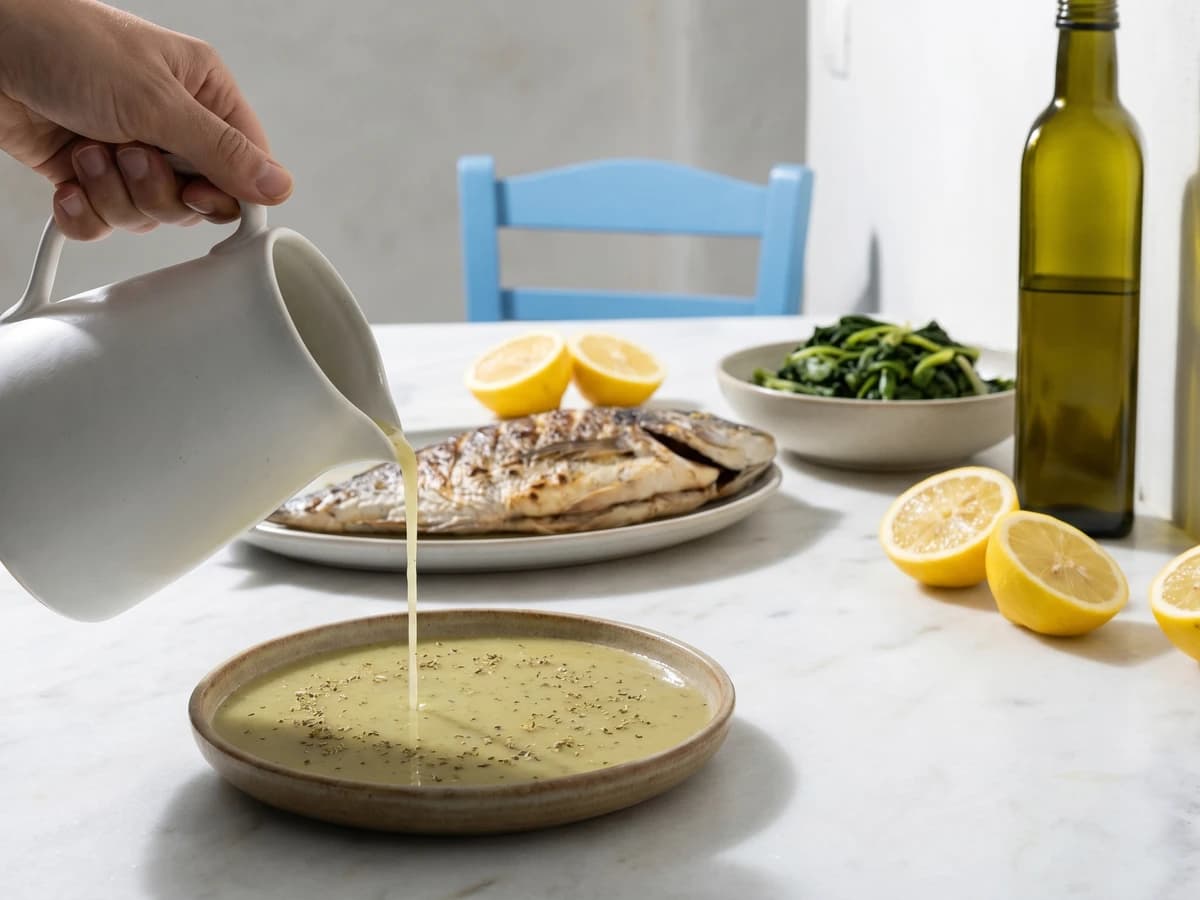
Aegean ladolemono is the quick oil-and-lemon sauce for grilled fish, boiled greens, and potatoes: cloudy when beaten hard, sharp enough to wake everything it touches on the plate.
A cooking platform built around craft, culture, and the stories behind what we eat.

Created by
Athens gave Greek baking this thick white crown: a cooked butter-flour sauce enriched with eggs and cheese for moussaka, pastitsio, and the Sunday pan.
Athenian besamel is the white crown of moussaka and pastitsio, thick enough to sit high over eggplant or pasta and brown in soft golden patches. It isn't the old village sauce of Greece. It is the urban loan that Athens adopted, stiffened with eggs and cheese, and made its own for the Sunday table.
The whole sauce rests on the roux, butter and flour cooked together before the milk goes in. Leave the flour raw and the finished besamel keeps that dull paste taste under the nutmeg. Cook it for two honest minutes, only to pale blond, and the sauce turns smooth, mild, and ready to carry kefalotyri without becoming heavy.
I use it generously. A thin smear is for timid casseroles, not for pastitsio. Make it warm, spread it at once, and let the oven set it into a soft layer you can cut cleanly. Your grandmother cooked by eye because she'd made it a thousand times. Here are the numbers until you have.
Greek besamel entered the household record through early twentieth-century urban cookery, especially the Athens cookbooks of Nikolaos Tselementes, whose 1910s and 1920s work brought French sauces into Greek domestic kitchens. The Greek version became thicker than the French mother sauce, often enriched with eggs and grated hard cheese so it could crown baked dishes such as moussaka and pastitsio. Its spread marks a clear divide between older regional bakes and the newer Athenian style that became standard across the country.
Quantity
100g
Quantity
100g
Quantity
1 litre
warmed
Quantity
1/2 teaspoon
Quantity
1/4 teaspoon
Quantity
1/4 teaspoon
Quantity
2
beaten
Quantity
80g
grated
| Ingredient | Quantity |
|---|---|
| unsalted butter | 100g |
| plain flour | 100g |
| whole milkwarmed | 1 litre |
| fine sea salt | 1/2 teaspoon |
| freshly grated nutmeg | 1/4 teaspoon |
| white pepper | 1/4 teaspoon |
| large eggsbeaten | 2 |
| kefalotyri or graviera cheesegrated | 80g |
Set the milk over low heat until it feels hot but is not boiling. Keep it nearby. Cold milk thrown into hot roux makes the sauce fight you with lumps, and we have better things to do.
Melt the butter in a heavy saucepan over medium heat. Add the flour all at once and whisk for 2 to 3 minutes, until the paste smells gently nutty and turns pale blond. This is the method that decides the sauce: cook the flour in the butter first, or the besamel tastes of raw paste no matter how much cheese you add.
Pour in the warm milk a ladle at a time at first, whisking hard until each addition is smooth. Once the base loosens, add the rest in a steady stream. Keep whisking until the sauce thickens enough to coat the spoon, 6 to 8 minutes.
Lower the heat and whisk in the salt, nutmeg, and white pepper. Taste now, before the eggs go in. The sauce should be mild but not flat, because it has to sit above spiced mince and pasta or eggplant without disappearing.
Take the pan off the heat. Whisk a cup of the hot sauce into the beaten eggs, then pour that mixture back into the pan, whisking all the time. Stir in the grated cheese until melted. The besamel should fall from the whisk in thick ribbons, smooth, glossy, and heavy enough to sit on top of a casserole.
Spread the besamel while it is still warm. Spoon it over pastitsio or moussaka and smooth it gently to the edges, then bake until the top is set and golden in patches. If it waits too long in the pan, press parchment directly on the surface so it doesn't form a skin.
1 serving (about 110g)
Culinary guides, cultural storytelling, and the editorial depth that makes cooking meaningful.
Discover Culinary ExplorerChef Dimitra
Aegean ladolemono is the quick oil-and-lemon sauce for grilled fish, boiled greens, and potatoes: cloudy when beaten hard, sharp enough to wake everything it touches on the plate.
Chef Dimitra
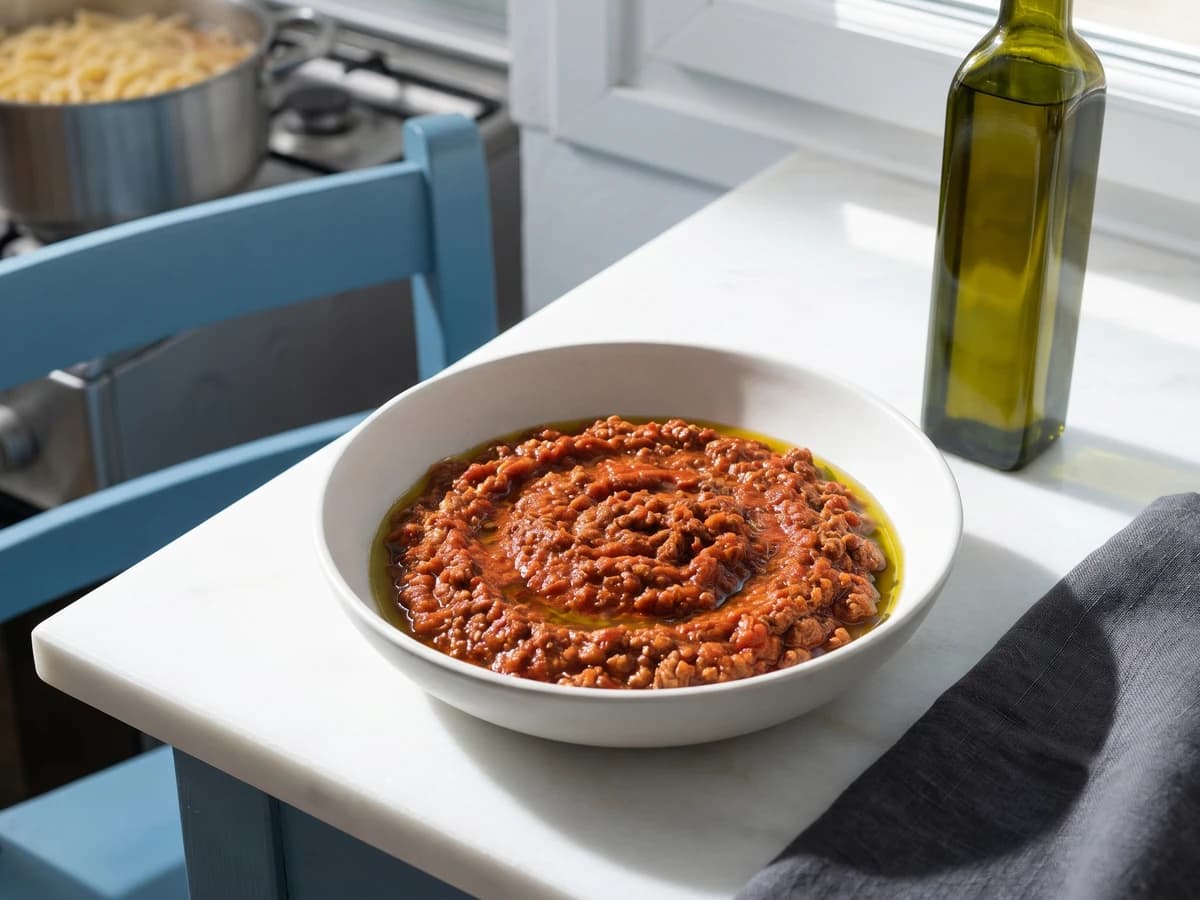
Athenian saltsa kima is minced beef, tomato, cinnamon, and allspice, cooked slowly until the sauce tightens and the green-gold oil pools at the top.
Chef Dimitra
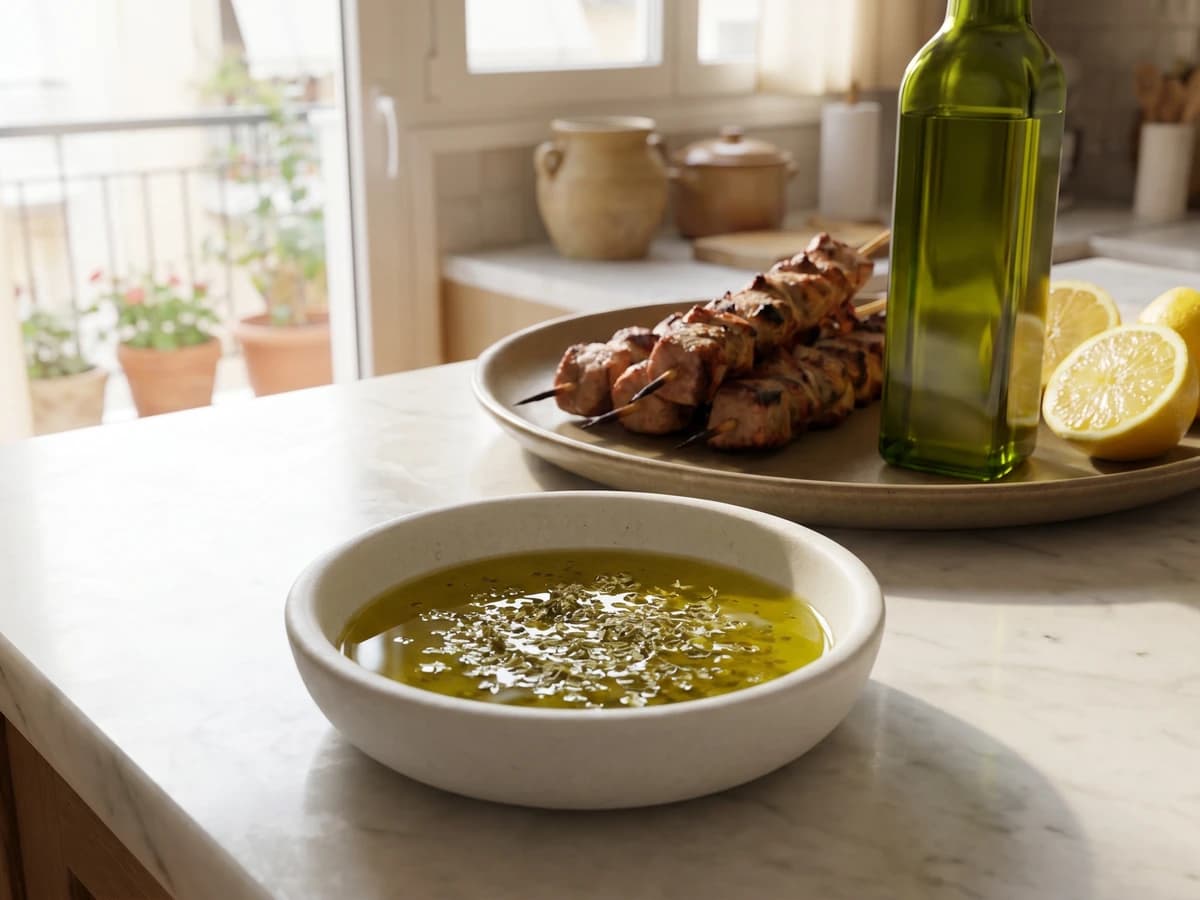
Attica's quick ladorigani is the oil, lemon, and oregano dressing that makes souvlaki taste like souvlaki. Bruise the rigani first, then let good olive oil do its work.
Chef Dimitra
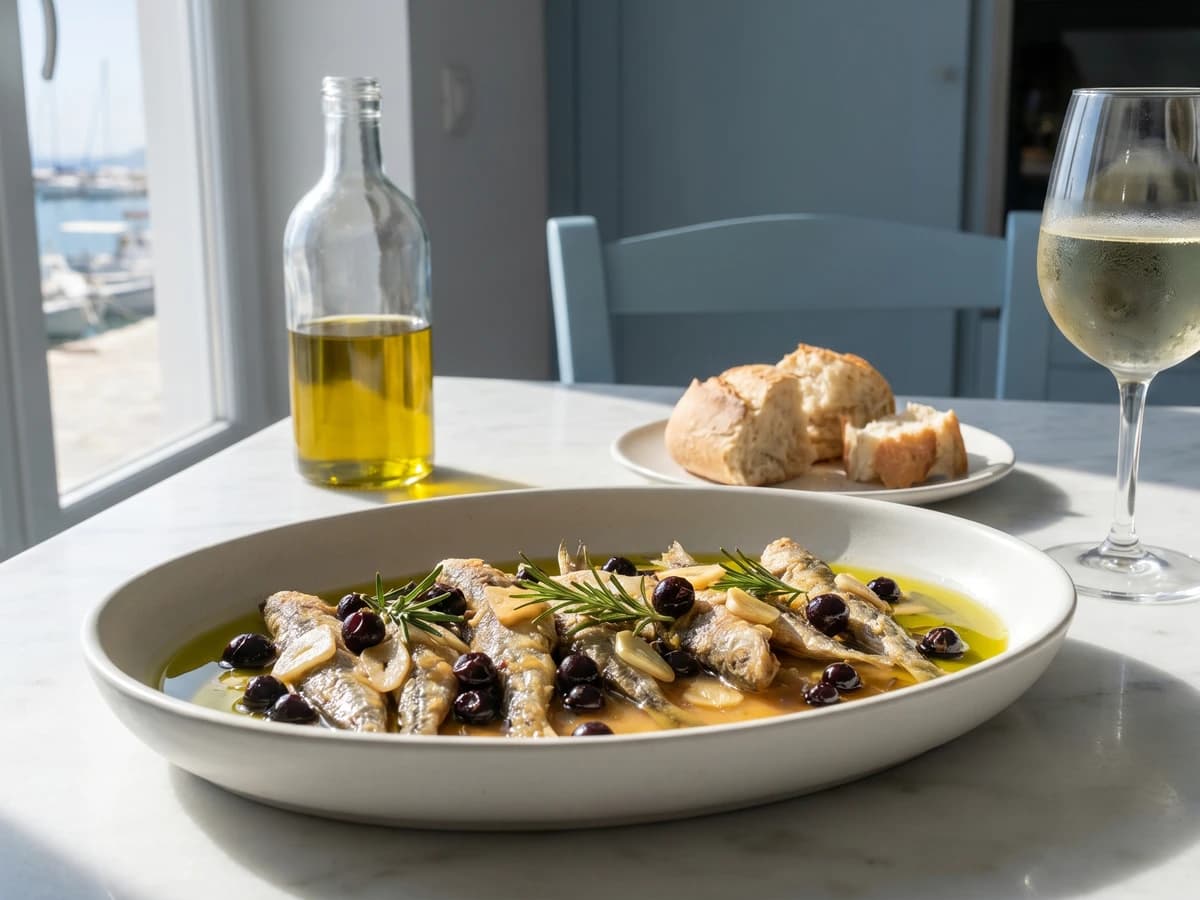
Corfu's savoro is fried small fish steeped in vinegar, rosemary, garlic and black currants, made ahead until the oil, acid and sweetness settle into one bright Ionian sauce.