Chef Dimitra
Aegean Islands Ladolemono (Λαδολέμονο)
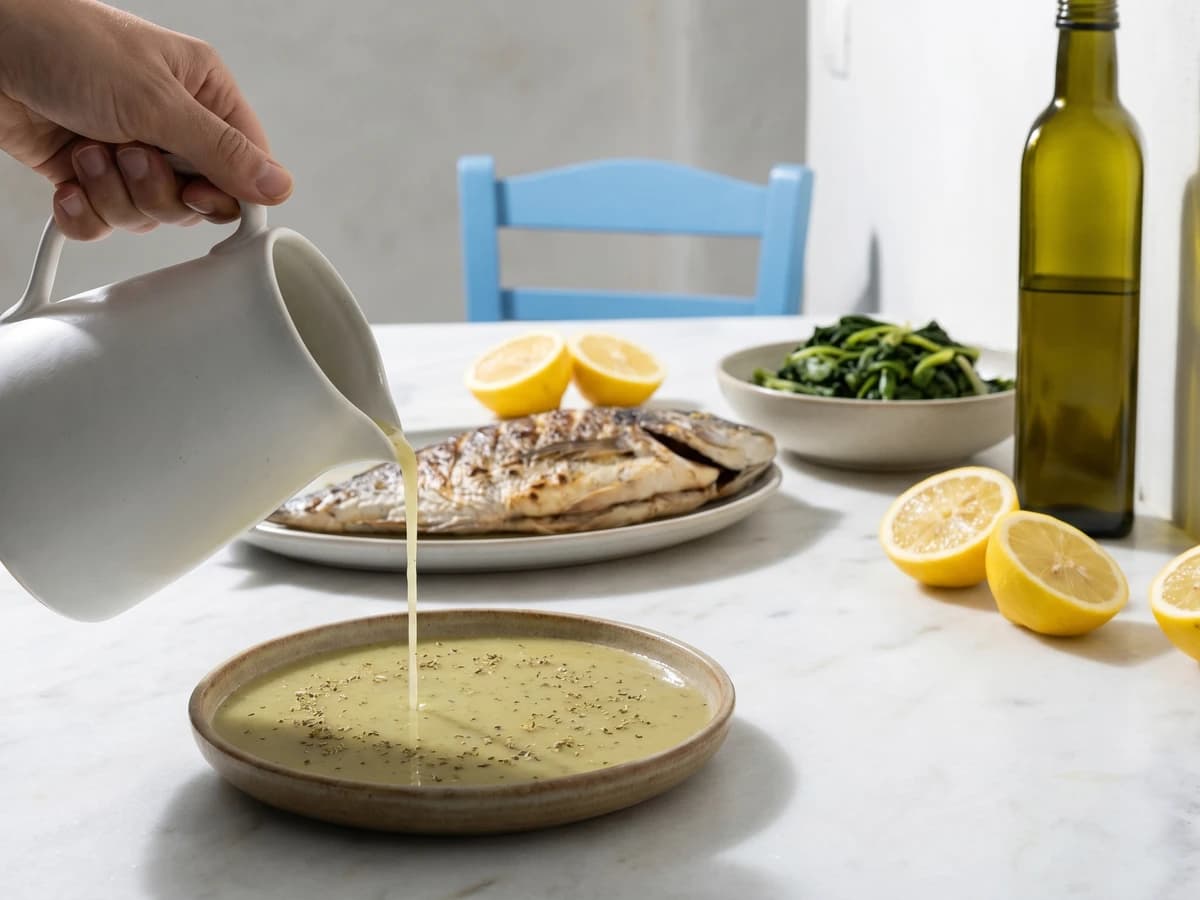
Aegean ladolemono is the quick oil-and-lemon sauce for grilled fish, boiled greens, and potatoes: cloudy when beaten hard, sharp enough to wake everything it touches on the plate.
A cooking platform built around craft, culture, and the stories behind what we eat.
Created by
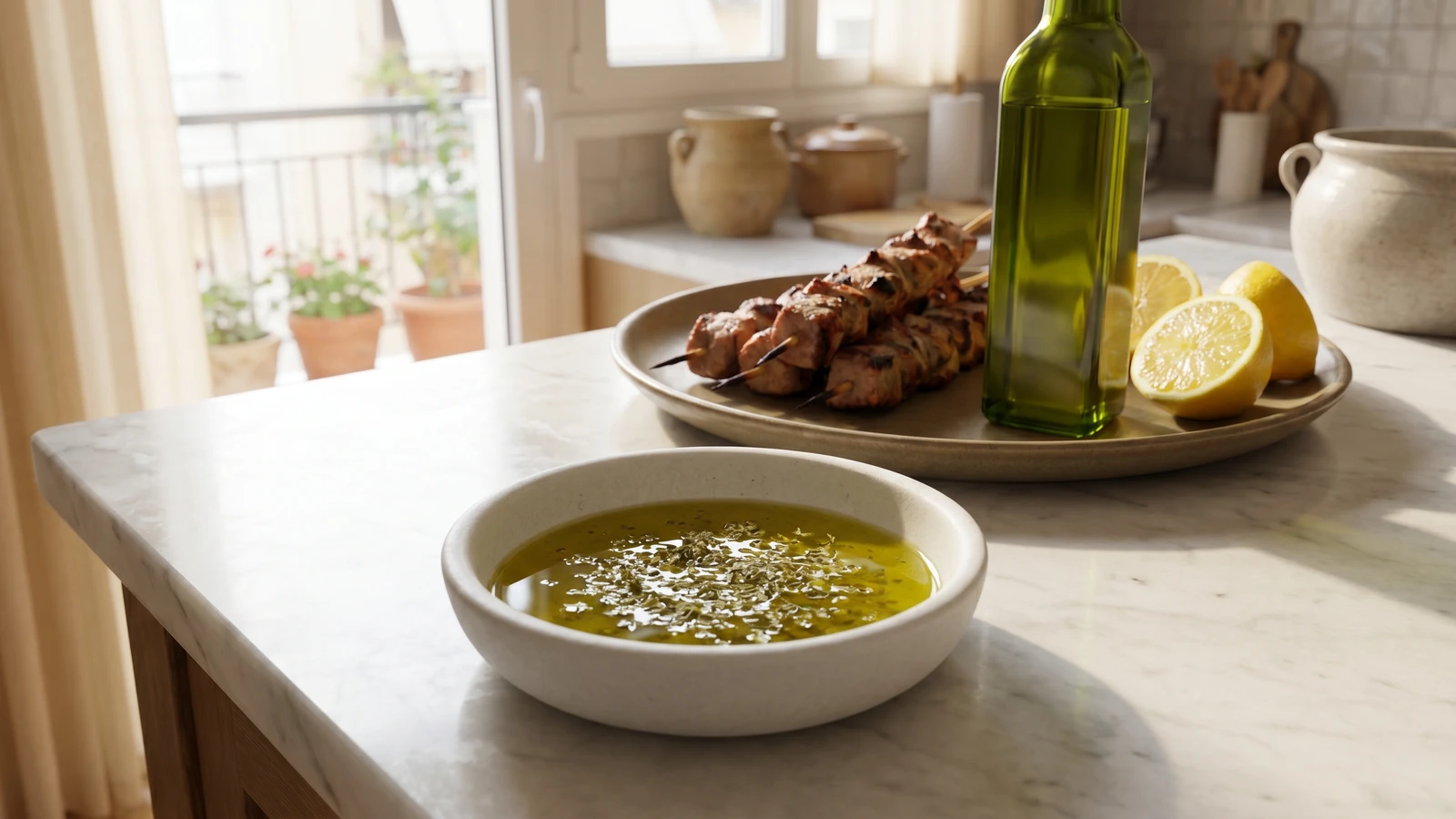
Attica's quick ladorigani is the oil, lemon, and oregano dressing that makes souvlaki taste like souvlaki. Bruise the rigani first, then let good olive oil do its work.
Attica's ladorigani is the green-gold dressing of the grill: olive oil, lemon, dried oregano, a little garlic, salt, and nothing theatrical. It belongs to souvlaki shops, seaside tavernas, and home balconies where the grill is small but the appetite is not.
What makes it itself is the oregano. Rub the dried rigani between your palms before you mix it, until the smell rises. If you throw whole dry leaves into oil, they sit there politely and give almost nothing. Bruise them first and the sauce wakes up.
Use it as a short marinade and a finishing spoon, not a long bath. Twenty to thirty minutes is enough for meat or vegetables before the fire, then more ladorigani after grilling, when the hot surface drinks the oil and lemon. Your grandmother cooked by eye because she'd made it a thousand times. Here are the numbers until you have.
Ladorigani is named plainly from ladi, oil, and rigani, oregano, and it belongs especially to the Greek grill table of the mainland and Attica's souvlaki culture. Its older form is less a bottled marinade than a last-minute dressing spooned over grilled meat, fish, potatoes, and vegetables. The lemon became central where fresh citrus was daily kitchen acid; inland versions often lean harder on vinegar when lemons are scarce.
Quantity
160ml
Quantity
60ml
Quantity
1 tbsp
Quantity
2 tbsp
rubbed between the palms
Quantity
1 small
finely grated
Quantity
1 tsp
Quantity
1/2 tsp
| Ingredient | Quantity |
|---|---|
| extra virgin Koroneiki olive oil | 160ml |
| fresh lemon juice | 60ml |
| red wine vinegar | 1 tbsp |
| dried Greek oregano (rigani)rubbed between the palms | 2 tbsp |
| garlic clovefinely grated | 1 small |
| fine sea salt | 1 tsp |
| freshly ground black pepper | 1/2 tsp |
Put the dried oregano in your palm and rub it hard between both hands over the bowl until it breaks into smaller flakes and smells sharp. This is the step that decides the sauce. Dried rigani carries its perfume in little oil pockets, and bruising it before it hits the liquid gives you the taste people remember from souvlaki, not dusty green specks.
Add the lemon juice, red wine vinegar, grated garlic, salt, and pepper to the oregano. Stir and let it stand for 3 minutes, just enough for the salt to dissolve and the oregano to soften a little.
Pour in the olive oil in a thin stream while whisking. It won't become a thick sauce, and it shouldn't. Ladorigani is loose, glossy, and spoonable, made to cling to hot grilled meat, fish, mushrooms, or potatoes.
For pork, chicken, lamb, or vegetables, spoon half over the food 20 to 30 minutes before grilling, then brush or drizzle the rest on after it comes off the fire. Don't leave meat in the lemon for hours. It turns the surface woolly, and then no charcoal can save it.
1 serving (about 60g)
Culinary guides, cultural storytelling, and the editorial depth that makes cooking meaningful.
Discover Culinary ExplorerChef Dimitra
Aegean ladolemono is the quick oil-and-lemon sauce for grilled fish, boiled greens, and potatoes: cloudy when beaten hard, sharp enough to wake everything it touches on the plate.
Chef Dimitra
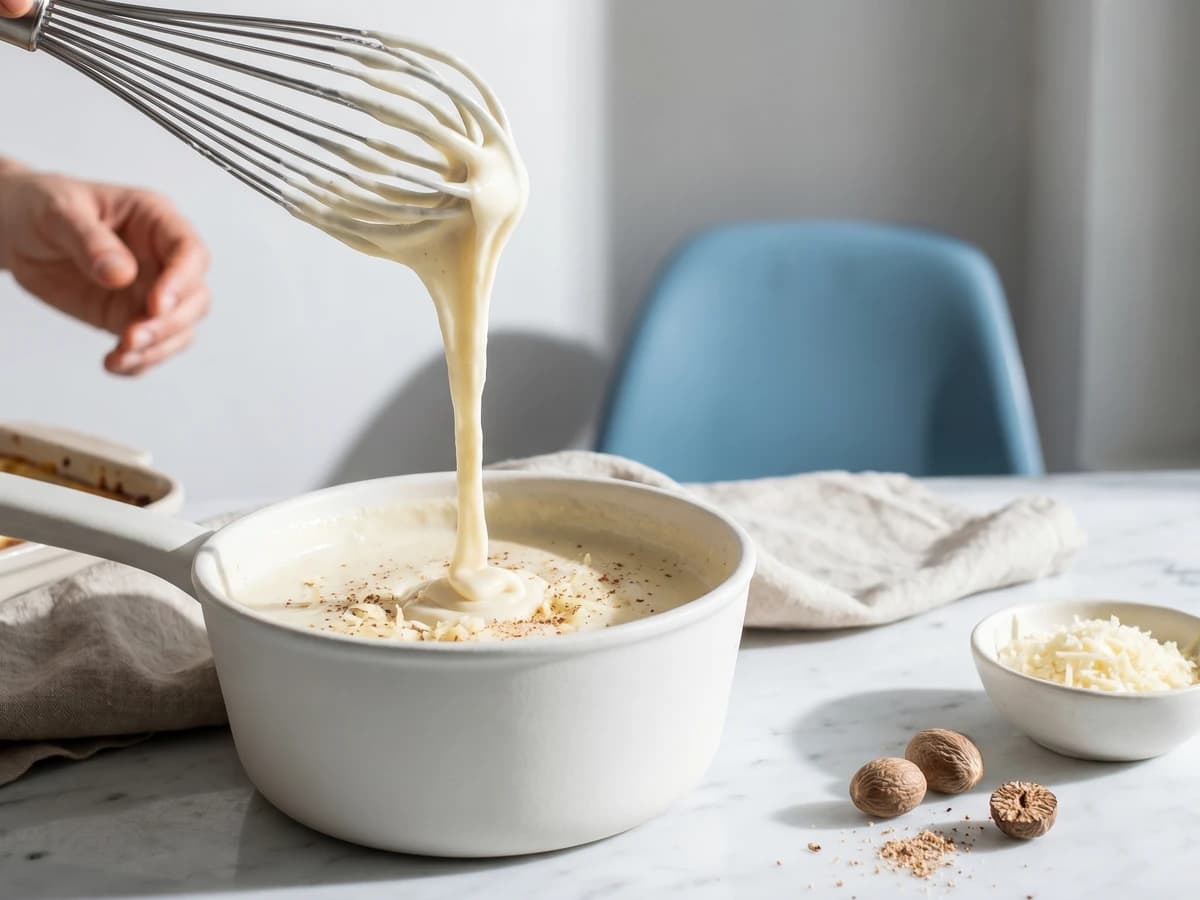
Athens gave Greek baking this thick white crown: a cooked butter-flour sauce enriched with eggs and cheese for moussaka, pastitsio, and the Sunday pan.
Chef Dimitra
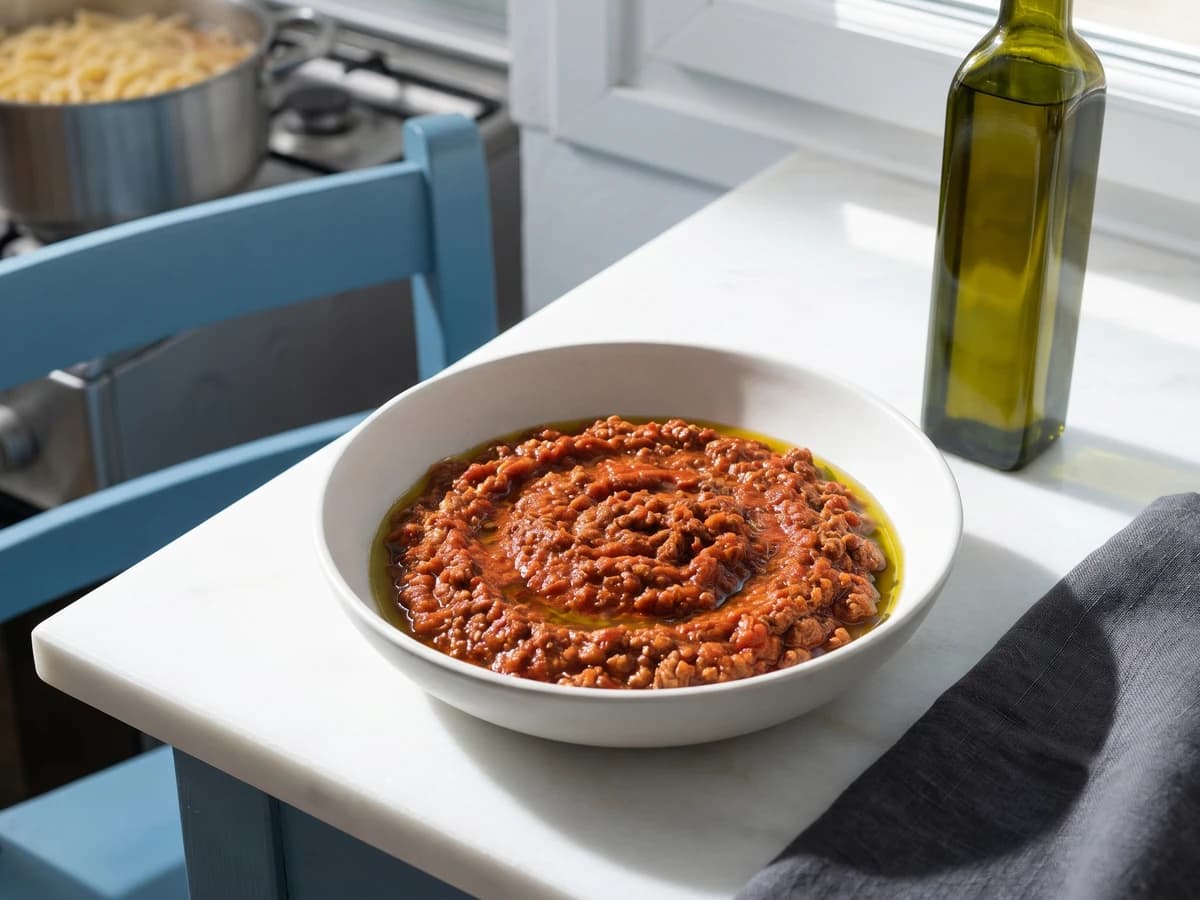
Athenian saltsa kima is minced beef, tomato, cinnamon, and allspice, cooked slowly until the sauce tightens and the green-gold oil pools at the top.
Chef Dimitra
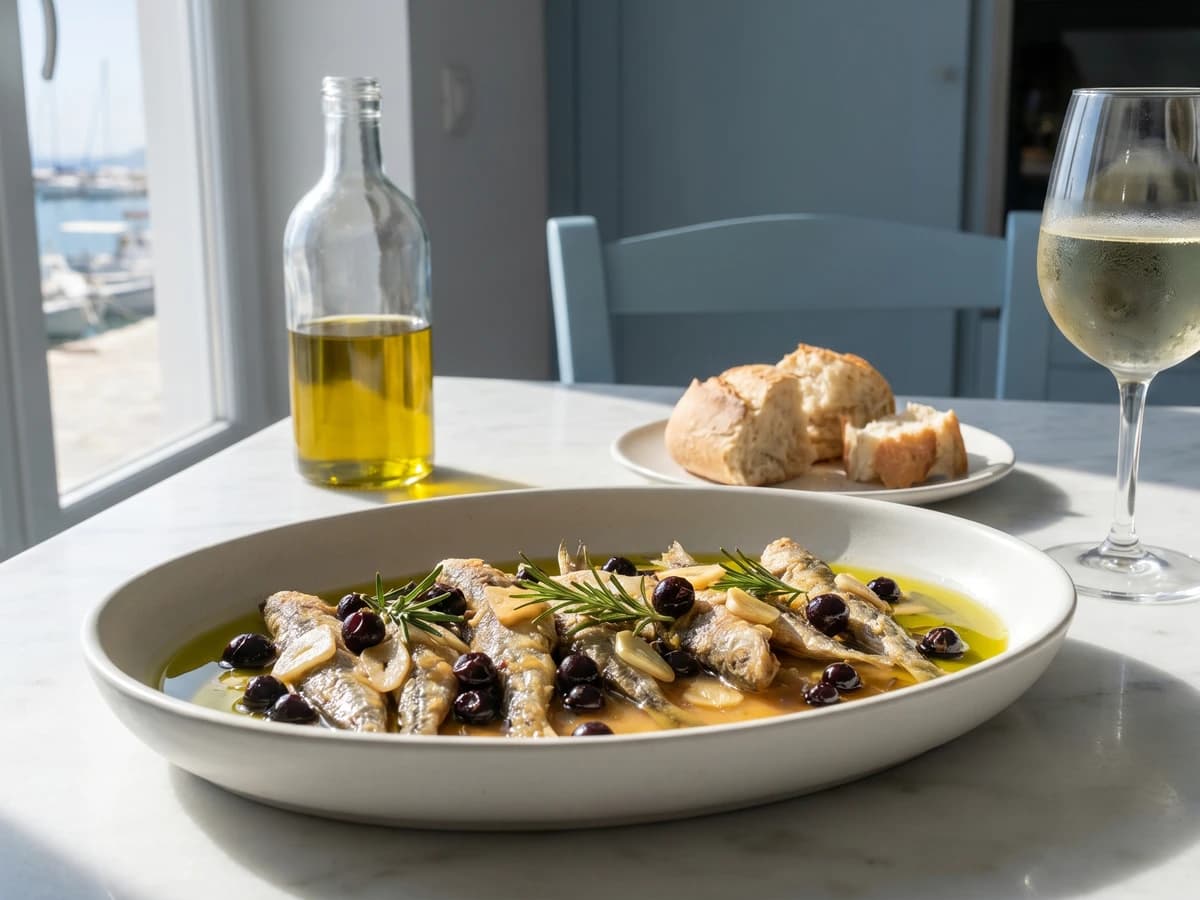
Corfu's savoro is fried small fish steeped in vinegar, rosemary, garlic and black currants, made ahead until the oil, acid and sweetness settle into one bright Ionian sauce.