
Chef Jeong-sun
Aehobak-guk (애호박국, Korean Zucchini Soup)
A clean summer soup of Korean zucchini and salted shrimp, built on quick anchovy-kelp broth and finished before the half-moons lose their shape on a weeknight table.
A cooking platform built around craft, culture, and the stories behind what we eat.

Created by
A Pyongyang sharing pot built on clear beef broth, thin slices of boiled beef and tripe, dumplings, mushrooms, and noodles, arranged first by color and cooked together at the table.
Eobok-jaengban lives or dies by arrangement before it ever touches the flame. A jeongol (arranged hot pot) is not jjigae (stew). Jjigae usually names one main ingredient and comes to the table finished. Jeongol carries several foods, cut neatly, set out by color and shape, then cooked at the table so everyone watches the broth gather them into one dish.
My teacher, Master Seong-nyeo, was strictest with dishes like this, because the pot exposes a lazy hand. Beef sliced too thick turns stiff. Tripe not cleaned and simmered properly keeps its old smell. Dumplings that are overfilled burst and cloud the broth. The broth must stay clear, because Pyongyang food has a quietness that gets ruined if you season like you are trying to win an argument.
This is a dinner-party dish, but not a restaurant trick. You can make it at home if you divide the work: broth and meats one day, dumplings the next, table cooking at the end. 시대가 바뀌면 음식도 바뀌어야 해요. When times change, food must change too, so a brass tray can become a wide shallow jeongol pan, and a charcoal brazier can become a portable burner. The knife work and the restraint cannot change. That is where the dish keeps its name.
They call this a food that mends a quarrel between people. I believe that. A tray at the center gives everyone the same broth, the same chopsticks reaching in, the same reason to lean toward the table instead of away from it.
Eobok-jaengban is closely tied to Pyongyang and the northern table, where clear beef broth, buckwheat noodles, and restrained seasoning carry more weight than chili heat. The wide brass tray, jaengban, gave the dish its form: boiled meats and vegetables were arranged on the tray, broth was added, and the food was heated communally at the table. After the Korean War, displaced northern families and restaurants in the South kept Pyongyang dishes such as naengmyeon, onban, and eobok-jaengban in circulation, preserving a table many could no longer reach by going home.
Quantity
900g
Quantity
300g
well cleaned
Quantity
3.5 liters
Quantity
1 medium, about 500g
cut into large chunks
Quantity
1 large
halved
Quantity
8
6 for broth, 1 grated for sauce, 1 reserved if adjusting
Quantity
4
3 for broth, 1 finely chopped for sauce
Quantity
10
Quantity
1 piece, about 5 inches square
Quantity
2 tablespoons, plus more as needed
Quantity
1 1/2 teaspoons, divided
Quantity
200g
trimmed
Quantity
150g
cut into 2-inch pieces
Quantity
120g
stems removed and caps sliced
Quantity
120g
torn into long pieces
Quantity
1 small
cut into thin matchsticks
Quantity
80g
cut into 3-inch lengths
Quantity
1
thinly sliced
Quantity
1
thinly sliced
Quantity
18
fresh or frozen
Quantity
180g
naengmyeon noodles or memil-guksu noodles
Quantity
2 large
separated
Quantity
1 teaspoon
Quantity
1 tablespoon
Quantity
4 tablespoons
Quantity
2 tablespoons
Quantity
2 tablespoons
Quantity
1 teaspoon, or more to taste
Quantity
1 teaspoon
| Ingredient | Quantity |
|---|---|
| beef brisket or shank | 900g |
| beef tripe or cow stomachwell cleaned | 300g |
| water | 3.5 liters |
| Korean radishcut into large chunks | 1 medium, about 500g |
| onionhalved | 1 large |
| garlic cloves6 for broth, 1 grated for sauce, 1 reserved if adjusting | 8 |
| scallions3 for broth, 1 finely chopped for sauce | 4 |
| black peppercorns | 10 |
| dried kelp (dasima) | 1 piece, about 5 inches square |
| soup soy sauce (guk-ganjang) | 2 tablespoons, plus more as needed |
| kosher salt | 1 1/2 teaspoons, divided |
| mung bean sprouts or soybean sproutstrimmed | 200g |
| napa cabbage leavescut into 2-inch pieces | 150g |
| shiitake mushroomsstems removed and caps sliced | 120g |
| oyster mushroomstorn into long pieces | 120g |
| carrotcut into thin matchsticks | 1 small |
| minari (Korean water dropwort)cut into 3-inch lengths | 80g |
| fresh red chilithinly sliced | 1 |
| fresh green chilithinly sliced | 1 |
| small Korean beef and tofu dumplingsfresh or frozen | 18 |
| dried buckwheat noodlesnaengmyeon noodles or memil-guksu noodles | 180g |
| eggsseparated | 2 large |
| neutral oil | 1 teaspoon |
| toasted sesame seeds | 1 tablespoon |
| soy sauce for dipping sauce | 4 tablespoons |
| rice vinegar for dipping sauce | 2 tablespoons |
| reserved beef broth for dipping sauce | 2 tablespoons |
| Korean mustard paste (yeongyeoja) | 1 teaspoon, or more to taste |
| sugar for dipping sauce | 1 teaspoon |
Put the brisket or shank and the cleaned tripe in a large pot, cover with cold water, and bring to a boil for 5 minutes. Drain, rinse the meat well, and scrub the pot. This first boil is not the broth. It pulls out blood and surface smell so the final broth can stay clear.
Return the rinsed beef and tripe to the clean pot with 3.5 liters water, radish, onion, 6 garlic cloves, 3 scallions, and peppercorns. Bring to a gentle boil, skim well, then lower to a quiet simmer. Add the kelp for 12 minutes only, then pull it out before it turns the broth slick and bitter. Continue simmering until the beef is tender but sliceable, about 2 hours for brisket, 2 1/2 to 3 hours for shank and tripe.
Lift out the meats and cool them just until you can handle them. Strain the broth through a fine sieve. Season 2.4 liters of the broth with 2 tablespoons soup soy sauce and 1 teaspoon kosher salt. Taste it warm. It should be savory and clear, a little lighter than soup you would eat alone, because the meats, dumplings, and noodles will season it further at the table.
Slice the beef across the grain into pieces about 3mm thick and 5cm wide. Slice the tripe into neat strips about 1cm wide. Thin, even slices warm through without toughening. Thick slices turn the tray into work for the teeth, and that is not hospitality.
Blanch the sprouts in boiling water for 2 minutes, drain, and season with 1/4 teaspoon salt. Blanch the cabbage for 1 minute and drain well. Keep mushrooms raw, because they will give their flavor to the tray as it simmers. Keep carrot, minari, and chilies separate so the colors stay clean when you arrange them.
Beat the yolks with a pinch of salt and the whites with another pinch, keeping them separate. Lightly oil a skillet and cook each into a thin sheet over low heat. Slice into narrow jidan (egg garnish) strips. Yellow and white are not decoration only. They help the tray read clearly before the broth goes in.
Stir together the soy sauce, rice vinegar, 2 tablespoons reserved beef broth, mustard paste, sugar, chopped scallion, and grated garlic. Taste it with a slice of beef, not by itself. The sauce should wake up the boiled meat without burying the broth, sharp first, salty second, with only enough sugar to round the vinegar.
Set a wide shallow jeongol pan, brass tray, or shabu pot on a portable burner. Lay sprouts and cabbage across the bottom so the meats do not stick. Arrange the sliced beef, tripe, mushrooms, carrot, minari, dumplings, egg strips, and chilies in radiating sections by color. Put heavier items near the outside and tender greens near the top. This is not fussing. The arrangement lets each ingredient cook at the right pace and lets the table see what it is eating.
Pour in enough seasoned broth to come halfway up the ingredients, about 1.4 liters at first. Bring it to a steady simmer at the table. Cook 6 to 8 minutes, ladling broth over the top until the dumplings are cooked through and the mushrooms soften. Add more broth as the tray lowers. Eat the beef and tripe as they warm, dipping lightly in the mustard soy sauce.
While the tray is being eaten, boil the buckwheat noodles in a separate pot according to the package, usually 3 to 4 minutes. Rinse briefly under warm water to remove excess starch, drain hard, and add them to the remaining broth at the end. Noodles added too early cloud the pot and steal the broth. Added last, they make a proper finish.
1 serving (about 900g)
Culinary guides, cultural storytelling, and the editorial depth that makes cooking meaningful.
Discover Culinary ExplorerChef Jeong-sun
A clean summer soup of Korean zucchini and salted shrimp, built on quick anchovy-kelp broth and finished before the half-moons lose their shape on a weeknight table.
Chef Jeong-sun
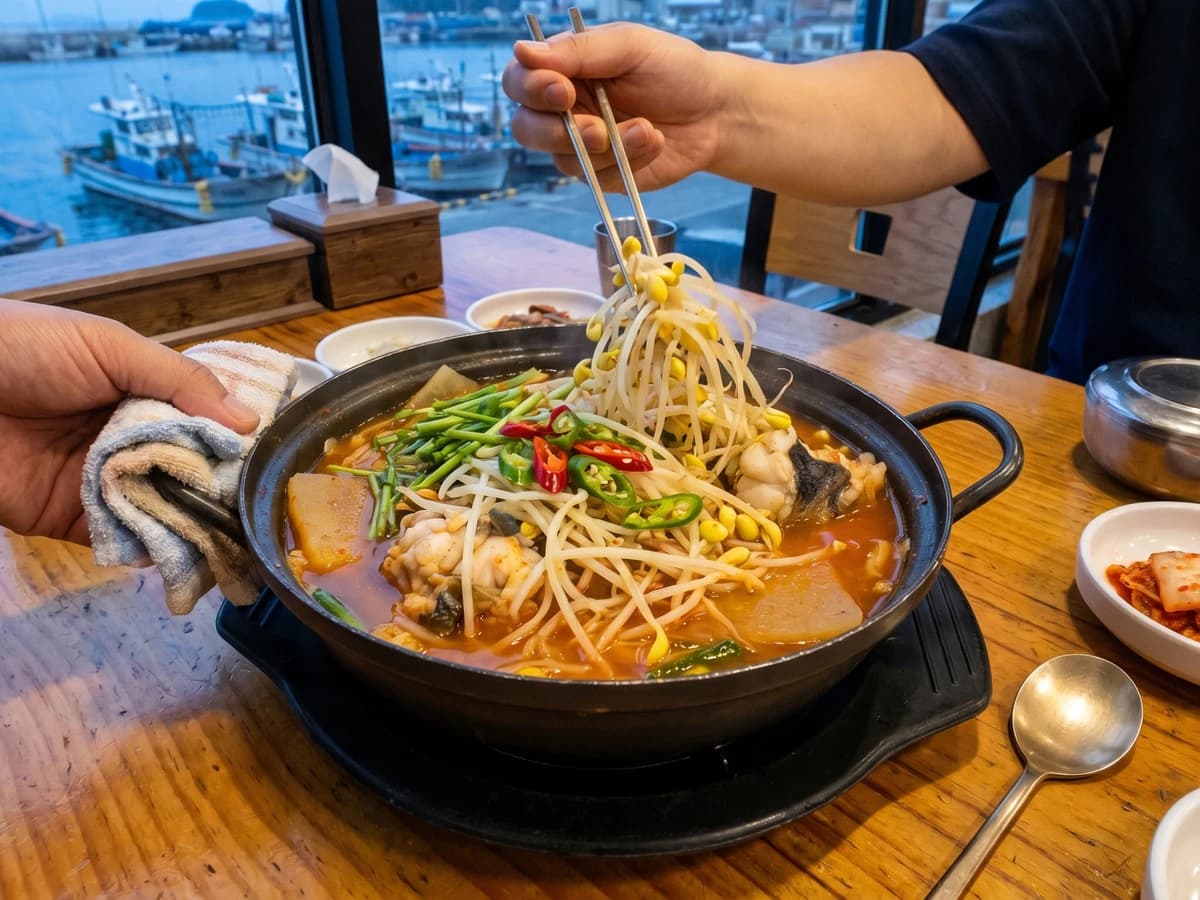
A Masan coast monkfish stew with firm white meat, gelatin at the bones, soybean sprouts for crunch, and a red broth seasoned to carry the fish, not bury it.

Chef Jeong-sun
A weeknight fish roe stew with radish and crown daisy in a clean spicy broth, where the whole success depends on adding the roe late enough that it sets tender, not chalky.

Chef Jeong-sun
Late-summer mallow leaves rubbed with salt until the bitter green water runs off, then simmered in a clean doenjang broth with dried shrimp, the quiet soup a Korean weeknight deserves.