
Chef Lupita
Acúmara Tatemada al Comal
Michoacán's Lake Pátzcuaro acúmara, a whole kurucha from the lago tatemada on a comal de leña and served with chile perón atápakua, corn tortillas, and P'urhépecha discipline.
A cooking platform built around craft, culture, and the stories behind what we eat.
Created by
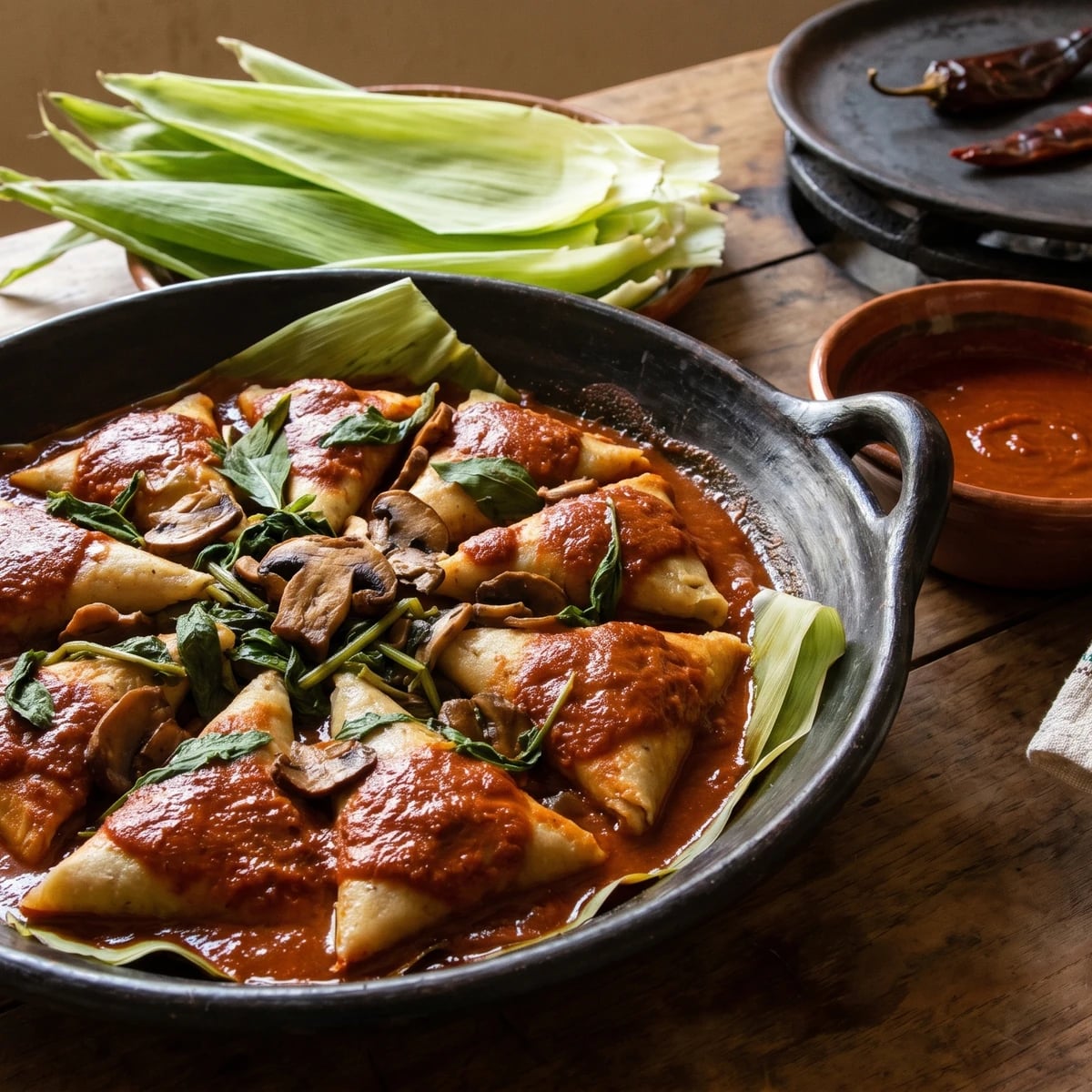
Michoacán's Meseta P'urhépecha corundas, triangular tamales of nixtamal masa wrapped in fresh corn leaves and bathed in a red atápakua thickened with masa, guajillo, ancho, and the patience of the fogón.
Michoacán, specifically the Meseta P'urhépecha and the kitchens around Zacán, Cherán, Uruapan, Cocucho, and the road down toward Lake Pátzcuaro, is where this dish lives. Corundas are not little generic tamales. They are triangular, folded in fresh green corn leaves, and their shape tells you which state you are in before you take the first bite. Cada estado, su propia cocina.
The atápakua roja is the authority here. It is not enchilada sauce. It is a P'urhépecha chile sauce thickened with nixtamal masa until it coats the spoon like a serious stew. The guajillo gives red color and clean chile fruit, the ancho gives body, and the masa gives the sauce its backbone. The milpa gives the corn and the quintoniles. The monte gives the trompa de puerco mushrooms when the season is generous. This version does not ask the lago for kurucha or acúmara. It stays with corn, greens, chiles, and mushrooms.
I learned to respect atápakua from cocineras tradicionales who cook on leña with the calm of people who know exactly when masa has cooked through by the way the sauce moves in the cazuela. The fold of the corunda is not decoration. It is engineering. If you fold badly, the masa leaks. If your sauce is thin, it is not atápakua. No me vengas con atajos.
This is a vegan dish without pretending to be modern. Many market corundas in Michoacán use manteca de cerdo and crema, and those have their place. This Meseta version follows older milpa logic: nixtamal, chile, quelites, monte, comal, fogón. Saber cocinar es saber vivir.
Corundas are among Michoacán's oldest tamal forms, tied to P'urhépecha ceremonial and household cooking long before wheat flour or northern tortilla habits reached the region. Atápakua is a P'urhépecha masa-thickened sauce or stew, and regional versions may carry fish such as kurucha from Lake Pátzcuaro, mushrooms from the monte, or greens from the milpa. Traditional Mexican cuisine was inscribed by UNESCO as Intangible Cultural Heritage in 2010 using the Michoacán paradigm, and cocineras tradicionales from communities including Zacán, Janitzio, Cocucho, Cherán, and Uruapan remain central to that living transmission.
Quantity
40
rinsed
Quantity
2 pounds plus 3 tablespoons
3 tablespoons reserved for thickening the atápakua
Quantity
1 to 1 1/4 cups, divided, plus more as needed
Quantity
2 teaspoons, divided
Quantity
1 teaspoon
Quantity
6
stemmed and seeded
Quantity
2
stemmed and seeded
Quantity
1
stemmed and seeded
Quantity
4
Quantity
1/2 medium
cut into 2 pieces
Quantity
3
unpeeled
Quantity
3 cups
Quantity
2 tablespoons
Quantity
8 ounces
cleaned and torn
Quantity
2 packed cups
washed and chopped
Quantity
1 large sprig
Quantity
4
Quantity
for finishing
| Ingredient | Quantity |
|---|---|
| fresh green corn leaves or broad fresh corn husksrinsed | 40 |
| fresh nixtamal masa for tamales, preferably white corn3 tablespoons reserved for thickening the atápakua | 2 pounds plus 3 tablespoons |
| warm corn-cob broth or warm water | 1 to 1 1/4 cups, divided, plus more as needed |
| fine sea salt | 2 teaspoons, divided |
| baking powder | 1 teaspoon |
| dried chile guajillostemmed and seeded | 6 |
| dried chile anchostemmed and seeded | 2 |
| dried chile puya (optional)stemmed and seeded | 1 |
| Roma tomatoes or jitomates guaje | 4 |
| white onioncut into 2 pieces | 1/2 medium |
| garlic clovesunpeeled | 3 |
| corn-cob broth, vegetable broth, or water | 3 cups |
| avocado oil or neutral corn oil | 2 tablespoons |
| trompa de puerco mushrooms or oyster mushroomscleaned and torn | 8 ounces |
| fresh quintoniles or other tender queliteswashed and chopped | 2 packed cups |
| fresh epazote | 1 large sprig |
| fresh nurite leaves (optional) | 4 |
| fresh epazote leaves (optional) | for finishing |
Heat a comal over medium or bring a wide pot of water to a simmer. Pass the fresh corn leaves over the comal for a few seconds per side, or dip them briefly in hot water, just until flexible. Do not cook them to death. They should bend without cracking and still smell green, like the milpa after rain.
Set aside 3 tablespoons of masa for the atápakua. Put the remaining masa in a large bowl with 1 1/2 teaspoons salt and the baking powder. Knead in 3/4 cup warm corn-cob broth or water, a little at a time, until the masa is soft, moist, and spreadable but not runny. It should hold a mound on your palm without cracking at the edges. Cover with a damp towel and rest 20 minutes.
Lay one corn leaf smooth side up with the point facing away from you. Put 2 generous tablespoons masa near the wide end. Fold one side over the masa, then fold diagonally into a triangle, like folding a flag, keeping the masa enclosed as you go. Tuck the narrow end under the final fold. The package should be firm but not strangled. Corundas need room to swell.
Line a tamalera or steamer basket with extra corn leaves. Arrange the corundas in layers, seams tucked down where you can, and cover with more leaves and a damp cotton servilleta. Steam over steady medium heat for 60 to 75 minutes. The corundas are done when the leaf pulls away cleanly and the masa feels firm, not pasty. Rest them off the heat for 10 minutes before opening.
While the corundas cook, heat a dry comal over medium. Toast the guajillo, ancho, and puya if using, one type at a time, about 20 to 30 seconds per side. They should darken slightly, puff in spots, and smell deep, not burned. Guajillo burns faster than people think. Watch it.
Cover the toasted chiles with hot water and let them soften for 20 minutes. On the same comal, roast the tomatoes, onion, and unpeeled garlic until the tomato skins blister, the onion chars at the edges, and the garlic softens inside its peel. Peel the garlic. The comal is doing the work here. A raw tomato sauce will taste thin, and atápakua is never thin.
Drain the chiles and put them in a blender with the roasted tomatoes, onion, peeled garlic, 1 cup broth, and 1/2 teaspoon salt. Blend until completely smooth. Strain through a medium-mesh sieve into a bowl, pressing hard with a spoon. The skins stay behind. The sauce should be deep red and clean, with no flakes of chile skin catching in the throat.
Heat the oil in a wide clay cazuela or heavy skillet over medium-high. Add the mushrooms and cook until they release their liquid, shrink, and take on browned edges. Add the chopped quintoniles and cook just until they collapse into the mushrooms, 2 to 3 minutes. Season with a pinch of salt. This is the monte and the milpa meeting in the pan.
Pour the strained chile puree into the cazuela with the mushrooms and quelites. Add the remaining 2 cups broth, the epazote sprig, and the nurite leaves if you have them. Simmer 10 minutes. Whisk the reserved 3 tablespoons masa with 1/2 cup warm water until smooth, then pour it into the cazuela in a thin stream while stirring. Cook 12 to 15 minutes more, stirring often, until the atápakua thickens enough to coat the spoon and the raw masa taste is gone. Taste for salt.
Open the corundas and place them in a wide serving cazuela or on deep barro plates. Ladle the atápakua roja over them until the triangular folds are partly covered but still visible. Scatter a few tender epazote leaves on top if you like. Serve with extra atápakua at the table. No crema is needed. No cheese is needed. No flour tortillas. This is Meseta P'urhépecha corn, and it stands on its own.
1 serving (about 400g)
Culinary guides, cultural storytelling, and the editorial depth that makes cooking meaningful.
Discover Culinary Explorer
Chef Lupita
Michoacán's Lake Pátzcuaro acúmara, a whole kurucha from the lago tatemada on a comal de leña and served with chile perón atápakua, corn tortillas, and P'urhépecha discipline.

Chef Lupita
Michoacán's P'urhépecha chicken plate, built with guajillo, ancho, tomato, epazote, and fresh masa, served over rice the way cocineras in Cocucho and Uruapan set it down for supper.

Chef Lupita
Michoacan's Lake Patzcuaro pescado blanco, called kurucha at the shore, bathed in toasted chile mulato, ajo, cominos, and raw cebolla before the cazuela goes to the oven.

Chef Lupita
Quiroga's carnitas are Michoacán pork cooked in manteca de cerdo inside a copper cazo, worked patiently until the skin crackles, the edges darken, and the taco needs nothing but onion, cilantro, salsa, and lime.