Chef Juliette
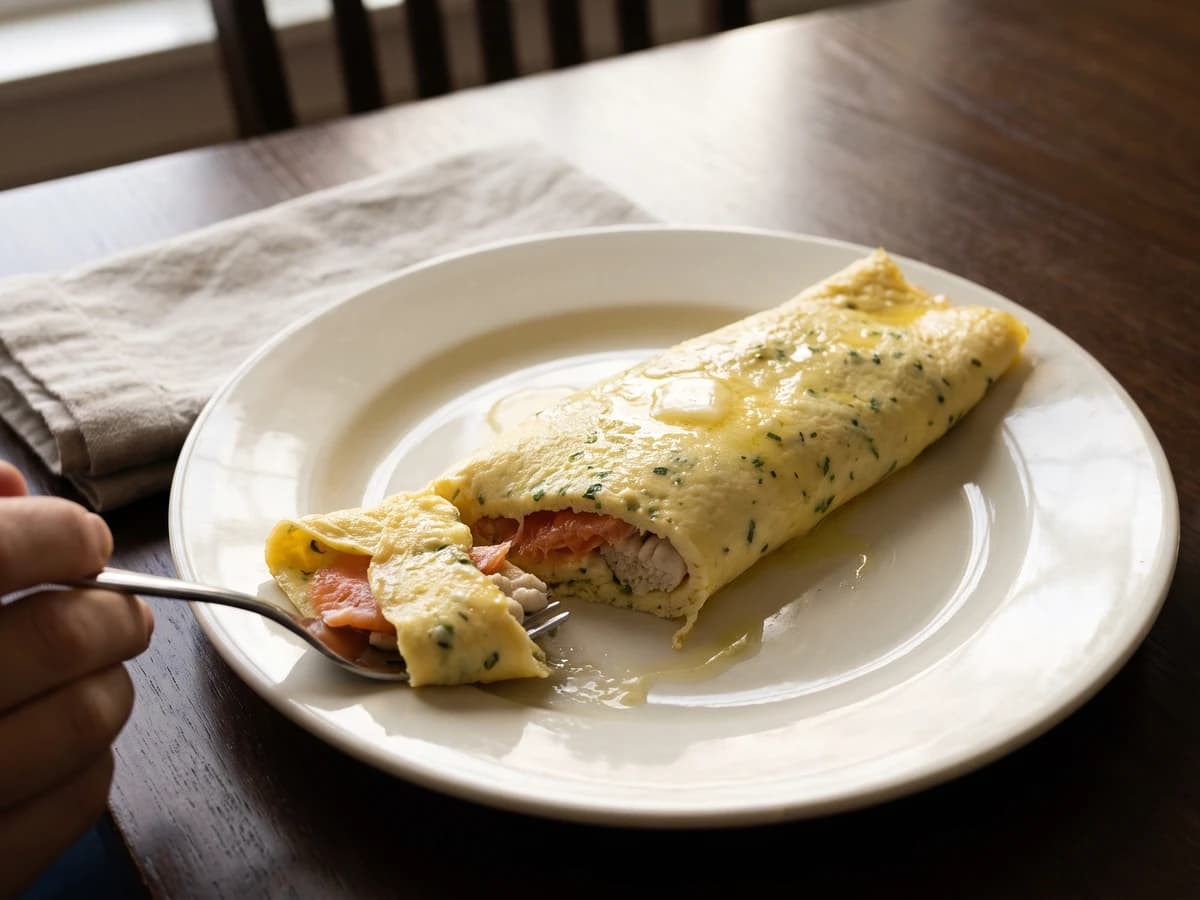
Omelette à l’Écossaise
A creamy omelette aux fines herbes closes around smoked-salmon-wrapped herring milts, gently poached in butter. Have the filling ready, then roll the eggs while they still shine.
A cooking platform built around craft, culture, and the stories behind what we eat.
Created by
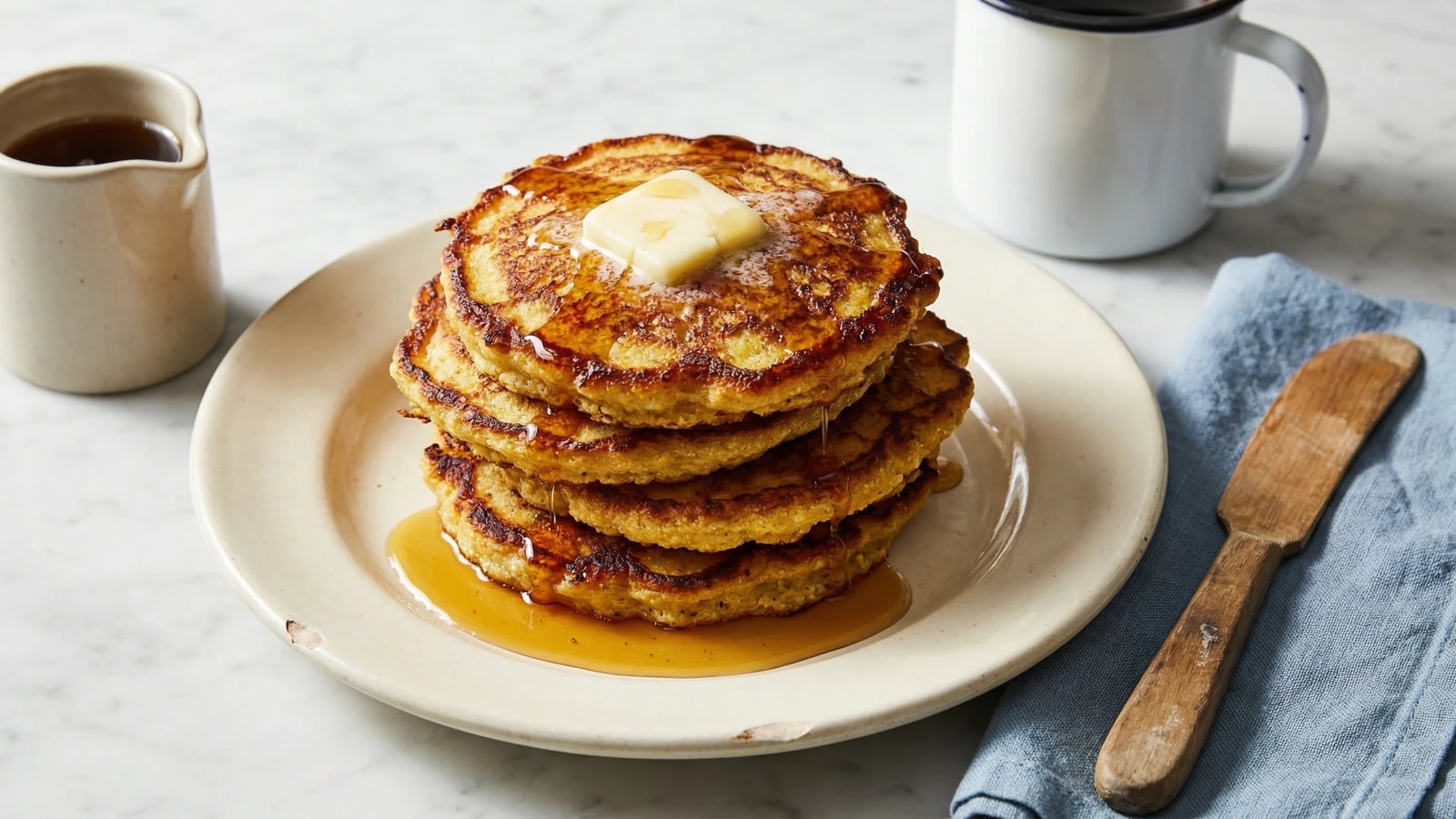
Golden cornmeal griddle cakes with lacy, shatteringly crisp edges and tender, creamy centers. This is the breakfast that sustained New England farmers for three centuries, and it will sustain you through whatever the day demands.
Before there were pancakes, there were johnny cakes. The Narragansett people taught early colonists to grind flint corn and cook it on hot stones, and Rhode Islanders have been perfecting the technique ever since. Every diner from Westerly to Woonsocket serves them. Every grandmother guards her particular method. This is American cooking at its most elemental: cornmeal, water, salt, and a hot griddle.
The secret lives in the boiling water. Pour it over your cornmeal and something magical happens. The starches swell and gelatinize, creating a batter that spreads thin on the griddle and develops those impossibly crisp, lacy edges while the center stays creamy and tender. Skip this step and you'll make something edible but unremarkable.
I've eaten johnny cakes in farmhouse kitchens where the cast iron skillet hadn't been washed in forty years, just wiped clean and seasoned with bacon fat between uses. Those were the best ones. The pan remembers every breakfast that came before. Your grandmother knew this. Trust the process.
Serve them the moment they leave the griddle. A pat of good butter melting into the craggy surface, a generous pour of pure maple syrup pooling in the plate. This is breakfast that asks nothing of you except appetite.
Quantity
1 1/2 cups (210g)
Quantity
1 teaspoon
Quantity
1 tablespoon
Quantity
1 1/2 cups
Quantity
1/2 cup
at room temperature
Quantity
2 tablespoons
melted, plus more for the griddle
Quantity
for serving
Quantity
for serving
| Ingredient | Quantity |
|---|---|
| stone-ground white or yellow cornmeal | 1 1/2 cups (210g) |
| fine sea salt | 1 teaspoon |
| granulated sugar | 1 tablespoon |
| boiling water | 1 1/2 cups |
| whole milkat room temperature | 1/2 cup |
| unsalted buttermelted, plus more for the griddle | 2 tablespoons |
| salted butter | for serving |
| pure maple syrup | for serving |
Whisk together the cornmeal, salt, and sugar in a large heatproof bowl. Bring your water to a rolling boil and pour it directly over the cornmeal while whisking constantly. The mixture will seize up and become very thick, almost like paste. This is correct. The boiling water gelatinizes the corn starches, which creates the creamy interior and crisp edges that define a proper johnny cake. Let the mixture stand for two minutes.
Add the room temperature milk gradually, stirring after each addition. The batter will loosen considerably. Stir in the melted butter until fully incorporated. The final consistency should be thick but pourable, like heavy cream or thin pancake batter. It will spread to about four inches when ladled onto the griddle. If your batter seems too thick, add milk a tablespoon at a time until you reach the right texture.
Set a cast iron skillet or griddle over medium heat. Add a generous tablespoon of butter and let it melt, swirling to coat the surface. The butter should foam actively but not brown. If it browns immediately, your pan is too hot. Johnny cakes require patience. A griddle that's too hot produces burnt exteriors and raw centers. Too cool and you'll never achieve that characteristic crisp edge.
Ladle about three tablespoons of batter per cake onto the griddle, spacing them two inches apart. They will spread into rough circles with irregular edges. Let them cook undisturbed for four to five minutes. You'll see the edges turn golden and begin to look lacy and set. Small bubbles will form across the surface and the top will lose its wet sheen. Resist the urge to flip early. The crust needs time to develop.
Slide a thin spatula under each cake and flip with confidence. The second side cooks faster, three to four minutes, until deeply golden with dark spots where the batter touched the pan directly. The edges should be visibly crisp, almost frilly. When pressed gently with your spatula, the center should feel set but give slightly. Transfer to a warm platter and add more butter to the griddle before the next batch.
Hold finished johnny cakes in a 200°F oven on a wire rack set over a sheet pan while you cook the remaining batter. This keeps them warm without steaming the bottoms soft. Serve immediately with cold salted butter and warm maple syrup. The butter should melt into the craggy surface, pooling in the crisp edges. Pour the syrup generously. These are not diet food.
1 serving (about 280g)
Culinary guides, cultural storytelling, and the editorial depth that makes cooking meaningful.
Discover Culinary ExplorerChef Juliette
A creamy omelette aux fines herbes closes around smoked-salmon-wrapped herring milts, gently poached in butter. Have the filling ready, then roll the eggs while they still shine.
Chef Juliette
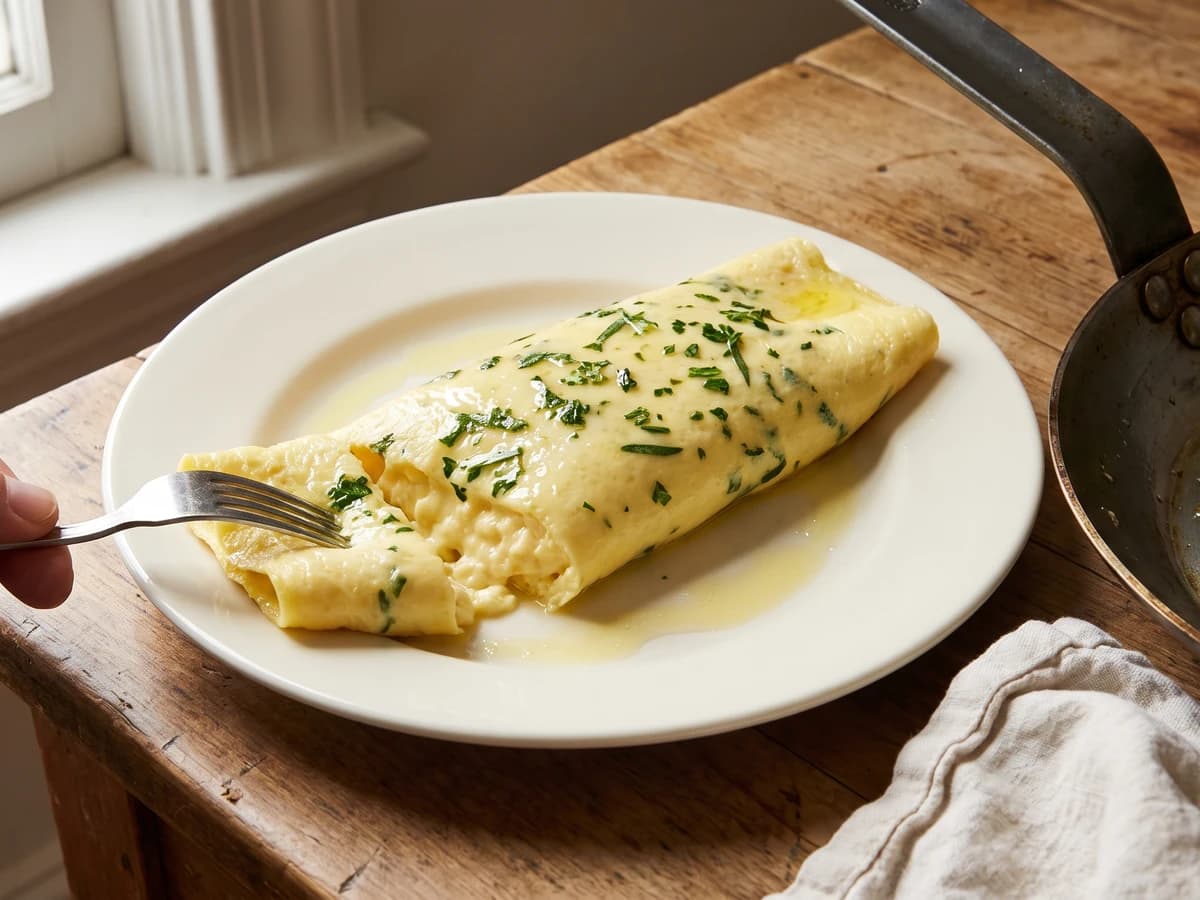
Four tender herbs, hot butter, and two eggs per pan: this rolled omelette teaches the quick hand and good judgment that keep the outside pale and the center creamy.
Chef Juliette
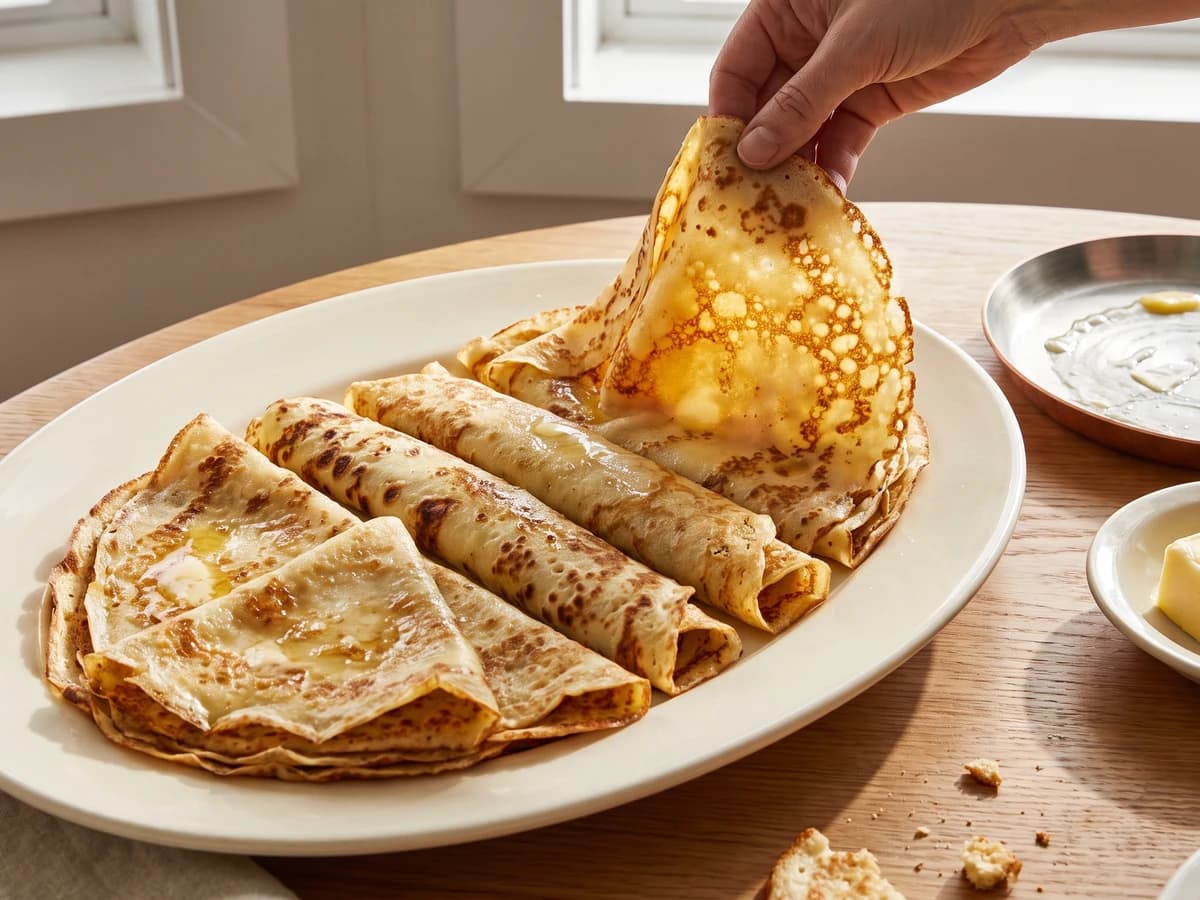
Four batters, one lesson: let the flour drink deeply before cooking, then spread the batter thinly in butter for crêpes and pannequets that bend without becoming tough.
Chef Juliette
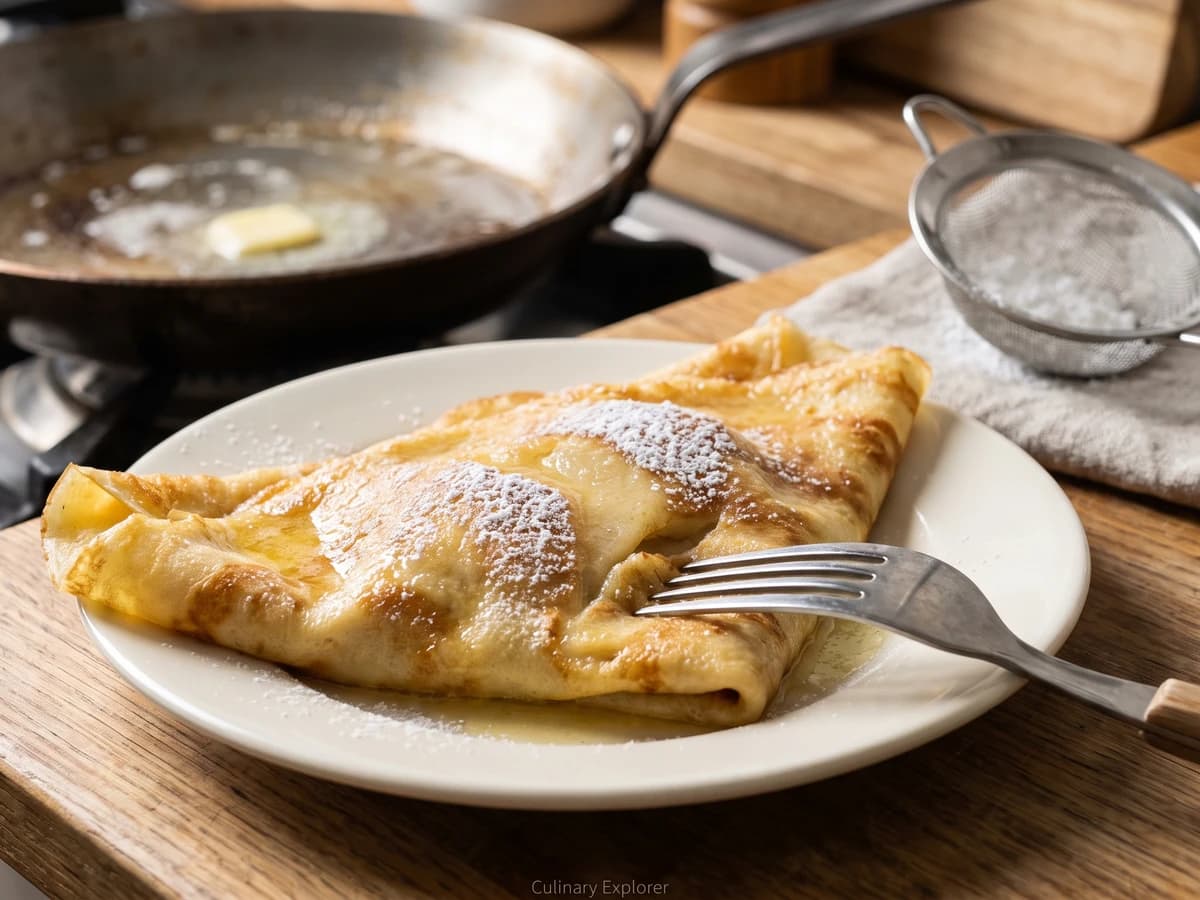
Crêpes au Couvent trap ripe Williams pear dice between two thin pours of sweet batter, then turn in one clean toss and reach the table butter-gold, powdered, and burning hot.