
Chef Takumi
Agedashi Tofu (揚げ出し豆腐)
Agedashi tofu looks like a fryer test. It is only drained tofu, potato starch, clean oil, and a hot dashi broth waiting nearby.
A cooking platform built around craft, culture, and the stories behind what we eat.
Created by
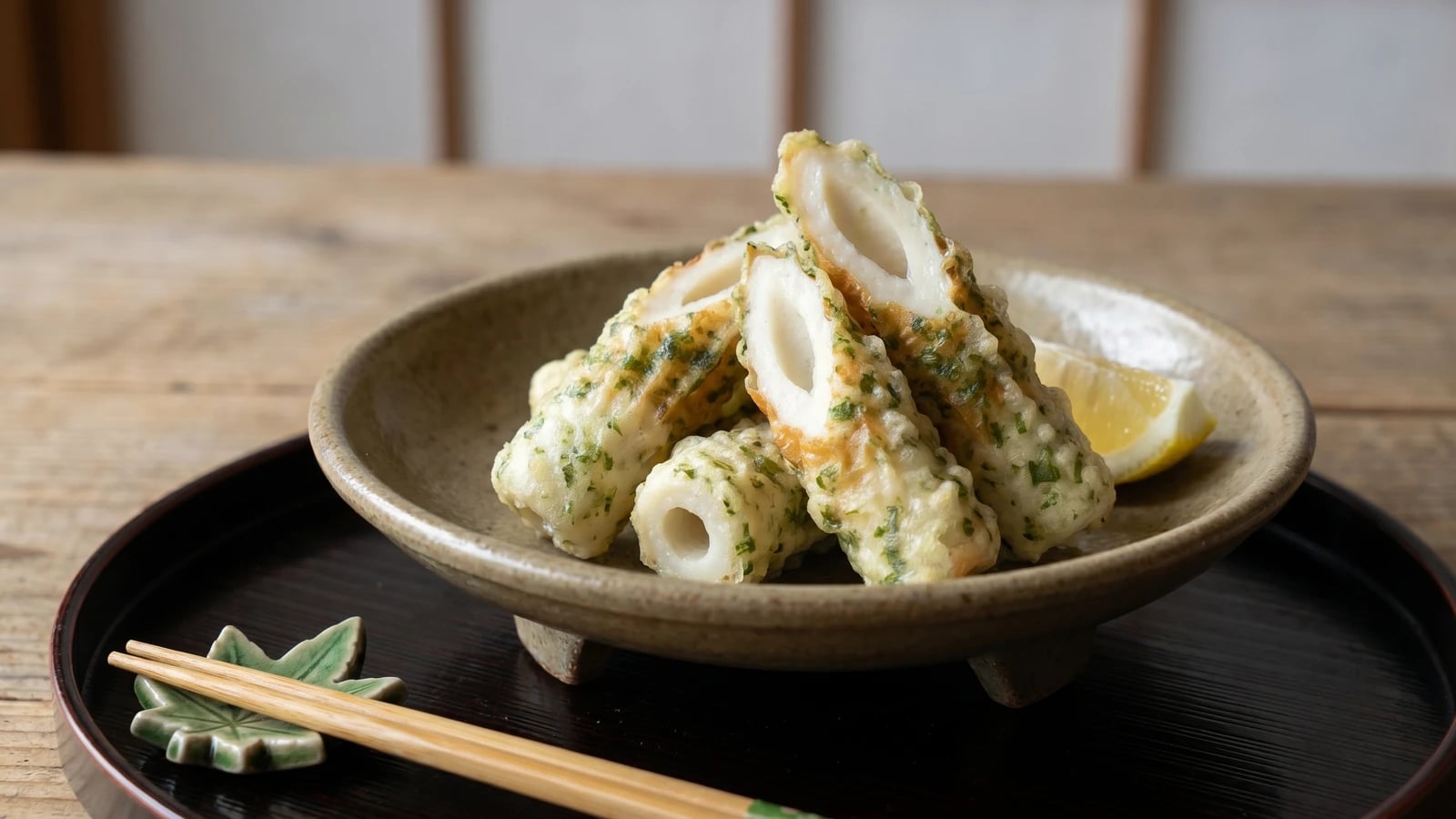
A pantry dish with good manners: chikuwa, cold batter, aonori, and hot oil. Fry it quickly and you get a crisp green shell around a springy fish-cake heart.
Chikuwa is already cooked, which is why this little fried dish is so kind on a weeknight. You're not trying to cook the fish cake through. You're only giving it a thin, crisp coat scented with aonori, the green seaweed that makes the batter smell faintly of the shore.
The one detail that decides it is temperature. Keep the batter cold and the oil properly hot, and the shell sets before it can drink oil. Stir the batter too smooth, or let it sit while the oil cools, and it turns heavy. A few lumps are not a moral failure. In tempura work, they're often evidence of restraint.
We cut each chikuwa on the bias because the angled faces take batter neatly and make the pieces look less like pantry economy, though that is exactly what they are. Isobeage, frying with seaweed in the coating, belongs comfortably beside rice, beer, a bento box, or a small plate before supper. Honmono doesn't always arrive with ceremony. Sometimes it takes six minutes and a modest saucepan.
Chikuwa, a tube-shaped fish paste cake formed around a rod and cooked, has been documented in Japan since at least the Muromachi period, though older fish-paste preparations came before it. The word is written with characters meaning bamboo ring, a plain description of its hollow shape after the skewer is removed. Isobeage, literally shore-side frying, refers to fried foods scented with aonori, and it became a familiar home and bento preparation as packaged chikuwa spread widely in the twentieth century.
Quantity
4
cut on the bias into 3 pieces each
Quantity
1/2 cup
Quantity
1 tablespoon
Quantity
1 tablespoon
Quantity
1/4 teaspoon
Quantity
1/2 cup
Quantity
for frying
Quantity
1
| Ingredient | Quantity |
|---|---|
| chikuwa fish cakescut on the bias into 3 pieces each | 4 |
| all-purpose flour | 1/2 cup |
| potato starch or cornstarch | 1 tablespoon |
| aonori dried green seaweed | 1 tablespoon |
| sea salt | 1/4 teaspoon |
| ice-cold water | 1/2 cup |
| vegetable oil | for frying |
| lemon wedge (optional) | 1 |
Cut each chikuwa on the bias into three pieces. The angled cut gives more surface for the batter to hold, and it makes the hollow center show nicely on the plate. Pat the pieces dry with a towel so the batter clings instead of sliding off.
Pour about 1 inch of oil into a small heavy pot and heat it to 170 to 175 C, or 340 to 350 F. If you don't have a thermometer, drop in a little batter: it should sink halfway, then rise with small lively bubbles. Too cool and the coating drinks oil; too hot and the aonori darkens before the shell crisps.
Whisk the flour, potato starch, aonori, and salt together. Add the ice-cold water and stir briefly with chopsticks until just combined, leaving a few small lumps. Cold, lightly mixed batter makes a cleaner crust because less gluten forms, and the water flashes off quickly in the oil.
Dip a few chikuwa pieces in the batter, let the excess drip once, and slide them into the oil. Fry in small batches for 60 to 90 seconds, turning once, until the coating is crisp and pale with green flecks. Don't crowd the pot, because crowded oil cools and gives you a soft coat.
Lift the pieces to a rack or a paper-lined tray and let them drain for a minute. Serve at once, with a lemon wedge if you like. Taste before adding anything else; chikuwa is already seasoned, and the point here is the clean seaweed fragrance, not a sauce hiding it.
1 serving (about 85g)
Culinary guides, cultural storytelling, and the editorial depth that makes cooking meaningful.
Discover Culinary ExplorerChef Takumi
Agedashi tofu looks like a fryer test. It is only drained tofu, potato starch, clean oil, and a hot dashi broth waiting nearby.

Chef Takumi
Aspara-bacon is late-spring asparagus treated with common sense: thin bacon, hot grill, and a last brush of shōyu and mirin so the spear stays sweet while the wrap crisps.

Chef Takumi
This is Osaka street food at its plainest and best: good beef cut small, a thin batter, fine panko, hot beef tallow, and one clean dip in sauce.

Chef Takumi
Buta-bara is not a trick of the grill. Good pork belly, even cutting, steady heat, and the patience to let the fat turn glossy do most of the work.