Culinary Explorer

A cooking platform built around craft, culture, and the stories behind what we eat.
Discover Culinary Explorer
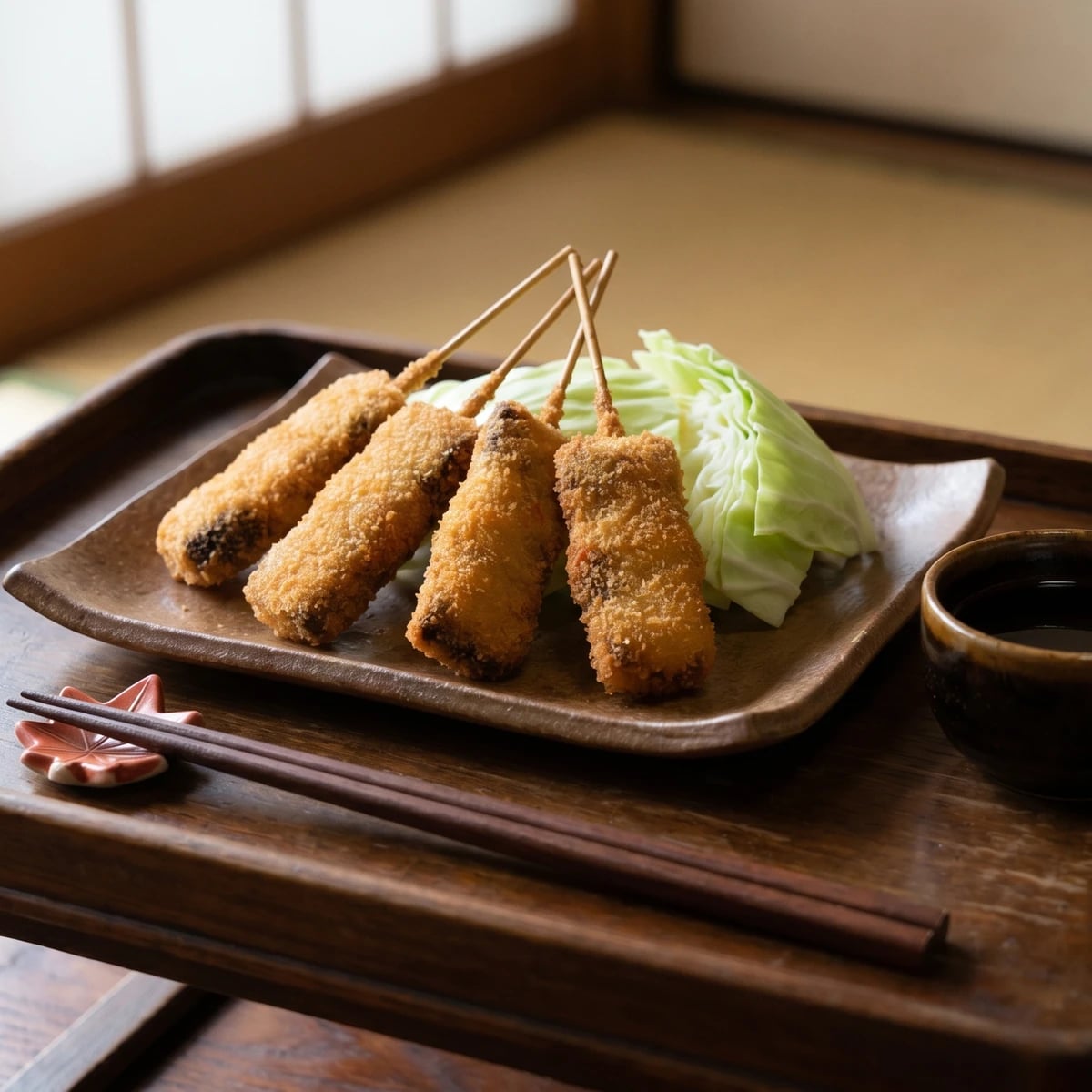
Beef Kushikatsu (牛串カツ, fried beef skewer)

Beef Kushikatsu (牛串カツ, fried beef skewer)

Created by

This is Osaka street food at its plainest and best: good beef cut small, a thin batter, fine panko, hot beef tallow, and one clean dip in sauce.

Appetizers & Snacks
Japanese
Dinner Party
Game Day
35 min
Active Time
20 min cook55 min total
Yield16 skewers, 4 servings

Kushikatsu looks like a fryer trick, but it isn't. It is a cutting lesson first. Beef cut into small, even cubes cooks before the crust has time to darken, so the skewer comes out crisp outside and still tender within. Make the pieces too large and you ask the oil to do impossible work. Oil is useful, not magical.

The first secret is thinness: thin batter, fine crumbs, and enough space on the skewer for heat to move. Heavy breading turns greasy because it traps oil before the beef is done. A light coat fries cleanly, especially in beef tallow, which gives this Osaka style its old, savory depth. If tallow is beyond reach, neutral oil will fry the skewers well, but don't call it the same thing. The fat is part of the memory of the dish.

Serve it as we do in Osaka, with sweet-tangy kushikatsu sauce and no fussing after that. Dip once, eat while the crust still speaks under your teeth, and let the beef stay honest. Nothing hidden. For a dinner party, fry in small batches and send the skewers out as they finish. Kushikatsu waits for no one, which is probably the only rude thing about it.

Osaka-style kushikatsu is closely tied to Shinsekai, the working-class entertainment district that grew around Tsūtenkaku Tower in the early twentieth century. Kushikatsu Daruma opened there in 1929 and is widely credited with popularizing the style: inexpensive skewers of meat and vegetables fried quickly and served with a shared Worcestershire-style dipping sauce. The famous no-double-dipping rule came from that communal sauce pot, a practical bit of table hygiene that became part of the culture.

The technique, the tradition, and the story behind every dish.

Discover Culinary Explorer

Ingredients

beef sirloin, rump, or tender chuck

Quantity

500g

trimmed and cut into 1-inch cubes

fine sea salt

Quantity

1/2 teaspoon

freshly ground black pepper

Quantity

1/4 teaspoon

short bamboo skewers

Quantity

16

soaked in water for 20 minutes

all-purpose flour

Quantity

1/2 cup, plus more for dusting

large egg

Quantity

1

cold water

Quantity

1/2 cup

fine panko breadcrumbs

Quantity

1 cup

beef tallow

Quantity

900g, or enough to fill a pot 2 inches deep

Worcestershire sauce

Quantity

1/2 cup

tonkatsu sauce

Quantity

3 tablespoons

ketchup

Quantity

2 tablespoons

soy sauce

Quantity

1 tablespoon

mirin

Quantity

1 tablespoon

sugar

Quantity

1 teaspoon

raw cabbage wedges (optional)

Quantity

as needed

Equipment Needed

  • Short bamboo skewers
  • Heavy pot or deep fryer
  • Deep-fry thermometer
  • Wire rack set over a tray
  • Three shallow trays for flour, batter, and panko

Instructions

  1. 1

    Make the sauce

    Combine the Worcestershire sauce, tonkatsu sauce, ketchup, soy sauce, mirin, and sugar in a small saucepan. Bring it just to a simmer, stirring until the sugar dissolves, then take it off the heat and cool it. The brief simmer takes the raw edge off the mirin and lets the sauce become one thing rather than six sharp ones.

    Use a small dipping cup for serving. The old shared sauce pot belongs to the shop, not the home table.
  2. 2

    Cut the beef

    Cut the beef into even 1-inch cubes and pat them dry. Season lightly with salt and pepper. Even pieces cook at the same pace, and dry surfaces take the flour properly. Wet beef makes the coating slide, then everyone blames the fryer for a knife problem.

  3. 3

    Skewer the cubes

    Thread two cubes of beef onto each soaked skewer, leaving a little space between them. Don't pack the meat tightly. Heat needs a path around each cube, and that small gap is how the crust crisps before the beef overcooks.

  4. 4

    Prepare the coating

    Set out three shallow trays: a little flour for dusting, a thin batter made by whisking the 1/2 cup flour with the egg and cold water, and the fine panko. The batter should be thinner than pancake batter and just thick enough to cling. Thin batter gives the crumbs something to hold without building a heavy coat.

  5. 5

    Bread the skewers

    Dust each skewer lightly with flour, shake off the excess, dip it into the batter, then roll it in fine panko. Press only gently. A hard press compacts the crumbs and makes a dense shell, while a light hand leaves tiny spaces that fry crisp.

  6. 6

    Heat the tallow

    Melt the beef tallow in a heavy pot and heat it to 175 C. Keep the depth near 2 inches so the skewers float rather than sit on the bottom. The right temperature matters: too cool and the crust drinks fat, too hot and the crumbs brown before the beef warms through.

  7. 7

    Fry in batches

    Fry 3 or 4 skewers at a time for 2 to 3 minutes, turning once, until the crust is golden and the bubbles around each skewer become smaller and quieter. Crowding drops the fat temperature, and the skewers turn heavy. Give them room and the coating stays clean.

  8. 8

    Drain and serve

    Lift the skewers to a rack, not paper towels, and rest them for one minute. A rack keeps the underside crisp instead of trapping oil against it. Serve at once with the sauce in a small cup and raw cabbage if you like. Dip once, not twice, and eat while the crust is still lively.

Chef Tips

  • Choose beef with some tenderness but not too much fat. Sirloin, rump, or a tender piece of chuck all work. Tough beef won't be rescued by breading, and a very fatty cut can loosen on the skewer as it fries.
  • Fine panko is important here. If your panko is coarse, crush it lightly in a bag with your hands. Osaka kushikatsu wears a neat, close crumb, not the big shaggy coat of tonkatsu.
  • Beef tallow is the honmono fat for this version, giving the crust a deeper savor. Neutral oil is a sensible stand-in for frying, but the finished taste will be cleaner and less old-Osaka.
  • Fry to the skewer, not the clock alone. When the bubbles shrink and the crust turns an even gold, lift it. Leave it longer and the beef will tighten before the coating improves.

Advance Preparation

  • The sauce can be made up to 1 week ahead and kept refrigerated. Bring it to room temperature before serving so it coats the crust cleanly.
  • The beef can be cut and skewered up to 6 hours ahead. Keep it covered in the refrigerator, then pat it dry again before coating.
  • Bread the skewers no more than 30 minutes before frying. If they sit too long, the crumbs soften and the crust loses its quick bite.

Frequently Asked Questions

Nutrition Information

1 serving (about 240g)

Calories
655 calories
Total Fat
38 g
Saturated Fat
18 g
Trans Fat
1 g
Unsaturated Fat
18 g
Cholesterol
130 mg
Sodium
1340 mg
Total Carbohydrates
38 g
Dietary Fiber
1 g
Sugars
13 g
Protein
38 g

Note: Chef personas and recipes are created with AI assistance. Cook with care: follow safe food-handling practices, check doneness with a thermometer when needed, and adapt for allergies and your kitchen.

Where cooking meets culture.

Culinary guides, cultural storytelling, and the editorial depth that makes cooking meaningful.

Discover Culinary Explorer

More from Yakitori & Kushiyaki

Browse the full collection