
Chef Lupita
Acitrón de Cidra Conventual
Puebla's convent-style acitrón, made from cidra peel instead of endangered biznaga, built through repeated syrup soakings until the cubes turn firm, translucent, and ready for rosca or chiles en nogada.
A cooking platform built around craft, culture, and the stories behind what we eat.
Created by
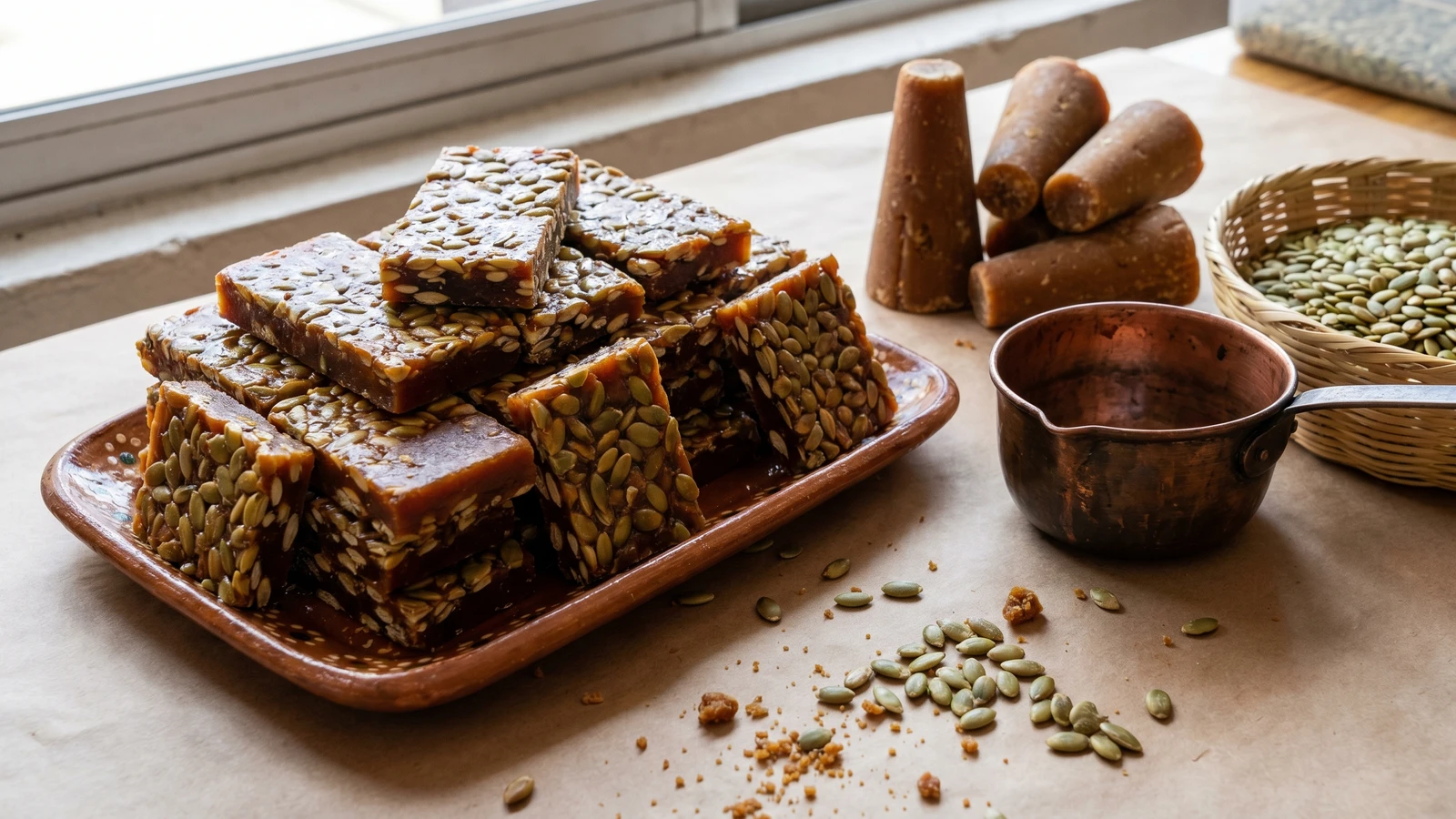
San Luis Potosí's market candy, toasted pepita locked in dark piloncillo syrup, cut into rectangles for holidays, feria tables, and the kilo sales at Mercado Hidalgo.
San Luis Potosí, the capital and the dry Centro Potosino, is where this chancaquilla lives: a slab of toasted pepita held together with dark piloncillo, cut into rectangles and sold by the kilo in the Mercado Hidalgo. This is mercado candy, not convent candy. It belongs on butcher paper, beside charamuscas and jamoncillo, carried home for holidays in a paper bag that smells of cane syrup and toasted seed.
The geography is in the ingredients. Pepita de calabaza comes from a crop that stores well in the dry highlands. Piloncillo comes from cane country, from trapiches and market routes that carry the dark cones into the capital. The state folds itself into one sweet: seed, cane, fire, and the hands of women who learned the syrup point without needing a thermometer.
Do not use brown sugar. Piloncillo has the dark mineral taste of cooked cane. Brown sugar is white sugar wearing molasses because it got invited late. You toast the pepita on a comal, cook the piloncillo to the snapping point, and move quickly before the candy hardens. No me vengas con atajos. Candy waits for nobody.
My mother kept a note for chancaquilla in the back of her notebook, copied from a potosina neighbor who sold dulces at Christmas. The note was only three lines: toast the seed, cook the piloncillo until it cracks in water, press while hot. That is enough when the cook understands the work. Saber cocinar es saber vivir.
Pumpkin seeds were part of Mesoamerican cooking long before sugarcane arrived with the Spanish in the 16th century; piloncillo turned cane into a durable rural sweetener that could travel to markets without spoiling. Chancaquilla potosina sits at that meeting point: pre-Columbian pepita bound with colonial cane syrup, sold by weight in capital markets and ferias rather than shaped in convent molds. Unlike peanut palanqueta, which spread widely through railway and fair stalls in the 19th and 20th centuries, the pepita version stayed tied to north-central and Bajío market candy registers, including San Luis Potosí.
Quantity
3 cups
unsalted
Quantity
1 pound
chopped into small pieces
Quantity
1/2 cup
Quantity
1 small
Quantity
1/2 teaspoon
Quantity
1 teaspoon
for greasing the board and knife
| Ingredient | Quantity |
|---|---|
| raw hulled pepita de calabazaunsalted | 3 cups |
| piloncillo oscurochopped into small pieces | 1 pound |
| water | 1/2 cup |
| raja de canela de Ceylan | 1 small |
| fine sea salt | 1/2 teaspoon |
| manteca de cerdo or neutral oilfor greasing the board and knife | 1 teaspoon |
Lightly grease a wooden board, marble slab, or rimmed sheet pan with the manteca. Grease a knife too. Have a wooden spoon ready. Once the piloncillo reaches its point, you will not have time to search for tools. La cocina no es decoracion, es trabajo.
Heat a dry comal or heavy skillet over medium. Add the pepita and stir constantly for 5 to 7 minutes, until the seeds puff slightly, turn a deeper green in spots, and smell nutty. Do not brown them hard. Burned pepita turns bitter and the piloncillo will not hide it. Transfer to a bowl and keep warm near the stove.
Put the chopped piloncillo, water, and canela in a cazo de cobre or heavy saucepan. Cook over medium-low heat, stirring until the piloncillo dissolves completely. Strain the syrup through a fine sieve if you see grit from the cones, then return it to the clean pot. Piloncillo is real cane sugar, not laboratory sugar. A little sediment happens.
Raise the heat to medium and let the syrup boil without stirring. Swirl the pot only if one side cooks faster. The bubbles will start loose, then turn thick and glossy. Remove the canela. Test by dropping a little syrup into a cup of cold water. It should form brittle threads that snap between your fingers, not a soft ball. At sea level this is about 300F. In the high capital of San Luis Potosí, it often reads closer to 290F to 295F. Trust the water test.
Immediately add the warm toasted pepita and the salt to the syrup. Stir hard with the wooden spoon until every seed is coated and the mixture pulls together in a heavy, glossy mass. Work quickly. If the pepita is cold, the syrup seizes too fast and you get clumps instead of chancaquilla.
Scrape the hot mixture onto the greased board. Press it into a slab about 1/2 inch thick with the greased spoon or the flat side of an oiled knife. Do not fuss with perfection. Mercado candy has edges made by hands, not machines. While it is still warm, score into rectangles.
Let the chancaquilla cool completely, 30 to 40 minutes. Break or cut along the scored lines. The pieces should snap cleanly, with toasted pepita packed tight in dark amber piloncillo. If they bend, the syrup was undercooked. Cook the next batch longer. Recetas probadas y garantizadas, but the point matters.
1 serving (about 35g)
Culinary guides, cultural storytelling, and the editorial depth that makes cooking meaningful.
Discover Culinary ExplorerChef Lupita
Puebla's convent-style acitrón, made from cidra peel instead of endangered biznaga, built through repeated syrup soakings until the cubes turn firm, translucent, and ready for rosca or chiles en nogada.

Chef Lupita
Ciudad de México's Tulyehualco alegría is popped huautli folded into piloncillo honey, pressed with peanuts, pepitas, and raisins, then cut into the rectangular bars that built a pueblo's identity.

Chef Lupita
Oaxaca's pre-Columbian amaranth bar, popped on a hot comal and bound with piloncillo, honey, and the sacred Zapotec grain that the Spanish tried, and failed, to outlaw.

Chef Lupita
Querétaro's mercado candy of popped amaranto pressed with dark piloncillo syrup, pepitas, pecans, and cacahuate, a Bajío sweet that respects the seed before it decorates the table.