
Chef Lupita
Acitrón de Cidra Conventual
Puebla's convent-style acitrón, made from cidra peel instead of endangered biznaga, built through repeated syrup soakings until the cubes turn firm, translucent, and ready for rosca or chiles en nogada.
A cooking platform built around craft, culture, and the stories behind what we eat.
Created by
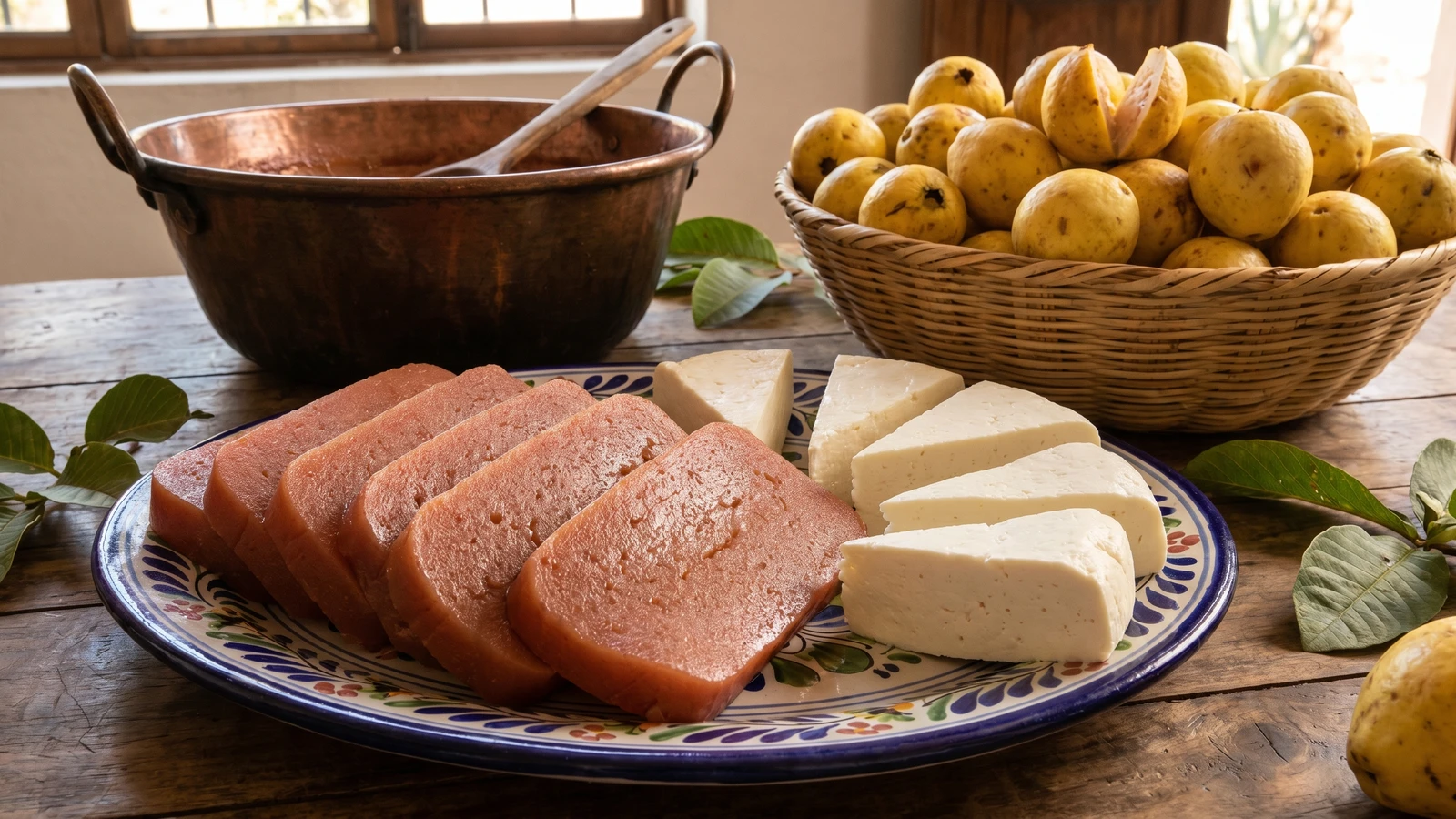
Aguascalientes's Calvillo guava paste, cooked in a copper cazo until the fruit and cane sugar tighten into a firm slab, then sliced thick beside queso fresco de rancho.
Aguascalientes, in the valley of Calvillo, owns this sweet. The guayaba grows there with a perfume you can smell before you see the crate, yellow-skinned, tender, sometimes bruised from ripeness. That bruise is not a defect. It is the fruit telling you it is ready.
This is dulceria de feria and dulceria de barrio, not a plated dessert from a restaurant. In Calvillo, the women who make ate know the sound of the spoon scraping the cazo before they trust any clock. Guava pulp, cane sugar, steady stirring. The paste darkens, tightens, and finally pulls away from the copper like it has decided to become candy. Asi se hace y punto.
I first wrote this version after a morning at Mercado Teran in Aguascalientes, where a vendor corrected me before I even asked a question: do not make ate from hard green guavas unless you want perfume without sweetness. She was right. Use mostly ripe guayaba de Calvillo, with a few slightly firm fruits for pectin, and let the fire do its work. Cada estado, su propia cocina.
Ate descends from the Iberian tradition of firm fruit pastes such as carne de membrillo, adapted in New Spain with local fruits and cane sugar from colonial sugar production. Guava is native to tropical America, and Calvillo's orchards made Aguascalientes one of Mexico's best-known guava regions during the 20th century, celebrated each December with the Feria Nacional de la Guayaba. The Calvillo version belongs to orchard and mercado confectionery: fruit preservation built around harvest, not convent decoration.
Quantity
1.5 kilograms (about 3 1/4 pounds)
washed, stem ends trimmed
Quantity
2 cups
plus more only if needed for softening
Quantity
equal to the weight of the strained guava pulp, usually 850 grams to 1 kilogram
Quantity
for serving
sliced thick
| Ingredient | Quantity |
|---|---|
| ripe guayaba de Calvillowashed, stem ends trimmed | 1.5 kilograms (about 3 1/4 pounds) |
| waterplus more only if needed for softening | 2 cups |
| cane sugar | equal to the weight of the strained guava pulp, usually 850 grams to 1 kilogram |
| queso fresco de rancho (optional)sliced thick | for serving |
Line an 8-inch square pan or a shallow wooden cajita with wax paper, leaving enough overhang to lift the ate out later. Do this before the fruit goes on the fire. Once the paste reaches its point, it waits for nobody.
Place the guayabas in a clean copper cazo or heavy stainless steel pot with the water. Bring to a simmer over medium heat and cook 15 to 20 minutes, stirring now and then, until the skins split and the flesh collapses when pressed with a spoon. Do not peel them. The skin carries aroma and pectin. A bruise is fine. Rot is not.
Pass the softened guavas and their cooking liquid through a food mill set over a bowl. If you use a blender, pulse only briefly, then push the pulp through a fine-mesh sieve with a wooden spoon. The seeds must stay behind. Broken guava seeds give grit and bitterness, and Calvillo dulceras will notice. Weigh the strained pulp.
Return the strained pulp to the cazo. Add an equal weight of cane sugar. If you have 900 grams of pulp, add 900 grams of sugar. Stir over low heat until the sugar dissolves and the mixture looks smooth and loose. This is candy, not jam for toast. The sugar is structure, preservation, and shine.
Raise the heat to medium-low and cook, stirring constantly with a long wooden spoon, 55 to 75 minutes. The paste will sputter, so protect your hand. It will move from pale guava pink to a deeper copper-rose color, then thicken until the spoon leaves a clean path across the bottom of the cazo. No me vengas con atajos. If you stop early, you get guava sauce, not ate.
Drop a spoonful of paste onto a cold plate and wait one minute. It should hold its shape, wrinkle when pushed, and leave no watery ring. In the pot, the paste should pull from the sides in one heavy mass. A thermometer helps, but trust the spoon first: at sea level the point is around 220F, while in the Bajio altitude changes the number. The texture tells the truth.
Scrape the hot paste into the lined mold and smooth the top with a damp spoon. Let it stand at room temperature at least 8 hours, uncovered or covered loosely with a clean cloth. Overnight is better. The surface should dry slightly and the center should turn firm enough to slice without slumping.
Lift the ate from the mold and peel away the wax paper. Cut into thick rectangles with a lightly dampened knife. Serve on a clay platon with slices of queso fresco de rancho. Fruit, sugar, time. Nothing else. Recetas probadas y garantizadas.
1 serving (about 60g)
Culinary guides, cultural storytelling, and the editorial depth that makes cooking meaningful.
Discover Culinary ExplorerChef Lupita
Puebla's convent-style acitrón, made from cidra peel instead of endangered biznaga, built through repeated syrup soakings until the cubes turn firm, translucent, and ready for rosca or chiles en nogada.

Chef Lupita
Ciudad de México's Tulyehualco alegría is popped huautli folded into piloncillo honey, pressed with peanuts, pepitas, and raisins, then cut into the rectangular bars that built a pueblo's identity.

Chef Lupita
Oaxaca's pre-Columbian amaranth bar, popped on a hot comal and bound with piloncillo, honey, and the sacred Zapotec grain that the Spanish tried, and failed, to outlaw.

Chef Lupita
Querétaro's mercado candy of popped amaranto pressed with dark piloncillo syrup, pepitas, pecans, and cacahuate, a Bajío sweet that respects the seed before it decorates the table.