
Chef Lupita
Alegrías Queretanas de Amaranto y Piloncillo
Querétaro's mercado candy of popped amaranto pressed with dark piloncillo syrup, pepitas, pecans, and cacahuate, a Bajío sweet that respects the seed before it decorates the table.
A cooking platform built around craft, culture, and the stories behind what we eat.
Created by
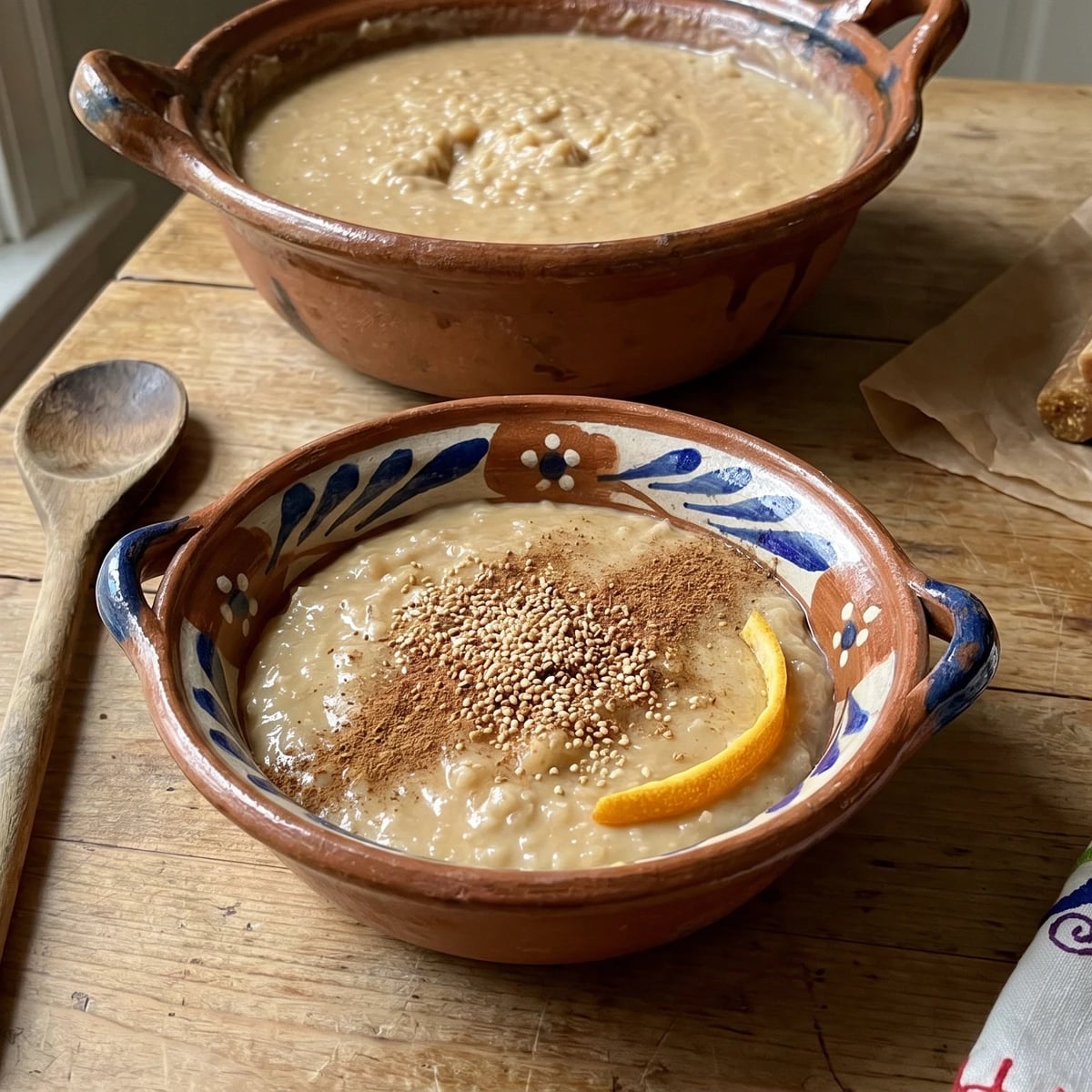
Guanajuato's Bajio rice pudding, slow-cooked with piloncillo, leche de cabra, canela, and orange peel until the milk thickens into something dark, practical, and unmistakably regional.
Guanajuato, in the heart of the Bajio, is where this arroz con leche belongs. Not the pale cafeteria version with white sugar and no memory. This one is cooked with piloncillo, leche de cabra, canela de Ceylan, and a strip of orange peel, the same pantry logic you see in the dulcerias of Celaya and the market kitchens around Mercado Hidalgo de Guanajuato.
The piloncillo is not decoration. It gives the rice its dark honey color and that mineral depth refined sugar cannot give you. The leche de cabra connects this pudding to the same dairy country that built Cajeta de Celaya de los dulceros: Salgado, La Tradicional, Coronel Sanchez. Hacienda and mercado register, not convent fantasy. Know the difference.
You cook it slowly because rice needs time to release its starch into the milk. Stir often, scrape the bottom, and do not walk away pretending the pot will take care of itself. The women who perfected this did it with a wooden cuchara and patience, not tricks. Saber cocinar es saber vivir.
Rice arrived in Mexico through Spanish colonial trade in the 16th century and entered household sweets through Iberian arroz con leche, then changed in Mexican kitchens according to local milk, sweeteners, and aromatics. In the Bajio, especially Guanajuato and Queretaro, dairy production from haciendas and later regional dulcerias made milk-based sweets central to market cooking, with Celaya's goat-milk cajeta becoming nationally recognized by the 19th century. Piloncillo, produced from cooked cane juice in cones, kept this pudding tied to mercado economy: cheaper than refined sugar, deeper in flavor, and easier to store in rural kitchens.
Quantity
1 cup
rinsed until the water runs mostly clear
Quantity
2 cups
Quantity
1 stick, about 3 inches
Quantity
1 wide strip
white pith removed
Quantity
1/4 teaspoon
Quantity
4 cups
Quantity
6 ounces
chopped or grated
Quantity
1/2 cup
Quantity
1 teaspoon
Quantity
for serving
Quantity
1/4 cup
for serving
| Ingredient | Quantity |
|---|---|
| long-grain white ricerinsed until the water runs mostly clear | 1 cup |
| water | 2 cups |
| Mexican cinnamon stick (canela de Ceylan) | 1 stick, about 3 inches |
| orange peelwhite pith removed | 1 wide strip |
| kosher salt | 1/4 teaspoon |
| leche de cabra | 4 cups |
| piloncillochopped or grated | 6 ounces |
| evaporated milk | 1/2 cup |
| Mexican vanilla extract | 1 teaspoon |
| ground Mexican cinnamon (optional) | for serving |
| toasted amaranto (optional)for serving | 1/4 cup |
Put the rice in a bowl and rinse it with cool water, rubbing the grains lightly with your fingers. Change the water two or three times, until it runs mostly clear. You are removing loose surface starch so the pudding thickens cleanly instead of turning gluey.
Combine the rinsed rice, water, canela, orange peel, and salt in a heavy saucepan or clay cazuela. Bring to a simmer over medium heat, then lower the heat and cook uncovered for 15 to 18 minutes, stirring now and then, until the rice has absorbed most of the water and the grains are tender at the edges.
Pour in the leche de cabra and stir from the bottom with a wooden cuchara. Keep the heat low. The milk should tremble gently around the rice, not boil hard. Goat milk catches faster than cow milk when the flame is careless, and scorched milk will announce your mistake to the whole kitchen.
Add the chopped piloncillo and stir until it dissolves completely into the milk. The pudding will turn beige, then deeper tan, then the color of light cajeta. That color is the point. Piloncillo gives body, dark sweetness, and a clean cane flavor. Brown sugar is not the same thing.
Cook over low heat for 25 to 30 minutes, stirring often and scraping the bottom and corners of the pot. The rice should swell, the milk should reduce, and the spoon should leave a short trail before the pudding closes back over itself. Stop while it is still loose. Arroz con leche thickens as it cools.
Remove the canela stick and orange peel. Stir in the evaporated milk and Mexican vanilla. Cook 3 to 5 minutes more, just until glossy and cohesive. Taste once. If your piloncillo was mild, add a small pinch of salt, not more sugar. Salt wakes up the milk and cane. Así se hace y punto.
Spoon the arroz con leche into clay tazones from Dolores Hidalgo or a family-style cazuela. Serve warm, at room temperature, or chilled. Dust with ground canela and scatter a little toasted amaranto if you want texture. Do not bury it under fruit cocktail or whipped cream. This is Bajio cooking, not a children’s buffet.
1 serving (about 265g)
Culinary guides, cultural storytelling, and the editorial depth that makes cooking meaningful.
Discover Culinary Explorer
Chef Lupita
Querétaro's mercado candy of popped amaranto pressed with dark piloncillo syrup, pepitas, pecans, and cacahuate, a Bajío sweet that respects the seed before it decorates the table.

Chef Lupita
Guanajuato's Day of the Dead alfeñiques are cane-sugar figures pressed in dry molds, finished with bright icing, and set on Talavera guanajuatense platones for the altar.

Chef Lupita
Aguascalientes's Calvillo guava paste, cooked in a copper cazo until the fruit and cane sugar tighten into a firm slab, then sliced thick beside queso fresco de rancho.

Chef Lupita
Guanajuato's Bajio candy, soft pectin jellies perfumed with real licor and rolled in sugar, the kind of borrachito a dulcero would pack in paper by the dozen.