
Chef Lupita
Acitrón de Cidra Conventual
Puebla's convent-style acitrón, made from cidra peel instead of endangered biznaga, built through repeated syrup soakings until the cubes turn firm, translucent, and ready for rosca or chiles en nogada.
A cooking platform built around craft, culture, and the stories behind what we eat.
Created by
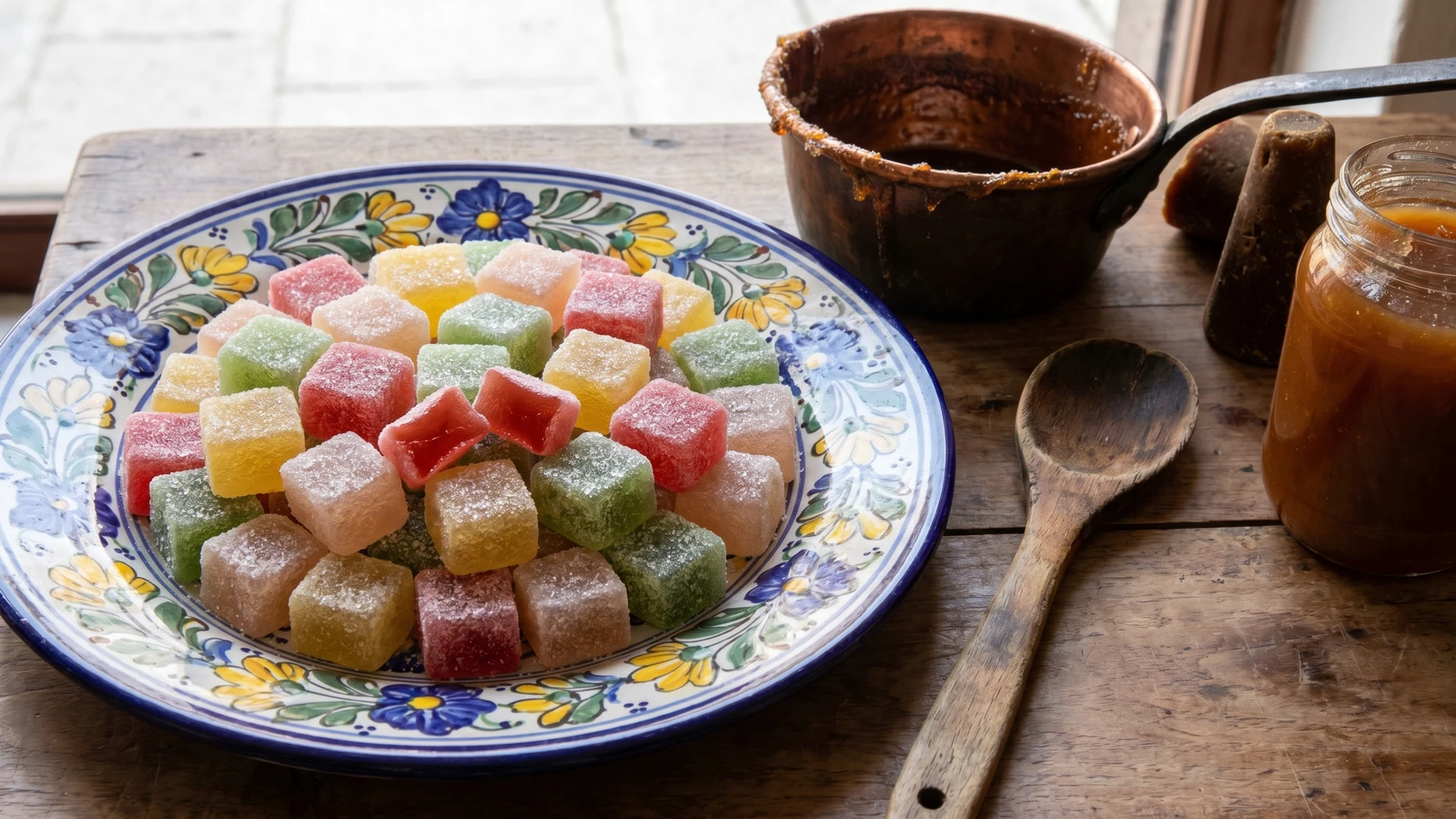
Guanajuato's Bajio candy, soft pectin jellies perfumed with real licor and rolled in sugar, the kind of borrachito a dulcero would pack in paper by the dozen.
Guanajuato, the Bajio, Celaya. That is where this sweet belongs before it belongs in any glass case in Ciudad de Mexico. Borrachitos are not gelatin cubes pretending to be candy. They are firm fruit pectin jellies with licor worked in at the end, rolled in sugar, and left to dry until the outside has a clean crust and the inside keeps its soft bite.
The Dulceria de Celaya tradition is a dulcero's register, not a convent register. Understand the difference. This is the world of ate, cajeta, jamoncillo, cocadas, charamuscas, fruit pastes, sugar cooked to the right point, and women who can tell by the weight of the spoon whether the batch is ready. No me vengas con atajos. If you pour rum into boxed gelatin and call it borrachito, the senora behind the counter will hear you from three streets away.
Use real fruit puree and real licor. Guayaba, membrillo, tuna cardona, fresa, limon, anis, rompope. The colors should look like a dulceria de barrio, not a toy box. I learned this texture from a woman who sold sweets near the Mercado Hidalgo in Guanajuato: cook the fruit hard enough to set, but add the alcohol off the heat so it stays present. That is the whole discipline. Saber cocinar es saber vivir.
Dulceria de Celaya opened in Mexico City's historic center in 1874 and became one of the capital's best-known houses for traditional sweets from the Bajio and central Mexico. Borrachitos belong to the 19th-century Mexican confectionery tradition that joined fruit pastes, cane sugar, and commercial pectin with small amounts of licor, a format suited to shops that needed candies to hold their shape for days. In Guanajuato and the wider Bajio, these sweets sit beside cajeta de Celaya, ate de membrillo, jamoncillo, and charamuscas, a market and dulceria tradition distinct from the convent sweets of Puebla and Santa Rosa.
Quantity
1 1/2 cups
strained
Quantity
1/2 cup
Quantity
2 tablespoons
Quantity
3 cups
Quantity
1/2 cup
Quantity
1/3 cup
Quantity
1/4 teaspoon
Quantity
a few drops
Quantity
1 cup
for coating
Quantity
1/4 cup
for coating
| Ingredient | Quantity |
|---|---|
| guayaba pureestrained | 1 1/2 cups |
| water | 1/2 cup |
| fresh lime juice | 2 tablespoons |
| granulated cane sugar | 3 cups |
| liquid fruit pectin | 1/2 cup |
| orange liqueur, rompope, anise liqueur, or good rum | 1/3 cup |
| fine sea salt | 1/4 teaspoon |
| natural red, yellow, or green food coloring (optional) | a few drops |
| granulated cane sugarfor coating | 1 cup |
| powdered sugarfor coating | 1/4 cup |
Line an 8-inch square pan with parchment, leaving handles on two sides. Lightly oil the parchment with a neutral oil and wipe away the excess. Mix the coating sugar and powdered sugar in a shallow bowl and set it aside. Borrachitos stick like gossip if you leave the pan bare.
Put the guayaba puree, water, lime juice, cane sugar, and salt in a heavy saucepan. Stir over medium heat until the sugar dissolves, then bring it to a steady boil. Cook, stirring often, until the mixture looks glossy and thick enough to leave a trail when the spoon crosses the bottom, about 10 to 12 minutes.
Stir in the liquid pectin and keep the mixture at a strong boil for 2 full minutes, stirring constantly. Do not wander away. Sugar rises fast and burns faster. The pectin needs that boil to build the structure that gives a borrachito its soft, clean bite.
Take the pan off the heat. Wait 1 minute, then stir in the licor and the coloring if using. Add the alcohol off the heat so it does not disappear into the ceiling. The mixture should smell clearly of fruit first and licor second. That order matters.
Immediately pour the hot candy into the prepared pan and smooth the top with an oiled spatula. Let it stand uncovered at cool room temperature until firm, at least 8 hours and preferably overnight. Do not refrigerate it. Cold makes the surface sweat and the sugar coating turns patchy.
Lift the slab from the pan with the parchment. Dust a knife with the coating sugar and cut the slab into 1-inch squares. Wipe and sugar the knife between cuts. The edges should be clean, not torn. If the slab drags, let it dry another hour.
Roll each square in the sugar mixture until every side is coated. Set the borrachitos on a rack and let them dry for 2 hours before packing. The sugar should cling in a thin crust, not dissolve. Store them between sheets of parchment in a tin. Recetas probadas y garantizadas.
1 serving (about 18g)
Culinary guides, cultural storytelling, and the editorial depth that makes cooking meaningful.
Discover Culinary ExplorerChef Lupita
Puebla's convent-style acitrón, made from cidra peel instead of endangered biznaga, built through repeated syrup soakings until the cubes turn firm, translucent, and ready for rosca or chiles en nogada.

Chef Lupita
Ciudad de México's Tulyehualco alegría is popped huautli folded into piloncillo honey, pressed with peanuts, pepitas, and raisins, then cut into the rectangular bars that built a pueblo's identity.

Chef Lupita
Oaxaca's pre-Columbian amaranth bar, popped on a hot comal and bound with piloncillo, honey, and the sacred Zapotec grain that the Spanish tried, and failed, to outlaw.

Chef Lupita
Querétaro's mercado candy of popped amaranto pressed with dark piloncillo syrup, pepitas, pecans, and cacahuate, a Bajío sweet that respects the seed before it decorates the table.