
Chef Lupita
Acitrón de Cidra Conventual
Puebla's convent-style acitrón, made from cidra peel instead of endangered biznaga, built through repeated syrup soakings until the cubes turn firm, translucent, and ready for rosca or chiles en nogada.
A cooking platform built around craft, culture, and the stories behind what we eat.
Created by
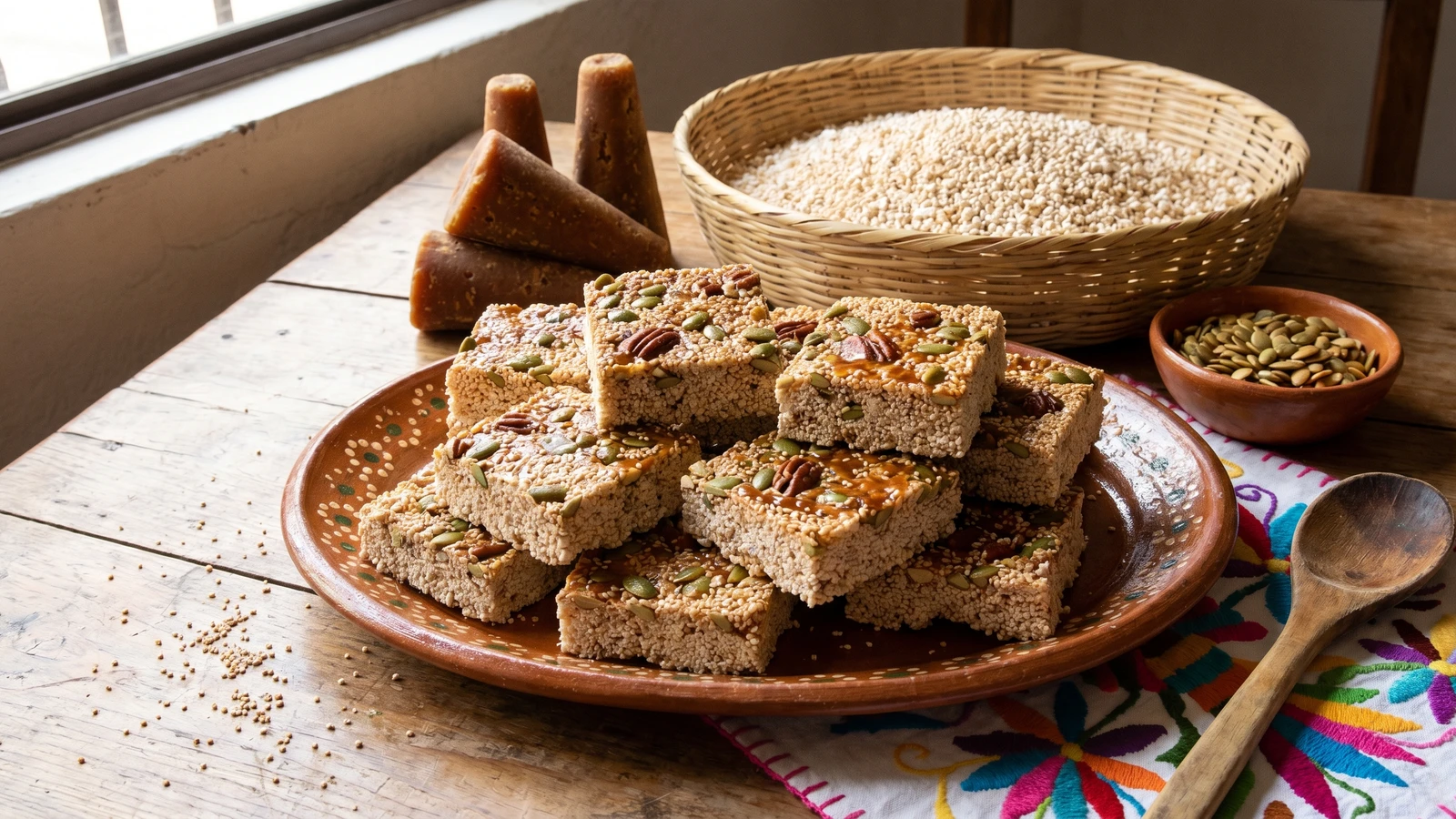
Querétaro's mercado candy of popped amaranto pressed with dark piloncillo syrup, pepitas, pecans, and cacahuate, a Bajío sweet that respects the seed before it decorates the table.
Querétaro, in the Bajío, gives this alegría its own sober, market-table character: popped amaranto, dark piloncillo, pepitas verdes, nuez pecan, and cacahuate pressed into squares for feria days, school lunches, and the dulcería counter near the Mercado de la Cruz. This is not pastry. This is seed, syrup, pressure, and timing.
The amaranto is the center. It grows in the old milpa logic of central Mexico, alongside maize and beans, and it still carries the memory of food that fed people before sugar arrived. Piloncillo came later and stayed because it knows how to bind without pretending to be refined. Do not call it brown sugar. Piloncillo has cane depth, mineral darkness, and the smell of a proper mercado sack.
I learned this version from a señora in Querétaro who pressed the mixture with a flat board wrapped in oil-slicked paper. She did not measure the pressure. Her hands knew. The syrup must reach soft-ball stage, the amaranto must stay dry until the last moment, and the slab must be cut before it turns stubborn. No me vengas con atajos. If you burn the piloncillo, start again.
Cada estado, su propia cocina. Querétaro's alegría is not the same as the neat tourist rounds from Xochimilco, and it is not a glossy candy-shop bar. It belongs to the Bajío table, wrapped in wax paper, carried in a school bag, stacked beside guayaba de Calvillo, ate, and queso fresco when the family wants something sweet that still feeds them.
Amaranth was one of the major pre-Columbian crops of central Mexico, used as food and in ritual forms by Nahua and Otomí communities before Spanish authorities restricted some ceremonial uses in the 16th century. The modern alegría developed after the colonial introduction of cane sugar, when popped amaranth could be bound with piloncillo or honey into portable market sweets. Querétaro's version belongs to the Bajío dulcería register, closer to feria and mercado candy than to convent sweets, with pepitas, pecans, and cacahuates reflecting the regional trade of seeds and nuts through central Mexico.
Quantity
6 cups
Quantity
1 1/2 cups
grated and packed
Quantity
1/2 cup
Quantity
2 tablespoons
Quantity
1 tablespoon
Quantity
1
Quantity
1 strip
white pith removed
Quantity
1/2 teaspoon
Quantity
3/4 cup
lightly toasted
Quantity
1/2 cup
chopped and lightly toasted
Quantity
1/3 cup
chopped
Quantity
2 tablespoons
lightly toasted
Quantity
1 tablespoon
for greasing the pan
| Ingredient | Quantity |
|---|---|
| popped amaranto | 6 cups |
| piloncillograted and packed | 1 1/2 cups |
| water | 1/2 cup |
| miel de abeja | 2 tablespoons |
| fresh lime juice | 1 tablespoon |
| Mexican cinnamon stick | 1 |
| orange peelwhite pith removed | 1 strip |
| kosher salt | 1/2 teaspoon |
| pepitas verdeslightly toasted | 3/4 cup |
| pecanschopped and lightly toasted | 1/2 cup |
| roasted cacahuateschopped | 1/3 cup |
| sesame seedslightly toasted | 2 tablespoons |
| neutral oilfor greasing the pan | 1 tablespoon |
Lightly oil a 9 by 13-inch metal pan or a shallow wooden frame set over parchment. Keep a second sheet of parchment ready for pressing the candy. Once the syrup is ready, you will not have time to look for equipment. La cocina no es decoración, es trabajo.
Place the popped amaranto in a wide bowl. Add the toasted pepitas, pecans, cacahuates, sesame seeds, and salt. Toss with your hands so everything is evenly distributed. The amaranto should smell nutty and dry, never stale. If it tastes tired, the alegría will taste tired. Start at the mercado, not the stove.
Combine the grated piloncillo, water, miel de abeja, lime juice, cinnamon stick, and orange peel in a heavy saucepan. Bring to a steady simmer over medium heat, stirring until the piloncillo dissolves. Stop stirring once it bubbles evenly. Let it cook until the syrup thickens, looks glossy, and reaches 245F on a candy thermometer.
Pull out the cinnamon stick and orange peel. Work carefully. Piloncillo syrup burns badly because it clings to the skin. This is not the moment for children near the pot.
Pour the hot piloncillo syrup over the amaranto mixture in a thin stream while stirring with a wooden spoon. Fold quickly from the bottom of the bowl until every seed is glossed with syrup. Do not crush the amaranto. You want it bound, not packed into paste. Así se hace y punto.
Scrape the mixture into the prepared pan. Cover with parchment and press firmly with the bottom of a measuring cup or a flat wooden board. The surface should be even and compact enough to hold together when cut, but not so compressed that it loses its lightness. Women who make dulces at the feria know this pressure by hand. You will learn it by doing.
Let the slab cool at room temperature for 45 minutes, until firm but not rock hard. Lift it out and cut into 24 squares with an oiled knife. If you wait until it is completely hard, it will crack instead of cutting cleanly. Wrap each alegría in wax paper or stack them in a tin with parchment between layers.
1 serving (about 30g)
Culinary guides, cultural storytelling, and the editorial depth that makes cooking meaningful.
Discover Culinary ExplorerChef Lupita
Puebla's convent-style acitrón, made from cidra peel instead of endangered biznaga, built through repeated syrup soakings until the cubes turn firm, translucent, and ready for rosca or chiles en nogada.

Chef Lupita
Ciudad de México's Tulyehualco alegría is popped huautli folded into piloncillo honey, pressed with peanuts, pepitas, and raisins, then cut into the rectangular bars that built a pueblo's identity.

Chef Lupita
Oaxaca's pre-Columbian amaranth bar, popped on a hot comal and bound with piloncillo, honey, and the sacred Zapotec grain that the Spanish tried, and failed, to outlaw.

Chef Lupita
Guanajuato's Day of the Dead alfeñiques are cane-sugar figures pressed in dry molds, finished with bright icing, and set on Talavera guanajuatense platones for the altar.