
Chef Jeong-sun
Aehobak-bokkeum (Korean Stir-Fried Zucchini)
Tender Korean zucchini half-moons cooked quickly over real heat, seasoned with salted shrimp so the squash tastes deeper than oil and still clean enough for a weeknight table.
A cooking platform built around craft, culture, and the stories behind what we eat.
Created by
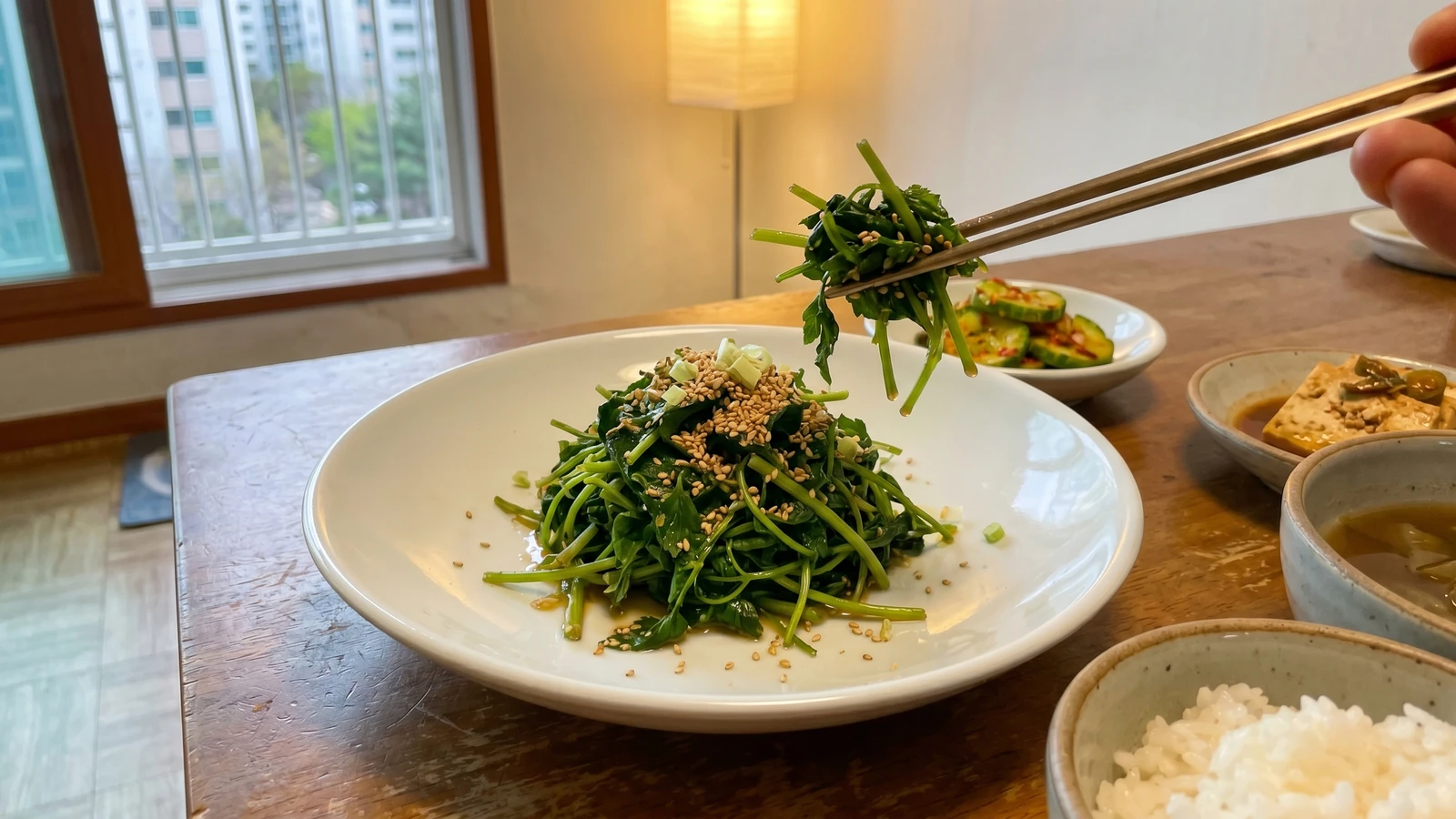
The gentlest spring namul, blanched for seconds and seasoned with restraint so the leaves stay fragrant, the stems keep a small bite, and nothing in the bowl shouts over the herb.
Cham-namul belongs to spring markets. You see it in loose green bundles, leaves tender, stems thin enough to bend without snapping, and you know the table is ready for lighter food. Cook the month you're standing in. This herb is at its best in spring and early summer, before the stems get tough and the fragrance turns tired.
The dish lives or dies by restraint. Blanch it briefly, shock it cold, squeeze it firmly but not cruelly, then season it alone in its own bowl. Every namul asks for its own balance before it ever meets rice. Cham-namul is easy to overpower, so no gochujang, no sugar, no heavy hand with garlic. Let it taste like itself.
Notebook 31 says 200 grams of trimmed cham-namul takes 3/4 teaspoon salt in the blanching water and just 1 teaspoon of soup soy sauce in the bowl. That looks like too little until you taste it. 손맛 is real. I still measure it, so it can be handed on.
Tonight this dish asks for attention, not strength. Wash the leaves well, watch the clock, taste before you add more seasoning. Put it beside rice, a jjigae, and one richer banchan, and the whole table becomes cleaner.
Cham-namul is part of Korea's san-namul tradition, the cooking of wild and mountain greens gathered in spring before cultivated vegetables filled the markets year-round. The word namul means both edible greens and the seasoned vegetable dish made from them, a category visible throughout Joseon-era household food records rather than tied to one palace origin. Today most cham-namul sold in Korean markets is cultivated, but the cooking method still follows the older spring habit: brief blanching, light seasoning, and respect for the green's own fragrance.
Quantity
200g
tough stems trimmed
Quantity
6 cups
for blanching
Quantity
3/4 teaspoon
for blanching water
Quantity
1 teaspoon
Quantity
1/4 teaspoon, plus more only if needed
Quantity
1 small clove
very finely minced, about 1/2 teaspoon
Quantity
1 tablespoon
Quantity
1 teaspoon
lightly crushed
Quantity
1 teaspoon
finely chopped
| Ingredient | Quantity |
|---|---|
| cham-namul (Korean wild parsley)tough stems trimmed | 200g |
| waterfor blanching | 6 cups |
| coarse saltfor blanching water | 3/4 teaspoon |
| guk-ganjang (Korean soup soy sauce) | 1 teaspoon |
| fine sea salt | 1/4 teaspoon, plus more only if needed |
| garlicvery finely minced, about 1/2 teaspoon | 1 small clove |
| toasted sesame oil | 1 tablespoon |
| toasted sesame seedslightly crushed | 1 teaspoon |
| scallion (optional)finely chopped | 1 teaspoon |
Trim away any thick or fibrous stem ends. Wash the cham-namul in two or three changes of cold water, lifting the greens out each time instead of pouring the grit back over them. Tender leaves bruise easily, so move them with open fingers, not a crushing grip.
Bring 6 cups water to a full boil and add 3/4 teaspoon coarse salt. Drop in the cham-namul and press it under the water for 20 to 30 seconds, just until the leaves turn bright green and the stems relax. Do not wander away. This green goes from fragrant to limp very quickly.
Lift the greens into a bowl of cold water and swish once to stop the cooking. Drain, gather the greens in both hands, and squeeze out water until they are damp but not dripping. If you leave too much water, the seasoning slides off. If you crush them dry, the leaves lose their life.
Lay the squeezed bundle on the board and cut it into 2-inch lengths. This is small work, but it matters: banchan should be easy to lift with chopsticks and eat with rice in one bite.
Put the greens in a mixing bowl and loosen them with your fingers. Add the soup soy sauce, fine sea salt, minced garlic, sesame oil, crushed sesame seeds, and scallion if using. Mix gently by hand, lifting and turning until the seasoning reaches every stem. Taste one stem and one leaf. It should be green, lightly nutty, and clean, with garlic behind the herb, not in front of it.
Let the seasoned namul sit 5 minutes, then taste again. Sesame oil softens the edges and the salt settles into the stems. Serve at room temperature in a small banchan dish, with rice and a stew or grilled fish.
1 serving (about 40g)
Culinary guides, cultural storytelling, and the editorial depth that makes cooking meaningful.
Discover Culinary ExplorerChef Jeong-sun
Tender Korean zucchini half-moons cooked quickly over real heat, seasoned with salted shrimp so the squash tastes deeper than oil and still clean enough for a weeknight table.

Chef Jeong-sun
Tender Korean summer zucchini softened gently in the pan with saeujeot for salt and depth, finished with sesame so the vegetable stays sweet, green, and plainly itself.

Chef Jeong-sun
A bittersweet spring green from the southern shore, blanched just until pliant, then seasoned lightly so its clean coastal bitterness stays alive on the rice table.

Chef Jeong-sun
Torn king oyster or shiitake mushrooms, browned until their own water disappears, then finished with soy, garlic, sesame oil, and onion for a quiet banchan that earns its place.