
Chef Lupita
Acitrón de Cidra Conventual
Puebla's convent-style acitrón, made from cidra peel instead of endangered biznaga, built through repeated syrup soakings until the cubes turn firm, translucent, and ready for rosca or chiles en nogada.
A cooking platform built around craft, culture, and the stories behind what we eat.
Created by
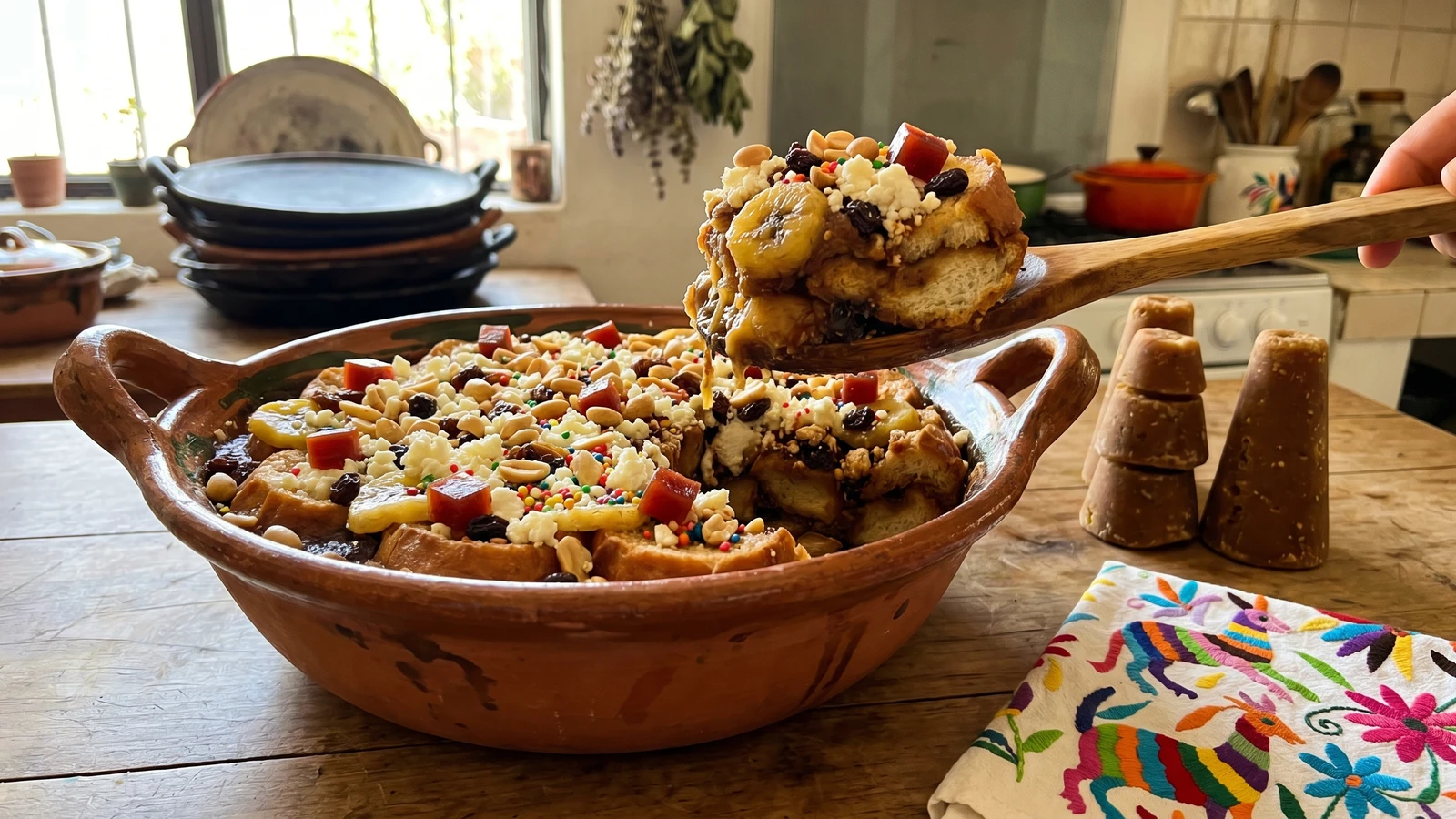
Guanajuato's market-style Lent capirotada, layered with bolillo, piloncillo miel, queso ranchero, raisins, peanuts, plantain, and ate de guayaba, built for a family table, not a convent register.
Guanajuato, in the Bajio, owns this version: capirotada de mercado from Salamanca and Celaya kitchens, not capirotada conventual dressed up for a silver tray. This is Cuaresma food, made when the meat leaves the table and the household still needs something generous, sweet, salty, and filling.
The ingredient that defines it is piloncillo. Not brown sugar. Piloncillo. It becomes a dark miel with canela, clavo, and orange peel, then it sinks into bolillo from the day before. The queso ranchero matters too. It gives salt and body against the raisins, peanuts, platano macho, and ate de guayaba. If you remove the cheese because dessert should behave like cake, you don't understand this dish yet.
I learned a version like this from a señora near the Mercado Hidalgo in Guanajuato, and she watched the syrup more carefully than she watched anything else. Too thin and the bread tastes wet. Too thick and it sits on top like candy. The syrup has to enter the bread and leave it standing. La cocina no es decoración, es trabajo.
This is Bajio household architecture: dry bread saved, piloncillo melted, cheese crumbled by hand, peanuts bought by weight at the stall. Cada estado, su propia cocina. Saber cocinar es saber vivir.
Capirotada entered Mexican Lent cooking through Spanish bread puddings and sopas dulces, then changed in New Spain as piloncillo, local cheeses, peanuts, and regional fruits replaced Iberian pantry habits. In central Mexico, convent versions often became more refined with milk, wine, nuts, or decorative finishes, while market and household versions in the Bajio stayed practical: stale bolillo, piloncillo syrup, salty fresh cheese, raisins, and peanuts. The dish became especially tied to Cuaresma because it fed families on meatless Fridays using saved bread and durable market ingredients.
Quantity
6
sliced 3/4 inch thick
Quantity
3 tablespoons
melted, for brushing the bread
Quantity
12 ounces
chopped or grated
Quantity
3 cups
Quantity
2
Quantity
4
Quantity
2 strips
pith removed
Quantity
1 small pinch
Quantity
1 cup
crumbled
Quantity
3/4 cup
Quantity
3/4 cup
skins removed
Quantity
1/3 cup
Quantity
1
peeled and sliced into 1/4-inch rounds
Quantity
1 tablespoon
for frying the plantain
Quantity
1/2 cup
cut into small cubes
Quantity
1/4 cup
for the market-style finish
| Ingredient | Quantity |
|---|---|
| bolillos from the day beforesliced 3/4 inch thick | 6 |
| manteca de cerdo or unsalted buttermelted, for brushing the bread | 3 tablespoons |
| piloncillochopped or grated | 12 ounces |
| water | 3 cups |
| Mexican cinnamon sticks | 2 |
| whole cloves | 4 |
| orange peelpith removed | 2 strips |
| fine sea salt | 1 small pinch |
| queso ranchero from Guanajuato or firm queso frescocrumbled | 1 cup |
| raisins | 3/4 cup |
| roasted unsalted peanutsskins removed | 3/4 cup |
| sliced almonds | 1/3 cup |
| ripe platano machopeeled and sliced into 1/4-inch rounds | 1 |
| manteca de cerdo or unsalted butterfor frying the plantain | 1 tablespoon |
| ate de guayaba from the Bajiocut into small cubes | 1/2 cup |
| grajeas de colores (optional)for the market-style finish | 1/4 cup |
Spread the sliced bolillo on a tray and let it sit uncovered for at least 4 hours, or overnight if you planned like a serious cook. Day-old bread drinks syrup without collapsing. Fresh bread turns pasty and then you blame the recipe. No me vengas con atajos.
Heat the oven to 350F. Brush both sides of the bread lightly with melted manteca or butter and arrange the slices in a single layer. Bake for 12 to 15 minutes, turning once, until the edges are golden and the centers feel dry. You want structure. The bread still has to hold itself after the piloncillo enters.
Combine the piloncillo, water, canela, cloves, orange peel, and salt in a saucepan. Bring to a steady simmer and cook 18 to 22 minutes, until the piloncillo dissolves and the syrup coats a spoon lightly. It should smell of canela first, then dark sugar, then clove. Strain it. The syrup is the spine of the capirotada.
Melt 1 tablespoon manteca or butter in a skillet over medium heat. Fry the platano macho slices until browned at the edges, about 2 minutes per side. They should be soft but not falling apart. In Bajio kitchens, that little sweetness against the salty cheese is the point.
Use a 2-quart clay cazuela or a heavy baking dish. Spoon a little syrup on the bottom. Add a layer of toasted bolillo, then queso ranchero, raisins, peanuts, almonds, fried plantain, and cubes of ate de guayaba. Repeat until everything is used, ending with cheese, peanuts, raisins, and a few pieces of ate on top. Do not pack it down hard. The syrup needs paths to move.
Pour the warm piloncillo syrup slowly over the layers, pausing so the bread can absorb it. Press only with the back of a spoon, gently. You should see syrup at the edges, not a dry mountain of bread. Let it stand 10 minutes before baking. Patience here saves the texture.
Cover the cazuela loosely with foil and bake at 350F for 25 minutes. Uncover and bake 10 minutes more, until the top is glossy, the cheese has softened, and the edges are sticky with piloncillo. This is not custard. This is bread, syrup, fruit, peanuts, and cheese holding together like a Cuaresma table should.
Let the capirotada rest at least 20 minutes before serving. Scatter grajeas on top if your family uses them. Some do, some don't. Serve warm or at room temperature from the cazuela, with a spoon big enough for the table to understand this is family food. Recetas probadas y garantizadas.
1 serving (about 250g)
Culinary guides, cultural storytelling, and the editorial depth that makes cooking meaningful.
Discover Culinary ExplorerChef Lupita
Puebla's convent-style acitrón, made from cidra peel instead of endangered biznaga, built through repeated syrup soakings until the cubes turn firm, translucent, and ready for rosca or chiles en nogada.

Chef Lupita
Ciudad de México's Tulyehualco alegría is popped huautli folded into piloncillo honey, pressed with peanuts, pepitas, and raisins, then cut into the rectangular bars that built a pueblo's identity.

Chef Lupita
Oaxaca's pre-Columbian amaranth bar, popped on a hot comal and bound with piloncillo, honey, and the sacred Zapotec grain that the Spanish tried, and failed, to outlaw.

Chef Lupita
Querétaro's mercado candy of popped amaranto pressed with dark piloncillo syrup, pepitas, pecans, and cacahuate, a Bajío sweet that respects the seed before it decorates the table.