Chef Lupita
Acúmara Tatemada al Comal
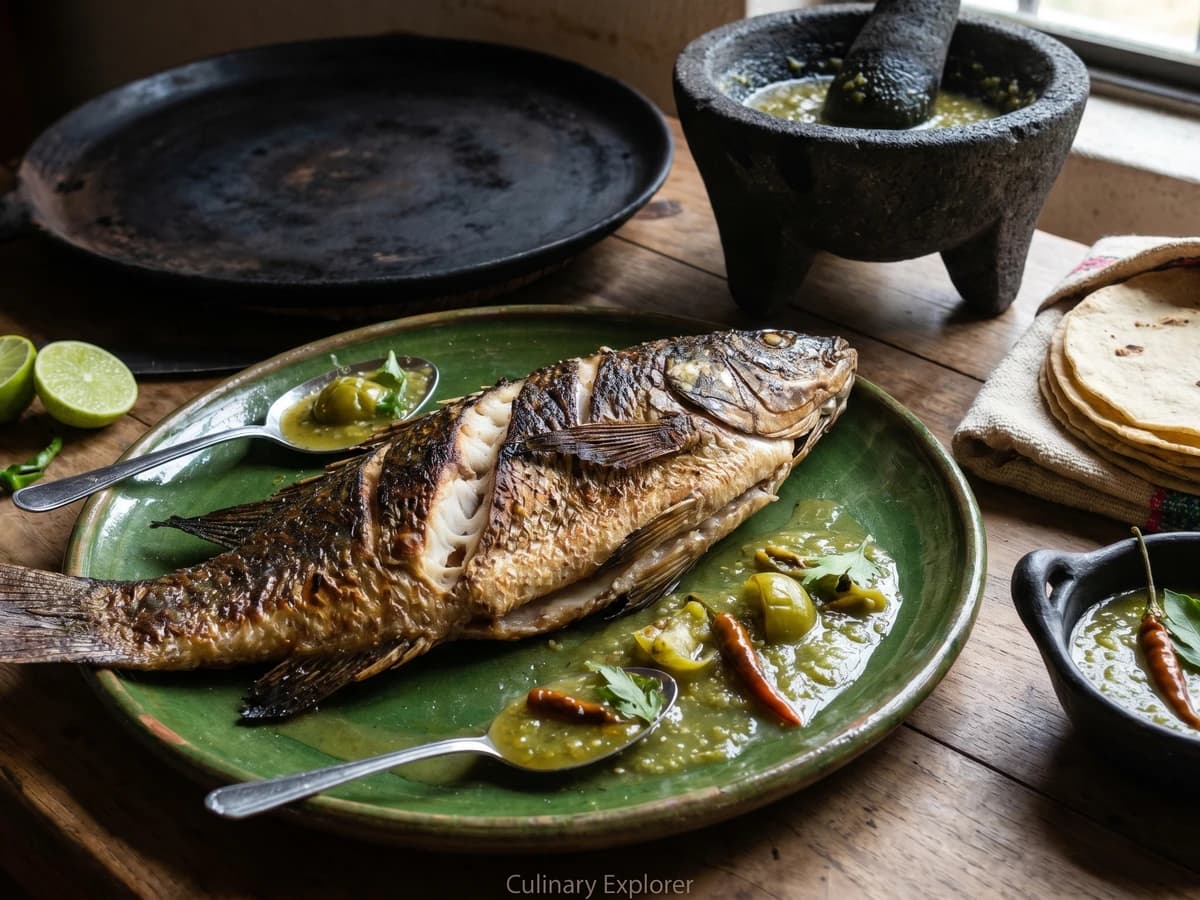
Michoacán's Lake Pátzcuaro acúmara, a whole kurucha from the lago tatemada on a comal de leña and served with chile perón atápakua, corn tortillas, and P'urhépecha discipline.
A cooking platform built around craft, culture, and the stories behind what we eat.
Created by
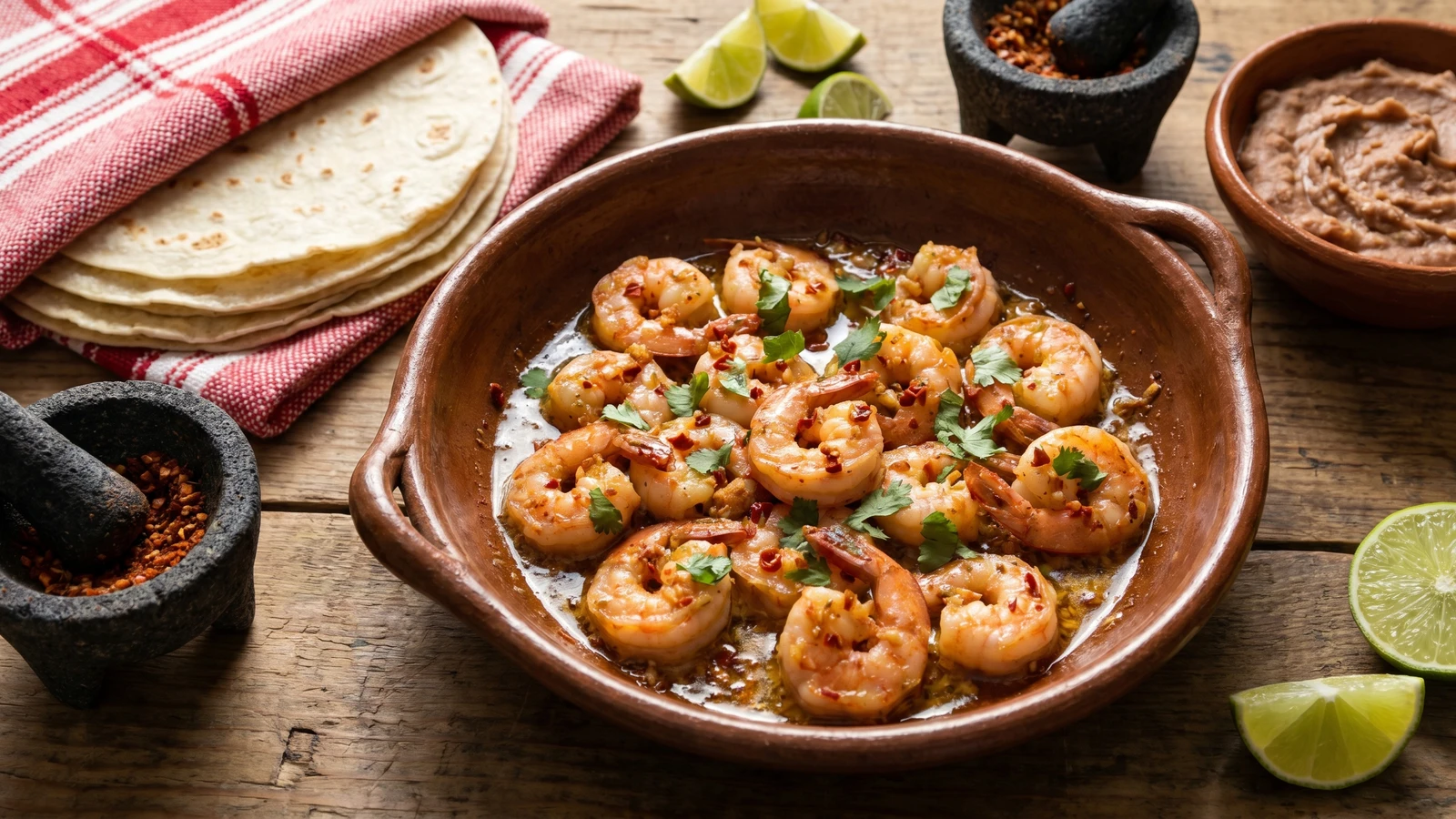
Sonora's desert-fired shrimp from the Sea of Cortez, butter-sauteed with crushed chiltepin and a bare minimum of garlic. Heat for cooks who respect what the smallest chile in Mexico can do.
This is from Sonora. The northwest. Cattle country, wheat country, and the long coast of the Sea of Cortez where the shrimp boats come in heavy and the chiltepin grows wild in the sierras. Two ingredients define this dish and both belong to the same state: the camaron from the gulf and the chiltepin from the desert hills above it.
Chiltepin is the smallest cultivated chile in Mexico and the most misunderstood. The size of a pea, dried to a wrinkled red dot, it carries a heat that arrives fast and leaves fast, sharp and clean, with none of the slow burn of a habanero. The Sonorans gather it wild, sell it by the gram in glass jars at the mercado in Hermosillo, and treat it with the respect a cook owes any ingredient that can hurt them. A tablespoon perfumes a pan. Three tablespoons is a statement.
The northern states cook differently from the south and this dish proves it. Butter, not lard. Flour tortillas, not corn. Wheat, beef, dairy. These are the ingredients of a region with cattle ranches and wheat fields, not the milpa traditions of central and southern Mexico. People who learned Mexican food in Mexico City or in a Oaxacan market sometimes refuse to call this Mexican cooking. They are wrong. Cada estado, su propia cocina, and Sonora's kitchen looks like Sonora.
My mother was from Jalisco and never cooked with chiltepin. I learned this dish in a small marisqueria in Bahia de Kino from a woman named Rosalba who told me the only secret was to crush the chile with your hand, not a blender, so you could feel how much heat you were giving the pan. Saber cocinar es saber vivir.
Chiltepin (Capsicum annuum var. glabriusculum) is the wild ancestor of every cultivated chile in the Americas and grows abundantly in the Sonoran sierras, where it has been gathered by the Yaqui, Mayo, and Seri peoples for thousands of years. In 1999 the Mexican government declared chiltepin a protected species in Sonora due to overharvesting, and the towns of Bavispe and Moctezuma now hold annual harvest festivals that double as conservation efforts. The pairing of chiltepin with shrimp from the Sea of Cortez emerged in the 20th century as Sonora's commercial shrimp industry grew alongside Sinaloa's, with marisquerias in Guaymas and Bahia de Kino codifying the dish as a regional signature distinct from Sinaloa's aguachile traditions to the south.
Quantity
1 1/2 pounds
peeled and deveined, tails left on
Quantity
2 tablespoons
about 3 tablespoons for the full Sonoran sting
Quantity
4 tablespoons
Quantity
2 tablespoons
Quantity
4
finely minced
Quantity
1 teaspoon, plus more to taste
Quantity
2 for juicing, 2 more for wedges
Quantity
2 tablespoons
chopped
Quantity
for serving
warmed on a comal
Quantity
for serving
| Ingredient | Quantity |
|---|---|
| large shrimp from the Sea of Cortezpeeled and deveined, tails left on | 1 1/2 pounds |
| dried chiltepin chilesabout 3 tablespoons for the full Sonoran sting | 2 tablespoons |
| unsalted butter | 4 tablespoons |
| olive oil | 2 tablespoons |
| garlic clovesfinely minced | 4 |
| kosher salt | 1 teaspoon, plus more to taste |
| Mexican limes | 2 for juicing, 2 more for wedges |
| fresh cilantrochopped | 2 tablespoons |
| flour tortillas (optional)warmed on a comal | for serving |
| frijoles puercos (optional) | for serving |
Place the dried chiltepines in a molcajete and crush them coarsely. Not to powder. You want broken pieces, some half-intact, some shattered. The chiltepin is the size of a pea but it carries the heat of a desert. Wash your hands after. Do not touch your face. The oils stay on your skin for hours.
Pat the shrimp dry with paper towels. Wet shrimp will not sear. They will steam in their own water and turn rubbery. Salt them lightly and let them sit on the towel while you heat the pan. This is not a step to skip. The Sonoran cooks who taught me this dish were ruthless about dry shrimp.
Place a wide heavy skillet, cast iron is best, over medium-high heat. Add the olive oil first, then the butter. The oil keeps the butter from burning. Wait for the butter to foam and the foam to subside. The bottom of the pan should look like clear gold.
Drop the crushed chiltepin into the hot fat. It will hiss and the kitchen will fill with a sharp peppery bite that catches the back of the throat. Open a window. Stir for 15 seconds, no longer, then add the minced garlic. The garlic should turn fragrant but not brown. If the garlic browns, the dish turns bitter. Move fast.
Add the shrimp in a single layer. Do not crowd the pan. If you have to, do this in two batches. Cook for 90 seconds on the first side without moving them. The shrimp should turn pink and opaque from the bottom up. Flip each one and cook for 60 more seconds. Sprinkle the salt across the pan as they finish.
Pull the pan off the heat. Squeeze the juice of two limes directly into the pan. The acid lifts the chile and brightens the butter. Toss the shrimp once or twice to coat. Scatter the cilantro across the top. Taste one. If it needs more salt, add it now. Asi se hace y punto.
Tip the shrimp and all the chile butter into a warm clay cazuela. Set the warmed flour tortillas alongside, wrapped in a servilleta. Each person folds a tortilla around two or three shrimp and a spoonful of the butter. Frijoles puercos on the side if you want the full Sonoran table. Eat while the butter is still hot enough to soak into the tortilla.
1 serving (about 195g)
Culinary guides, cultural storytelling, and the editorial depth that makes cooking meaningful.
Discover Culinary ExplorerChef Lupita
Michoacán's Lake Pátzcuaro acúmara, a whole kurucha from the lago tatemada on a comal de leña and served with chile perón atápakua, corn tortillas, and P'urhépecha discipline.

Chef Lupita
Puebla's weekday adobo of pork shoulder braised in a thick guajillo and ancho sauce sharpened with vinegar, cumin, and clove. The deep red of a market spice stall, the dish a poblana cooks without thinking.

Chef Lupita
Loreto's pit-roasted clams, planted hinge-up in beach sand and tatemadas under a fast fire of dried romerillo brush, the resinous Baja desert shrub that gives this dish its smoke.

Chef Lupita
Oaxaca's eighth mole, the silky, almond-and-cinnamon almendrado, served over poached chicken. Mild, sweet, restrained, and a quiet rebuttal to anyone who thinks Mexican food has to be hot to be Mexican.