Chef Joost
Amsterdamse Ossenworst
The name means ox sausage, but the real story is Amsterdam itself: cattle trade, Jewish butchers, VOC spices, and raw beef sliced thin with onion.
A cooking platform built around craft, culture, and the stories behind what we eat.
Created by
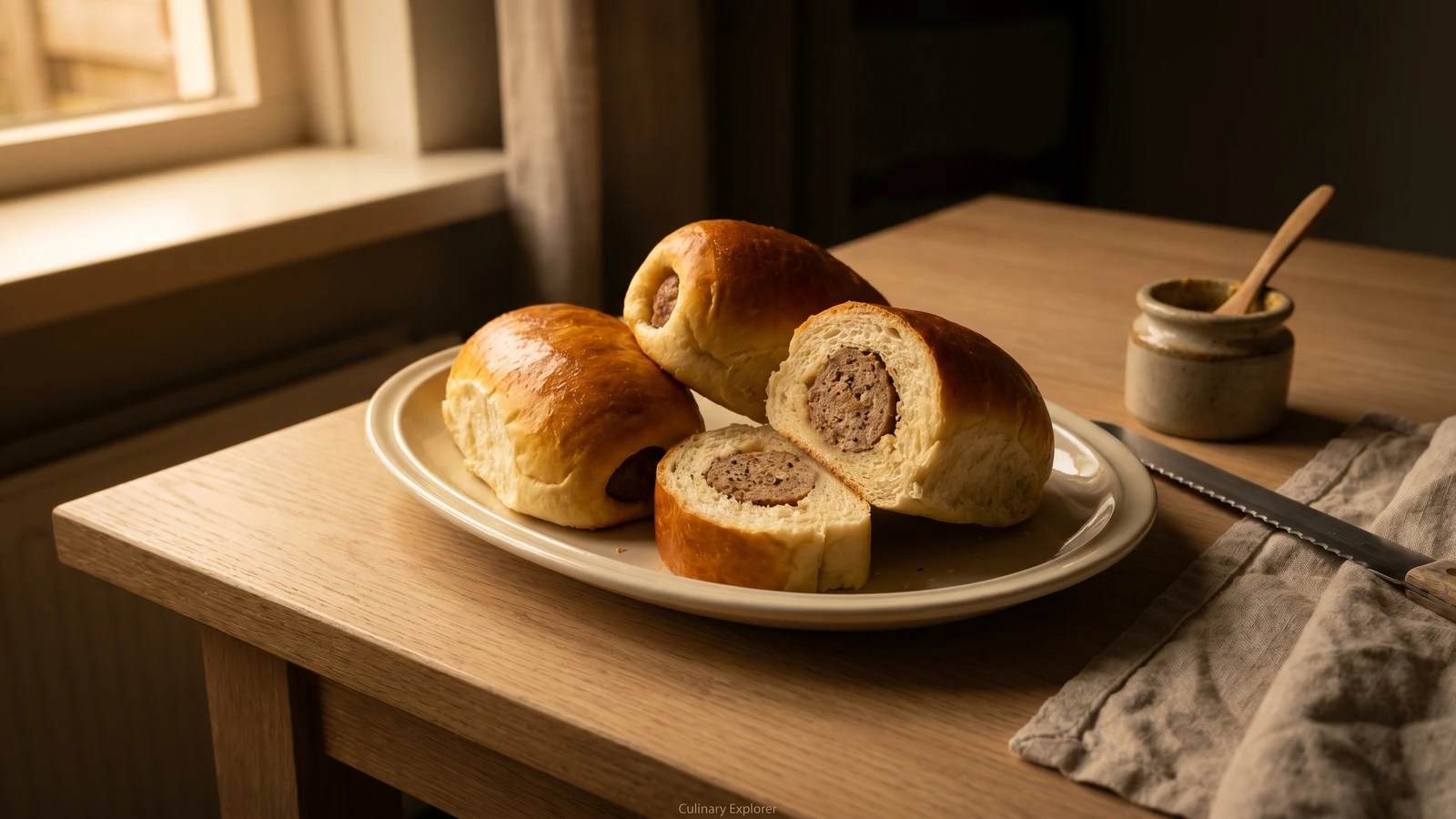
South of the rivers, a soft bread roll hiding seasoned minced meat is breakfast, borrel, and winter table all at once: Brabant's quiet answer to anyone who mistakes Dutch food for plain.
South of the rivers, onder de rivieren, a worstenbroodje is how a province keeps a little meat and bread within reach. In Zeeland I grew up with the tide table by the door; in Brabant, when I first stayed with a family after a December evening, the plate by the stove told me the calendar just as clearly. Midnight Mass, New Year visits, Carnaval, a tray for the builders, a tray for the cousins, the same small roll appearing before anyone announces a meal.
The name is almost stubbornly honest: worst, sausage, brood, bread, and -je, the Dutch little ending that makes food fit the hand. But let me tell you a secret. The name also protects the dish from its richer cousin, the saucijzenbroodje. That one is puff pastry. This is bread dough, soft and faintly sweet, wrapped around seasoned mince so the two bake into one sensible object. The pastry version flakes on your shirt; the Brabant one travels to a potluck without drama. For obvious reasons, this made it beloved.
The trick is modest. Knead the meat mixture only until it turns tacky, because that is the skinless sausage holding itself together. Let the dough rise properly, seal it under the meat, and proof once more so the roll does not split in the oven like a badly kept secret. Nutmeg or mace is not modern decoration; it is the old Dutch meat cupboard speaking softly.
Then walk it back to a real table. Eat them warm, or at room temperature, with mustard if the family does, and no apology if the tray empties before dinner. Hou het altijd simpel: good mince, soft dough, proper seasoning. The rest is Brabant doing what Brabant does, quietly being right.
Brabants worstenbroodje is a regional speciality of Noord-Brabant and is traditionally linked with the Catholic winter calendar, especially food eaten after nachtmis, midnight Mass, and during Carnaval. Its bread dough distinguishes it from the Dutch saucijzenbroodje, which uses puff pastry, and the filling reflects the old household economy of late-autumn slaughter and bread baking. In 2016 the Brabants worstenbroodje was entered in the Netherlands' National Inventory of Intangible Cultural Heritage, recognition of a living regional practice carried mainly by bakers, families, and workplace trays.
Quantity
500g
Quantity
7g
Quantity
10g
Quantity
8g
Quantity
250ml
lukewarm
Quantity
50g
softened
Quantity
1
Quantity
600g
Quantity
60g
Quantity
1
Quantity
9g
Quantity
1 teaspoon
Quantity
1/2 teaspoon
Quantity
1/4 teaspoon
Quantity
2 tablespoons
Quantity
1 egg plus 1 tablespoon milk
| Ingredient | Quantity |
|---|---|
| bread flour or Dutch patentbloem | 500g |
| instant yeast | 7g |
| sugar | 10g |
| fine salt for the dough | 8g |
| whole milklukewarm | 250ml |
| unsalted buttersoftened | 50g |
| egg for the dough | 1 |
| half-and-half minced pork and beef | 600g |
| fine dry breadcrumbs or crushed beschuit | 60g |
| egg for the filling | 1 |
| fine salt for the filling | 9g |
| ground white pepper | 1 teaspoon |
| freshly grated nutmeg | 1/2 teaspoon |
| ground mace or extra nutmeg | 1/4 teaspoon |
| whole milk for the filling | 2 tablespoons |
| egg beaten with milk for brushing | 1 egg plus 1 tablespoon milk |
Mix the flour, yeast, sugar, and salt in a large bowl. Add the lukewarm milk, softened butter, and egg, then knead for 8 to 10 minutes until the dough is soft, smooth, and just tacky. Cover and let it rise until doubled, about 1 hour. A worstenbroodje needs tender bread, not a tough jacket, so use only a little extra flour if the dough sticks.
Put the minced pork and beef in a bowl with the breadcrumbs, egg, salt, white pepper, nutmeg, mace, and milk. Mix with your hand until the meat turns slightly tacky and holds together, then divide into 12 equal portions and roll each into a short sausage about 11cm long. Chill the meat logs for 20 minutes. The chill is not fuss; a firm filling rolls neatly into the dough instead of smearing across it.
Punch down the risen dough and divide it into 12 equal pieces. Roll each piece into an oval large enough to enclose one meat log, about 14cm by 10cm. Lay the meat in the centre, fold the short ends over it, then bring the long sides together and pinch the seam firmly closed. Place each roll seam-side down on a parchment-lined baking sheet.
Cover the shaped rolls loosely and let them proof for 35 to 45 minutes, until puffed and soft to the touch. Heat the oven to 200C, or 180C fan. Brush the tops with the beaten egg and milk. Do not rush this second rise; it is what lets the bread expand around the filling instead of cracking open.
Bake for 20 to 25 minutes, until the rolls are deep golden and the meat filling reaches 70C/160F in the centre. Let them rest for at least 10 minutes before serving. The bread finishes settling, the filling firms, and nobody burns their mouth trying to be first at the tray.
1 serving (about 125g)
Culinary guides, cultural storytelling, and the editorial depth that makes cooking meaningful.
Discover Culinary ExplorerChef Joost
The name means ox sausage, but the real story is Amsterdam itself: cattle trade, Jewish butchers, VOC spices, and raw beef sliced thin with onion.

Chef Joost
The little yellow onion on the Amsterdam borrel board looks modest, until vinegar, turmeric, and patience turn it into the sharp bite that wakes cheese, herring, and sausage.

Chef Joost
The bear's claw of the northern snackbar: a seasoned gehaktbal, Dutch meatball, cut into thick discs, skewered with onion, fried until the edges catch, then dragged through peanut sauce.

Chef Joost
The name points to the drink, not the mood: bitterballen are crisp little balls of beef ragout made for the borrel table, mustard beside them, fingers slightly burned by impatience.