
Chef Isabel
Arròs al Forn de Vigilia
Arròs al forn de vigilia is Valencia's meatless baked rice for Cuaresma: chickpeas, potato, tomato, and a whole garlic head set in a clay cazuela and baked dry, with no stirring.
A cooking platform built around craft, culture, and the stories behind what we eat.
Created by
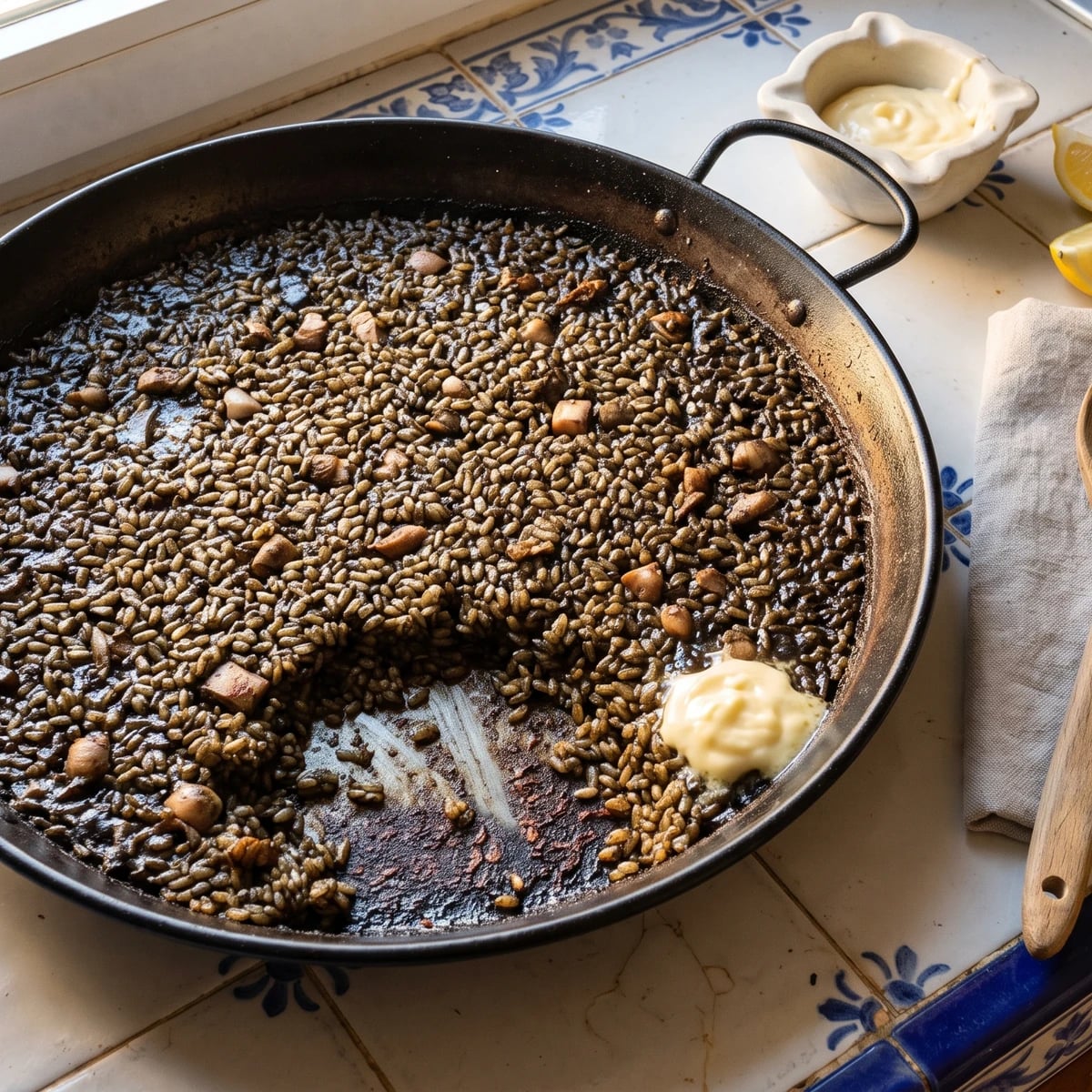
Arroz negro is Valencian coastal rice: short grains stained black with sepia ink, cooked dry in a wide pan, and finished with allioli, never peas.
Arroz negro is Valencian coastal arroz, a dry rice stained black with sepia or squid ink and cooked in a wide pan until the grains sit separate and glossy. This is not a paella painted black, and not every arroz is a paella. The ink, the cuttlefish, the fumet, and the sofrito, the slow onion and tomato base, are what make it this dish and not its neighbour's.
The method that decides it is the same one that decides most good dry rice from the coast: build the flavour before the broth goes in. Cook the sofrito low until the tomato is dark, thick, and almost sweet. Add the rice and move it through the oil until the grains look glassy. Then add hot fumet all at once and leave it alone. Stir after that and you work loose the starch, and the dry finish you wanted turns heavy.
If you are far from Valencia, no hace falta haber pisado España. Use short Spanish rice if you can, bomba, senia, bahía, or Calasparra. If not, use a good short-grain rice and know it will take a little less broth. Frozen cleaned squid is fine, and frozen ink packets are often better than ink you can't get fresh. What you cannot skip is a real fish stock; water gives you black rice with no sea behind it.
Serve it from the pan with allioli at the table. A small spoonful against the black rice is enough. My Margin beside this one says only: don't fuss with it once the broth is in. Siempre sale, si lo sigues.
Arroz negro belongs to the rice coast of Valencia and Alicante, where fishermen's kitchens made use of cuttlefish, squid, and their ink in the same wide pans used for other dry arroces. In Valencian it is arròs negre, and close versions run north along the Catalan coast, but the Valencian table keeps it tied to short local rice, seafood fumet, and allioli. The black colour is not decoration; ink was part of the animal and part of the larder, giving the rice its briny depth and its name.
Quantity
360g
Quantity
500g
bodies sliced, tentacles cut small
Quantity
1.2L
Quantity
16g
from sachets or fresh sacs
Quantity
1 large
finely chopped
Quantity
2, about 250g pulp
grated, skins discarded
Quantity
1 small
finely chopped
Quantity
4 cloves
2 minced, 2 reserved for allioli
Quantity
90ml
divided
Quantity
1 teaspoon
Quantity
120ml
Quantity
1
Quantity
1 pinch
Quantity
1 large
for allioli
Quantity
1 teaspoon, plus wedges to serve
Quantity
180ml
for allioli
Quantity
to taste
| Ingredient | Quantity |
|---|---|
| short Spanish rice, preferably bomba, senia, bahía, or Calasparra | 360g |
| cleaned cuttlefish or squidbodies sliced, tentacles cut small | 500g |
| good fish stock or seafood fumet | 1.2L |
| squid or cuttlefish inkfrom sachets or fresh sacs | 16g |
| onionfinely chopped | 1 large |
| ripe tomatoesgrated, skins discarded | 2, about 250g pulp |
| green pepperfinely chopped | 1 small |
| garlic2 minced, 2 reserved for allioli | 4 cloves |
| extra virgin olive oildivided | 90ml |
| sweet pimentón de la Vera | 1 teaspoon |
| dry white wine | 120ml |
| bay leaf | 1 |
| saffron threads (optional) | 1 pinch |
| egg yolkfor allioli | 1 large |
| lemon juice | 1 teaspoon, plus wedges to serve |
| mild olive oil or sunflower oilfor allioli | 180ml |
| salt | to taste |
Put the fish stock in a saucepan with the bay leaf and keep it hot at the side of the stove. Stir the ink into a ladleful of the hot stock until smooth and black, then return it to the pan. Taste carefully for salt; many ink packets are already salted, so season with a light hand now and adjust later.
Set a 38 to 42cm paellera or wide heavy pan over medium-high heat and add 45ml of the olive oil. Pat the cuttlefish or squid dry, salt it lightly, and fry it in the pan until it tightens, gives off its liquid, and begins to catch in golden spots, 6 to 8 minutes. Lift it to a plate and leave the oil and browned bits in the pan.
Lower the heat to medium-low. Add the onion, green pepper, and a pinch of salt to the pan and cook slowly for 12 to 15 minutes, scraping the bottom, until the onion is soft and dark gold. Add the 2 minced garlic cloves and cook 1 minute. Stir in the grated tomato and cook until the water is gone and the sofrito looks thick, dark, and jammy, 10 to 12 minutes more. That slow cook is where the sweetness comes from; rush it and the whole arroz tastes thinner.
Stir in the pimentón off the strongest heat for a few seconds, just until it smells warm, then pour in the white wine. Let it bubble down until the pan is almost dry again. Return the cuttlefish or squid to the pan and coat it well in the sofrito.
Sprinkle in the rice and stir it through the sofrito for 1 to 2 minutes, until every grain is blackened with the ink-dark base and looks a little glassy at the edges. Pésalo, no lo adivines: 360g rice to about 1.1 to 1.2L hot fumet is the balance for a dry rice in a wide pan, with bomba taking the upper amount.
Pour in 1.1L of the hot inked fumet all at once, reserving the last 100ml only in case the pan runs dry too soon. Add the saffron if using. Shake the pan gently to level the rice, bring it to a lively boil, and cook 8 minutes. From this point, do not stir. Stirring works the starch loose and turns a dry arroz into something else.
Reduce the heat to medium-low and cook 8 to 10 minutes more, until the rice is just tender and the surface looks glossy rather than wet. If the rice is still chalky and the pan is dry, spoon in a little of the reserved hot fumet around the edge, not over the top. For a little socarrat, raise the heat for the last 60 to 90 seconds and listen for a fine crackle, not a burn.
While the rice cooks, crush the 2 reserved garlic cloves with a pinch of salt to a paste. Whisk in the egg yolk and lemon juice, then add the mild oil drop by drop at first, then in a thin stream, until thick and glossy. Taste for salt. If it splits, start a new yolk in a clean bowl and whisk the broken sauce into it slowly. Nadie nace sabiendo.
Take the pan off the heat, cover loosely with a clean cloth, and rest 5 minutes. The grains finish settling and the bottom crust releases more cleanly. Serve straight from the pan with lemon wedges and allioli on the side, so each person can take a little with the black rice.
1 serving (about 560g)
Culinary guides, cultural storytelling, and the editorial depth that makes cooking meaningful.
Discover Culinary Explorer
Chef Isabel
Arròs al forn de vigilia is Valencia's meatless baked rice for Cuaresma: chickpeas, potato, tomato, and a whole garlic head set in a clay cazuela and baked dry, with no stirring.

Chef Isabel
Arròs amb ànec i anguila belongs to the Albufera of Valencia: duck from the marsh, eel from the water, and rice cooked dry until the bottom catches dark and good.

Chef Isabel
Arròs amb fesols i naps is Valencian spoon rice from La Safor and La Marina: white beans, winter turnips, and pork cooked into a broth rich enough to take the rice without turning dry.

Chef Isabel
Arroz a banda is Alicante's fishermen's rice: dry rice cooked in fierce fish stock with salmorreta, the fish served apart, and allioli beside it. Not paella. Its own thing.