
Chef Juliette
John Dory (St. Pierre)
John Dory has the delicacy of sole and the firmness of turbot. A light flouring, a quick butter sauté, and nut-brown beurre noisette show exactly why looks never mattered.
A cooking platform built around craft, culture, and the stories behind what we eat.
Created by Chef Juliette
Based on No. 996, Laitances de Carpe (Carp’s Milt), from Le Guide Culinaire (1907) by Auguste Escoffier
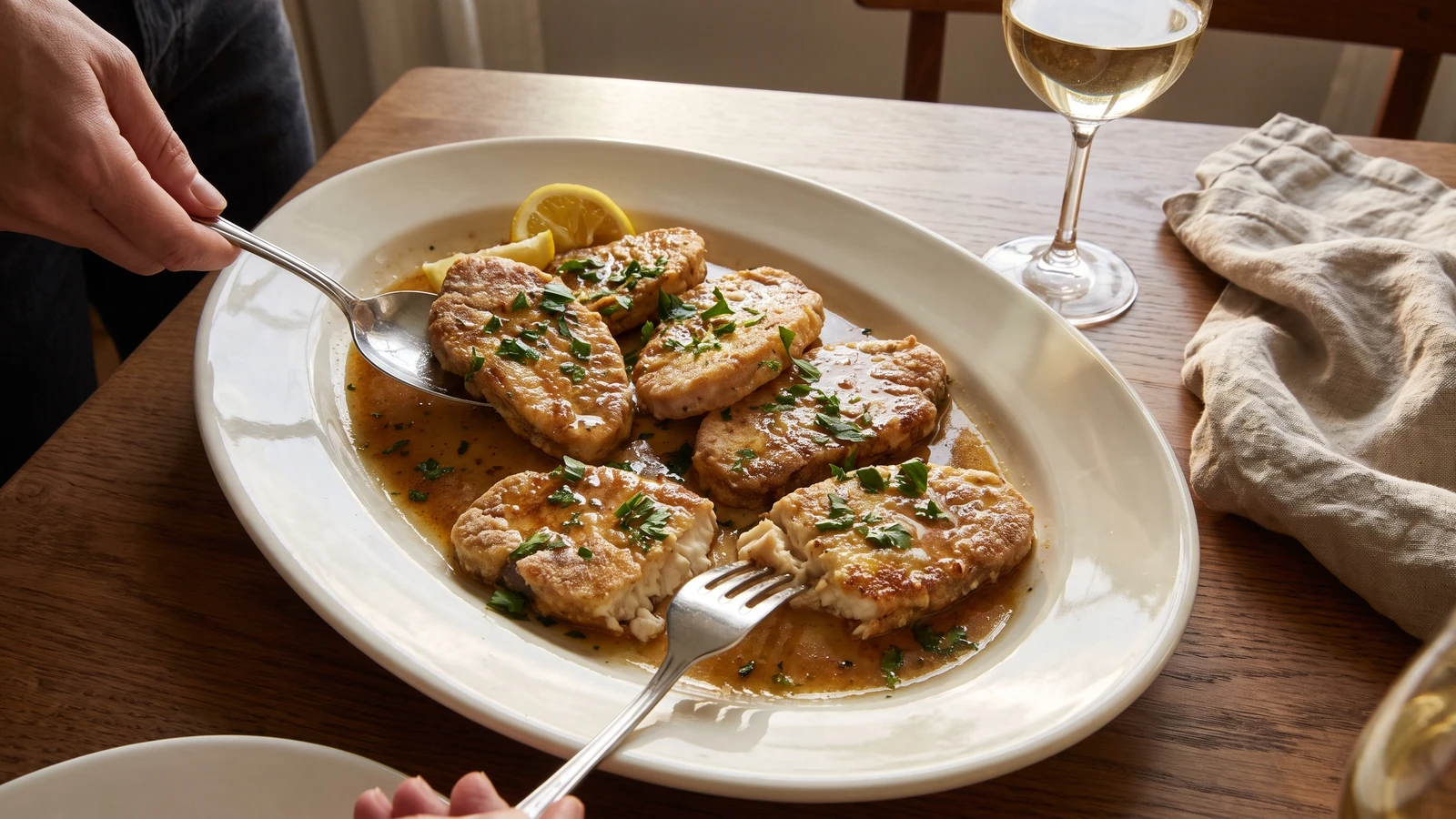
Laitances de carpe need only a veil of flour, hot butter, and a sure hand: bronzed meunière slices with a creamy centre, sharpened by lemon and parsley for a generous fish course at home.
Laitances de Carpe (carp’s milt) teaches the cleanest lesson in meunière, the miller’s treatment of a delicate ingredient with flour and hot butter: the flour must be a veil, not a coat. Milt is softer than a fish fillet, creamy inside its thin membrane, so the one true thing to know before touching the pan is this: keep it cold, dry it patiently, and turn it only after the first side has made a crust.
The original entry assumed a fish station receiving whole carp and enough hands to trim, portion, and cook the milt immediately. There is no saucier, stockpot, or salamander to replace here. At home, the honest equivalent is a fishmonger who will reserve intact milt and a 30 cm skillet used in two batches. I’ve chosen the entry’s raw-sliced meunière service because this is a main dish for four; the whole poached preparation remains the garnish method, and you’ll find it in the tips. One cook, one stove, one evening.
The brigade scaffolding we discard is bulk trimming and holding for service. The dish we defend is the cold milt, the spare flour coating, and the butter watched every second. We don’t apologize for butter. Dredge only when the skillet is ready, then leave the first side alone until it has made its crust. That turn decides the dish.
Laitances de carpe belong to the classical French fish service rather than to one province, with carp supplied by inland pond districts such as the Dombes and Alsace and served on bourgeois and grand tables. Cooks prized the milt as a delicate second fish or poached it whole for a relevé, the substantial course built around a large fish; treating raw slices meunière gave it a place of its own. Despite the familiar name soft roe, laitance is not the carp’s eggs but the pale reproductive tissue of the male fish.
Quantity
1½ pounds (680 g)
in intact lobes
Quantity
1¼ teaspoons (6 ml / 7.5 g)
divided
Quantity
¼ teaspoon (1 ml / 0.6 g)
Quantity
½ cup (120 ml / 60 g)
Quantity
¾ cup (180 ml / 170 g)
divided, including ¼ cup (60 ml / 57 g) held in reserve
Quantity
2
1 juiced to yield 3 tablespoons (45 ml / 45 g), 1 cut into 4 wedges
Quantity
3 tablespoons (45 ml / 12 g)
finely chopped
| Ingredient | Quantity |
|---|---|
| very fresh carp miltin intact lobes | 1½ pounds (680 g) |
| fine sea saltdivided | 1¼ teaspoons (6 ml / 7.5 g) |
| freshly ground white pepper | ¼ teaspoon (1 ml / 0.6 g) |
| plain flour | ½ cup (120 ml / 60 g) |
| unsalted butterdivided, including ¼ cup (60 ml / 57 g) held in reserve | ¾ cup (180 ml / 170 g) |
| medium lemons1 juiced to yield 3 tablespoons (45 ml / 45 g), 1 cut into 4 wedges | 2 |
| flat-leaf parsleyfinely chopped | 3 tablespoons (45 ml / 12 g) |
Keep the milt refrigerated until the skillet work begins. Lay the lobes on absorbent paper and trim away clotted blood, dark veins, and any ragged outer membrane with the tip of a small knife, preserving the thin casing that holds each lobe together. If rinsing is necessary, dip the milt briefly in a bowl of very cold water rather than running water over it, then blot every surface dry. Set it on a chilled tray for 10 minutes. Cold milt cuts cleanly; warm milt smears and breaks.
Cut the lobes crosswise into slices about ¾ inch (2 cm) thick, drawing a very sharp dampened knife through each piece once rather than sawing. Leave narrow end pieces whole. Season with 1 teaspoon (5 ml / 6 g) of the salt and all the white pepper. Mix the remaining salt into the flour, then coat each slice lightly and shake off every loose trace. The flour is there to protect the tender surface and make a fine crust, not to become breading. Dredge only what will enter the first batch; flour left sitting on damp milt turns to paste.
Warm a serving platter in a 200°F (95°C) oven. Heat a 12-inch (30 cm) heavy skillet over medium to medium-high heat, then add 2 tablespoons (30 ml / 28 g) of the butter. When the foam is lively and beginning to subside, lay in half the slices with space between them. Cook without nudging for 2 to 3 minutes, until the underside is deep gold and the opaque edge has begun to climb the sides. Turn once with a thin spatula and cook for another 1½ to 2½ minutes, until the centre is opaque, still creamy, and reaches 145°F (63°C). Transfer gently to the warm platter and repeat with another 2 tablespoons (30 ml / 28 g) of butter. If a slice clings, give it another 20 seconds; a formed crust releases more readily. If the butter blackens, lift out the milt, wipe the skillet, and continue with some of the reserved butter. Ça se rattrape.
Wipe the skillet free of dark flour crumbs and add 4 tablespoons (60 ml / 57 g) fresh butter. Swirl it over medium heat to make beurre noisette, butter cooked until its milk solids form chestnut-coloured flecks and the aroma turns hazelnut-sweet. Pull the skillet from the heat at once, shield your hand, and add the lemon juice; it will spit sharply. Stir in the parsley. If the flecks turn black or the butter smells acrid, do not pour it over the milt. Wipe the skillet and begin again with the reserved butter. Two minutes lost, dinner saved.
Arrange the milt loosely on the warm platter and spoon over the beurre noisette, including the parsley and toasted milk solids from the skillet. Set the lemon wedges alongside and serve immediately, while the crust remains distinct from the creamy centre. Do not cover the platter while it waits, because trapped moisture softens the flour coating. À table!
1 serving (about 200g)
Culinary guides, cultural storytelling, and the editorial depth that makes cooking meaningful.
Discover Culinary ExplorerChef Juliette
John Dory has the delicacy of sole and the firmness of turbot. A light flouring, a quick butter sauté, and nut-brown beurre noisette show exactly why looks never mattered.

Chef Juliette
Fresh haddock proves its delicacy in the meunière pan: a fine flour crust, moist pearly flakes, and beurre noisette sharpened with lemon and parsley, ready from one skillet in half an hour.

Chef Juliette
Éperlans à l’Anglaise turns small fish into a lesson in disciplined coating: boned smelts under a close, crisp crumb, pan-fried in clarified butter and finished with bright, half-melted maître d’hôtel butter.

Chef Juliette
Tiny smelts, shallot, mushrooms, white wine, gratin sauce, and fine bread raspings meet a fierce oven, where the fish must turn tender in the same breath the buttered crust bronzes.