
Chef Juliette
John Dory (St. Pierre)
John Dory has the delicacy of sole and the firmness of turbot. A light flouring, a quick butter sauté, and nut-brown beurre noisette show exactly why looks never mattered.
A cooking platform built around craft, culture, and the stories behind what we eat.
Created by Chef Juliette
Based on No. 994, Cabillaud à la Flamande, from Le Guide Culinaire (1907) by Auguste Escoffier
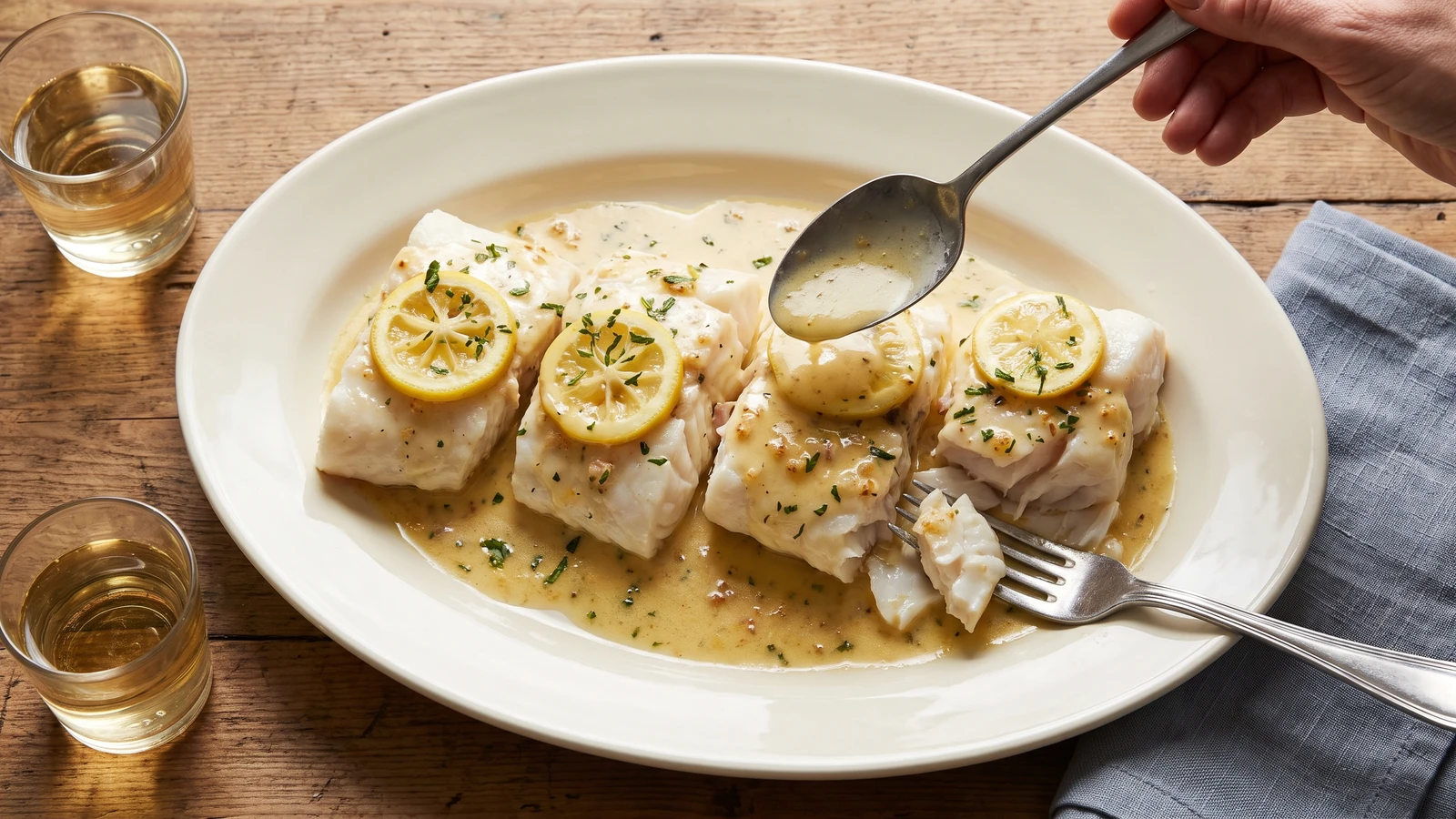
Cabillaud à la Flamande keeps cod tender under white wine, shallots, fines herbes, and lemon, then turns the poaching liquor into its own softly bound sauce with crushed biscotte.
Cabillaud à la Flamande (Flemish-style cod) teaches the gentlest truth in fish cookery: the liquor may come to the boil, but the fish must not stay there. Once cod begins to curl and split under fierce heat, no sauce can return its tenderness. Bring the wine up once, move the pan immediately to the oven, and let twelve quiet minutes do the work.
The source entry assumed a broad sautépan, an oven already hot from service, and a saucier ready to bind the liquor as soon as the cod was lifted. It calls for neither a stockpot nor a salamander, and adding either would turn translation into invention. At home, one snug ovenproof pan handles the poach and the sauce. The extra pair of hands is brigade scaffolding and goes; the wine reaching the height of the fish, the peeled lemon, fines herbes, and crushed biscotte (plain rusk) are the dish and stay. The portions are simply reduced to four.
The finished cod should part in broad, moist flakes beneath a pale sauce scented with wine and shallot, with the faint texture of bread rather than the polish of a roux. Cooking well is not cooking fancy. Watch the first boil, because that brief crossing from bubbling to gentle oven heat decides the dish.
Cabillaud à la Flamande belongs to the cooking vocabulary of Flanders, the northern country shared by French Flanders around Lille and Dunkirk and neighboring Belgian tables, where North Sea fish came readily to market. Household wine-poaching entered the classical repertoire as a precise method for keeping lean fish succulent while making its cooking liquor serve as the sauce. The telling detail is the biscotte: this is not a cream sauce or a roux, but a northern bread-bound liquor whose modest binder became part of the formal canon.
Quantity
4 portions, each about 6 ounces (170 g), 1½ pounds (680 g) total
cut 1 inch (2.5 cm) thick
Quantity
3 tablespoons (45 ml / 42 g)
softened
Quantity
1 teaspoon (5 ml / 6 g)
Quantity
½ teaspoon (2.5 ml / 1 g)
Quantity
⅛ teaspoon (0.6 ml / 0.25 g)
Quantity
½ cup (120 ml / 75 g), about 3 medium
finely chopped
Quantity
¼ cup (60 ml / 15 g)
finely chopped mixture of parsley, chervil, chives, and tarragon
Quantity
1, about 4½ ounces (130 g)
peeled to the pulp, thinly sliced into roundels, and pips removed
Quantity
Up to 2½ cups (600 ml / 590 g)
use enough to reach the height of the cod
Quantity
4, about ½ cup (120 ml / 45 g) when crushed
finely crushed
| Ingredient | Quantity |
|---|---|
| skinless center-cut cod portionscut 1 inch (2.5 cm) thick | 4 portions, each about 6 ounces (170 g), 1½ pounds (680 g) total |
| unsalted buttersoftened | 3 tablespoons (45 ml / 42 g) |
| fine sea salt | 1 teaspoon (5 ml / 6 g) |
| freshly ground black pepper | ½ teaspoon (2.5 ml / 1 g) |
| freshly grated nutmeg | ⅛ teaspoon (0.6 ml / 0.25 g) |
| shallotsfinely chopped | ½ cup (120 ml / 75 g), about 3 medium |
| fines herbesfinely chopped mixture of parsley, chervil, chives, and tarragon | ¼ cup (60 ml / 15 g) |
| large lemonpeeled to the pulp, thinly sliced into roundels, and pips removed | 1, about 4½ ounces (130 g) |
| dry white wineuse enough to reach the height of the cod | Up to 2½ cups (600 ml / 590 g) |
| plain biscottesfinely crushed | 4, about ½ cup (120 ml / 45 g) when crushed |
Heat the oven to 375°F (190°C), with a rack in the middle. Coat the base and sides of a snug 11-inch (28 cm) ovenproof sauté pan generously with all the softened butter. A close fit matters: a pan with great empty reaches demands too much wine and leaves you with a thin, excessive sauce.
Dry the cod thoroughly and check it for pin bones. Season both sides evenly with the salt, pepper, and nutmeg, then arrange the portions in one layer in the buttered pan. Wet fish dilutes the wine before the poach has even begun, so give the surface proper attention.
Scatter the shallots and fines herbes around and over the cod. Lay the peeled, pipped lemon roundels across the portions, then pour the wine down the side of the pan until it reaches the height of the fish without washing the seasonings away. You may not need every drop. The level, not an arbitrary cup measure, preserves the source method.
Set the uncovered pan over medium-high heat and watch closely. The instant the wine reaches its first full boil around the edges, transfer the pan to the oven. Poach for 12 minutes, until the cod is opaque through the center, parts into broad moist flakes under gentle pressure, and reaches 145°F (63°C) at its thickest point. If the liquor boils hard and the fish starts splitting, pull the pan out at once and lift any portion already cooked. Ça se rattrape: let an underdone center finish in the calmer liquor, but never leave cooked cod there to toughen.
Transfer the cod carefully to a warm serving platter with a flexible spatula, keeping the softened lemon roundels on top. Cover it loosely so it stays warm without continuing to cook. Measure ½ cup (120 ml) of the hot poaching liquor into a heatproof cup and keep it beside the stove for adjusting the sauce.
Return the pan and its remaining liquor, shallots, herbs, and melted butter to medium heat. Bring it to a gentle simmer, then rain in three-quarters of the crushed biscottes while whisking. Simmer for exactly 5 minutes, stirring often, until the crumbs soften completely and the sauce becomes lightly nappant, thick enough to coat the back of a spoon. Add more biscotte if it remains watery. If it tightens into porridge, don't panic: whisk in the reserved liquor one spoonful at a time until it flows again. Ça se rattrape.
Taste the sauce and correct the salt only if needed; the wine has concentrated, so taste before reaching for the cellar. Pour the hot sauce generously over the cod and lemon, making certain every portion receives shallots and fines herbes. Serve at once, while the fish is moist and the biscotte-bound sauce still flows. À table!
1 serving (about 285g)
Culinary guides, cultural storytelling, and the editorial depth that makes cooking meaningful.
Discover Culinary ExplorerChef Juliette
John Dory has the delicacy of sole and the firmness of turbot. A light flouring, a quick butter sauté, and nut-brown beurre noisette show exactly why looks never mattered.

Chef Juliette
Fresh haddock proves its delicacy in the meunière pan: a fine flour crust, moist pearly flakes, and beurre noisette sharpened with lemon and parsley, ready from one skillet in half an hour.

Chef Juliette
Éperlans à l’Anglaise turns small fish into a lesson in disciplined coating: boned smelts under a close, crisp crumb, pan-fried in clarified butter and finished with bright, half-melted maître d’hôtel butter.

Chef Juliette
Tiny smelts, shallot, mushrooms, white wine, gratin sauce, and fine bread raspings meet a fierce oven, where the fish must turn tender in the same breath the buttered crust bronzes.