Chef Juliette
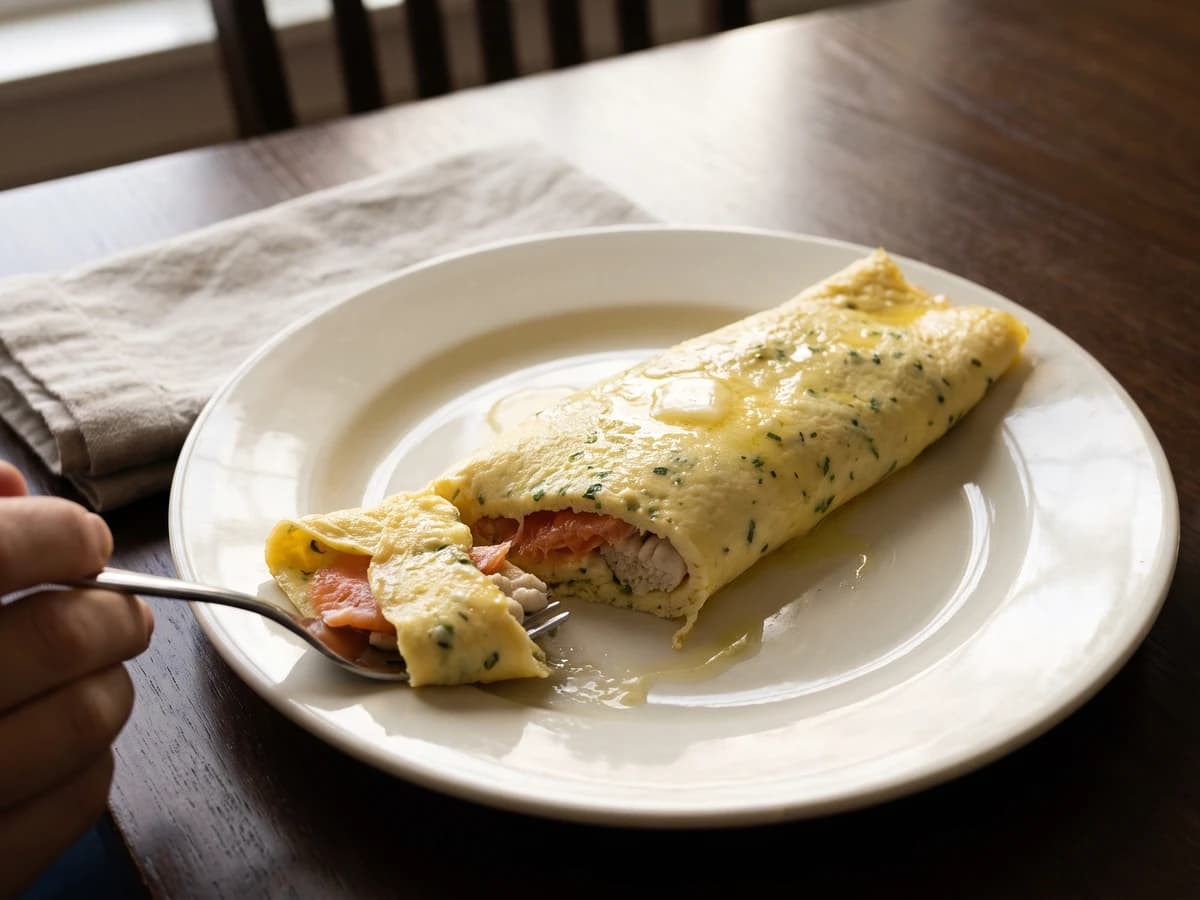
Omelette à l’Écossaise
A creamy omelette aux fines herbes closes around smoked-salmon-wrapped herring milts, gently poached in butter. Have the filling ready, then roll the eggs while they still shine.
A cooking platform built around craft, culture, and the stories behind what we eat.

Created by Chef Juliette
Based on No. 989, Bloaters, from Le Guide Culinaire (1907) by Auguste Escoffier
Lightly cured harengs bouffis meet moderate heat and nothing more, their skins bronzing as the flesh turns succulent, proof that careful grilling, not ornament, makes this quick breakfast.
Harengs bouffis (bloaters, herrings half-dried in smoke) teach restraint at the grill. The cure has already supplied salt and smoke, so your work is simply to warm the fish through while the skin bronzes and the flesh stays succulent. Moderate heat is not a casual suggestion. Too fierce a fire burns the skin before the thickest flesh is ready.
The classical entry assumed a coal fire and a gridiron whose distance a cook could adjust by instinct. Your oven broiler is the honest home equivalent: set the tray well below the element and let distance soften the heat. I have changed only the fire and the scale, giving you one fish per person. There is no saucier's work or standing stock here, and no brigade scaffolding worth preserving. The grilling is the dish and must stay. One cook, one stove, one evening.
Because the cure is light, these fish remain perishable. Keep them cold, cook them promptly, and don't soak or salt them again. Before the tray meets the broiler, remember the step that decides everything: control the distance from the heat.
Harengs bouffis do not originate in a French region, and that is the useful correction: the bloater belongs to the English North Sea curing tradition, particularly Great Yarmouth, where whole herring were lightly salted and smoked without being split. French classical kitchens retained the English preparation and served it at breakfast with the same spare treatment, simply grilled because the cure already supplied its seasoning. Unlike a kipper, a bloater is smoked whole and only lightly preserved, which explains both its plump texture and its short keeping life.
Quantity
4 (about 24 to 32 oz / 680 to 900 g total)
cleaned if needed and patted thoroughly dry
| Ingredient | Quantity |
|---|---|
| whole harengs bouffis (bloaters)cleaned if needed and patted thoroughly dry | 4 (about 24 to 32 oz / 680 to 900 g total) |
Keep the fish cold until you are ready to cook. If they were sold ungutted, make a shallow slit along each belly, remove the entrails without tearing the flesh, and wipe the cavity with a barely damp cloth. Leave the fish whole and pat every surface thoroughly dry. Do not soak or salt them: soaking weakens the light cure, while damp skin softens instead of bronzing.
Line a rimmed broiler-safe tray with foil and preheat the broiler for 5 minutes. If it has a medium setting, use it and place the rack 5 to 6 inches / 13 to 15 cm below the element. With a high-only broiler, set the rack 7 to 8 inches / 18 to 20 cm below it. This distance is your moderate fire.
Lay the fish on the prepared tray with room between them and broil for 4 to 5 minutes. Watch the skin, not merely the clock: it should tighten, release a fine sheen of oil, and turn bronze with a few darker blisters. If it begins blackening before it bronzes evenly, lower the tray at once. Ça se rattrape: the greater distance will let the centre cook without sacrificing the rest of the skin.
Turn each fish carefully with a broad fish spatula and cook the second side for 3 to 5 minutes. The flesh at the thickest point should be opaque, succulent, and easy to lift from the backbone, reaching 145°F / 63°C. If the skin is ready but the centre remains cool, switch off the broiler and leave the tray in the hot oven for 2 minutes. Gentle retained heat finishes the flesh without scorching the cure.
Let the fish rest on the tray for 2 minutes, then transfer them whole to a warm platter. At the table, draw back the skin and lift the upper fillet from the backbone, then remove the skeleton and check carefully for fine pin bones before serving the lower fillet. Serve immediately. À table!
1 serving (about 120g)
Culinary guides, cultural storytelling, and the editorial depth that makes cooking meaningful.
Discover Culinary ExplorerChef Juliette
A creamy omelette aux fines herbes closes around smoked-salmon-wrapped herring milts, gently poached in butter. Have the filling ready, then roll the eggs while they still shine.
Chef Juliette
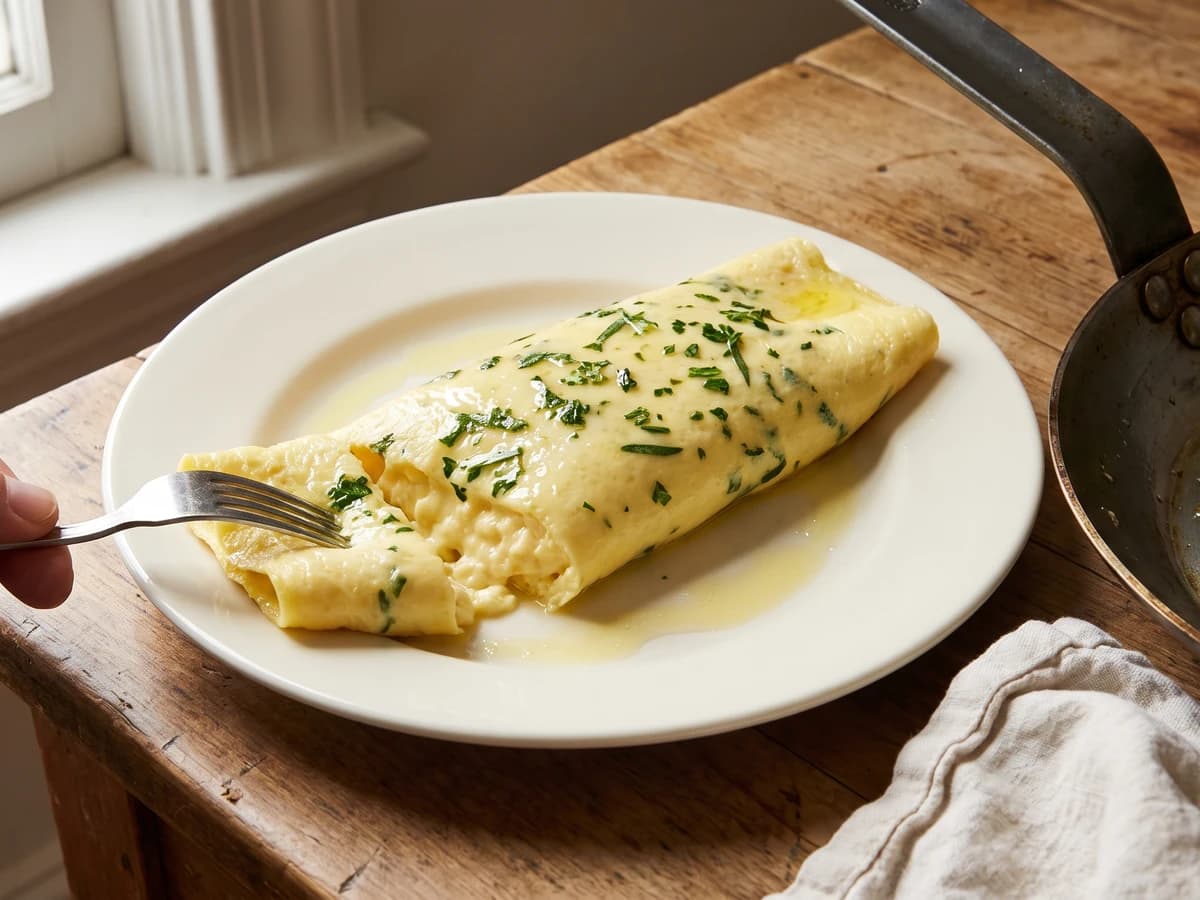
Four tender herbs, hot butter, and two eggs per pan: this rolled omelette teaches the quick hand and good judgment that keep the outside pale and the center creamy.
Chef Juliette
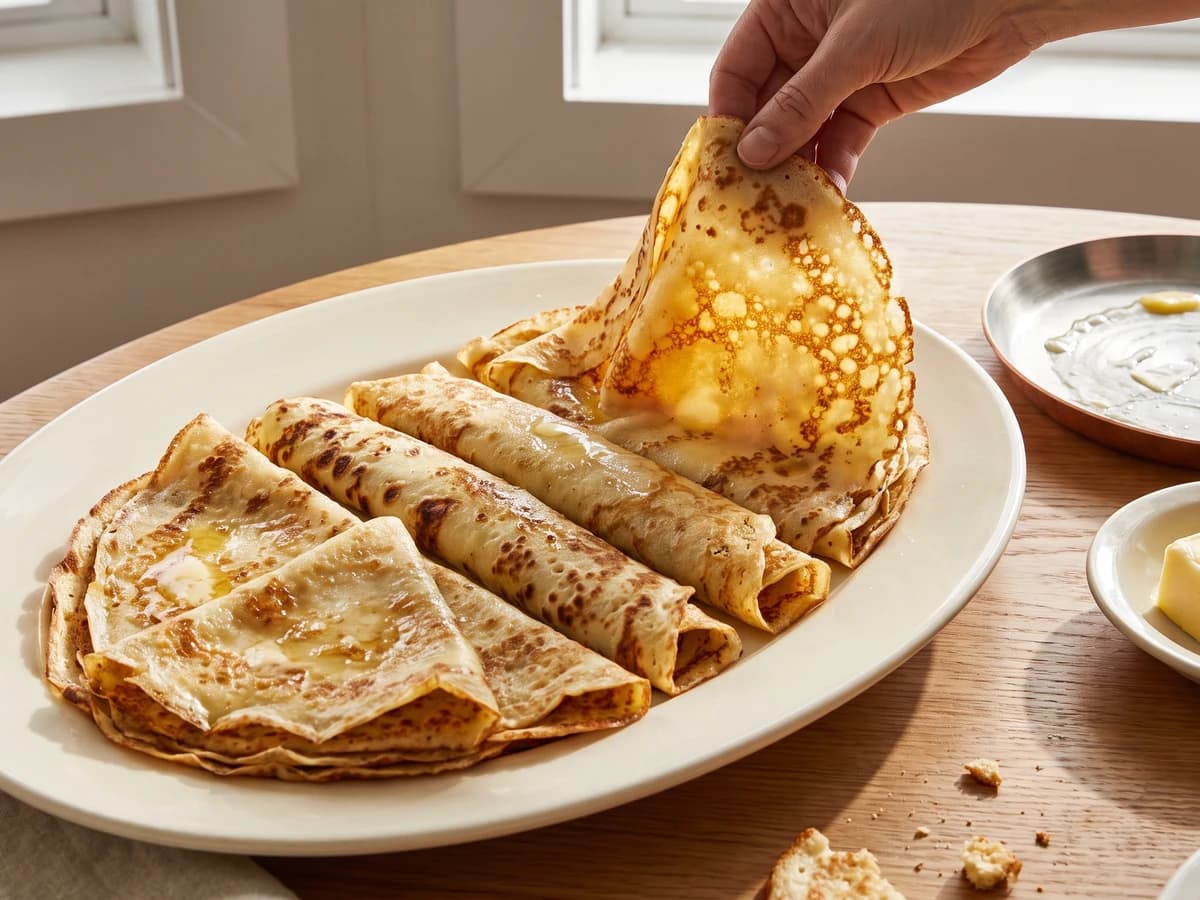
Four batters, one lesson: let the flour drink deeply before cooking, then spread the batter thinly in butter for crêpes and pannequets that bend without becoming tough.
Chef Juliette
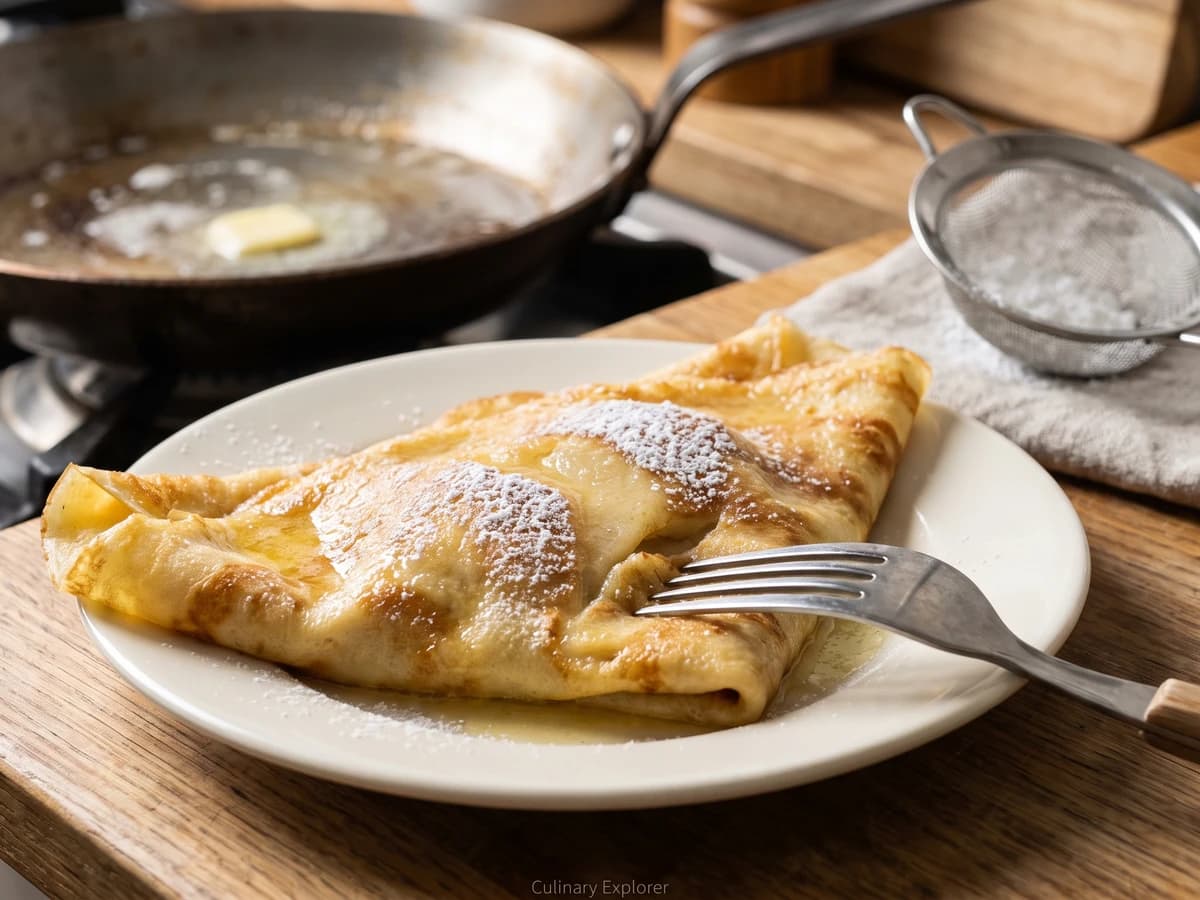
Crêpes au Couvent trap ripe Williams pear dice between two thin pours of sweet batter, then turn in one clean toss and reach the table butter-gold, powdered, and burning hot.