
Chef Juliette
John Dory (St. Pierre)
John Dory has the delicacy of sole and the firmness of turbot. A light flouring, a quick butter sauté, and nut-brown beurre noisette show exactly why looks never mattered.
A cooking platform built around craft, culture, and the stories behind what we eat.
Created by Chef Juliette
Based on No. 987, Bass (Bar), from Le Guide Culinaire (1907) by Auguste Escoffier
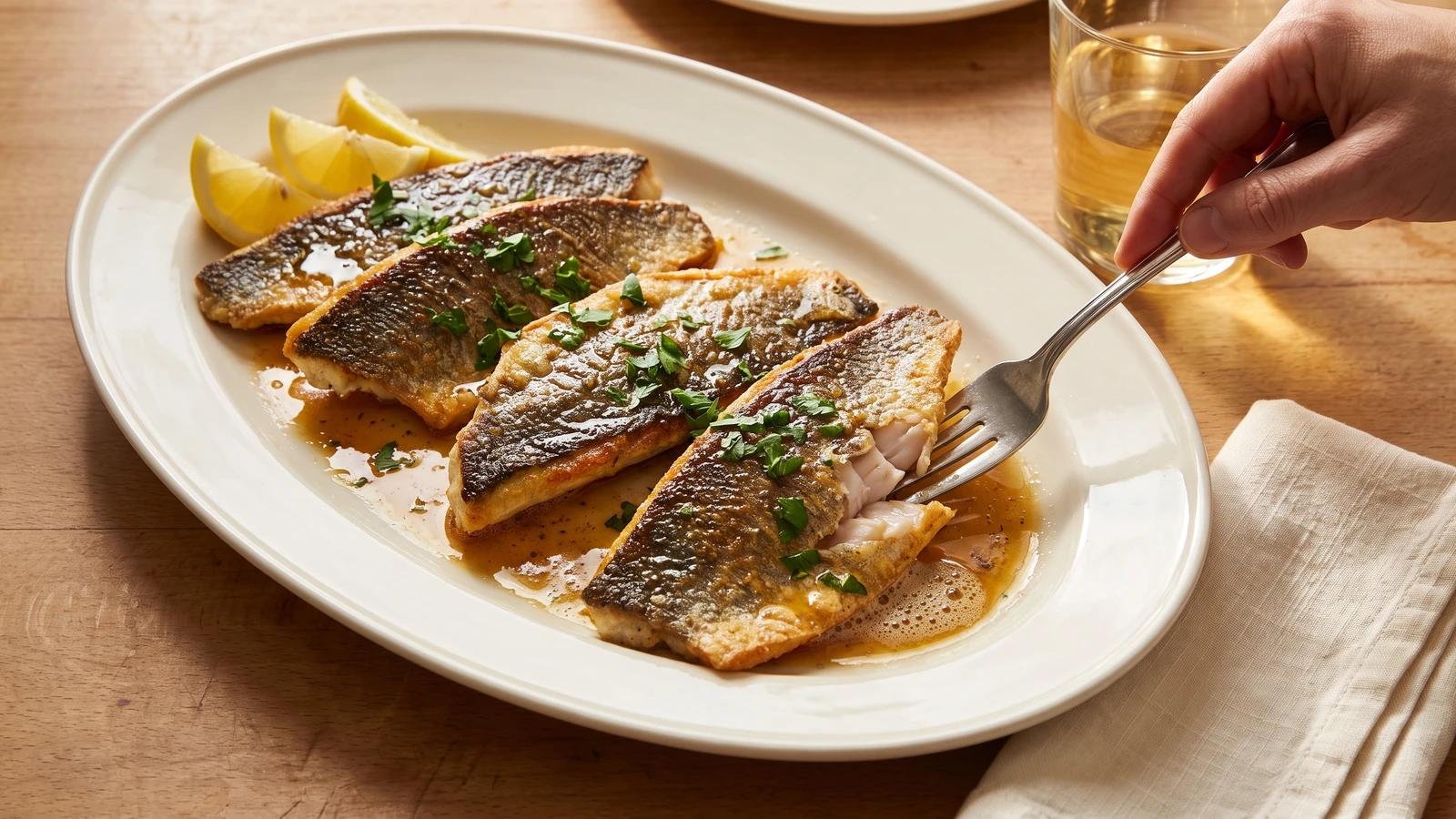
Bar à la meunière turns four modest fillets into a proper supper: crisp skin under a whisper of flour, moist flesh, and lemon-parsley beurre noisette spooned over at the last moment.
Bar à la meunière (sea bass lightly floured and cooked in butter) teaches the cleanest lesson in the fish canon: a dry fillet browns, while a damp one seals itself beneath a sticky coat of flour. Everything that follows is quick. The skin turns crisp and bronze, the flesh stays pearly, and the butter carries lemon and parsley into every crevice.
The source entry assumes a brigade able to sort bass by size, route a large specimen to a fish kettle and a saucier, then send the smaller fish directly to meunière or frying. At home, we take the route it gives for small fish and have two modest bass cut into four skin-on fillets, which fit an ordinary skillet and cook evenly in two batches. The sorting system, separate stations, and whole-fish service are scaffolding. The thin flour coating, real butter, lemon, and parsley are the dish, and they stay. One cook, one stove, one evening.
The finished fillets should arrive glistening, their edges crisp enough to resist the fork before giving way to moist white flakes. Dry them until the paper comes away clean and the skin feels tacky rather than slick before flour comes near them. That is the step that decides the dish.
Along France's Atlantic and Channel coasts the fish is bar; on Mediterranean markets it is often loup de mer, a change of name that follows the coast. Classical kitchens treated it according to size, sending large specimens to the fish kettle with the sauces used for turbot and smaller fish to the meunière pan or frying kettle, market logic carried straight into service. The source's observation that bass was little sought in England records a difference in appetite, not quality: French cooks valued its firm white flesh because it could bear either gentle boiling or quick butter cooking without losing itself.
Quantity
4, about 6 ounces (170 g) each
pin-boned
Quantity
1 teaspoon (5 ml / 6 g)
Quantity
½ teaspoon (2.5 ml / 1 g)
Quantity
½ cup (120 ml / 60 g)
Quantity
8 tablespoons (120 ml / 113 g)
divided between cooking and finishing
Quantity
4 tablespoons (60 ml / 57 g)
kept cold for rescue if needed
Quantity
2 tablespoons (30 ml / 30 g)
from 1 large lemon
Quantity
¼ cup (60 ml / 15 g)
finely chopped
Quantity
1 medium
cut into 8 wedges
| Ingredient | Quantity |
|---|---|
| skin-on European sea bass filletspin-boned | 4, about 6 ounces (170 g) each |
| fine sea salt | 1 teaspoon (5 ml / 6 g) |
| freshly ground black pepper | ½ teaspoon (2.5 ml / 1 g) |
| all-purpose flour | ½ cup (120 ml / 60 g) |
| unsalted butterdivided between cooking and finishing | 8 tablespoons (120 ml / 113 g) |
| additional unsalted butter (optional)kept cold for rescue if needed | 4 tablespoons (60 ml / 57 g) |
| fresh lemon juicefrom 1 large lemon | 2 tablespoons (30 ml / 30 g) |
| flat-leaf parsleyfinely chopped | ¼ cup (60 ml / 15 g) |
| lemoncut into 8 wedges | 1 medium |
Run your fingers over the flesh and remove any remaining pin bones. If the skin is unscored, make two or three shallow cuts through the skin only so the fillets lie flat. Press every surface firmly with paper towels, then leave the fillets uncovered for 10 minutes while you prepare the remaining ingredients. Pat them once more before seasoning. The paper should come away clean, and the skin should feel tacky rather than wet.
Season both sides of the fillets with the salt and pepper. Spread the flour in a shallow dish, coat each fillet lightly, then shake and brush away every loose patch. You want a veil, not breading. Do this only when the skillet is ready; if the flour turns pasty while it waits, scrape it away gently, dry the fish again, and apply a fresh dusting. Ça se rattrape.
Warm a large heavy skillet over medium heat and add 2 tablespoons of the butter. When it foams and the milk solids begin turning pale gold, lay in two fillets skin-side down, placing them away from you. Press each gently with the spatula for 20 seconds to prevent curling, then leave them alone for 3 to 4 minutes. The skin is ready when it is evenly bronze and releases with little persuasion; if it clings, give it another 20 seconds rather than tearing it free.
Turn the fillets and cook the flesh side for 1 to 2 minutes, spooning the foaming butter over the thicker ends. Remove them when the flesh is opaque around the edges, still moist at the centre, and registers 140 to 145°F (60 to 63°C) at the thickest point. Place them skin-side up on a warm platter. Wipe away browned flour crumbs, add another 2 tablespoons of butter, and repeat with the remaining fish. If the butter becomes black or smells bitter, discard it, wipe the pan, and restart with some of the reserved butter. Burnt milk solids cannot be hidden beneath lemon, but the fish is unharmed.
Wipe the skillet clean and add the remaining 4 tablespoons of cooking butter over medium heat. For the beurre noisette, hazelnut-brown butter, swirl the pan as the foam becomes fine and the milk solids change from gold to amber. Pull the skillet from the heat as soon as it smells nutty, because the hot pan will carry it another shade. Add the lemon juice carefully, then swirl in the parsley. If the solids go black, pour them out and make a smaller, clean beurre noisette with the reserved cold butter. A modest spoonful of good butter is better than a flood of burnt butter.
Spoon most of the lemon-parsley beurre noisette around the fillets and pass one light spoonful over the flesh, leaving the crisp skin largely uncovered. Taste a drop of the butter and correct the salt only if needed. Tuck the lemon wedges at the edge of the platter and serve immediately. Meunière waits for nobody. À table!
1 serving (about 190g)
Culinary guides, cultural storytelling, and the editorial depth that makes cooking meaningful.
Discover Culinary ExplorerChef Juliette
John Dory has the delicacy of sole and the firmness of turbot. A light flouring, a quick butter sauté, and nut-brown beurre noisette show exactly why looks never mattered.

Chef Juliette
Fresh haddock proves its delicacy in the meunière pan: a fine flour crust, moist pearly flakes, and beurre noisette sharpened with lemon and parsley, ready from one skillet in half an hour.

Chef Juliette
Éperlans à l’Anglaise turns small fish into a lesson in disciplined coating: boned smelts under a close, crisp crumb, pan-fried in clarified butter and finished with bright, half-melted maître d’hôtel butter.

Chef Juliette
Tiny smelts, shallot, mushrooms, white wine, gratin sauce, and fine bread raspings meet a fierce oven, where the fish must turn tender in the same breath the buttered crust bronzes.