Chef Juliette
Ordinary or White Consommé
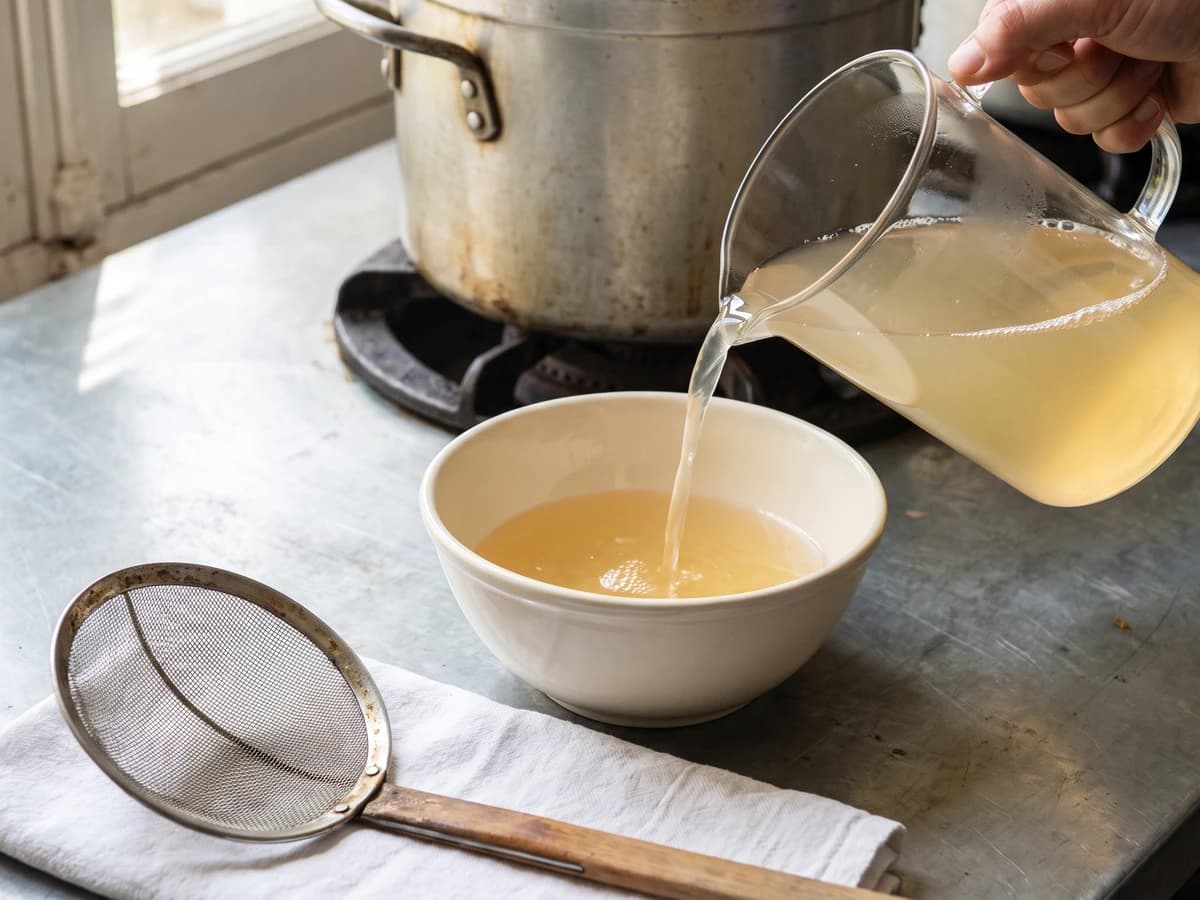
Beef shin, lean beef, and fowl begin in cold water and rise slowly toward a tremble. Skim before the boil, and you learn the quiet discipline that gives every clear French broth its backbone.
A cooking platform built around craft, culture, and the stories behind what we eat.
Created by Chef Juliette
Based on No. 97, Second Method (with Cooked Lobster), from Le Guide Culinaire (1907) by Auguste Escoffier
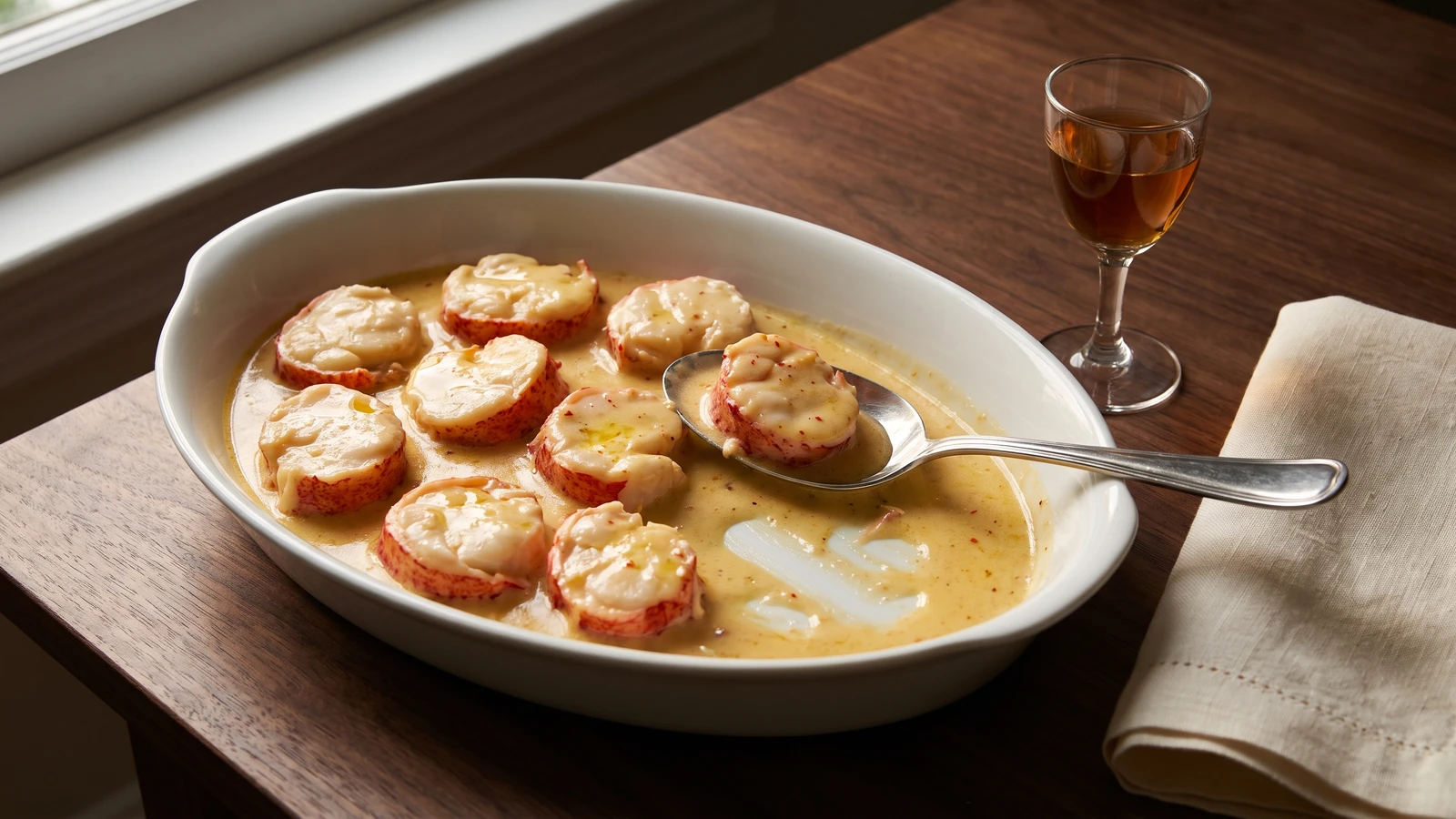
Cooked lobster tail, butter, and dry Sherry become Sauce Newburg through one decisive act: reduce almost dry, then bind off the fire with cream and yolks while the pan keeps moving.
Sauce Newburg, deuxième méthode (Newburg sauce with cooked lobster), teaches the discipline of a liaison, a cream-and-egg-yolk binding. The Sherry must be reduced until only its concentrated perfume remains, then the pan's stored heat must thicken the liaison without ever boiling it. That is the dish: reduction first, restraint second.
The original method assumed a saucier standing at service, cooked lobster already waiting, and a broad sauté pan that could move from flame to pass in one motion. A stockpot never off the fire and a salamander have no work here; at home, one 12-inch pan, a bowl, and four warm plates are the honest equivalents. The brigade's holding and repeated batches are scaffolding and can go. The quick Sherry reduction, the off-fire liaison, and the rolling of the pan stay exactly where they are. One cook, one stove, one evening.
When it lands, coral-edged lobster rests beneath an ivory-gold sauce, rich with butter and rounded by Sherry, with cayenne arriving as warmth rather than noise. Have the guests seated before you begin. Take the pan fully off the flame before the liaison enters, because that is the one step deciding whether Sauce Newburg turns to silk or to scrambled egg.
Sauce Newburg's real home is New York City's grand dining rooms, not a French region, and French classical manuals kept its American name while absorbing its reduction-and-liaison method into the canon. The spelling traveled from Newberg to Newburg through service custom, but the defining practice remained lobster warmed in butter, Sherry reduced almost away, and cream with egg yolks bound off the fire. The source extends the sauce to fillets or Mousselines of sole, individual molded portions, with lobster as garnish, while this second method keeps the cooked lobster at the center.
Quantity
1, about 2 to 2½ pounds (900 g to 1.1 kg)
cooked in court-bouillon and cooled
Quantity
3 tablespoons (45 ml / 42 g)
softened
Quantity
½ teaspoon (2.5 ml / 3 g), plus more only if needed
Quantity
¼ teaspoon (1.25 ml / 0.5 g)
Quantity
1½ cups (360 ml / 355 g), or enough to just cover the lobster slices
Quantity
⅔ cup plus 2 tablespoons (190 ml / 190 g)
divided
Quantity
2
| Ingredient | Quantity |
|---|---|
| large whole cooked lobstercooked in court-bouillon and cooled | 1, about 2 to 2½ pounds (900 g to 1.1 kg) |
| unsalted buttersoftened | 3 tablespoons (45 ml / 42 g) |
| fine sea salt | ½ teaspoon (2.5 ml / 3 g), plus more only if needed |
| cayenne pepper | ¼ teaspoon (1.25 ml / 0.5 g) |
| dry Sherry, preferably amontillado | 1½ cups (360 ml / 355 g), or enough to just cover the lobster slices |
| heavy creamdivided | ⅔ cup plus 2 tablespoons (190 ml / 190 g) |
| large egg yolks | 2 |
Remove the tail from the lobster cooked in court-bouillon, the aromatic poaching liquor used for shellfish. Cut through the soft underside of the shell with kitchen shears and ease out the tail meat intact. Remove the dark intestinal vein, then slice the meat crosswise into 8 medallions about ½ inch (1.25 cm) thick. Keep the coral-colored outer membrane attached where possible, because its color deepens beautifully in butter. Pat the slices dry and reserve the claws and body for another preparation.
Set aside 1 tablespoon of the measured cream and keep it cold. Whisk the remaining cream with the egg yolks until completely smooth but not frothy. This is the liaison, the cream-and-yolk binding that gives Sauce Newburg its body. Let it lose its refrigerator chill for about 10 minutes while you begin the lobster; an icy liaison would rob the pan of the gentle heat needed to thicken it.
Spread the softened butter generously across the bottom of a broad 12-inch sauté pan. Set it over medium heat until the butter melts and its foam settles, without letting it brown. Arrange the lobster medallions in one layer and season them firmly with the salt and cayenne. Warm for 20 to 30 seconds per side, just until the coral membrane reddens and the butter coats the flesh. The lobster is already cooked, so color and heat are the aim, not a second cooking.
Pour in enough dry Sherry to cover the lobster slices narrowly and bring it to a brisk simmer. Reduce for 4 to 6 minutes, rolling the pan occasionally, until the wine has almost entirely disappeared and only 2 to 3 glossy tablespoons remain around the lobster. The raw alcoholic edge should be gone, leaving a concentrated nutty fragrance. Use a broad pan so this happens quickly; a narrow saucepan prolongs the reduction and turns cooked lobster firm. Pull the pan from the flame before the last liquid evaporates, or the butter and Sherry will catch.
Move the pan to a cool burner. Immediately pour the liaison around the lobster, then stir gently while rolling the pan in small circles so the sauce washes continuously over the slices. The retained heat will thicken it within 1 to 2 minutes to a soft nappant consistency, meaning it coats a spoon while remaining fluid. Never let it boil. If yellow streaks or graininess appear, set the pan at once on a cold damp towel and whisk in the reserved cold cream; if small flecks remain, pass the sauce through a fine sieve and return it to the lobster. Ça se rattrape. If no rescue was needed, roll the reserved cream into the smooth sauce at the end.
Taste the sauce and correct the salt or cayenne only if needed. Divide the lobster medallions among four warmed shallow plates and spoon over every drop of the glossy liaison. Serve immediately, because an egg-bound sauce neither waits nor improves by reheating. À table!
1 serving (about 150g)
Culinary guides, cultural storytelling, and the editorial depth that makes cooking meaningful.
Discover Culinary ExplorerChef Juliette
Beef shin, lean beef, and fowl begin in cold water and rise slowly toward a tremble. Skim before the boil, and you learn the quiet discipline that gives every clear French broth its backbone.
Chef Juliette
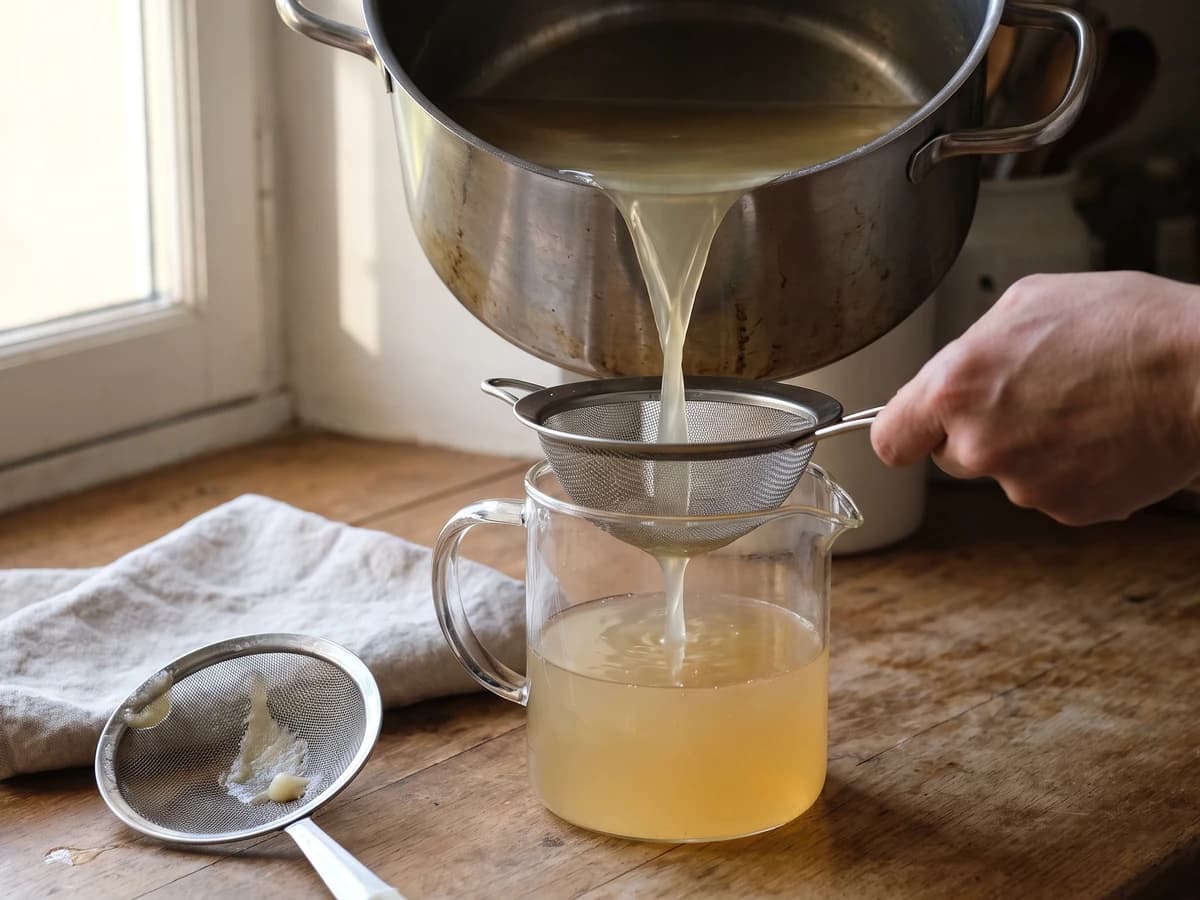
Break the veal bones small, then give them eight hours at a bare tremble. This pale, gelatinous fond becomes the quiet foundation beneath velouté, blanquette, and every sauce that must stay light.
Chef Juliette
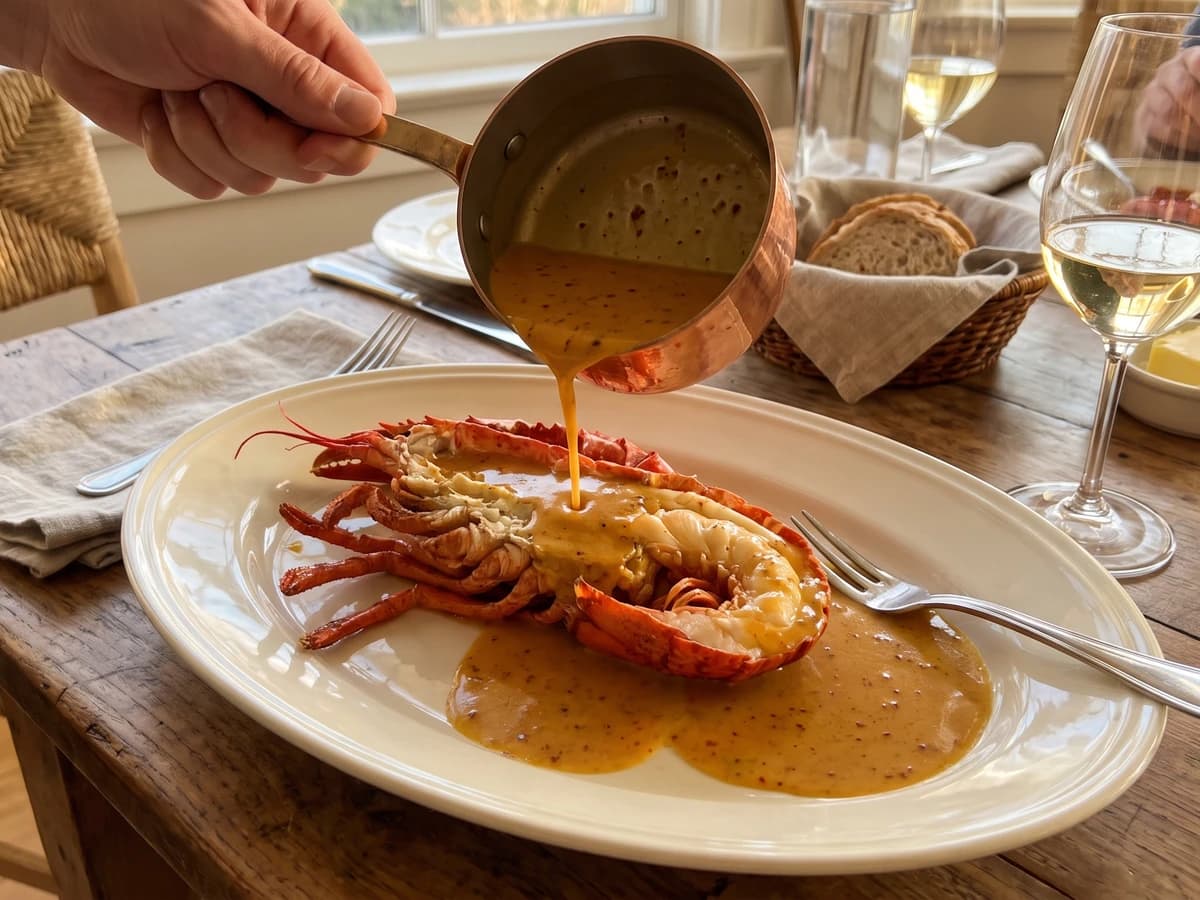
Sauce Orientale concentrates lobster-rich American Sauce with curry, then folds in cream away from the fire: a glossy, gently spiced derivative made for lobster, crayfish, and firm fish.
Chef Juliette
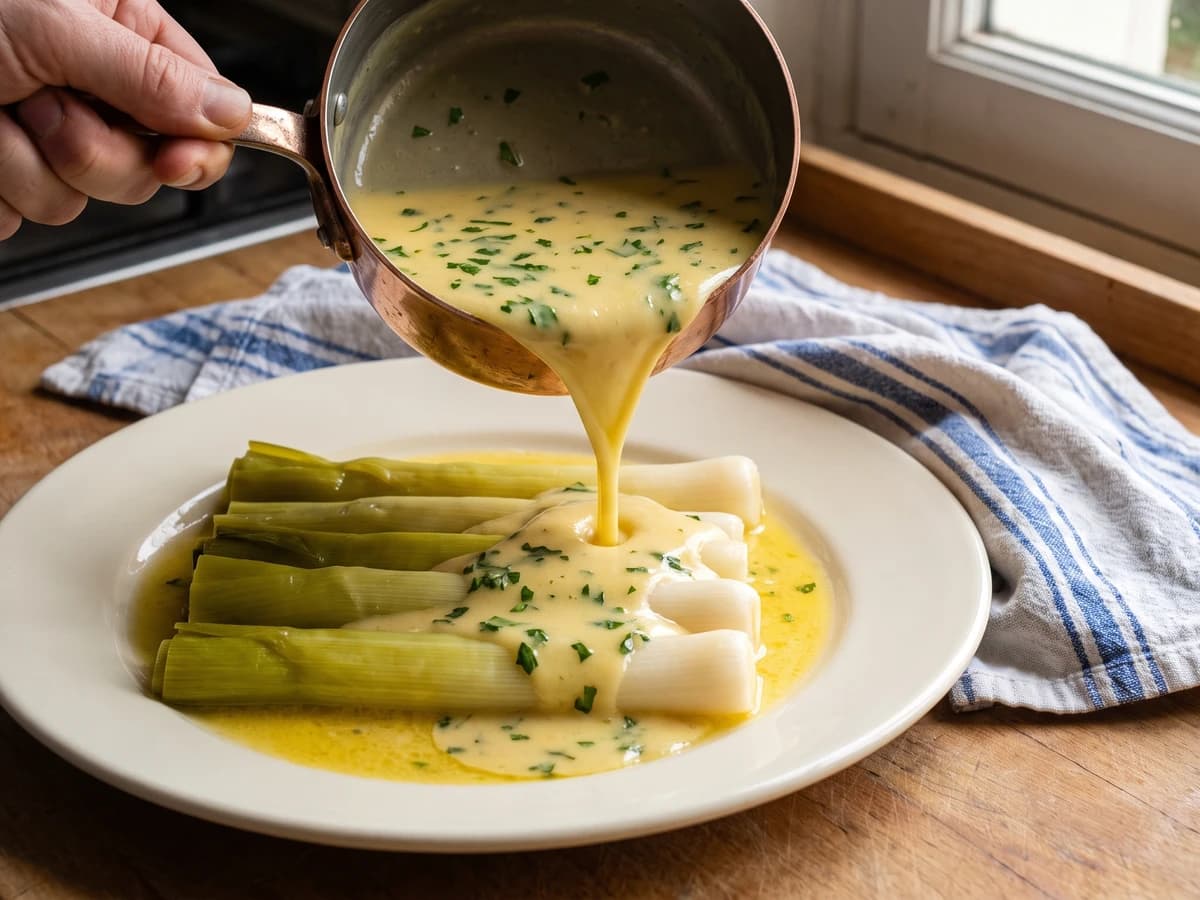
An old lesson in sauce families: Sauce Allemande takes mushroom liquor, then butter, lemon, and parsley, becoming a glossy Poulette for sheep's trotters, leeks, cauliflower, and anything needing gentle richness with a bright edge.