Culinary Explorer

A cooking platform built around craft, culture, and the stories behind what we eat.
Discover Culinary Explorer
Écrevisses à la Nage

Écrevisses à la Nage

Created by Chef Juliette

Based on No. 968, Écrevisses à la Nage, from Le Guide Culinaire (1907) by Auguste Escoffier

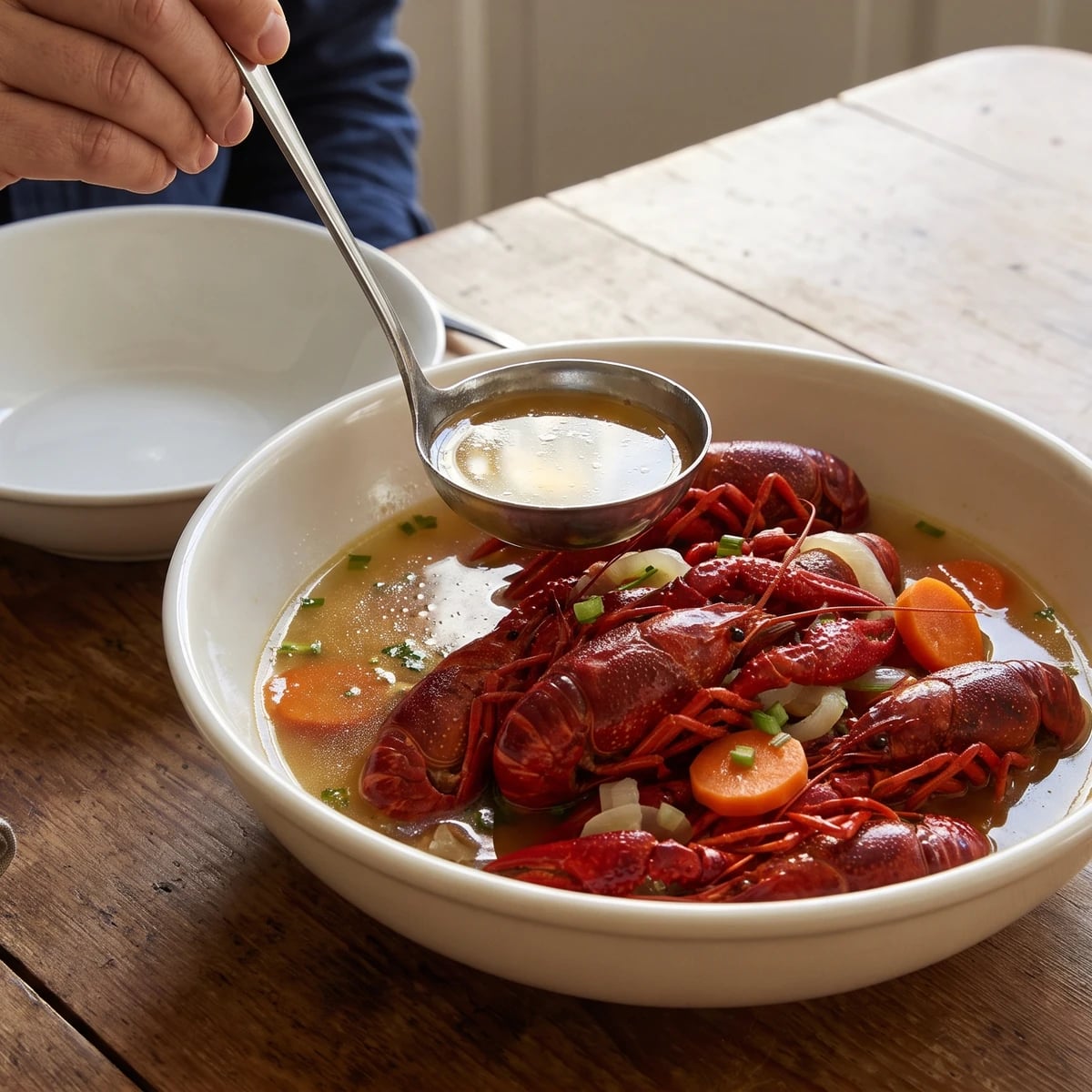
Twelve crayfish, ten minutes, and one fragrant nage: white wine, fish fumet, carrots, onion, and herbs, carried straight from covered pot to deep serving bowl with every drop of broth.

Main Dishes
French
Dinner Party
Special Occasion
15 min
Active Time
20 min cook35 min total
Yield4 servings

Écrevisses à la Nage (crayfish served in their aromatic poaching broth) teaches one clean principle: the cooking liquor is not backstage work. The white wine, fumet, vegetables, and herbs cook the crayfish, then come proudly to the table with them. Drain that broth away and you've discarded the dish.

The original kitchen assumed a saucier with fish fumet, a concentrated fish essence, never far from the fire, plus a timbale waiting for service. At home, use a well-made fumet prepared ahead and a warm, deep serving bowl. The entry's twelve large crayfish already make four generous portions, so the count stays; I've translated the old pint measures while keeping the wine-to-fumet ratio exactly two to one. One cook, one stove, one evening.

The ready fumet and formal timbale are brigade scaffolding. The ten-minute aromatic infusion, the covered cooking, the regular turning, and the broth carried intact to the table are the dish itself. Keep the crayfish moving through the shallow nage so every one cooks evenly. That is the step that matters.

Écrevisses à la nage belongs to the Parisian classical table, which drew live river crayfish from Burgundy and the Saône basin and carried their cooking liquor into the dining room instead of returning it to the sauce station. Nage means that the shellfish arrive swimming in court-bouillon; despite later uses of the word for delicate plated broths, this preparation is not a separate sauce but the wine-and-fumet poaching liquor, aromatics and all. From grand dining rooms it passed naturally into bourgeois home service because its essential work happens in one covered pot.

The technique, the tradition, and the story behind every dish.

Discover Culinary Explorer

Ingredients

large live crayfish

Quantity

12 (about 2¾ lb / 1.25 kg total)

rinsed just before cooking

dry white wine

Quantity

1 cup plus 3 tablespoons (285 ml / about 280 g)

fish fumet

Quantity

½ cup plus 1 tablespoon (142 ml / about 142 g)

small carrot

Quantity

½ (about 1½ oz / 40 g)

cut into 6 thin roundels

small yellow onion

Quantity

½ (about 1½ oz / 40 g)

cut into 6 thin roundels

sturdy flat-leaf parsley stalk

Quantity

1

finely diced

ground dried thyme

Quantity

1 small pinch (about 1/16 teaspoon / 0.05 g)

ground bay leaf

Quantity

1 small pinch (about 1/16 teaspoon / 0.04 g)

fine sea salt

Quantity

⅛ teaspoon (about 0.6 ml / 0.75 g)

cayenne pepper

Quantity

1 small pinch (about 1/32 teaspoon / 0.02 g)

Equipment Needed

  • 4-quart (3.8 L) heavy pot with a tight-fitting lid
  • Long kitchen tongs
  • Instant-read thermometer
  • Deep 3-quart (2.8 L) warmed serving bowl
  • Small brush for cleaning the crayfish

Instructions

  1. 1

    Sort the crayfish

    Keep the crayfish cold and damp until the court-bouillon is ready. Rinse them briefly under cold running water, brushing away any visible mud, but never leave them soaking. Discard any dead crayfish; cold animals may be sluggish, so look for movement in the legs or antennae when touched. If local animal-welfare rules require stunning or dispatch before boiling, follow them immediately before cooking. Once prepared, they must go straight into the pot.

    Buy the crayfish on the day you cook them and keep them in a ventilated container beneath a damp towel in the coldest part of the refrigerator. A sealed bag or fresh-water bath will suffocate them.
  2. 2

    Infuse the court-bouillon

    Combine the white wine, fish fumet, carrot and onion roundels, diced parsley stalk, thyme, bay, salt, and cayenne in a snug 4-quart pot. Bring the court-bouillon to a boil, then let it bubble gently for 10 minutes, partially covered. You are softening the wine and drawing out the aromatics, not reducing the liquid into a sauce. If a fierce boil carries it much below its original level, add hot water a tablespoon at a time to restore it. Ça se rattrape.

  3. 3

    Poach for ten minutes

    Bring the court-bouillon back to a full boil. Add all the crayfish, cover immediately, and start a 10-minute timer. Keep the heat brisk until the liquid returns to a lively simmer, then lower it enough to prevent a violent boil. Every 2 to 3 minutes, uncover briefly and use long tongs to bring the bottom crayfish to the top, coating every shell with the nage before replacing the lid. The liquid is deliberately shallow, so this turning is what makes the cooking even.

  4. 4

    Check the thickest tail

    At 10 minutes, the shells should be evenly crimson and the thickest tail should register at least 145°F / 63°C when probed through a shell joint. If a crayfish from the top is below that temperature, roll the upper layer beneath the broth, cover, and cook for 1 to 2 minutes more. Ça se rattrape. Do not keep boiling them for reassurance once they are done; crayfish meat passes quickly from tender to tight.

  5. 5

    Serve the nage intact

    Taste the broth quickly and correct only the salt. Do not strain it, thicken it, or mount it with butter; the carrot, onion, parsley, and clear aromatic liquor all belong at the table. Pour the crayfish, court-bouillon, and every aromatic into a warmed deep serving bowl. Ladle a little nage into each shallow bowl, add three crayfish, and serve at once with bread for the broth and an empty bowl for the shells. À table!

Chef Tips

  • The source method requires whole live or freshly dispatched crayfish. Previously cooked frozen crayfish cannot endure another ten-minute poach without tightening, so they aren't an honest equivalent here. If live crayfish aren't available, wait for a reliable supplier rather than changing the dish into warmed crayfish tails.
  • Use a clear, lightly seasoned fish fumet. It should taste cleanly of fish and aromatics, never muddy or heavily salted, because it is half the foundation of the nage. Bottled fish sauce and dark shellfish bisque are not substitutes.
  • Choose a dry, lively white wine without obvious oak or sweetness. The wine cooks only briefly and remains present in the broth, so use one you are pleased to pour into a glass alongside the crayfish.
  • Set out shallow bowls, shell bowls, sturdy napkins, and plenty of bread before cooking begins. The crayfish wait for nobody, and the nage is at its best the moment it leaves the pot.

Advance Preparation

  • The fish fumet may be prepared up to 2 days ahead and kept covered in the refrigerator, or frozen in a measured portion. Bring it from the cold only when you are ready to build the court-bouillon.
  • Slice the carrot and onion, dice the parsley stalk, and measure the seasonings several hours ahead. Keep everything covered and cold so the final cooking can proceed without interruption.
  • Do not cook the crayfish ahead. Leftovers should be cooled promptly, refrigerated within 2 hours, and eaten the following day, but reheating will make the meat firmer.

Frequently Asked Questions

Nutrition Information

1 serving (about 160g)

Calories
65 calories
Total Fat
1 g
Saturated Fat
0 g
Trans Fat
0 g
Unsaturated Fat
0 g
Cholesterol
65 mg
Sodium
200 mg
Total Carbohydrates
4 g
Dietary Fiber
0 g
Sugars
1 g
Protein
9 g

Note: Chef personas and recipes are created with AI assistance. Cook with care: follow safe food-handling practices, check doneness with a thermometer when needed, and adapt for allergies and your kitchen.

Where cooking meets culture.

Culinary guides, cultural storytelling, and the editorial depth that makes cooking meaningful.

Discover Culinary Explorer

More from Fish - Lobster (Homard)

Browse the full collection