Chef Juliette
Ordinary or White Consommé
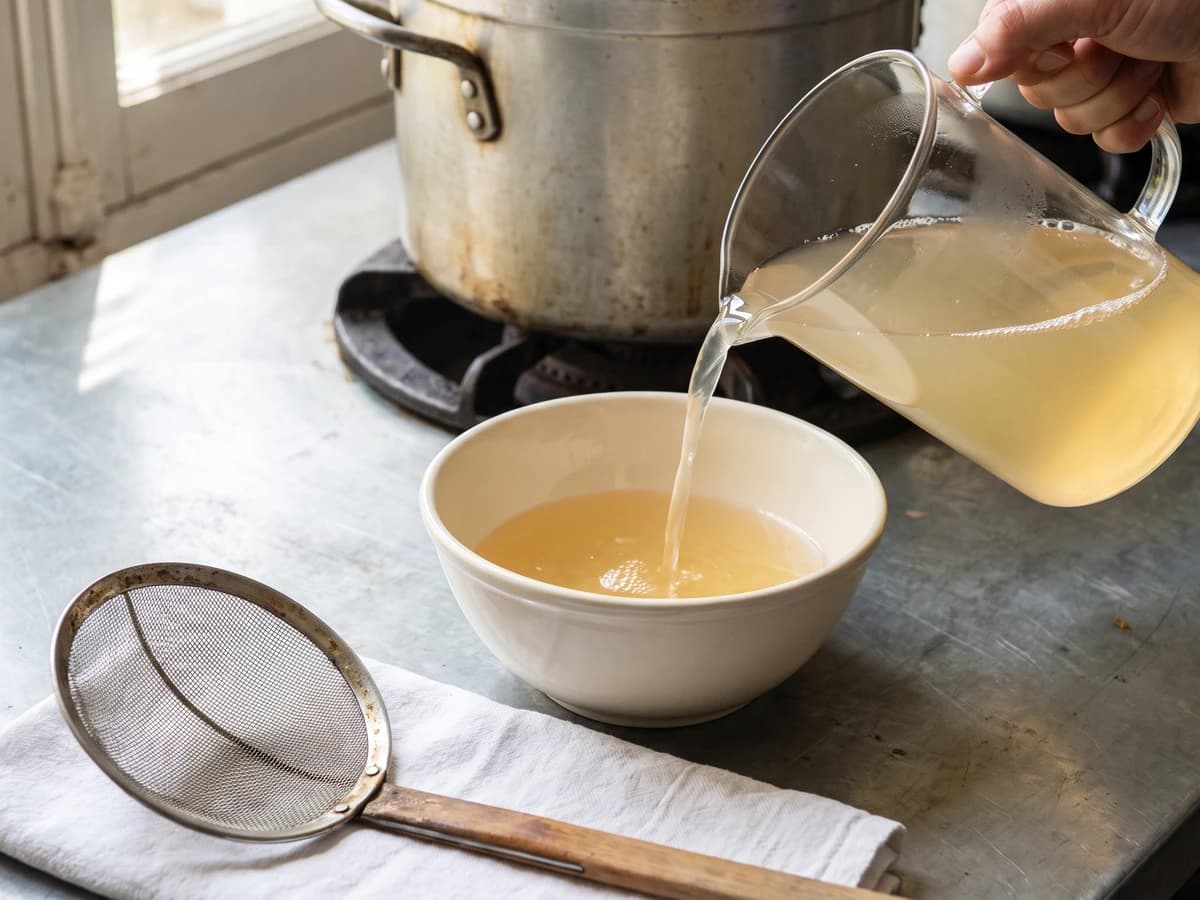
Beef shin, lean beef, and fowl begin in cold water and rise slowly toward a tremble. Skim before the boil, and you learn the quiet discipline that gives every clear French broth its backbone.
A cooking platform built around craft, culture, and the stories behind what we eat.
Created by Chef Juliette
Based on No. 96, Newburg Sauce, from Le Guide Culinaire (1907) by Auguste Escoffier
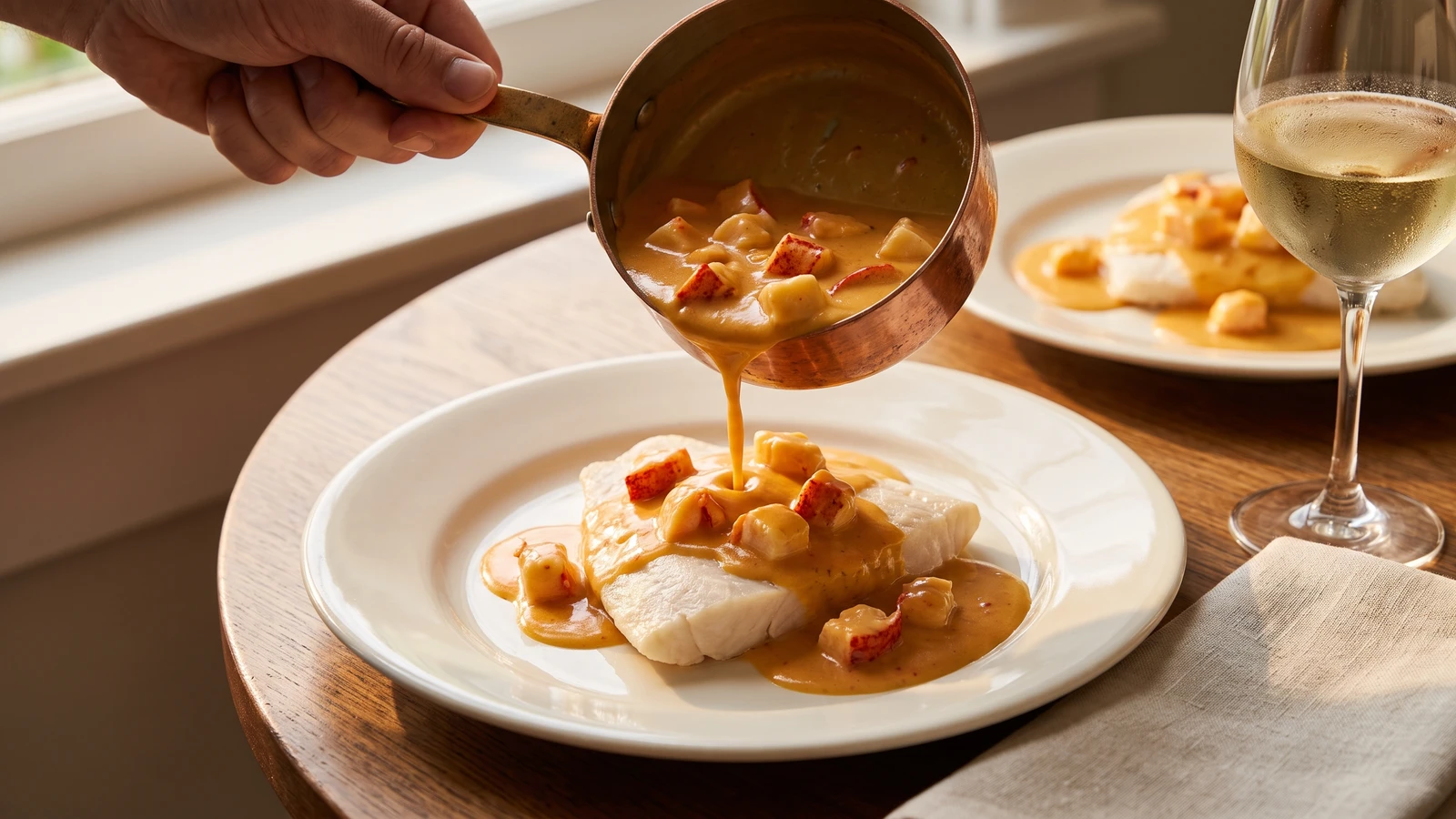
Raw lobster is fried hard in butter and oil, flamed with brandy, reduced with Marsala, then simmered in cream and fumet before its own coral binds the sauce to a coppery gloss.
Sauce Newburg (lobster sauce with brandy, Marsala, cream, and coral) teaches the liaison, the final binding that gives a sauce body without flour. The coral is not decoration. It is seasoning, colour, and thickener. Know the one true thing before you touch the pan: once the coral butter enters, Newburg must not boil.
The original expected a saucier at the pan, fish fumet (concentrated fish essence) never off the fire, and another pair of hands to pound the lobster's creamy portions while the sauce moved. It needed no salamander; this sauce lives entirely on the stove. A wide sauté pan, fine sieve, small processor, and instant-read thermometer replace the staff. For a generous home batch, the book's single two-pound lobster and every other ingredient are doubled, bringing the finished sauce and meat close to two quarts without stretching the ratios. The source's tied herb bundle becomes a small bouquet garni. One cook, one stove, one evening.
Making the fumet ahead and using a processor are brigade scaffolding. The hard frying, complete draining of the fat, brandy flame, two-thirds wine reduction, twenty-five-minute gentle cook, and coral liaison are the dish, so they stay. The written direction calls for boiling the coral to cook it; the home translation holds the sauce at 175 to 180°F instead, hot enough to cook the coral without seizing it or breaking the cream. When right, Newburg is coral-gold and glossy, with cayenne behind the lobster's sweetness. Have the fish and plates ready before the coral butter meets the pan; controlling that final heat is the step that decides the sauce.
Sauce Newburg has no French region to claim it: its real home is Manhattan's grand dining-room table, where lobster met brandy, fortified wine, cream, and cayenne. Stories about the name and its shifting spelling disagree, but the preparation traveled cleanly into French classical kitchens, which codified this raw-lobster method around shell fond and a coral liaison. Newburg is often confused with Homard Thermidor, but Thermidor carries mustard and a gratinéed finish; Newburg depends on fortified wine, cream, cayenne, and coral, with no cheese and no salamander.
Quantity
2, about 2 pounds (900 g) each
dispatched and quartered; internal coral and creamy portions reserved
Quantity
1/2 cup (120 ml / 113 g)
softened
Quantity
6 tablespoons (90 ml / 85 g)
Quantity
6 tablespoons (90 ml / 82 g)
Quantity
2 teaspoons (10 ml / 12 g)
divided
Quantity
1/2 teaspoon (2.5 ml / 1 g)
divided
Quantity
1/4 cup (60 ml / 57 g)
for flambéing
Quantity
1 2/3 cups (400 ml / 395 g)
Quantity
1 2/3 cups (400 ml / 400 g)
Quantity
2 1/2 cups (600 ml / 600 g)
Quantity
1 small bundle
1 bay leaf, 4 parsley stems, and 2 thyme sprigs tied together
Quantity
2 tablespoons (30 ml / 30 g)
| Ingredient | Quantity |
|---|---|
| raw whole lobstersdispatched and quartered; internal coral and creamy portions reserved | 2, about 2 pounds (900 g) each |
| unsalted butter for the coral buttersoftened | 1/2 cup (120 ml / 113 g) |
| unsalted butter for frying | 6 tablespoons (90 ml / 85 g) |
| neutral vegetable oil | 6 tablespoons (90 ml / 82 g) |
| fine sea saltdivided | 2 teaspoons (10 ml / 12 g) |
| cayenne pepperdivided | 1/2 teaspoon (2.5 ml / 1 g) |
| brandyfor flambéing | 1/4 cup (60 ml / 57 g) |
| dry Marsala | 1 2/3 cups (400 ml / 395 g) |
| heavy cream | 1 2/3 cups (400 ml / 400 g) |
| light, unsalted fish fumet | 2 1/2 cups (600 ml / 600 g) |
| bouquet garni1 bay leaf, 4 parsley stems, and 2 thyme sprigs tied together | 1 small bundle |
| cold heavy cream for rescuing the liaison (optional) | 2 tablespoons (30 ml / 30 g) |
Keep the lobsters cold until the pan and every ingredient are ready. The cleanest home arrangement is to ask the fishmonger to dispatch and quarter them just before collection, wrapping the internal coral and creamy portions separately. If doing the work yourself, chill the lobsters for twenty minutes, then dispatch each decisively with a heavy chef's knife. Split it lengthwise, cut each half crosswise between body and tail, and crack each claw once so the sauce can reach the meat. Lift the dark internal coral and clean creamy portions into a chilled bowl. Discard the stomach sac, feathery gills, and intestinal vein.
Work the reserved coral and creamy portions with the softened 1/2 cup butter in a mortar or small processor until completely smooth, scraping down the bowl several times. No visible lumps should remain, because each lump will set into a grain when heated. Keep the coral butter cool but pliable while the lobster cooks. This is the liaison, and it goes into the sauce only at the finish.
Mix the salt and cayenne, season the lobster pieces with about two-thirds of it, and reserve the rest. Heat half the frying butter and half the oil in a wide sauté pan over medium-high heat until the butter's foam subsides. Add half the lobster without crowding and fry hard, turning the pieces until every shell is a fine, vivid red and the cut surfaces take light bronze colour, about five to seven minutes. Repeat with the remaining butter, oil, and lobster. The lobster need not be cooked through yet; the purpose is colour, shell flavour, and a real fond on the pan floor.
Move the lobster to a tray and pour every drop of frying fat from the pan, leaving the brown glaze attached to its floor. Return all the lobster pieces. Turn off the burner and extractor fan, clear anything flammable from the stove, and keep the pan lid beside you. Add the brandy off the heat, move the bottle well away, then return the pan to medium heat and ignite the alcohol at the far edge with a long lighter. Let the flame die naturally. This is the source's burnt brandy: flamed cleanly, never scorched. If it does not catch after one safe attempt, stop striking matches and simmer the brandy until its raw alcoholic smell disappears.
When the flame is gone, add the Marsala and scrape the pan floor thoroughly so every trace of fond enters the wine. Simmer briskly until the Marsala has reduced by two-thirds, from 1 2/3 cups to roughly 1/2 cup, about eight to twelve minutes in a wide pan. Tilt the pan occasionally to judge the liquid beneath the lobster pieces. It should smell rounded and nutty, with no sharp alcohol, and look lightly syrupy without going dry. This reduction is the dish, not scaffolding.
Pour in the heavy cream and fish fumet, then tuck in the bouquet garni. Bring the liquid only to a bare simmer, cover tightly, and cook gently for twenty-five minutes. The surface should tremble under the lid, never churn. If the cream rises or boils hard, pull the pan from the burner, lower the heat, and continue once it settles. It will look pale and loose at this stage. That is exactly right.
Set a fine-mesh sieve over a clean saucepan and drain the entire pan through it, letting the sauce pass without crushing the shells. Discard the bouquet garni. When the lobster pieces are cool enough to handle, remove the tail, claw, and knuckle meat and cut it into generous 3/4-inch (2 cm) cubes. Keep the meat covered. The source also permits leaving the meat in larger pieces and arranging it over the fish rather than folding it into the finished sauce.
Set the strained sauce over low heat and bring it to about 170°F (77°C). Whisk in the coral butter a small piece at a time, allowing each addition to disappear before adding the next. Hold the sauce between 175 and 180°F (79 and 82°C) for two minutes, whisking steadily, so the raw coral cooks and turns the sauce coral-gold. Do not let it boil. The liaison is ready when the sauce coats a spoon in a glossy, even layer. If it turns grainy or shows beads of butter, remove it from the heat and whisk in the cold cream one teaspoon at a time. If needed, pass it through the clean sieve and blend briefly. Ça se rattrape.
Fold in the cubed lobster and warm it for two to three minutes without approaching a simmer. Taste, then adjust with the reserved salt and cayenne until the sauce tastes of lobster first, Marsala second, and cayenne only as a quiet warmth. Spoon Newburg immediately over poached turbot, sole, or another simply cooked fish, or arrange the lobster meat on the fish and pour the sauce around it as the source allows. À table!
1 serving (about 60g)
Culinary guides, cultural storytelling, and the editorial depth that makes cooking meaningful.
Discover Culinary ExplorerChef Juliette
Beef shin, lean beef, and fowl begin in cold water and rise slowly toward a tremble. Skim before the boil, and you learn the quiet discipline that gives every clear French broth its backbone.
Chef Juliette
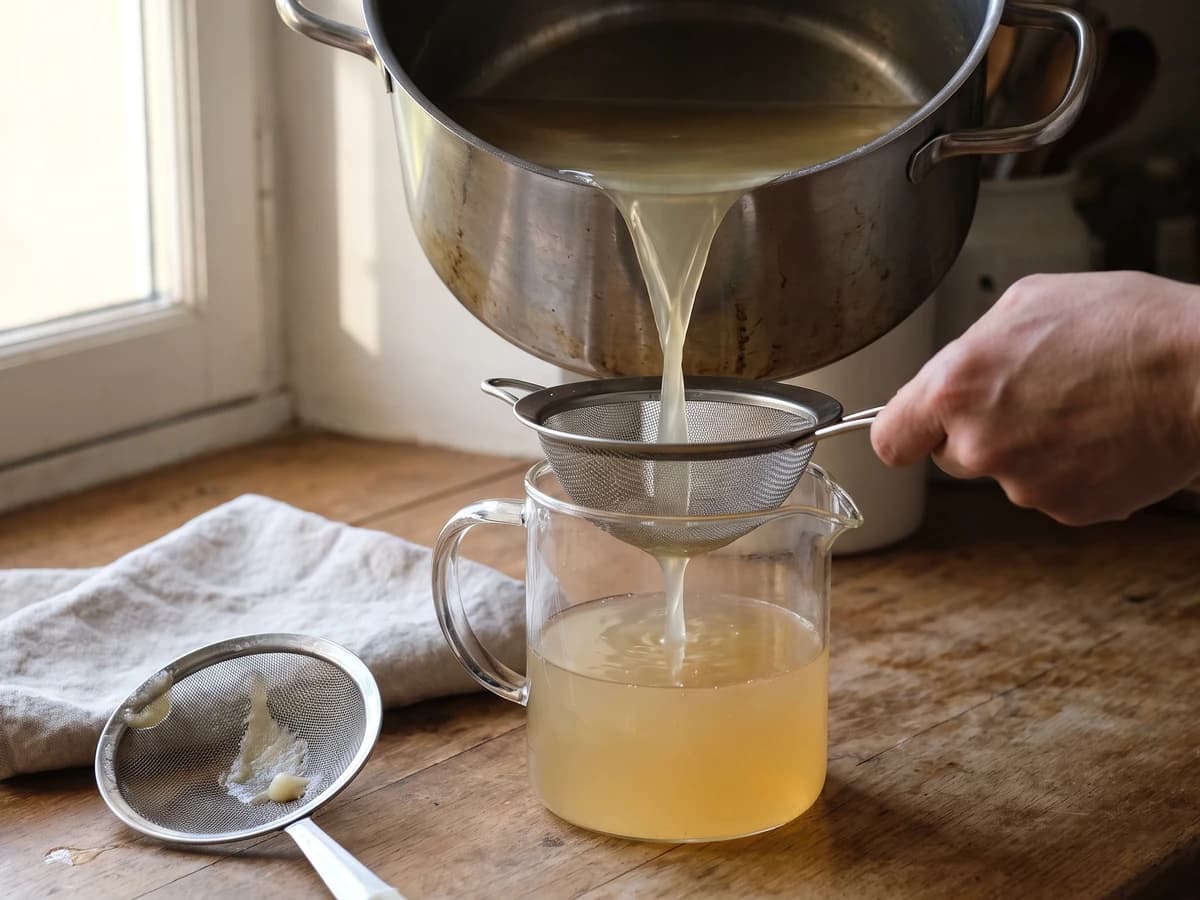
Break the veal bones small, then give them eight hours at a bare tremble. This pale, gelatinous fond becomes the quiet foundation beneath velouté, blanquette, and every sauce that must stay light.
Chef Juliette
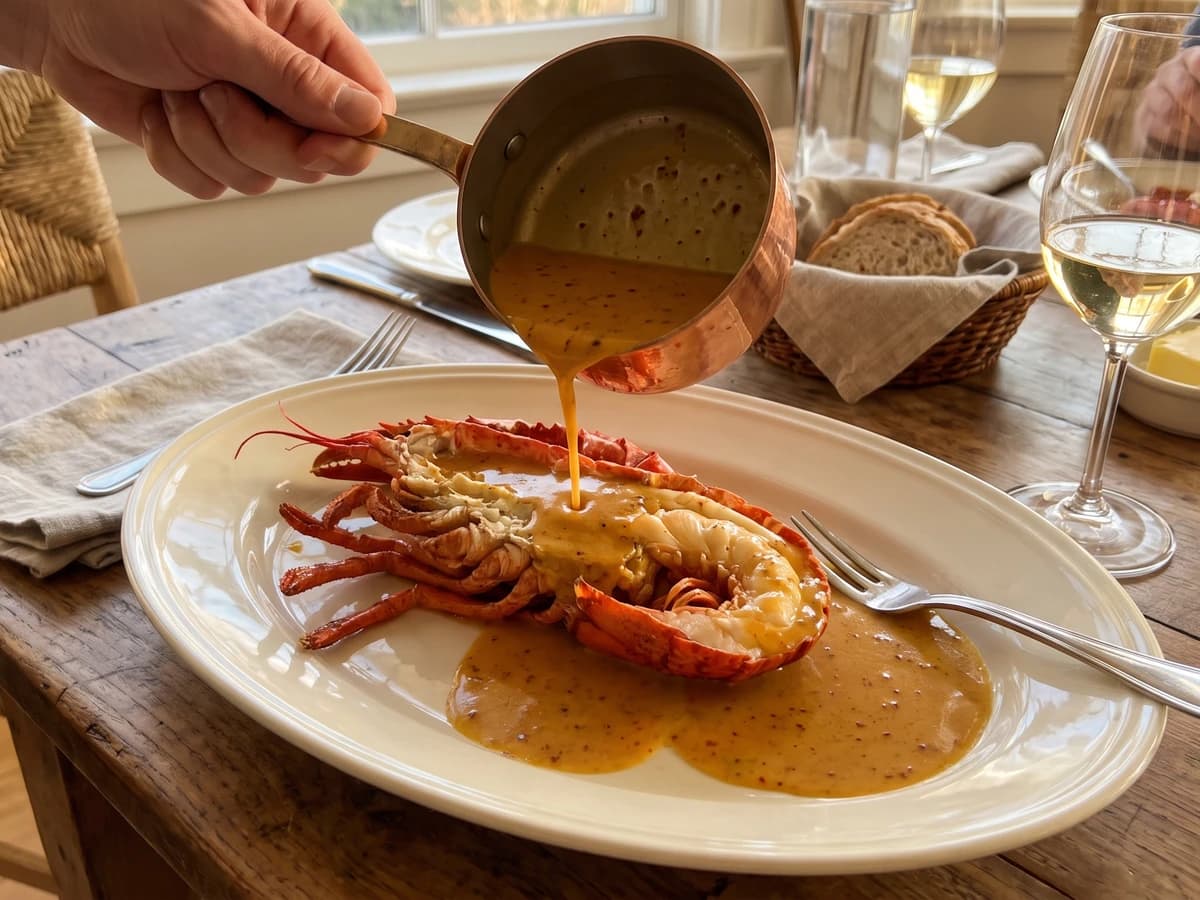
Sauce Orientale concentrates lobster-rich American Sauce with curry, then folds in cream away from the fire: a glossy, gently spiced derivative made for lobster, crayfish, and firm fish.
Chef Juliette
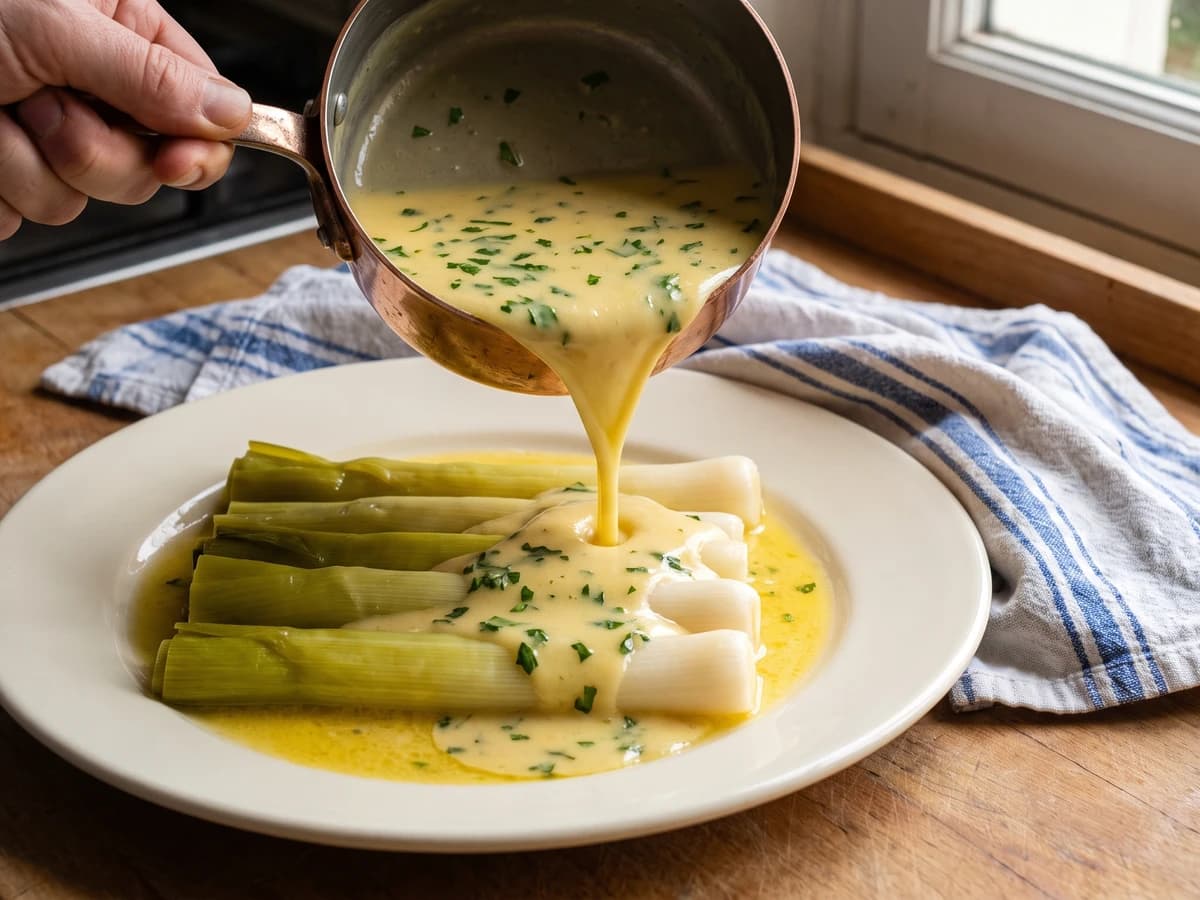
An old lesson in sauce families: Sauce Allemande takes mushroom liquor, then butter, lemon, and parsley, becoming a glossy Poulette for sheep's trotters, leeks, cauliflower, and anything needing gentle richness with a bright edge.