Chef Juliette
Ordinary or White Consommé
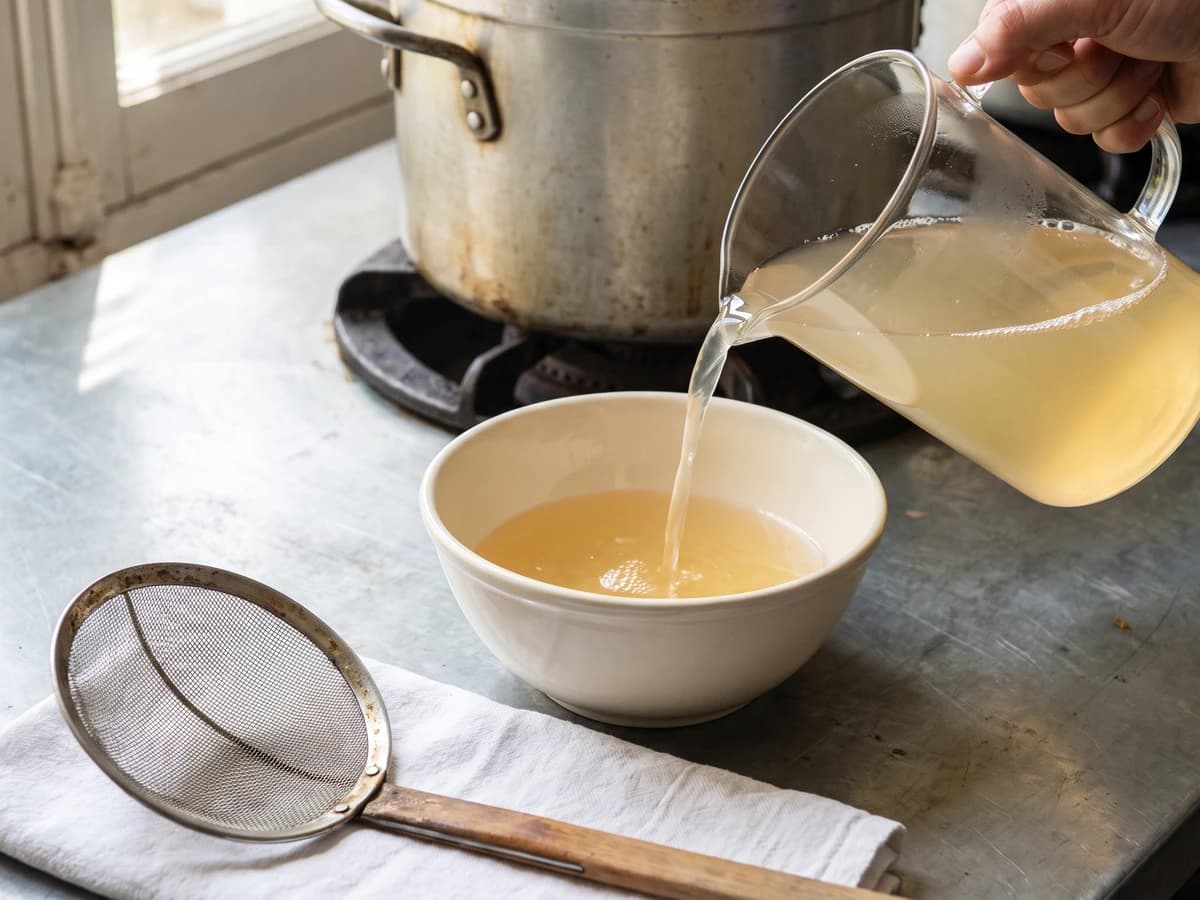
Beef shin, lean beef, and fowl begin in cold water and rise slowly toward a tremble. Skim before the boil, and you learn the quiet discipline that gives every clear French broth its backbone.
A cooking platform built around craft, culture, and the stories behind what we eat.
Created by Chef Juliette
Based on No. 95, Nantua Sauce, from Le Guide Culinaire (1907) by Auguste Escoffier
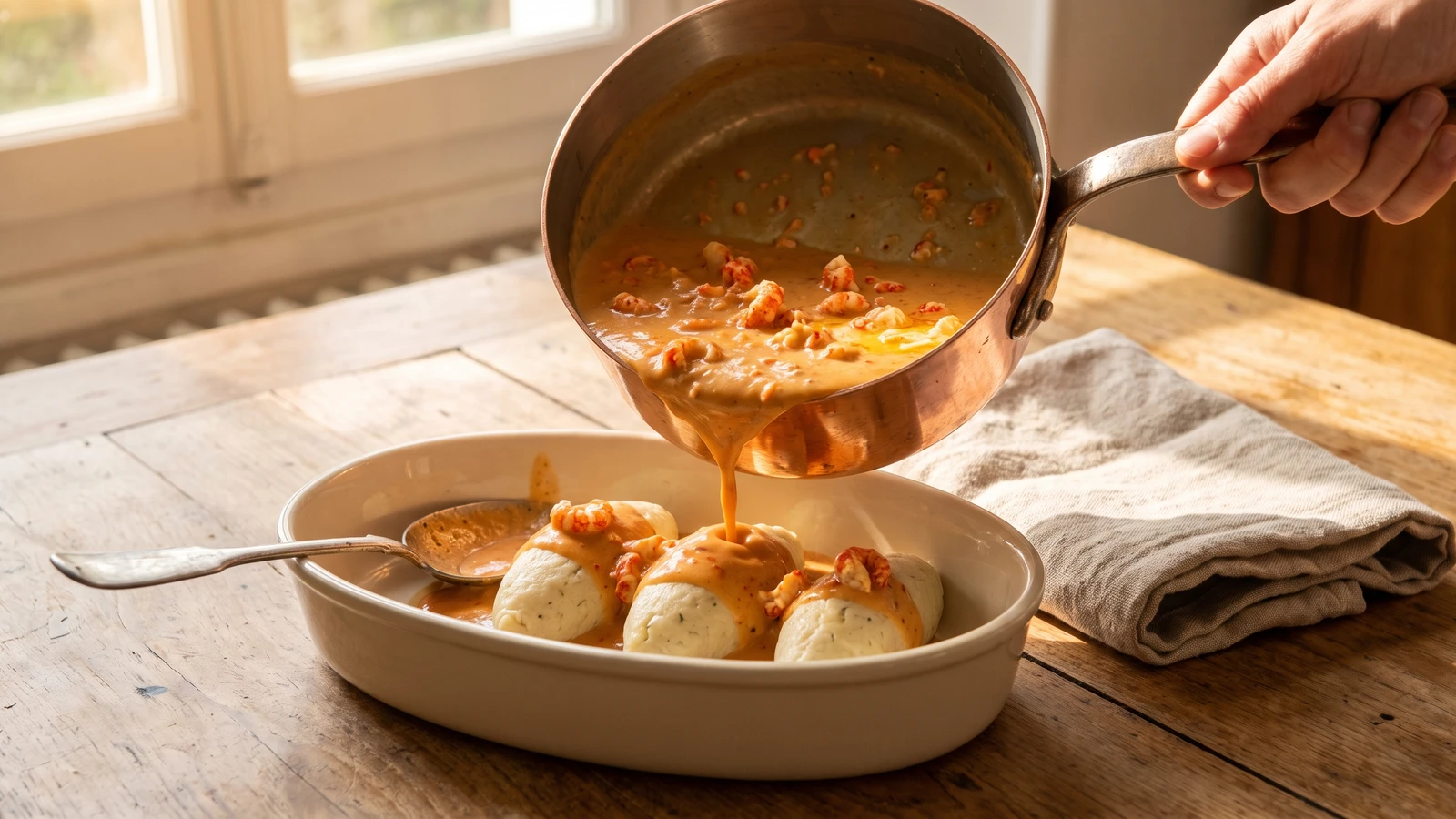
Sauce Nantua turns cream-reduced Béchamel into the signature sauce of Bugey: an ivory base, coral crayfish butter, and sweet little tails, finished off the heat so the butter stays glossy and fragrant.
Sauce Nantua (cream-enriched Béchamel finished with crayfish butter) teaches one true thing: the reduction comes before the butter. Reduce the base until it has body, then mount the crayfish butter off the boil; reverse that order and the shellfish perfume fades while the sauce turns greasy. The butter carries the dish.
The original entry assumed a saucier with finished Béchamel and crayfish butter already at hand, plus a tammy for the final polish. Your honest equivalents are those same prepared foundations, a wide heavy saucepan, and a fine-mesh sieve. Keeping a whole sauce station alive is brigade scaffolding and can go; reducing by a third, straining, and finishing with real cream and crayfish butter are the dish and must stay. This batch preserves the original two-to-one proportion of Béchamel to cream and its finishing ratios, recalculated to yield about two quarts.
Watch the heat at the finish. The sauce should fall from the spoon in a broad coral-ivory ribbon, with small tails tucked through it and the sweet mineral fragrance of crayfish arriving before the cream. Once the butter enters, don't let the pan boil again; that is the step that decides Nantua.
Sauce Nantua takes its name from Nantua in the Ain, east of Lyon in Bugey, where the lake and surrounding waterways made crayfish part of the local table. From Bugey it entered Lyon's repertoire as the customary partner to quenelles de brochet, its crayfish butter lending pale Béchamel a coral tint and concentrated shellfish perfume. Some kitchens build richer versions on fish velouté or crayfish reduction, but this classical branch begins with Béchamel and cream, then finishes with butter and tails.
Quantity
6 cups (1.42 L / about 1.5 kg)
Quantity
3 cups (710 ml / 710 g)
for the reduction
Quantity
6 tablespoons (90 ml / 90 g)
for finishing, divided
Quantity
1 cup plus 2 tablespoons (270 ml / 255 g)
kept cool and cut into small pieces
Quantity
3 tablespoons (45 ml / 45 g)
drained and patted dry
| Ingredient | Quantity |
|---|---|
| finished Béchamel Sauce | 6 cups (1.42 L / about 1.5 kg) |
| heavy creamfor the reduction | 3 cups (710 ml / 710 g) |
| heavy creamfor finishing, divided | 6 tablespoons (90 ml / 90 g) |
| very fine crayfish butterkept cool and cut into small pieces | 1 cup plus 2 tablespoons (270 ml / 255 g) |
| small cooked shelled crayfish tailsdrained and patted dry | 3 tablespoons (45 ml / 45 g) |
Measure the finished Béchamel Sauce, both additions of cream, crayfish butter, and tails before applying heat. Reserve 1 tablespoon (15 ml / 15 g) of the finishing cream for the emulsion, set a fine-mesh sieve over a clean heatproof bowl, and keep the crayfish butter cool but pliable. Pat the tails dry and check them carefully for fragments of shell; excess packing liquid would thin the finished sauce.
Combine the Béchamel Sauce with the 3 cups (710 ml / 710 g) of reduction cream in a wide, heavy saucepan. Bring it to a controlled boil over medium heat, whisking across the bottom and into the corners, then maintain lively but steady bubbling until the original 9 cups have reduced to about 6 cups, 30 to 40 minutes. The bubbles will broaden, the sauce will cling heavily to a spoon, and a line drawn through it will close slowly. This reduction must happen now, before the crayfish butter enters. If the bottom begins to catch, don't scrape it: immediately pour the clean upper sauce into another pan and leave the browned layer behind. Ça se rattrape when caught early; a bitter, scorched sauce does not.
Rub the reduced sauce through the fine-mesh sieve with the back of a ladle, scraping the smooth sauce from the underside into the bowl. The old kitchen used a tammy, a fine cloth sieve; the metal sieve is its honest home equivalent. Straining removes any cooked milk skin and roux specks, giving Nantua the uninterrupted silk the crayfish butter deserves. Transfer the strained sauce to a clean saucepan.
Warm the strained sauce over low heat and whisk in 5 tablespoons (75 ml / 75 g) of the finishing cream. Remove the pan from the heat before adding the crayfish butter a few pieces at a time, whisking each addition completely into the sauce before the next. The colour will shift from ivory toward pale coral and the surface will take on a satin gloss. If a greasy ring appears, the sauce is too hot: set the pan on a cool, damp towel and whisk in the reserved tablespoon of cream until it gathers again. Ça se rattrape. If the emulsion is already smooth, whisk in that final tablespoon normally. Do not boil the sauce once the butter is incorporated.
Fold in the crayfish tails and return the pan to the lowest heat for 1 to 2 minutes, stirring gently, just until the tails are warmed through. Nantua is ready when it coats the back of a spoon and falls in a broad, glossy ribbon without looking pasty. Serve at once with quenelles de brochet, poached fish, or delicate shellfish, or hold it covered over barely warm water for no longer than 30 minutes. Never let it boil. À table!
1 serving (about 60g)
Culinary guides, cultural storytelling, and the editorial depth that makes cooking meaningful.
Discover Culinary ExplorerChef Juliette
Beef shin, lean beef, and fowl begin in cold water and rise slowly toward a tremble. Skim before the boil, and you learn the quiet discipline that gives every clear French broth its backbone.
Chef Juliette
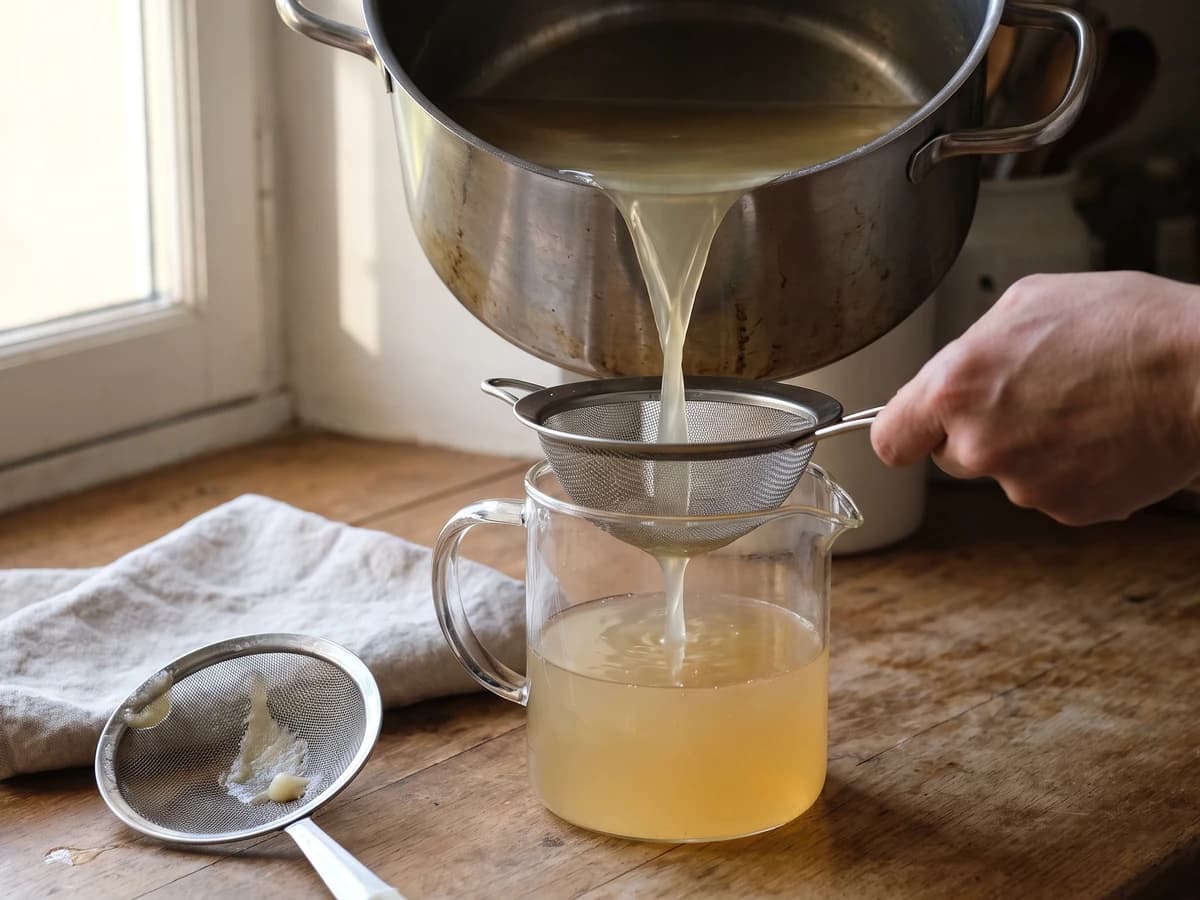
Break the veal bones small, then give them eight hours at a bare tremble. This pale, gelatinous fond becomes the quiet foundation beneath velouté, blanquette, and every sauce that must stay light.
Chef Juliette
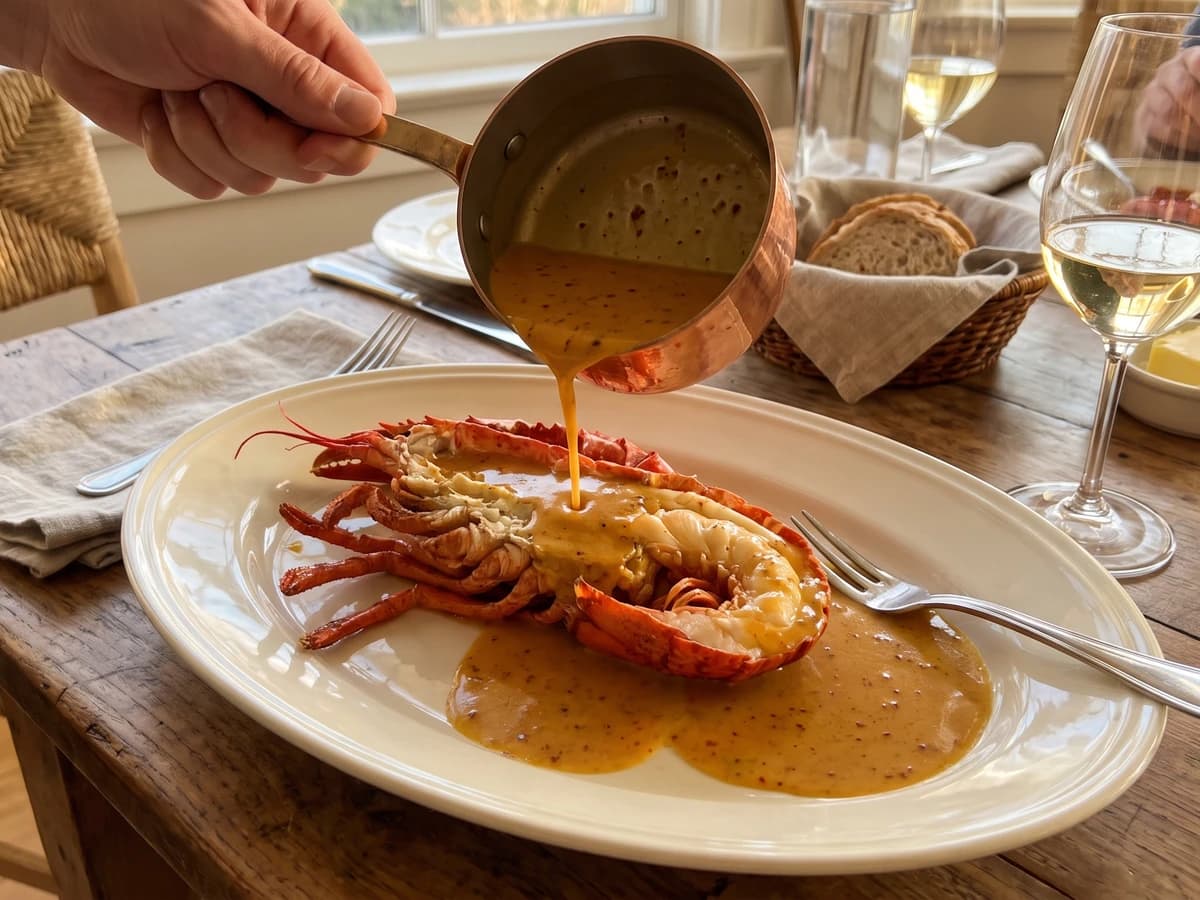
Sauce Orientale concentrates lobster-rich American Sauce with curry, then folds in cream away from the fire: a glossy, gently spiced derivative made for lobster, crayfish, and firm fish.
Chef Juliette
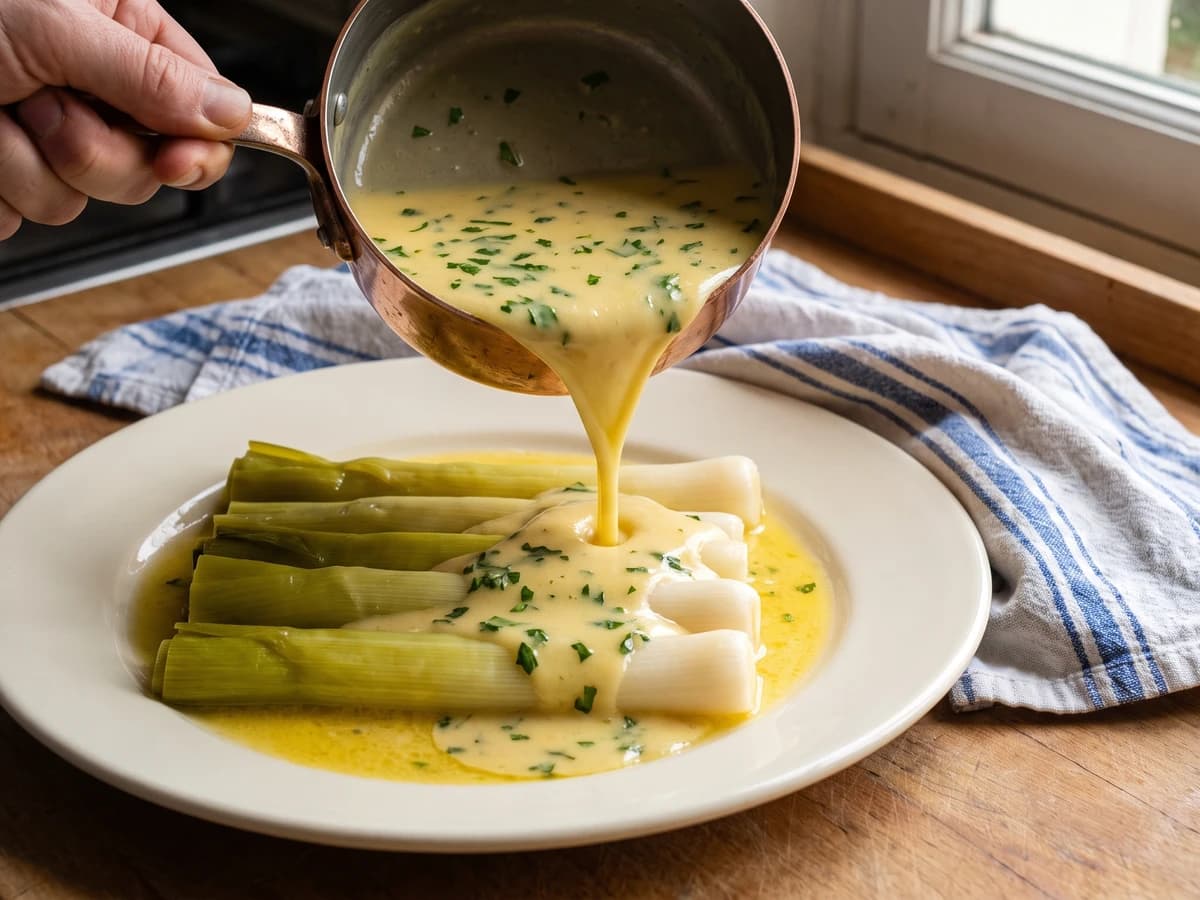
An old lesson in sauce families: Sauce Allemande takes mushroom liquor, then butter, lemon, and parsley, becoming a glossy Poulette for sheep's trotters, leeks, cauliflower, and anything needing gentle richness with a bright edge.