Chef Juliette
Ordinary or White Consommé
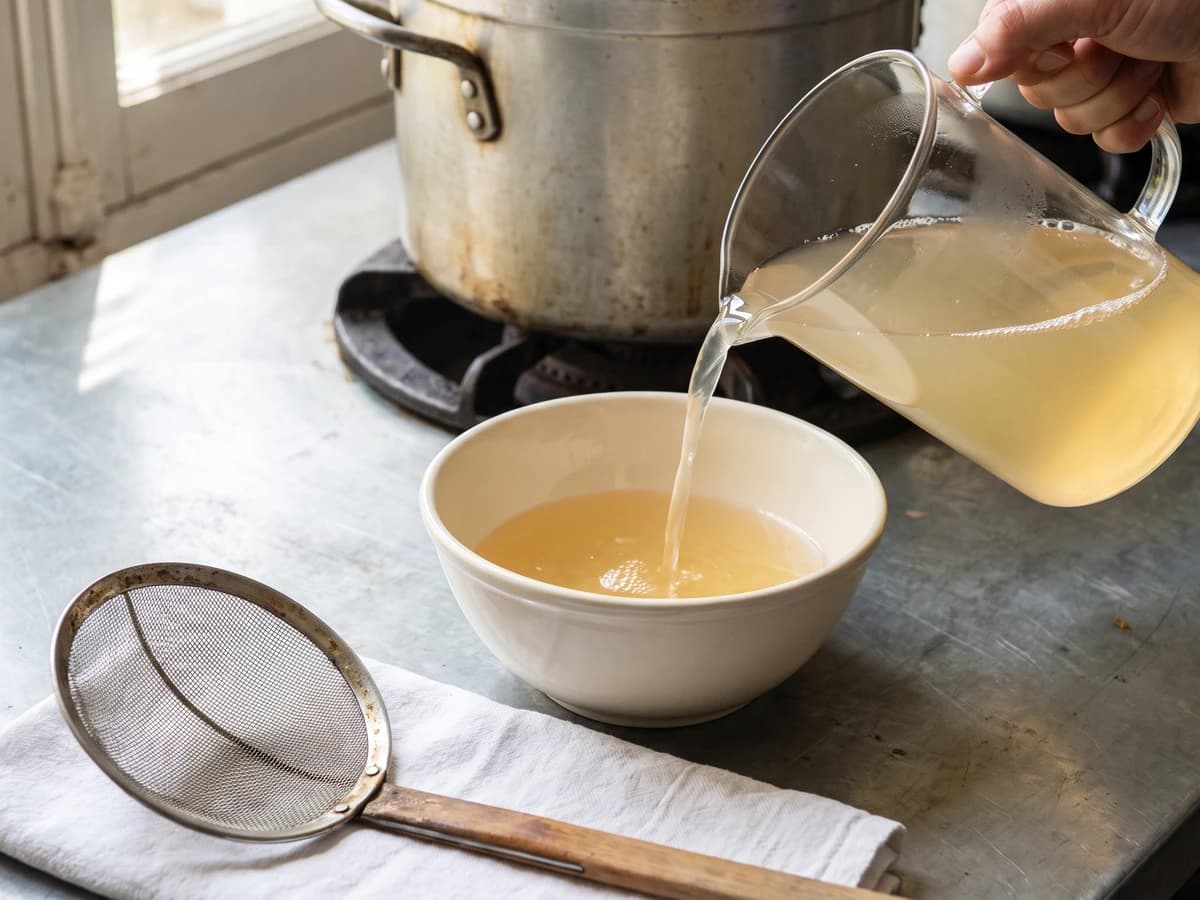
Beef shin, lean beef, and fowl begin in cold water and rise slowly toward a tremble. Skim before the boil, and you learn the quiet discipline that gives every clear French broth its backbone.
A cooking platform built around craft, culture, and the stories behind what we eat.
Created by Chef Juliette
Based on No. 94, Mustard Sauce, from Le Guide Culinaire (1907) by Auguste Escoffier
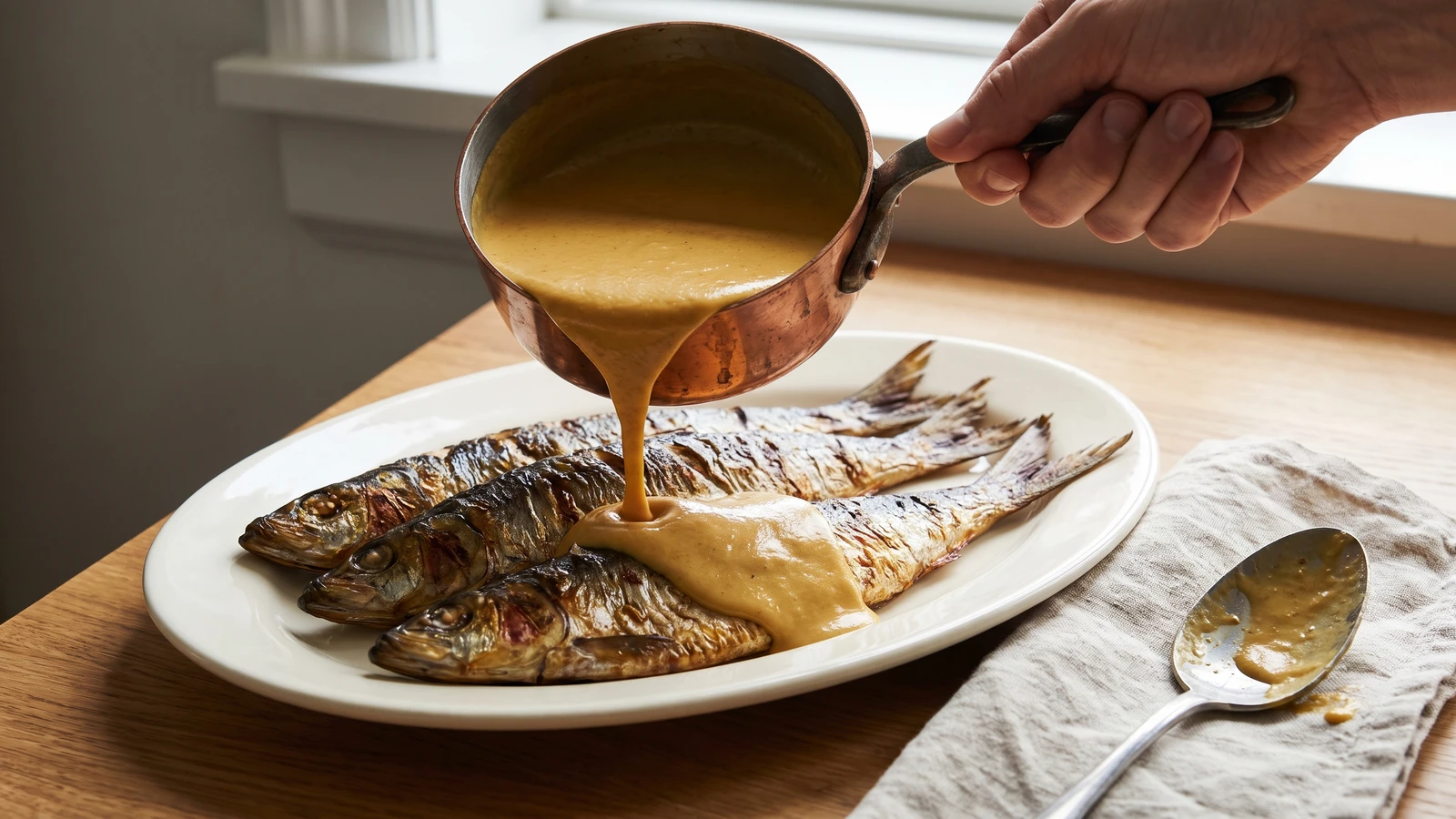
Sauce Moutarde teaches the discipline of finishing off the fire: warm butter sauce, Dijon mustard, and no boiling, spooned generously over grilled herring or other small fish.
Sauce Moutarde teaches the quiet discipline of finishing an emulsion away from heat. The mustard isn't cooked into submission. It is whisked into warm butter sauce so its bite stays clear while the sauce remains glossy. One true thing before you touch the pan: once the mustard goes in, boiling is forbidden.
The original formula assumed a saucier with finished butter sauce ready to hand, enough service to use any necessary quantity, and a bain-marie waiting beside the range. At home, use about two quarts of prepared butter sauce, keep the book's exact ratio of one tablespoon of mustard per pint, and turn a wide skillet of warm water into the bain-marie, a hot-water bath for holding the sauce. The service scaffolding goes; the off-fire finish and the ratio stay, because they are the dish. One cook, one stove, one evening.
Expect an ivory sauce with a Dijon-gold cast, rich first and brisk at the finish, made for grilled small fish and fresh herring above all. The one step that matters is the last one: lift the pan, whisk in the mustard off the fire, and never let the Sauce Moutarde boil while it waits.
Sauce Moutarde belongs to the classical French sauce repertoire shaped in the grand kitchens of Paris rather than to a single provincial larder. Its particular companionship with fresh herring and other small grilled fish connects that formal repertoire to the Channel and North Sea coasts of northern France, where herring has fed households for generations. The name often covers cream sauces and reduced pan sauces, but this canonical form is simpler: prepared butter sauce and mustard, joined away from the fire so the mustard keeps its edge.
Quantity
2 quarts (8 cups / 1.9 L / about 1.9 kg)
Quantity
4 level tablespoons (60 ml / about 60 g)
Quantity
1 tablespoon (15 ml / 15 g)
only if needed to rescue a split sauce
| Ingredient | Quantity |
|---|---|
| prepared butter sauce | 2 quarts (8 cups / 1.9 L / about 1.9 kg) |
| smooth Dijon mustard | 4 level tablespoons (60 ml / about 60 g) |
| cool water (optional)only if needed to rescue a split sauce | 1 tablespoon (15 ml / 15 g) |
Pour about 1½ inches of water into a wide, deep skillet and heat it until hot but nowhere near simmering. Lower the heat completely. This bain-marie will hold the finished sauce without attacking its butter emulsion; it is a holding bath, not a second cooking fire.
Put the prepared butter sauce into a heavy 4-quart saucepan and warm it over the lowest heat, whisking gently until it is smooth, glossy, and hot enough to serve. Stop before even the smallest bubble appears. The foundation is already cooked, so this step restores its serving texture and nothing more.
Lift the saucepan completely off the burner. Add the Dijon mustard one tablespoon at a time, whisking each addition through the warm sauce before adding the next. The sauce should remain glossy, with no mustard streaks and no oil gathering at the rim. If it separates into oily beads, stop. Ça se rattrape: put the cool water in a clean bowl, then whisk the split sauce into it one ladleful at a time until the emulsion becomes smooth again. Do not return it to direct heat.
Nest the saucepan in the prepared bain-marie, with the water reaching partway up its sides but unable to splash into the sauce. Hold over the lowest heat and stir every few minutes. It must not boil under any circumstances. If the bath begins bubbling, remove the whole arrangement from the heat and replace a little hot water with cool water before continuing.
Serve the Sauce Moutarde within 30 minutes, while it is warm, glossy, and still brisk with mustard. Spoon it over freshly grilled herring or another small oily fish just before the plate reaches the table. The fish supplies smoke and richness; the mustard supplies the clean edge. À table!
1 serving (about 30g)
Culinary guides, cultural storytelling, and the editorial depth that makes cooking meaningful.
Discover Culinary ExplorerChef Juliette
Beef shin, lean beef, and fowl begin in cold water and rise slowly toward a tremble. Skim before the boil, and you learn the quiet discipline that gives every clear French broth its backbone.
Chef Juliette
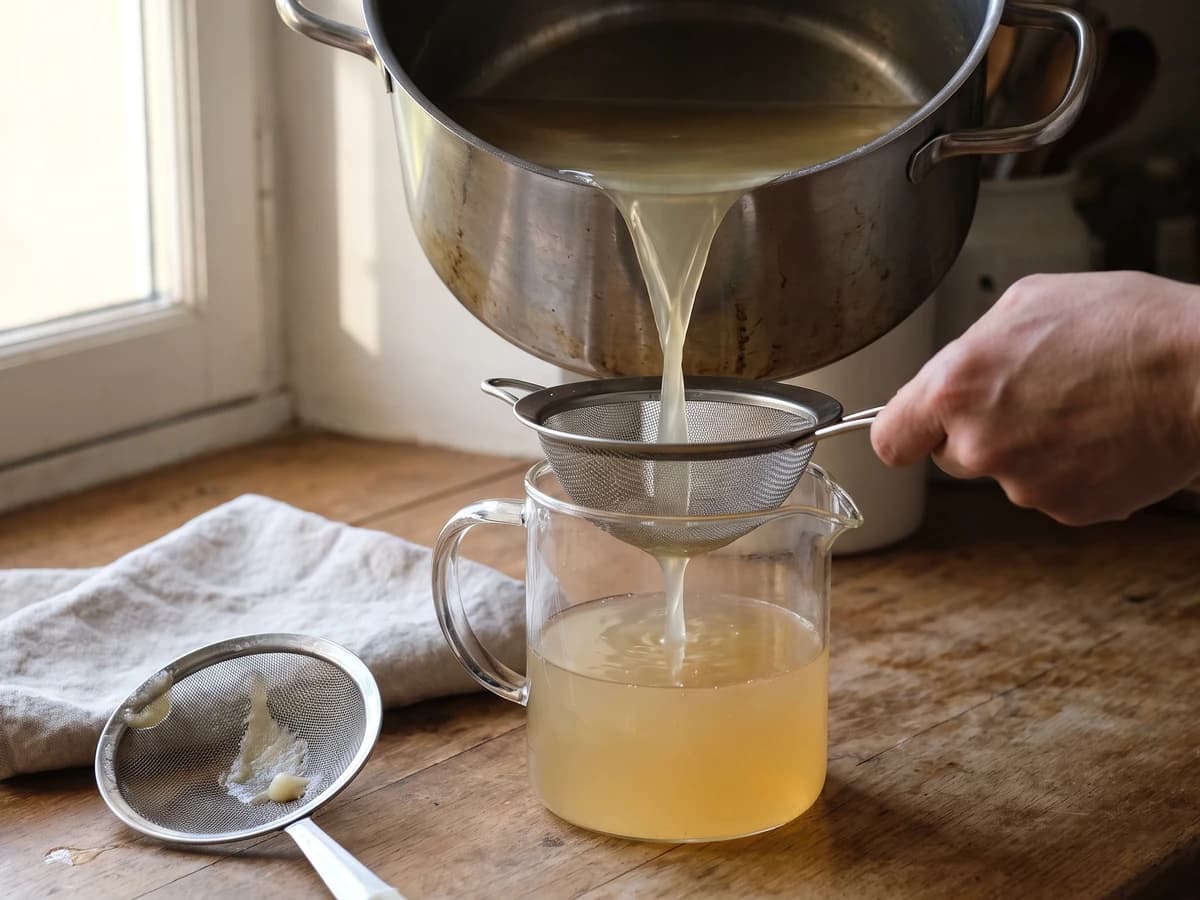
Break the veal bones small, then give them eight hours at a bare tremble. This pale, gelatinous fond becomes the quiet foundation beneath velouté, blanquette, and every sauce that must stay light.
Chef Juliette
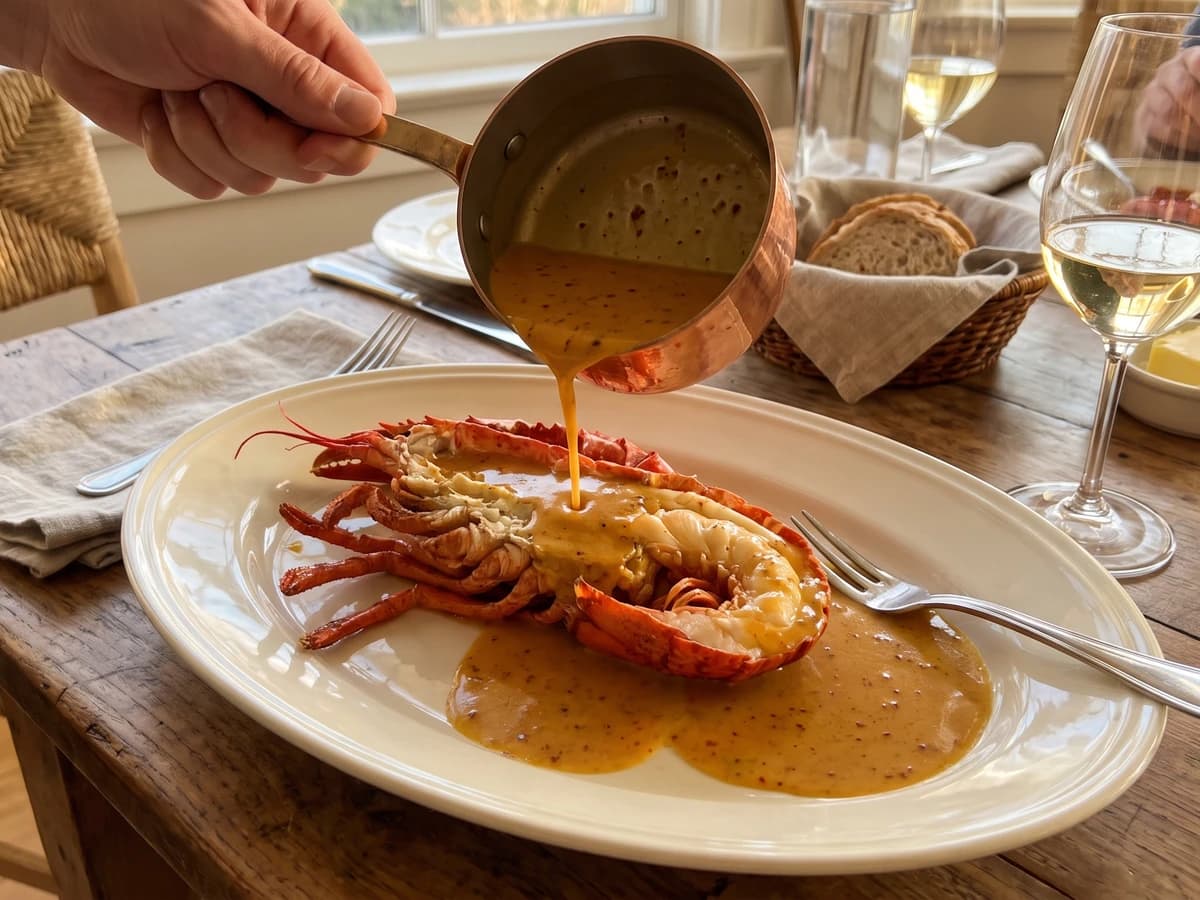
Sauce Orientale concentrates lobster-rich American Sauce with curry, then folds in cream away from the fire: a glossy, gently spiced derivative made for lobster, crayfish, and firm fish.
Chef Juliette
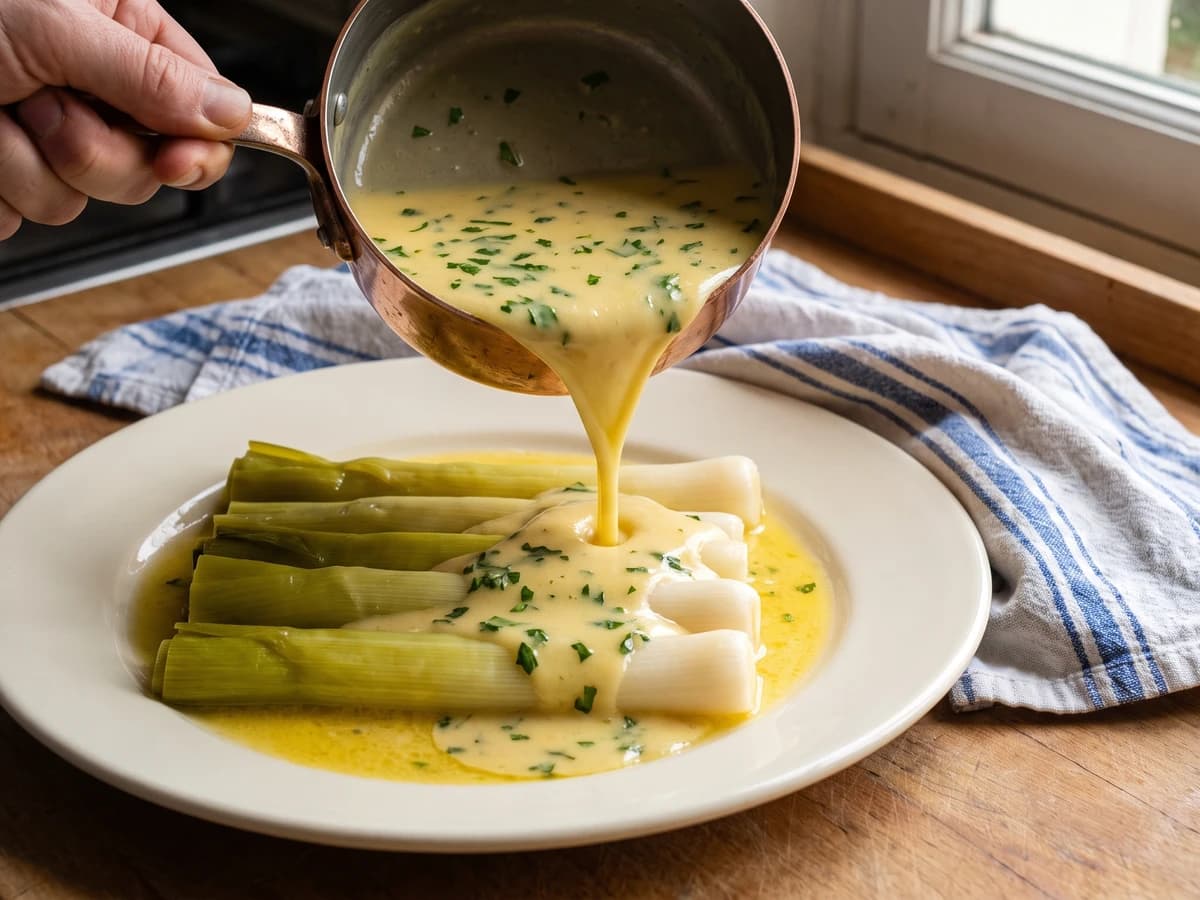
An old lesson in sauce families: Sauce Allemande takes mushroom liquor, then butter, lemon, and parsley, becoming a glossy Poulette for sheep's trotters, leeks, cauliflower, and anything needing gentle richness with a bright edge.