
Chef Juliette
John Dory (St. Pierre)
John Dory has the delicacy of sole and the firmness of turbot. A light flouring, a quick butter sauté, and nut-brown beurre noisette show exactly why looks never mattered.
A cooking platform built around craft, culture, and the stories behind what we eat.
Created by Chef Juliette
Based on No. 939, Homard à l’Américaine, from Le Guide Culinaire (1907) by Auguste Escoffier
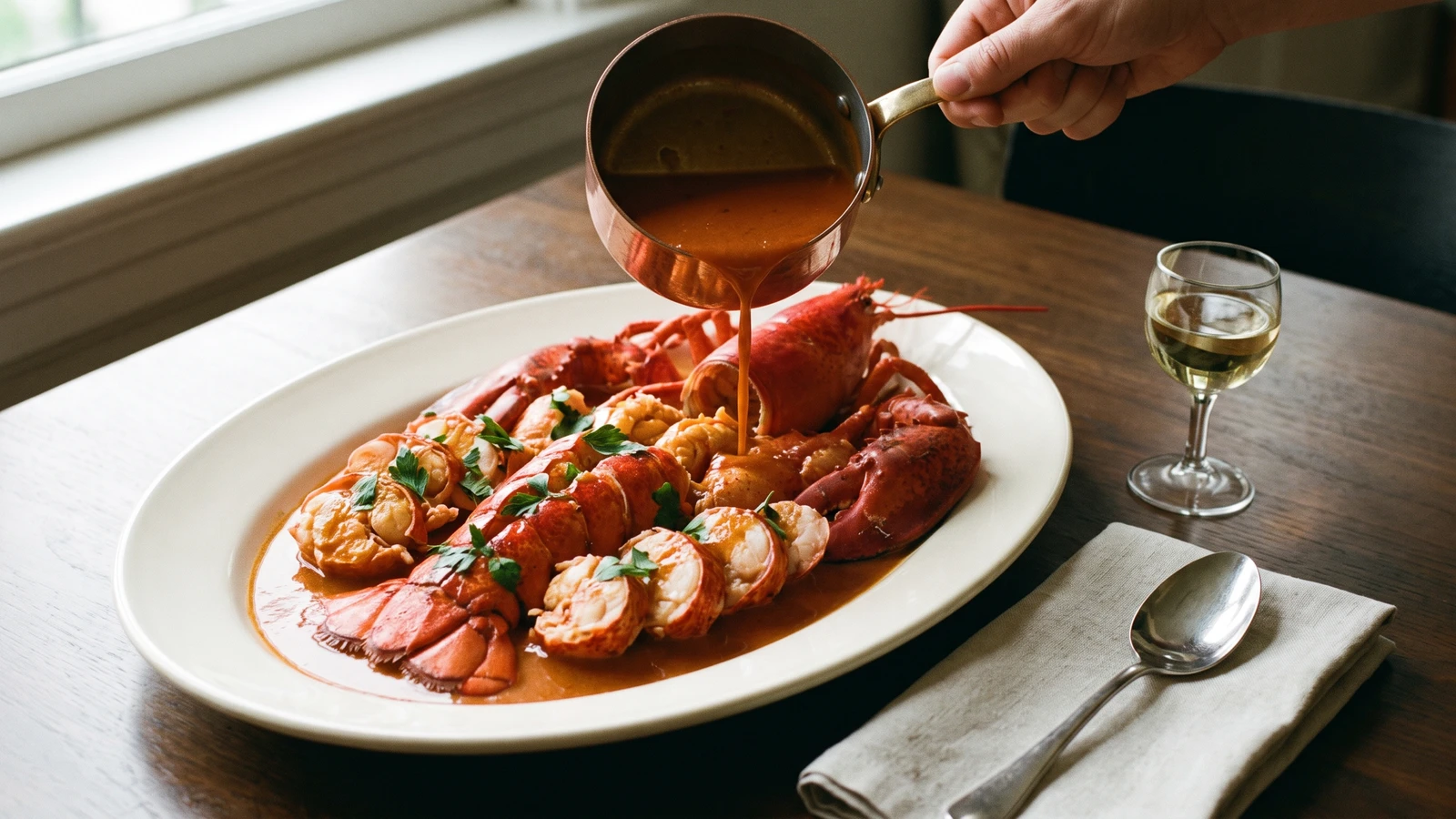
Lobster shells blaze red over fierce heat, brandy catches, and tomato-wine liquor reduces to a shining sauce bound with coral and cold butter. The lesson is simple: after the finish, never let it boil.
Homard à l’Américaine (lobster with tomato, white wine, and brandy) teaches one decisive thing: the sauce may simmer before its finish, but once coral and butter enter, it must never boil. The shells should blaze red, the meat should stay sweet and firm, and the cooking liquor should become a brick-red gloss. This is reduction followed by monter au beurre (whisking in cold butter), and the heat decides whether you get silk or grease.
The original entry assumed a saucier on staff, fish fumet never off the fire, meat glaze ready by the spoonful, and a salamander nearby, though this dish asks nothing of the salamander. Your honest home equivalents are prepared fumet, a good unsalted meat glaze, one wide ovenproof pan, and a warm platter. The upright shell timbale was service architecture, so it goes; the lobster cut only when the pan is ready, fierce searing, flambage, covered cooking, reduction, and butter finish are the dish, so every one stays. One cook, one stove, one evening.
The one true thing to carry to the stove is simple: finish the sauce below a simmer. If it splits, don't pour it out. Ça se rattrape, and the method gives you the clean bowl and spoonful of cold water that bring it home.
Homard à l’Américaine was born in Paris in the hands of a cook from Sète, so its garlic, tomato, and oil speak with the Midi while its reduction and butter finish belong to the grand-kitchen sauce system. The name is often rewritten as armoricaine and assigned to Brittany, but that is the later tale; Américaine is the older Parisian title, and no Breton larder is needed to explain the dish. It moved from grand dining rooms to bistros and celebration tables because the spectacle serves a sound method: sear the shell, flame the brandy, concentrate the juices, then bind them off the heat.
Quantity
2, about 2 pounds (900 g) each
Quantity
1 teaspoon (5 ml / 6 g)
plus more only after reduction
Quantity
½ teaspoon (2.5 ml / 1 g)
Quantity
¾ cup plus 2 teaspoons (190 ml / 175 g)
Quantity
¼ cup (60 ml / 56 g)
Quantity
4 (about ½ cup / 120 ml / 100 g)
finely chopped
Quantity
2 cloves (about 2 teaspoons / 10 ml / 10 g)
crushed
Quantity
⅓ cup plus 2 teaspoons (90 ml / 85 g)
Quantity
1½ cups plus 1 tablespoon (375 ml / 375 g)
Quantity
1 cup plus 3 tablespoons (285 ml / 285 g)
Quantity
2 tablespoons (30 ml / 36 g)
melted
Quantity
6 small tomatoes (about 2½ cups / 600 ml / 500 g), or ¼ cup (60 ml / 64 g) tomato purée
tomatoes peeled, seeded, pressed, and chopped
Quantity
2 tablespoons (30 ml / 8 g)
concassé (roughly chopped), divided, with half blanched for finishing
Quantity
⅛ teaspoon (0.6 ml / 0.25 g)
Quantity
2 tablespoons (30 ml / 28 g)
softened
Quantity
¾ cup (180 ml / 170 g)
cold and cut into small cubes
Quantity
1 tablespoon (15 ml / 15 g)
| Ingredient | Quantity |
|---|---|
| live hard-shell lobsters | 2, about 2 pounds (900 g) each |
| fine sea saltplus more only after reduction | 1 teaspoon (5 ml / 6 g) |
| freshly ground black pepper | ½ teaspoon (2.5 ml / 1 g) |
| neutral high-heat oil | ¾ cup plus 2 teaspoons (190 ml / 175 g) |
| unsalted butter for searing | ¼ cup (60 ml / 56 g) |
| small shallotsfinely chopped | 4 (about ½ cup / 120 ml / 100 g) |
| garliccrushed | 2 cloves (about 2 teaspoons / 10 ml / 10 g) |
| Cognac or other French brandy | ⅓ cup plus 2 teaspoons (90 ml / 85 g) |
| dry white wine | 1½ cups plus 1 tablespoon (375 ml / 375 g) |
| prepared fish fumet (concentrated fish stock) | 1 cup plus 3 tablespoons (285 ml / 285 g) |
| prepared unsalted meat glazemelted | 2 tablespoons (30 ml / 36 g) |
| ripe plum tomatoes or double-concentrated tomato puréetomatoes peeled, seeded, pressed, and chopped | 6 small tomatoes (about 2½ cups / 600 ml / 500 g), or ¼ cup (60 ml / 64 g) tomato purée |
| flat-leaf parsleyconcassé (roughly chopped), divided, with half blanched for finishing | 2 tablespoons (30 ml / 8 g) |
| cayenne pepper | ⅛ teaspoon (0.6 ml / 0.25 g) |
| unsalted butter for the coral finishsoftened | 2 tablespoons (30 ml / 28 g) |
| unsalted butter for mounting the saucecold and cut into small cubes | ¾ cup (180 ml / 170 g) |
| cold water (optional) | 1 tablespoon (15 ml / 15 g) |
Set a rack in the middle of the oven and heat it to 400°F (200°C). Measure every sauce ingredient before touching the lobsters, place the cold finishing butter back in the refrigerator, and warm a wide serving platter with hot water. Blanch half the persil concassé in boiling water for 10 seconds, cool it under cold water, squeeze it dry, and reserve it for the finish. Once the lobster is cut, the cooking must move without interruption.
Have the fishmonger dispatch the live lobsters immediately before pickup if you can reach the stove within 30 minutes. Otherwise dispatch them just before cutting, using an approved method and following local animal-welfare guidance. Sever the claws and crack each one lightly so the sauce can enter without the meat escaping. Cut each tail crosswise into three sections, then split the head shell lengthwise. Discard the gravelly stomach sac near the head and the dark intestinal vein. Reserve any clean coral and creamy liver in a cold bowl, season the shell pieces with the salt and pepper, and cook at once.
Heat the oil and searing butter in a wide, heavy ovenproof sauté pan over high heat until the butter's foam subsides and the fat is very hot. Add the lobster pieces in two batches, cut sides down first, and fry them for 2 to 3 minutes per batch, turning until the exposed meat stiffens and every shell becomes a vivid red. Do not cook the meat through. Crowding lowers the heat and boils the lobster in its own juices, so give the pieces room and let the shells build a proper fond.
Lift the lobster pieces onto a tray. Carefully pour the hot cooking fat into a heatproof bowl, leaving the browned fond and only a thin film of fat in the pan, then return all the lobster. Scatter over the shallots and garlic and toss over medium-high heat for 30 seconds, just until their raw smell softens. The draining stays because a butter sauce cannot begin under a lake of frying oil.
Take the pan off the heat and turn off any extractor fan. Pour the measured brandy from its cup, never from the bottle, over the lobster and ignite it with a long match. Stand back and let the flame die naturally. Add the white wine, fish fumet, melted meat glaze, tomatoes or tomato purée, the unblanched parsley, and cayenne. Stir once, cover tightly, and cook in the oven for 18 to 20 minutes, until the lobster meat is opaque and reaches 145°F (63°C) at its thickest point.
Transfer the lobster pieces to a tray and pour the hot water from the serving platter. Remove the tail and claw meat while the shells are still warm enough to handle, keeping the pieces as whole as possible. Arrange the meat loosely on the warm platter and set a few cleaned red shell sections behind it if you like. Cover lightly with foil and keep it near the stove, not in the oven, where it would toughen. Building two carapace halves upright into a timbale serves presentation, not flavour, and one cook has better work to do.
Set the uncovered pan over high heat and reduce the cooking liquor to about 1½ cups plus 1 tablespoon (375 ml). It should smell concentrated, lose the raw edge of tomato and wine, and lightly coat a spoon. If it is still watery, keep reducing now; you cannot boil it down after the final butter enters. Lower the heat, stir in the reserved coral and permitted creamy liver with the softened butter, and hold at a gentle simmer for 60 to 90 seconds, until the coral turns orange-red. Pass the sauce through a fine-mesh strainer into a clean saucepan, pressing firmly on the solids.
Heat the strained sauce only until the first small tremor appears at its edge, then remove it from the heat. Monter au beurre by whisking in the cold butter a few cubes at a time, adding each portion only after the last has disappeared. The finished sauce should nap the spoon in a smooth brick-red gloss. Never let it boil. If it turns greasy or separates, put 1 teaspoon of the cold water in a clean bowl and whisk in the broken sauce one spoonful at a time until it comes back together, adding another teaspoon of water only if needed. Ça se rattrape.
Taste the sauce now, after reduction, and adjust the salt only if it needs it. Pour it generously over the warm lobster, letting it pool around the tail and claw meat, then scatter the blanched parsley over the top. Carry the platter straight to the table with bread close by for the sauce. À table!
1 serving (about 320g)
Culinary guides, cultural storytelling, and the editorial depth that makes cooking meaningful.
Discover Culinary ExplorerChef Juliette
John Dory has the delicacy of sole and the firmness of turbot. A light flouring, a quick butter sauté, and nut-brown beurre noisette show exactly why looks never mattered.

Chef Juliette
Fresh haddock proves its delicacy in the meunière pan: a fine flour crust, moist pearly flakes, and beurre noisette sharpened with lemon and parsley, ready from one skillet in half an hour.

Chef Juliette
Éperlans à l’Anglaise turns small fish into a lesson in disciplined coating: boned smelts under a close, crisp crumb, pan-fried in clarified butter and finished with bright, half-melted maître d’hôtel butter.

Chef Juliette
Tiny smelts, shallot, mushrooms, white wine, gratin sauce, and fine bread raspings meet a fierce oven, where the fish must turn tender in the same breath the buttered crust bronzes.