
Chef Juliette
John Dory (St. Pierre)
John Dory has the delicacy of sole and the firmness of turbot. A light flouring, a quick butter sauté, and nut-brown beurre noisette show exactly why looks never mattered.
A cooking platform built around craft, culture, and the stories behind what we eat.
Created by Chef Juliette
Based on No. 918, Filets de Soles Calypso, from Le Guide Culinaire (1907) by Auguste Escoffier
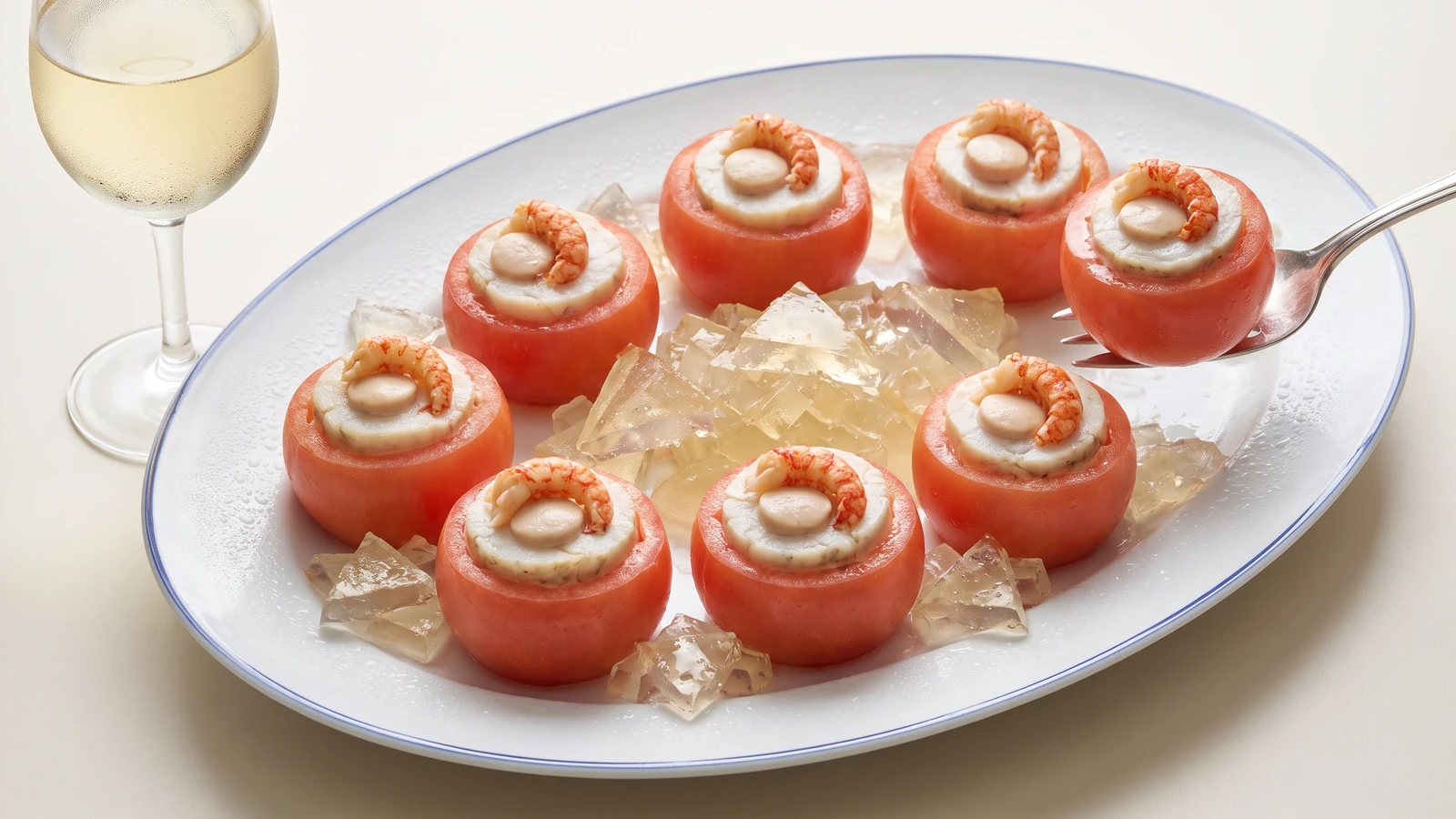
Eight chilled rings of sole, shaped as paupiettes and nested in peeled tomatoes, hold crayfish mousse, poached milt, and bright crayfish tails, with clear fish jelly cut and chopped around the platter.
Filets de Soles Calypso (cold sole fillet rings with crayfish mousse) teaches one severe little truth: sole must poach below a simmer. Let the fumet bubble and the fillets contract, their white flesh dulls, and the rings you worked to shape turn tight and uneven. Keep the liquid at a bare tremble and the paupiette, a fillet rolled around a cylinder, stays tender, pale, and clean-edged.
The original formula assumed a saucier on staff, clear fumet always ready, a tray of fish jelly already set, custom wooden rods, and enough hands to prepare every cold garnish together. It asks nothing of a salamander because its finish is deliberately cold. At home, one measured batch of fumet does three jobs, stainless cannoli forms replace the wooden rods, powdered gelatin replaces the waiting tray of jelly, and eight pieces feed four. One cook, one stove, one evening.
The brigade's extra hands were scaffolding and may go. The ring-shaped paupiettes, peeled tomato cups, crayfish mousse with diced tails, poached milt roundels, whole tails, and two cuts of fish jelly are the dish and must stay. Before you touch the pan, remember the step that decides everything: poach the sole gently enough to keep it white.
Filets de Soles Calypso belongs to the Parisian grande cuisine of named cold fish preparations rather than to a regional household larder. Its architecture of sole, crayfish mousse, milt, tails, and fish jelly comes from the grand cold buffet, where precise repetition displayed the discipline of the garde-manger, the cold station. The title is fanciful rather than Caribbean: the formula uses no island seasoning, and its identity lies in pale poached fish, French crayfish, and the geometry of the platter.
Quantity
8 fillets, 1¼ pounds (570 g) total
pin bones removed
Quantity
1¼ teaspoons (6 ml / 7 g)
divided
Quantity
¼ teaspoon (1 ml / 0.5 g)
Quantity
2 tablespoons (30 ml / 28 g)
softened
Quantity
4 cups (960 ml / approximately 960 g)
Quantity
2 tablespoons (30 ml / 30 g)
Quantity
10 tomatoes, about 2 pounds (900 g) total
8 for serving and 2 spares
Quantity
3½ teaspoons (18 ml / 10.5 g)
divided
Quantity
¼ cup (60 ml / 60 g)
divided
Quantity
12 ounces (340 g)
8 left whole and the remainder divided between purée and dice
Quantity
½ cup (120 ml / 120 g)
Quantity
4 ounces (115 g)
preferably cod milt
| Ingredient | Quantity |
|---|---|
| skinless sole filletspin bones removed | 8 fillets, 1¼ pounds (570 g) total |
| fine sea saltdivided | 1¼ teaspoons (6 ml / 7 g) |
| finely ground white pepper | ¼ teaspoon (1 ml / 0.5 g) |
| unsalted buttersoftened | 2 tablespoons (30 ml / 28 g) |
| very clear, unsalted fish fumet | 4 cups (960 ml / approximately 960 g) |
| fresh lemon juice | 2 tablespoons (30 ml / 30 g) |
| small ripe but firm tomatoes8 for serving and 2 spares | 10 tomatoes, about 2 pounds (900 g) total |
| unflavored powdered gelatindivided | 3½ teaspoons (18 ml / 10.5 g) |
| cold waterdivided | ¼ cup (60 ml / 60 g) |
| cooked, shelled crayfish tails8 left whole and the remainder divided between purée and dice | 12 ounces (340 g) |
| cold heavy cream | ½ cup (120 ml / 120 g) |
| cleaned fish milt or soft roepreferably cod milt | 4 ounces (115 g) |
Sprinkle 2½ teaspoons of the gelatin over 3 tablespoons of the cold water and leave it to swell for 5 minutes. Warm 1½ cups of the fish fumet without boiling, then take it off the heat and stir in the softened gelatin until completely dissolved. Season with a small pinch of the measured salt; cold mutes seasoning, so the warm liquid should taste just slightly more pronounced than the finished jelly needs. Pass it through a dampened fine sieve into an 8-inch shallow square pan, skim away surface bubbles, and chill until firm enough to cut, about 3 hours.
Lay the cleaned milt lobes flat on parchment and use a wet 1-inch cutter to stamp or trim 8 neat roundels about ⅜ inch thick. Warm ½ cup of the fish fumet in a small pan to 160 to 170°F (71 to 77°C), slip in the roundels, and hold them at that gentle temperature until opaque, firm enough to lift, and 145°F (63°C) at the center, about 3 to 5 minutes. Drain without pressing, place on a parchment-lined cold plate, cover, and chill.
Lay each sole fillet between sheets of parchment and gently level the thick end with the flat side of a meat mallet or a small pan. Do not pound it thin; you want an even fillet that can bend without tearing. Season lightly with salt and white pepper. Butter 8 stainless cannoli forms about ⅔ inch wide, then roll one fillet snugly around each form, beginning at the narrow end and overlapping the final edge. Butter a wide sauté pan and stand the paupiettes seam-side down so their own weight keeps them closed.
Pour 1½ cups of fish fumet and the lemon juice down the side of the pan without washing seasoning from the fish. Cover the paupiettes with buttered parchment and warm the pan slowly until the liquid barely trembles. Poach without boiling until the sole is opaque, still supple, and 145°F (63°C) at its thickest point, about 6 to 8 minutes. If the liquid bubbles, pull the pan from the heat for 30 seconds. If a seam opens, press it back against the form and secure it loosely with a wooden pick until chilled. Ça se rattrape. Rest the paupiettes in the liquid for 5 minutes, then lift them out with the forms still inside and chill for 1 hour before removing the forms.
Cut the stem-end third from each tomato, leaving a cup made from the lower two-thirds. Scoop out the seeds and watery pulp without piercing the walls, then peel the cups carefully with a serrated tomato peeler or sharp paring knife. Choose the best 8, sprinkle their interiors with a little of the remaining salt, and drain them upside down for 20 minutes. A torn cup won't support its paupiette, so use one of the spares and keep the damaged tomato for another meal.
Reserve the 8 handsomest crayfish tails whole. Finely dice one-third of the remaining meat and keep it cold. Sprinkle the final teaspoon of gelatin over the remaining tablespoon of cold water and leave it for 5 minutes. Warm the remaining ½ cup fish fumet, dissolve the gelatin in it, and let it cool for several minutes. Blend the undiced crayfish meat with the fumet until smooth, pass it through a fine sieve, then stir the bowl over ice until the mixture thickens enough to hold a faint trail. Whip the cream to soft mounds and fold it into the crayfish base with the diced tails, a pinch of salt, and the remaining white pepper. Chill until spoonable, about 45 minutes. If the base sets before the cream goes in, rest the bowl briefly over warm water and stir until supple; if it was too warm and loosened the cream, chill it while folding gently every few minutes. Ça se rattrape.
Twist each cannoli form gently and slide it from the cold paupiette without pulling at the fish. Stand one paupiette upright inside each drained tomato cup. Spoon or pipe the crayfish mousse into the hollow center, allowing it to settle into the tomato and anchor the ring. Lay one cold milt roundel over each filled center, then place a whole crayfish tail on every roundel. Chill the assembled tomatoes for 30 minutes so they hold cleanly.
Turn the firm fish jelly onto a cold board and cut 16 small triangles with a wet knife. Chop the trimmings and remaining jelly by hand into bright, irregular pieces. Arrange the 8 filled tomatoes in a circle on a chilled oval platter, place the jelly triangles around them, and mound the chopped jelly in the center exactly as the formula intends. Bring the platter directly from the cold and serve within 30 minutes. À table!
1 serving (about 560g)
Culinary guides, cultural storytelling, and the editorial depth that makes cooking meaningful.
Discover Culinary ExplorerChef Juliette
John Dory has the delicacy of sole and the firmness of turbot. A light flouring, a quick butter sauté, and nut-brown beurre noisette show exactly why looks never mattered.

Chef Juliette
Fresh haddock proves its delicacy in the meunière pan: a fine flour crust, moist pearly flakes, and beurre noisette sharpened with lemon and parsley, ready from one skillet in half an hour.

Chef Juliette
Éperlans à l’Anglaise turns small fish into a lesson in disciplined coating: boned smelts under a close, crisp crumb, pan-fried in clarified butter and finished with bright, half-melted maître d’hôtel butter.

Chef Juliette
Tiny smelts, shallot, mushrooms, white wine, gratin sauce, and fine bread raspings meet a fierce oven, where the fish must turn tender in the same breath the buttered crust bronzes.