Chef Juliette
Ordinary or White Consommé
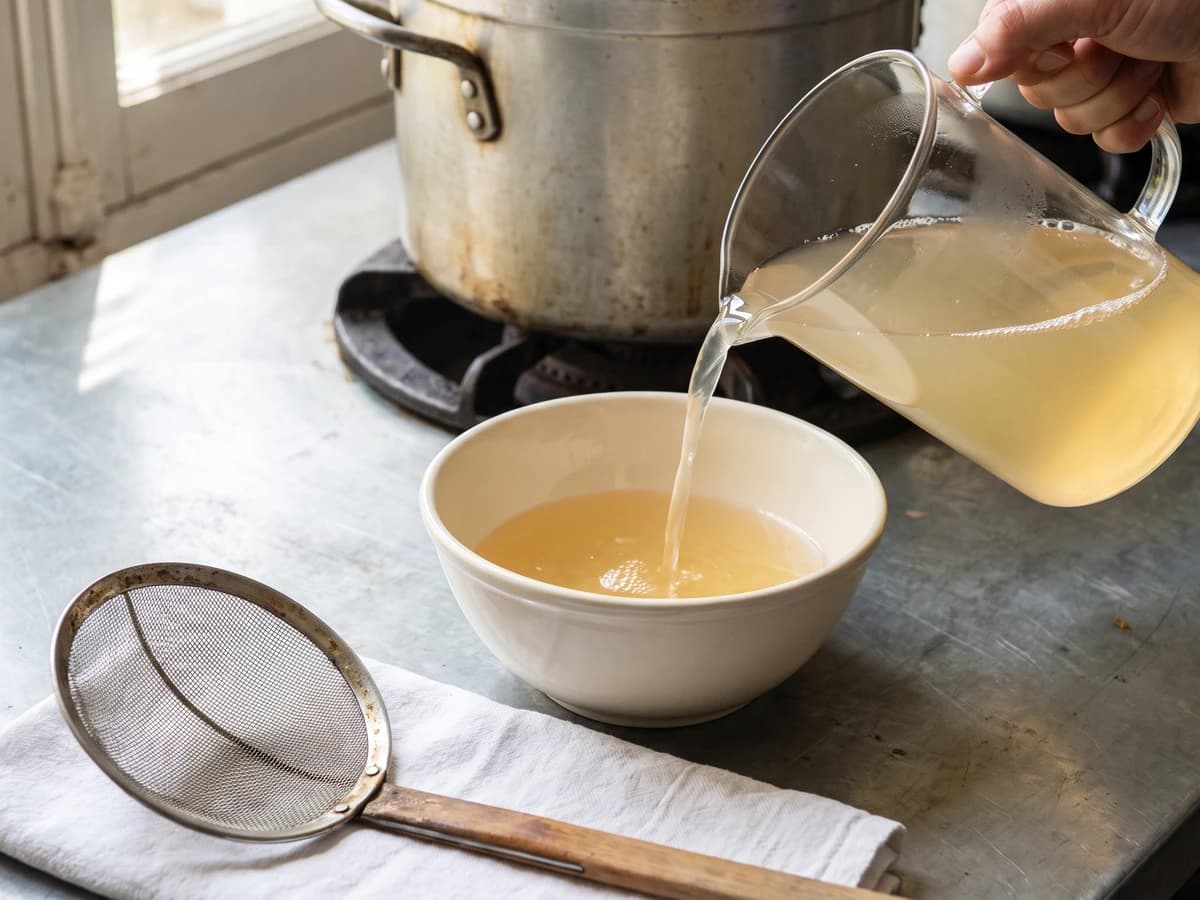
Beef shin, lean beef, and fowl begin in cold water and rise slowly toward a tremble. Skim before the boil, and you learn the quiet discipline that gives every clear French broth its backbone.
A cooking platform built around craft, culture, and the stories behind what we eat.
Created by Chef Juliette
Based on No. 91, Mornay Sauce, from Le Guide Culinaire (1907) by Auguste Escoffier
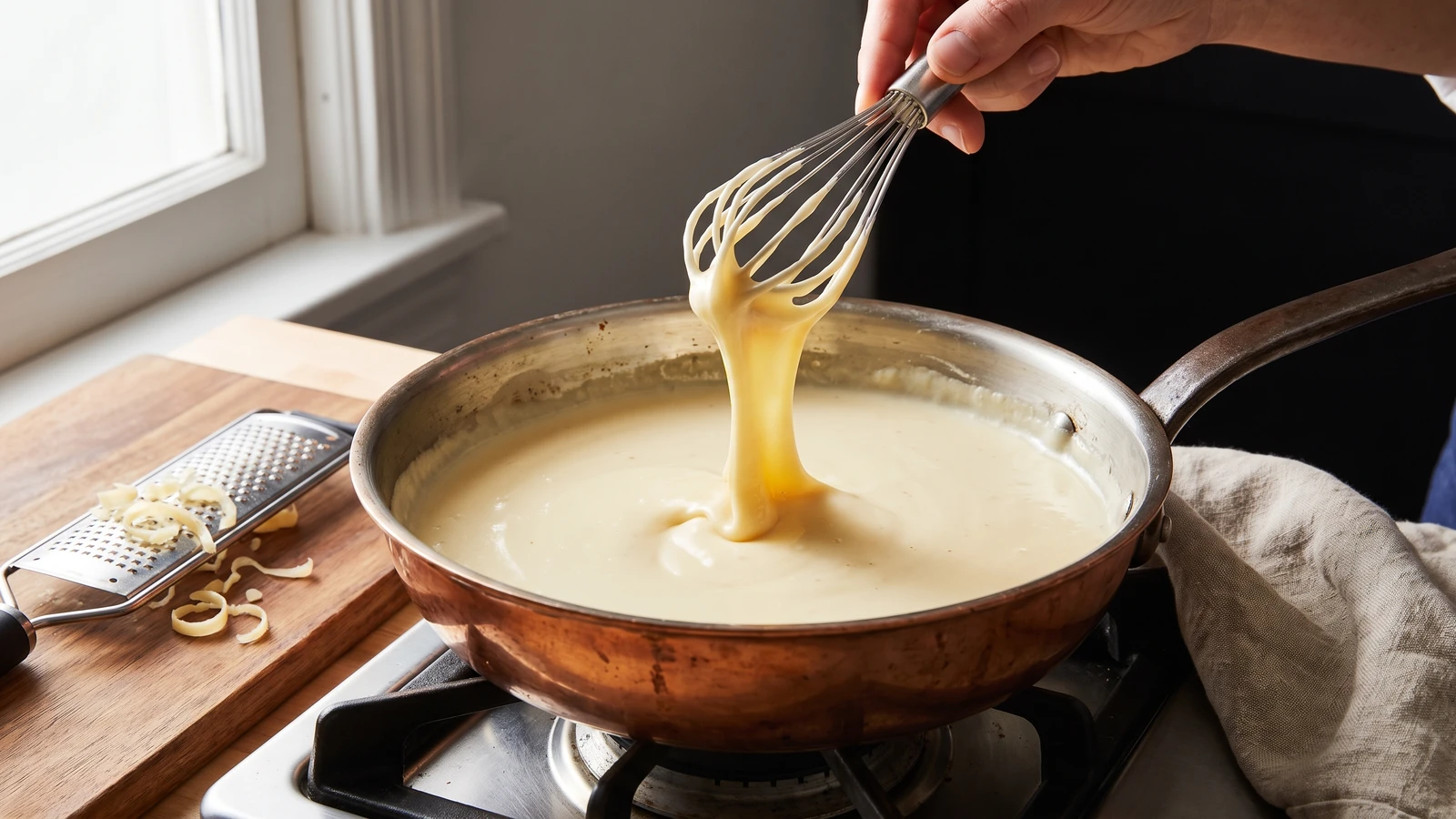
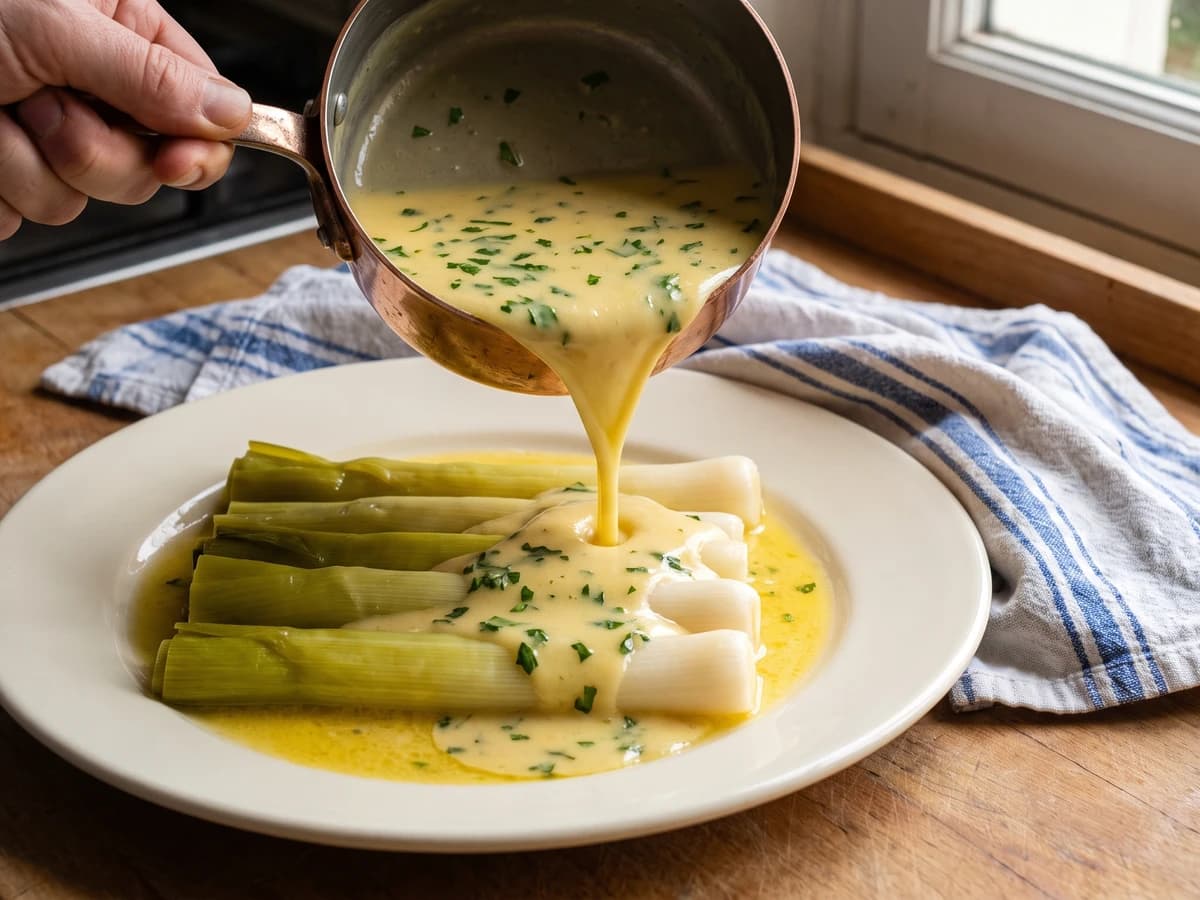
Silken Sauce Mornay begins with béchamel and matching fumet, then takes Gruyère, Parmesan, and butter. Reduce with patience, melt the cheese gently, and never let the finished sauce boil.
Sauce Mornay (béchamel enriched with the dish's own fumet, Gruyère, Parmesan, and butter) teaches the distinction between melting cheese and boiling it. The one true thing to know before touching a pan is this: reduce first, then add the cheese over gentle heat and never let the finished sauce boil. Heat builds the foundation; restraint keeps the cheese supple.
The old kitchen assumed a saucier on staff, prepared Béchamel Sauce and fumet near a stockpot never off the fire, and a salamander waiting for whatever the sauce would cloak. At home, a broad saucepan and your ordinary broiler, used only after the Mornay meets its dish, do the same work. This version makes one finite two-quart batch. The brigade's holding pots, repeated reheating, and separate service pans are scaffolding, so they go; the reduction, both cheeses, and butter whisked in away from the fire are the dish, so they stay. One cook, one stove, one evening.
When it is right, Mornay falls from the whisk in an ivory ribbon, glossy with butter and smooth enough to nap the back of a spoon. If it tightens or begins to turn oily, don't panic. Ça se rattrape, and the method gives you the rescue exactly where you need it. Watch the pan after the cheese enters; that gentle melting is the step that decides the sauce.
Sauce Mornay belongs to the Parisian classical sauce repertoire, where it became a rich derivative of Béchamel Sauce for eggs, vegetables, fish, poultry, and gratins. Its titled namesake is disputed, and no single Mornay can be securely credited with its invention; what is certain is the kitchen practice of enriching a white sauce with firm cheeses and butter. The addition of a fumet matching the food beneath the sauce ties this version firmly to the classical system, where a derivative sauce carries the character of the dish it serves.
Quantity
6½ cups (1.54 L / 1.55 kg)
Quantity
1⅝ cups (385 ml / 385 g)
Quantity
1⅔ cups (395 ml / 185 g)
finely grated
Quantity
about 2 cups (475 ml / 185 g)
finely grated
Quantity
¾ cup plus 1 tablespoon (195 ml / 185 g)
cut into small cubes
Quantity
up to ¼ cup (60 ml / 60 g)
only if needed to rescue the sauce
| Ingredient | Quantity |
|---|---|
| finished Béchamel Sauce | 6½ cups (1.54 L / 1.55 kg) |
| finished fumet matching the fish, poultry, or vegetable being served | 1⅝ cups (385 ml / 385 g) |
| Gruyèrefinely grated | 1⅔ cups (395 ml / 185 g) |
| Parmesanfinely grated | about 2 cups (475 ml / 185 g) |
| cool unsalted buttercut into small cubes | ¾ cup plus 1 tablespoon (195 ml / 185 g) |
| cool water (optional)only if needed to rescue the sauce | up to ¼ cup (60 ml / 60 g) |
Put the finished Béchamel Sauce and the matching fumet into a broad, heavy-bottomed saucepan. If either component is cold and firm, whisk them together before turning on the heat; forcing a whisk through hot lumps only drives them smaller. Grate both cheeses finely and keep them beside the stove, then cut the butter into small cubes and leave it cool. Once the reduction begins, the sauce wants your attention.
Bring the Béchamel Sauce and fumet to a boil over medium heat, whisking across the pan floor and into the corners. Lower the heat enough to maintain an active simmer and reduce by a good quarter, from about 8⅛ cups to roughly 6 cups, until the sauce looks fuller and leaves a clear track behind the whisk. This reduction is the foundation and cannot be replaced by adding more cheese. If you feel the sauce catch, stop stirring and pour the clean upper sauce into a fresh pan without scraping the bottom. Ça se rattrape when caught early; if the whole batch tastes burnt, it must be remade.
Turn the heat to its lowest setting. Add the Gruyère and Parmesan by small handfuls, whisking each addition smooth before adding the next. Keep the sauce hot enough to melt the cheese but below a boil; after the cheese enters, boiling makes its proteins seize into strings and pushes fat to the surface. If the sauce begins to pull into ropes or show oily beads, take it off the heat immediately and whisk in cool water one teaspoon at a time until it smooths, using no more than ¼ cup. Ça se rattrape if you catch it before a hard boil.
Remove the pan completely from the heat. Monter au beurre, finish with butter, by whisking in the cool cubes a few at a time and waiting until each addition disappears before adding the next. The butter should thicken the sauce into a glossy ribbon, not sit on top as grease. If it begins to pool, stop adding butter and whisk in a teaspoon of cool water; once the sauce comes together, continue more slowly. We don't apologize for butter, but we do give it proper attention.
Use the Mornay at once, while it naps a spoon smoothly and falls in a broad ribbon. Pair it with the same fish, poultry, or vegetable represented by its fumet, then gratinate under the broiler only after the sauce has been spooned over the finished dish. If it must wait, press buttered parchment directly against the surface and hold the pan off the heat for no longer than 30 minutes. Rewarm it over a gentle bain-marie, whisking steadily, and never let it boil. À table!
1 serving (about 70g)
Culinary guides, cultural storytelling, and the editorial depth that makes cooking meaningful.
Discover Culinary ExplorerChef Juliette
Beef shin, lean beef, and fowl begin in cold water and rise slowly toward a tremble. Skim before the boil, and you learn the quiet discipline that gives every clear French broth its backbone.
Chef Juliette
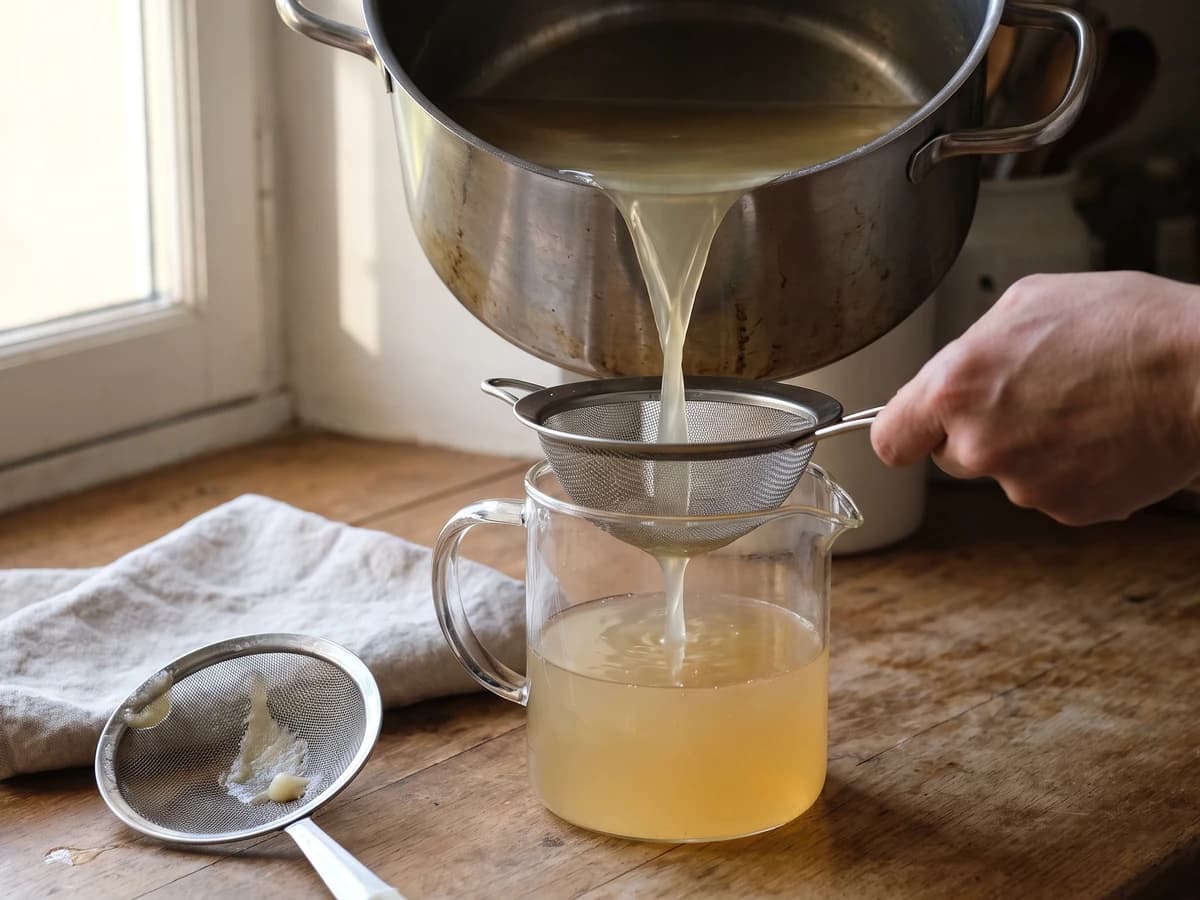
Break the veal bones small, then give them eight hours at a bare tremble. This pale, gelatinous fond becomes the quiet foundation beneath velouté, blanquette, and every sauce that must stay light.
Chef Juliette
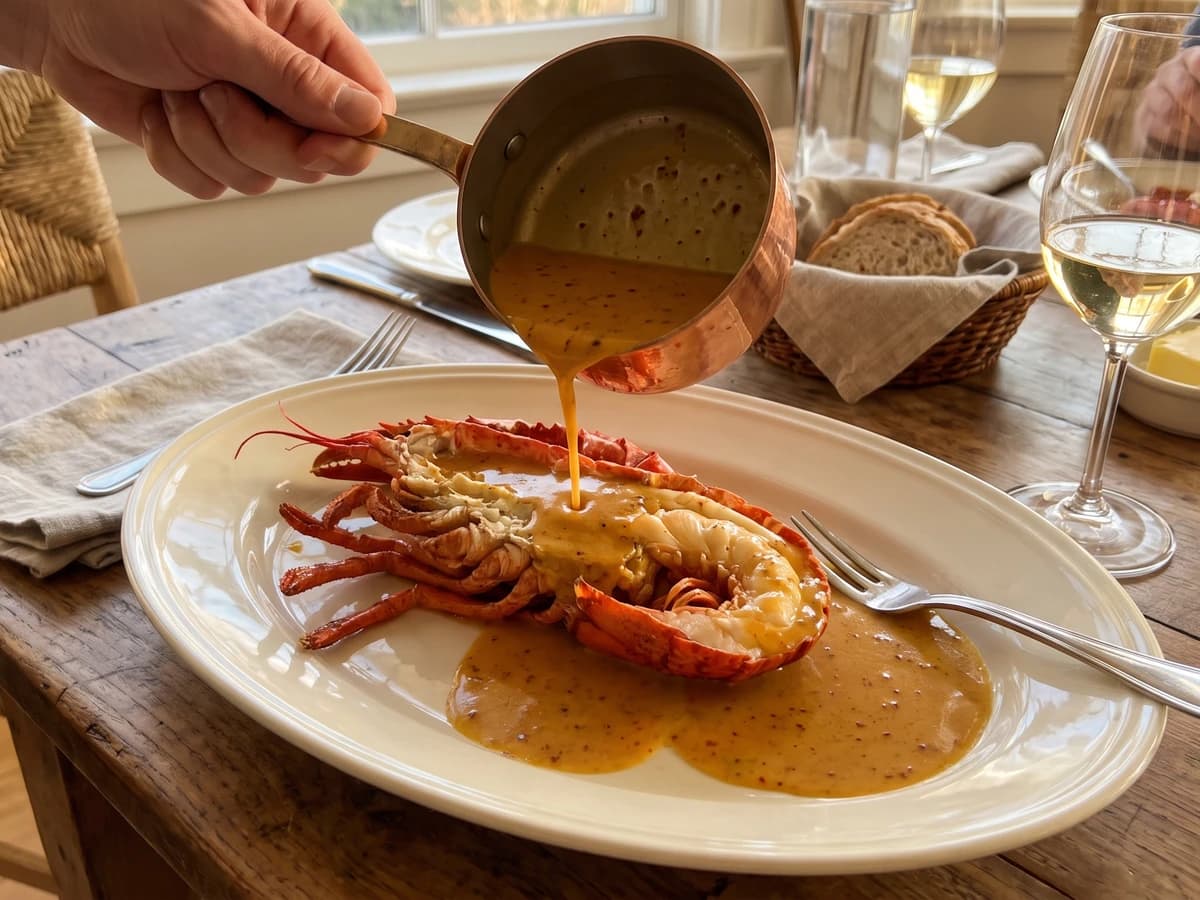
Sauce Orientale concentrates lobster-rich American Sauce with curry, then folds in cream away from the fire: a glossy, gently spiced derivative made for lobster, crayfish, and firm fish.
Chef Juliette
An old lesson in sauce families: Sauce Allemande takes mushroom liquor, then butter, lemon, and parsley, becoming a glossy Poulette for sheep's trotters, leeks, cauliflower, and anything needing gentle richness with a bright edge.