
Chef Juliette
John Dory (St. Pierre)
John Dory has the delicacy of sole and the firmness of turbot. A light flouring, a quick butter sauté, and nut-brown beurre noisette show exactly why looks never mattered.
A cooking platform built around craft, culture, and the stories behind what we eat.
Created by Chef Juliette
Based on No. 904, Filets de Soles Walewska, from Le Guide Culinaire (1907) by Auguste Escoffier
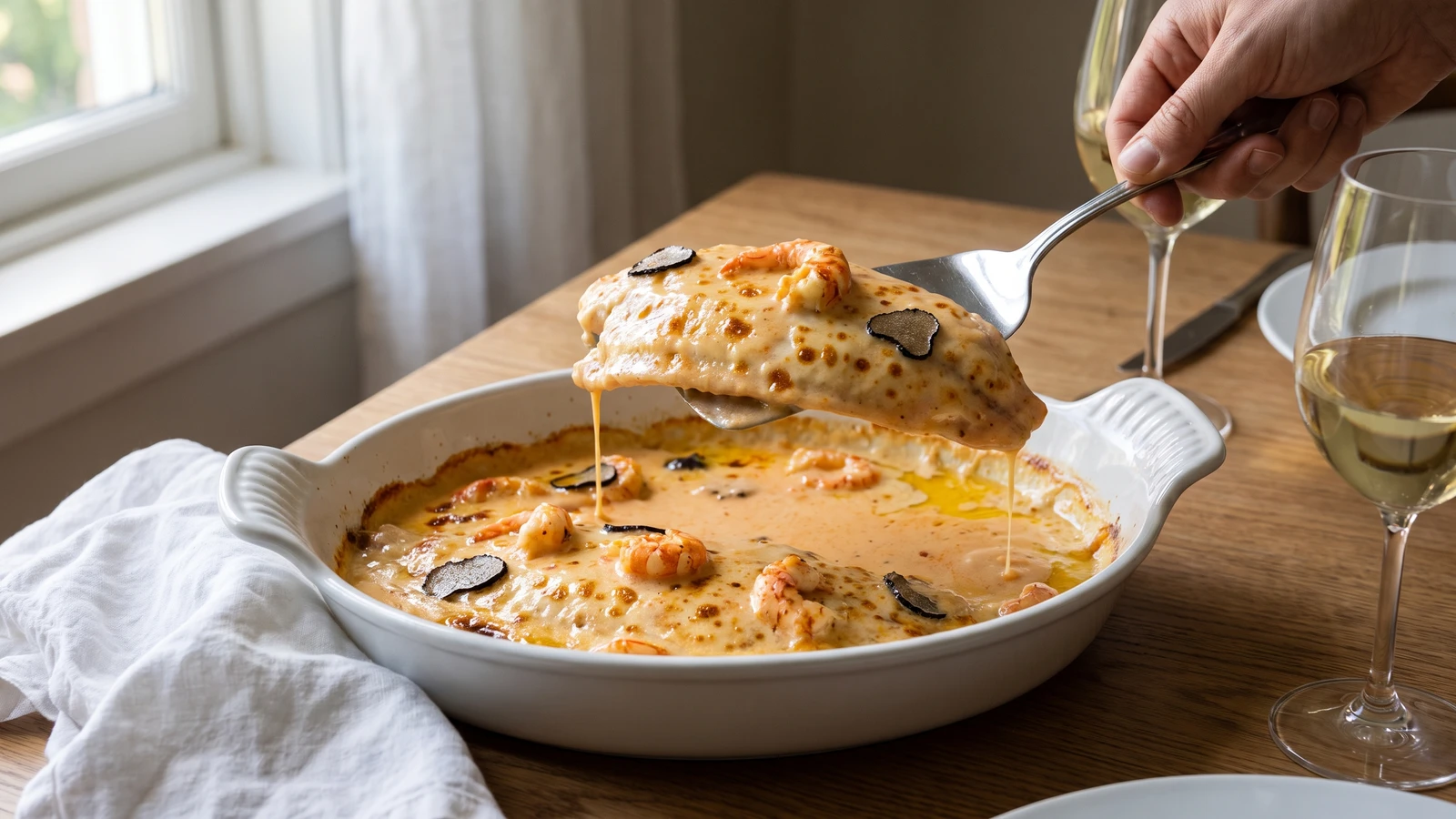
Filets de Soles Walewska makes its lesson plain: gentle poaching preserves the sole, but langoustine butter carries shellfish through every spoonful of Mornay before a fierce, brief glaze.
Filets de Soles Walewska (sole fillets with langoustines, truffle, and glazed Mornay) teaches the discipline of finishing: the fish must be barely poached before the dish meets fierce top heat, and the langoustine butter must carry the shellfish through the whole sauce. That butter decides it. Without it, you have excellent sole under cheese sauce; with it, every ivory spoonful tastes first of the sea, then cream and truffle.
The original entry assumed a saucier with delicate Mornay already warm, fish fumet never far from the fire, langoustine butter ready in a crock, and a salamander hot enough to glaze without recooking the sole. At home, make one compact Mornay, extract the butter from the shells already on the board, shallow-poach eight fillets in a wide pan, and use a fully heated broiler. The brigade's separate sauce station is scaffolding and can go; the flat poach, the butter-stewed tails and raw truffle, the shellfish-butter enrichment, and the fast glaze are the dish and must stay. One cook, one stove, one evening.
Before you touch the pan, settle this in your mind: the sole comes out of the fumet while it still looks a breath underdone. Hot Mornay and the broiler finish it. The final whisking of langoustine butter happens off the heat; if the sauce turns oily, ça se rattrape, and the method gives you the clean way back.
Filets de Soles Walewska belongs to the Parisian grand-kitchen repertoire, where dishes bearing aristocratic names were assembled precisely from fish, shellfish, truffle, and finished sauce. Its title points to Countess Walewska, but its grammar is wholly French: sole poached in fumet, langoustine tails and raw truffle stewed under cover in butter, delicate Mornay, then a rapid glaze. The dish traveled naturally to formal home tables because its luxury lies in concentration and timing, not in the size of the brigade.
Quantity
8 fillets (about 24 oz / 680 g total)
Quantity
12 (about 1½ lb / 680 g total)
tails removed, split lengthwise, and deveined; heads and shells reserved
Quantity
1 teaspoon (5 ml / 5 g)
divided
Quantity
⅛ teaspoon (0.6 ml / 0.3 g)
Quantity
6 tablespoons (90 ml / 85 g)
Quantity
3 tablespoons (45 ml / 42 g)
Quantity
3 tablespoons (45 ml / 24 g)
Quantity
1½ cups (360 ml / 370 g)
Quantity
½ cup (120 ml / 120 g)
Quantity
½ cup (120 ml / 50 g)
finely grated
Quantity
¼ cup (60 ml / 22 g)
finely grated
Quantity
1 small pinch
Quantity
1½ cups (360 ml / 360 g)
Quantity
2 tablespoons (30 ml / 28 g)
Quantity
1 small truffle (about 1 oz / 30 g)
cut into 24 fine slices
Quantity
1 teaspoon (5 ml / 5 g)
| Ingredient | Quantity |
|---|---|
| skinless Dover sole fillets | 8 fillets (about 24 oz / 680 g total) |
| whole raw langoustinestails removed, split lengthwise, and deveined; heads and shells reserved | 12 (about 1½ lb / 680 g total) |
| fine sea saltdivided | 1 teaspoon (5 ml / 5 g) |
| ground white pepper | ⅛ teaspoon (0.6 ml / 0.3 g) |
| unsalted butter for the langoustine butter | 6 tablespoons (90 ml / 85 g) |
| unsalted butter for the Mornay | 3 tablespoons (45 ml / 42 g) |
| all-purpose flour | 3 tablespoons (45 ml / 24 g) |
| whole milk | 1½ cups (360 ml / 370 g) |
| heavy cream | ½ cup (120 ml / 120 g) |
| Gruyèrefinely grated | ½ cup (120 ml / 50 g) |
| Parmesanfinely grated | ¼ cup (60 ml / 22 g) |
| freshly grated nutmeg | 1 small pinch |
| prepared fish fumet | 1½ cups (360 ml / 360 g) |
| unsalted butter for stewing the garnish | 2 tablespoons (30 ml / 28 g) |
| fresh black trufflecut into 24 fine slices | 1 small truffle (about 1 oz / 30 g) |
| unsalted butter for the gratin dish | 1 teaspoon (5 ml / 5 g) |
Shell the langoustines, keeping every head and shell for the butter. Split each tail lengthwise and remove the dark intestinal thread, giving you 24 half-tails. Cut the raw truffle into 24 fine slices. Pat the sole fillets dry, season them lightly with half the salt and the white pepper, and keep the fish and tails cold while you build the sauces. Butter a shallow 2-quart broiler-safe gratin dish.
Crush the reserved langoustine heads and shells roughly in a medium saucepan, then add the 6 tablespoons of butter. Cook over medium-low heat for 10 to 12 minutes, pressing and turning the shells often, until the butter is coral-colored and smells intensely of sweet shellfish. Keep the heat below browning; scorched milk solids will make the whole sauce bitter. Strain through a fine sieve, pressing firmly to recover every drop. Measure 3 tablespoons (45 ml / 42 g) for the sauce and reserve any excess for another fish dish.
Melt the 3 tablespoons of butter in a clean saucepan over medium-low heat. Stir in the flour and cook for 2 minutes without letting the roux color; this sauce should remain ivory. Whisk in the milk gradually, then the cream, and hold the sauce at a bare simmer for 5 to 7 minutes, whisking until it is nappé, thick enough to coat the back of a spoon. Remove it from the heat and stir in the Gruyère, Parmesan, nutmeg, and a little of the remaining salt. If lumps appear, whisk vigorously off the heat or pass the sauce through the fine sieve. Cover its surface directly and keep it warm, never boiling.
Warm the fish fumet in a wide lidded skillet until its surface barely trembles. Lay in the sole fillets flat and in their natural shape, without folding or rolling them, working in two batches if the pan cannot hold them in one layer. Cover and poach over the gentlest heat for 3 to 5 minutes, until the edges are opaque and the centers retain the faintest translucence. Lift the fillets carefully with a fish slice, let them drain, and arrange two per serving in the buttered gratin dish. Reserve the poaching fumet. Pale and delicate is correct here; the broiler still has work to do.
Heat the broiler fully, with a rack about 5 inches beneath it. Melt the 2 tablespoons of butter in the wiped skillet over medium-low heat. Add the split langoustine tails, truffle slices, and a pinch of the remaining salt, then cover and cook for about 90 seconds. Turn the tails, cover again, and cook for 30 to 60 seconds more, just until their flesh turns pearly and barely opaque. Take them off the heat immediately. Surround each pair of sole fillets with six half-tails and six truffle slices, spooning over the fragrant butter from the pan.
Return the Mornay to very low heat and whisk in 1 to 3 tablespoons of the reserved poaching fumet, only enough to restore a soft coating consistency. Remove the pan from the heat. Whisk in the measured langoustine butter a spoonful at a time until the sauce is glossy, coral-ivory, and tastes unmistakably of shellfish. Do not boil it now. If the butter separates and an oily rim appears, stop. Ça se rattrape: put 1 teaspoon of warm fumet in a clean warm bowl, whisk in a spoonful of the broken sauce until smooth, then add the rest gradually, whisking after every spoonful.
Coat the sole, langoustines, and truffle completely with the hot Mornay. Slide the dish beneath the fully heated broiler for 60 to 120 seconds, watching without interruption, until the sauce bubbles at the rim and takes small golden freckles across the surface. If the broiler colors unevenly, rotate the dish rather than leaving the sole beneath the heat for several more minutes. Bring it straight to the table while the sauce still gleams. À table!
1 serving (about 375g)
Culinary guides, cultural storytelling, and the editorial depth that makes cooking meaningful.
Discover Culinary ExplorerChef Juliette
John Dory has the delicacy of sole and the firmness of turbot. A light flouring, a quick butter sauté, and nut-brown beurre noisette show exactly why looks never mattered.

Chef Juliette
Fresh haddock proves its delicacy in the meunière pan: a fine flour crust, moist pearly flakes, and beurre noisette sharpened with lemon and parsley, ready from one skillet in half an hour.

Chef Juliette
Éperlans à l’Anglaise turns small fish into a lesson in disciplined coating: boned smelts under a close, crisp crumb, pan-fried in clarified butter and finished with bright, half-melted maître d’hôtel butter.

Chef Juliette
Tiny smelts, shallot, mushrooms, white wine, gratin sauce, and fine bread raspings meet a fierce oven, where the fish must turn tender in the same breath the buttered crust bronzes.