
Chef Juliette
John Dory (St. Pierre)
John Dory has the delicacy of sole and the firmness of turbot. A light flouring, a quick butter sauté, and nut-brown beurre noisette show exactly why looks never mattered.
A cooking platform built around craft, culture, and the stories behind what we eat.
Created by Chef Juliette
Based on No. 901, Filets de Soles Verdi, from Le Guide Culinaire (1907) by Auguste Escoffier
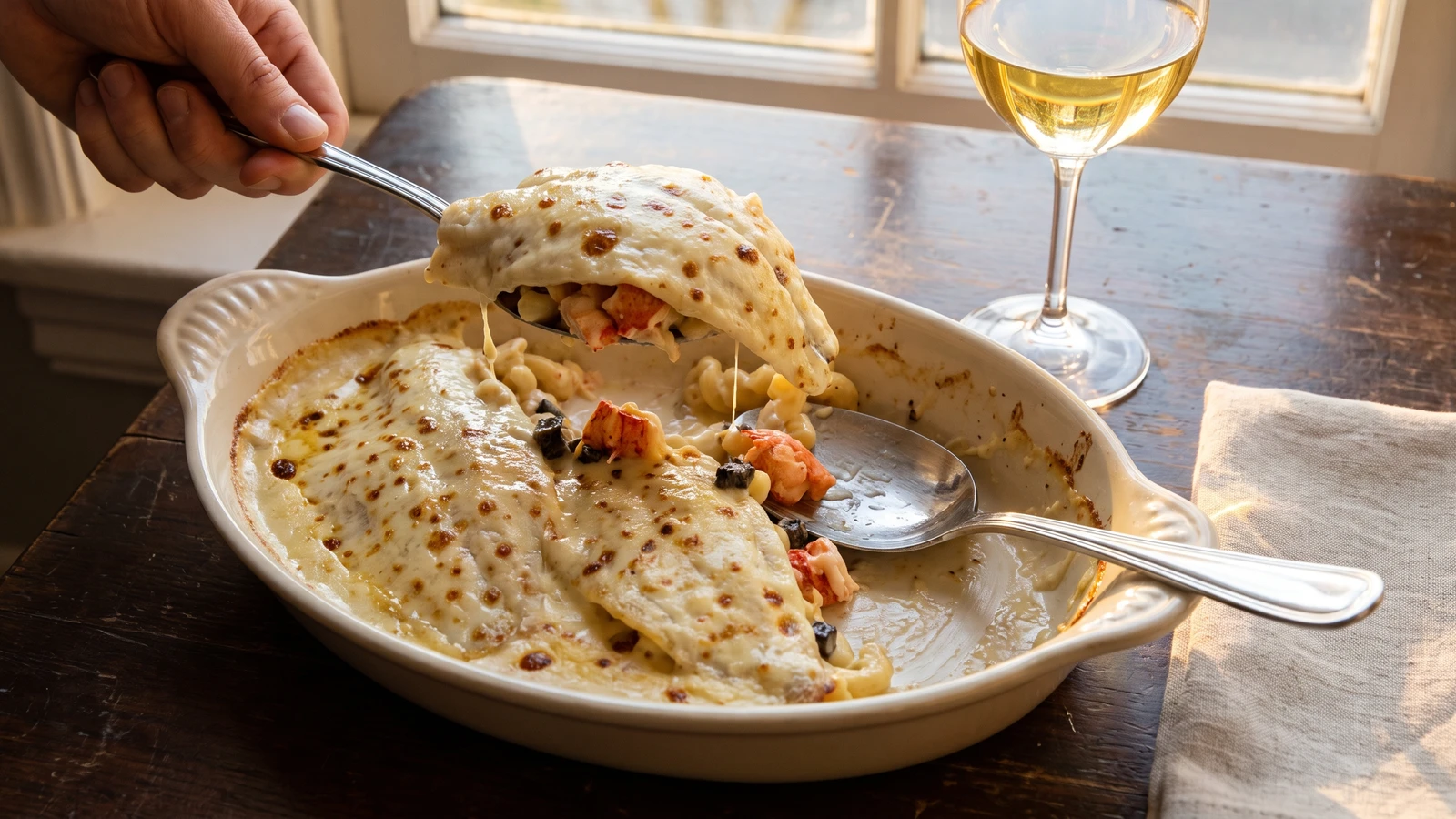
The macaroni carries Filets de Soles Verdi: cream-bound, studded with lobster and truffle, supporting tender fumet-poached sole beneath a quickly bronzed coat of Mornay at the table.
Filets de Soles Verdi (sole fillets Verdi-style) teaches a grand rule of garnished fish: the bed beneath the fillets is not decoration. Here the macaroni carries the whole dish, bound with cream and cheese, then set with the book's exact proportion of lobster and truffle. Make it loose and the fish swims; make it stiff and the plate eats like paste. It must hold a level bed while remaining supple under the spoon.
The original kitchen assumed a saucier on staff, fumet (concentrated fish essence) never far from the fire, long macaroni cut into dice by hand, and a salamander waiting to glaze the finished dish. At home, one small saucepan makes the Mornay, prepared fumet or properly reduced fish stock supplies the poach, naturally short ditalini replaces the cutting, and a hot broiler does the salamander's work. The separate sauce station and holding pans were brigade scaffolding, so they go. The fumet poach, the flat natural shape of the fillets, the exact lobster-to-truffle ratio, and the rapid glaze are the dish, so they stay. One cook, one stove, one evening.
Before you touch a pan, know the step that decides everything: drain the macaroni completely, then bind it over gentle heat until a spoon drawn through the pan leaves a path that closes slowly. Get that texture right and the whole composition stands proudly.
Filets de Soles Verdi belongs to Parisian grand cuisine, where named sole garnishes displayed mastery by pairing delicate fish with a composed foundation and a quickly glazed sauce. Its name salutes Giuseppe Verdi, while macaroni, Parmesan, truffle, and lobster give the garnish an Italian accent translated through French fumet, Mornay, and the salamander. The dish moved from grand dining rooms into the working classical repertory, but its identity is not the golden sauce alone: the precisely bound macaroni remains its structural center.
Quantity
4 large fillets (about 1¼ pounds / 570 g total)
pin bones removed
Quantity
1¼ cups (300 ml / 300 g)
Quantity
2 cups dry (475 ml / 227 g)
Quantity
½ cup (120 ml / 120 g)
Quantity
½ cup (120 ml / 50 g)
finely grated
Quantity
¼ cup (60 ml / 22 g)
finely grated
Quantity
½ cup (120 ml / 85 g)
cut into small dice
Quantity
¼ cup (60 ml / 43 g)
drained if preserved and cut into small dice
Quantity
2 tablespoons (30 ml / 28 g)
Quantity
2 tablespoons (30 ml / 16 g)
Quantity
1½ cups (360 ml / 370 g)
reserve 2 tablespoons cold
Quantity
½ cup (120 ml / 50 g)
finely grated
Quantity
¼ cup (60 ml / 22 g)
finely grated
Quantity
1 teaspoon (5 ml / 5 g)
softened
Quantity
1 tablespoon (15 ml / 18 g)
divided
Quantity
¼ teaspoon (1.25 ml / 0.5 g)
divided
| Ingredient | Quantity |
|---|---|
| skinless sole filletspin bones removed | 4 large fillets (about 1¼ pounds / 570 g total) |
| prepared fish fumet (concentrated fish stock) | 1¼ cups (300 ml / 300 g) |
| small straight macaroni or ditalini | 2 cups dry (475 ml / 227 g) |
| heavy cream | ½ cup (120 ml / 120 g) |
| Gruyère for the macaronifinely grated | ½ cup (120 ml / 50 g) |
| Parmesan for the macaronifinely grated | ¼ cup (60 ml / 22 g) |
| cooked lobster meatcut into small dice | ½ cup (120 ml / 85 g) |
| black truffle, fresh or whole preserveddrained if preserved and cut into small dice | ¼ cup (60 ml / 43 g) |
| unsalted butter for the Mornay sauce | 2 tablespoons (30 ml / 28 g) |
| all-purpose flour | 2 tablespoons (30 ml / 16 g) |
| whole milkreserve 2 tablespoons cold | 1½ cups (360 ml / 370 g) |
| Gruyère for the Mornay saucefinely grated | ½ cup (120 ml / 50 g) |
| Parmesan for the Mornay saucefinely grated | ¼ cup (60 ml / 22 g) |
| unsalted butter for the gratin dishsoftened | 1 teaspoon (5 ml / 5 g) |
| fine sea saltdivided | 1 tablespoon (15 ml / 18 g) |
| finely ground white pepperdivided | ¼ teaspoon (1.25 ml / 0.5 g) |
Melt the 2 tablespoons butter in a heavy saucepan over medium-low heat. Whisk in the flour and cook this roux blanc (white roux) for 2 minutes without letting it color. Holding back the reserved cold milk, add the remaining milk by thirds, whisking each addition completely smooth before adding the next. Bring the sauce to the barest simmer and cook for 5 to 7 minutes, whisking often, until it coats a spoon without tasting floury. Remove it from the heat, stir in the Gruyère and Parmesan for the sauce, then season lightly with salt and white pepper. Never boil Mornay after the cheese enters. If it turns oily or grainy, take it off the heat and whisk in the reserved cold milk a spoonful at a time, then pass it through a fine sieve. Ça se rattrape. Press parchment directly against the surface and keep the sauce warm, not bubbling.
Boil the macaroni in well-salted water until tender but still firm at its center, about 1 minute short of the package time. Drain it thoroughly and shake the colander until no water falls, but do not rinse. Return it to the warm pan over low heat with 6 tablespoons of the cream, the Gruyère, and the Parmesan reserved for the macaroni. Stir until the cheese melts and the cream clings to every piece. Draw a spoon across the pan: the path should close slowly. If the mixture is stiff, add the remaining cream a spoonful at a time; if it pools, keep stirring over low heat for 30 to 60 seconds. Fold in the 3 ounces of lobster and 1½ ounces of truffle off the heat, preserving the source's exact ratio to 8 ounces of macaroni. Taste and correct the seasoning.
Butter a shallow broiler-safe gratin dish. Spoon in the macaroni and spread it into a perfectly even bed about ¾ inch thick, taking care to distribute the lobster and truffle rather than leaving their good bites in one corner. Press only enough to level it. Compacted macaroni turns heavy beneath the fish. Set the dish near the stove while you poach the sole, and begin heating the broiler with a rack about 6 inches below it.
Season the sole lightly with salt and white pepper, then arrange the fillets in one flat layer in a wide sauté pan, keeping them in their natural state rather than folding or rolling them. Pour the fish fumet around them and bring it just to a tremble over medium-low heat. Cover and poach gently for 3 to 5 minutes, depending on thickness, until the flesh is turning opaque and reaches about 135 to 140°F (57 to 60°C) at the center; the final glaze will carry it to 145°F (63°C). If the fumet begins to boil, slide the pan off the burner immediately, uncover it for 20 seconds, and finish over the lowest heat. Lift any thinner fillet as soon as it is ready.
Lift the sole with a broad fish spatula and let each fillet drain for a moment so the Mornay will cling. Lay the fillets neatly over the macaroni without overlapping them. Remove the parchment from the warm Mornay, whisk it smooth, and spoon a complete but not heavy coat over every fillet. The contours of the fish should remain visible beneath the sauce. Do not pour the poaching fumet into the Mornay; the source keeps the fumet poach and the cheese sauce distinct.
Set the dish beneath the fully heated broiler and glaze it quickly for 2 to 4 minutes, watching without leaving the stove, until the Mornay is freckled butter-gold and the edges bubble. Rotate the dish once if one side colors faster, but do not chase an absolutely even brown top and overcook the sole for appearances. Check that the thickest fillet has reached 145°F (63°C), then carry the gratin directly to the table. The sauce should gleam, the sole should part under the spoon, and the macaroni should hold it all together. À table!
1 serving (about 480g)
Culinary guides, cultural storytelling, and the editorial depth that makes cooking meaningful.
Discover Culinary ExplorerChef Juliette
John Dory has the delicacy of sole and the firmness of turbot. A light flouring, a quick butter sauté, and nut-brown beurre noisette show exactly why looks never mattered.

Chef Juliette
Fresh haddock proves its delicacy in the meunière pan: a fine flour crust, moist pearly flakes, and beurre noisette sharpened with lemon and parsley, ready from one skillet in half an hour.

Chef Juliette
Éperlans à l’Anglaise turns small fish into a lesson in disciplined coating: boned smelts under a close, crisp crumb, pan-fried in clarified butter and finished with bright, half-melted maître d’hôtel butter.

Chef Juliette
Tiny smelts, shallot, mushrooms, white wine, gratin sauce, and fine bread raspings meet a fierce oven, where the fish must turn tender in the same breath the buttered crust bronzes.