
Chef Juliette
John Dory (St. Pierre)
John Dory has the delicacy of sole and the firmness of turbot. A light flouring, a quick butter sauté, and nut-brown beurre noisette show exactly why looks never mattered.
A cooking platform built around craft, culture, and the stories behind what we eat.
Created by Chef Juliette
Based on No. 895, Filets de Soles Polignac, from Le Guide Culinaire (1907) by Auguste Escoffier
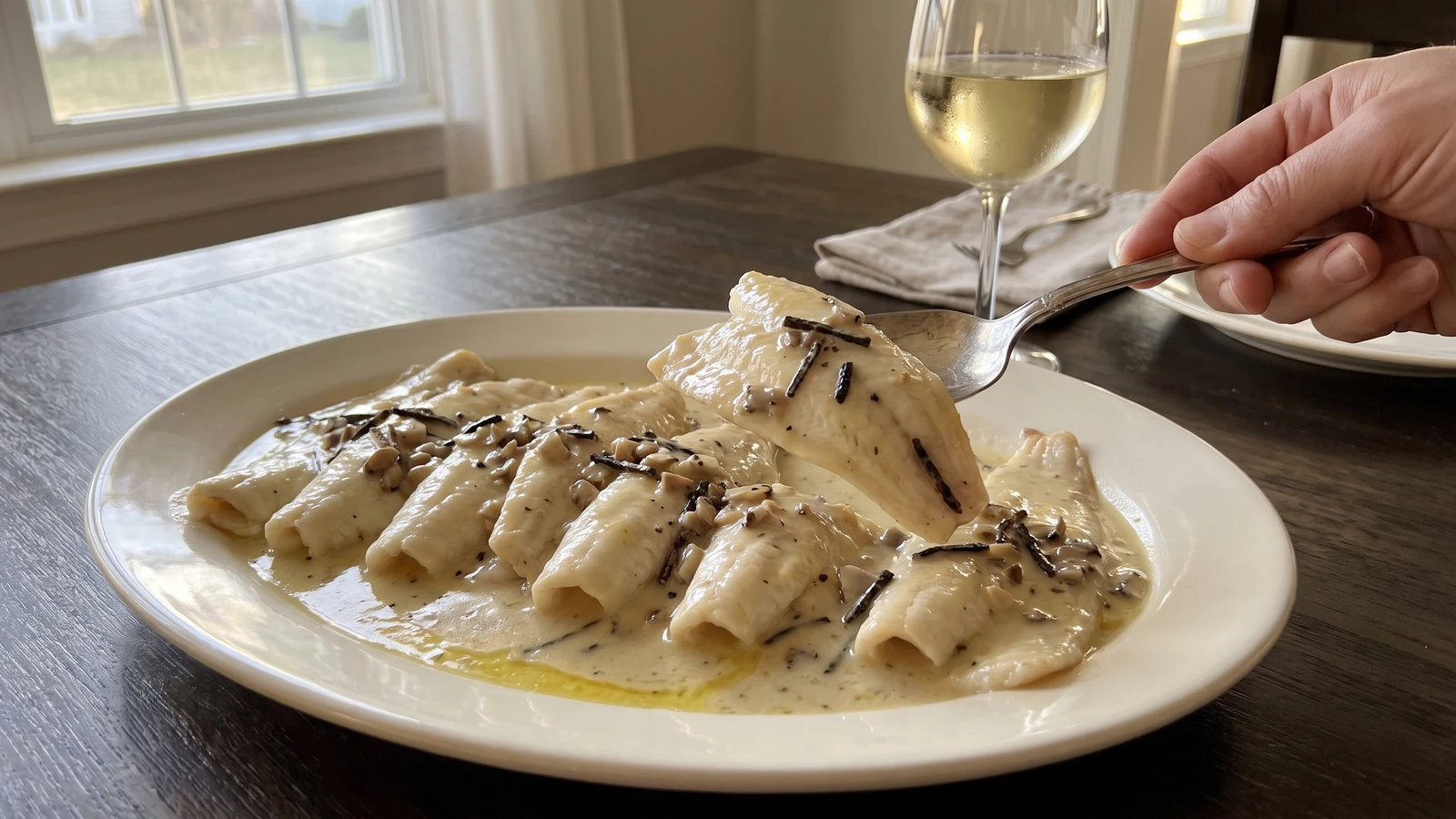
Folded sole poached gently in white wine and mushroom liquor, then glazed beneath a glossy fish velouté with butter, minced mushrooms, and black truffle: a master lesson in reduction and restraint.
Filets de Soles Polignac (folded sole fillets with a buttered fish sauce, mushrooms, and truffle) teaches one true thing: the poaching liquor is not waste, it is the spine of the sauce. Treat it carefully, reduce it accurately, and the fish, wine, mushroom, velouté, and butter become one coherent dish. Boil the sole hard or reduce carelessly, and no quantity of truffle will put the delicacy back.
The formula assumed a saucier on staff, fish stock never off the fire, mushroom liquor waiting beside it, and a salamander ready to glaze the platter. Your honest equivalents are prepared fish velouté, one small saucepan for the mushrooms, and the broiler already in your oven. The walnut of butter becomes a measured tablespoon, the bare spoonfuls become two level tablespoons, and the quarter-pint becomes 140 millilitres because a home cook shouldn't have to guess the saucier's hand. Those separate stations were brigade scaffolding, so they go. The reduction, velouté, cold-butter finish, and final glaze are the dish, so they stay. One cook, one stove, one evening.
When Filets de Soles Polignac is right, the folded fish remains pearly and tender beneath an ivory sauce with a quiet butter sheen, earthy mushroom beneath it, and black truffle running through in fine matchsticks. The broiler gives lustre, not a browned crust. Reduce the measured poaching liquor to precisely half before the velouté goes in. That is the step that decides the plate.
Filets de soles Polignac belongs to the Parisian grand-kitchen repertoire, where sole carried named garnishes from the saucier's stove to formal dining rooms. The Polignac title reflects that repertoire's habit of attaching distinguished names to precise combinations, here white-wine poaching liquor, fish velouté, mushroom, and truffle, rather than marking a regional coastal recipe. Passed from grand kitchen to bourgeois table, the dish kept its defining final glaze, a lustrous coating meant to unite fish and sauce without burying either.
Quantity
3 small (about 1½ ounces / 45 g)
wiped clean
Quantity
½ cup (120 ml / 120 g)
for cooking the mushrooms
Quantity
8 fillets, about 3 ounces each (1½ pounds / 680 g total)
trimmed
Quantity
½ teaspoon (2.5 ml / 3 g)
divided
Quantity
⅛ teaspoon (0.6 ml / 0.3 g)
Quantity
½ cup plus 1½ tablespoons (140 ml / 140 g)
Quantity
1 tablespoon (15 ml / 14 g)
for poaching
Quantity
2 level tablespoons (30 ml / 30 g)
Quantity
2 tablespoons (30 ml / 28 g)
cut into 4 pieces
Quantity
1 tablespoon (15 ml / 8 g)
cut julienne-fashion into matchstick rods
| Ingredient | Quantity |
|---|---|
| small white button mushroomswiped clean | 3 small (about 1½ ounces / 45 g) |
| cold waterfor cooking the mushrooms | ½ cup (120 ml / 120 g) |
| skinless sole filletstrimmed | 8 fillets, about 3 ounces each (1½ pounds / 680 g total) |
| fine sea saltdivided | ½ teaspoon (2.5 ml / 3 g) |
| ground white pepper | ⅛ teaspoon (0.6 ml / 0.3 g) |
| dry white wine | ½ cup plus 1½ tablespoons (140 ml / 140 g) |
| unsalted butterfor poaching | 1 tablespoon (15 ml / 14 g) |
| prepared fish velouté | 2 level tablespoons (30 ml / 30 g) |
| cold unsalted buttercut into 4 pieces | 2 tablespoons (30 ml / 28 g) |
| fresh or whole preserved black trufflecut julienne-fashion into matchstick rods | 1 tablespoon (15 ml / 8 g) |
Heat the oven to 350°F (175°C). Put the mushrooms and cold water in the smallest saucepan that will hold them snugly. Cover, bring to a gentle simmer, and cook for about 5 minutes, turning once, until the mushrooms are tender but still pale. Lift them out, strain the cooking liquor, and reserve exactly 3 tablespoons (45 ml / 45 g). If evaporation has left you short, make up the difference with hot water. Finely mince the cooked mushrooms and hold them separately.
Pat the sole fillets thoroughly dry. Season them lightly on both sides with about three-quarters of the salt and all the white pepper. Fold each fillet in half with the smoother presentation side outward and the thin tail tucked inside, making a neat, even parcel. Place the folded fillets in a single snug layer in a shallow ovenproof sauté pan. A crowded overlap cooks unevenly, but a pan much too wide lets the poaching liquor spread and evaporate before the fish is ready.
Pour in the white wine and the reserved 3 tablespoons of mushroom cooking liquor. Dot the poaching butter around the fish, then cover the surface directly with a round of parchment. Bring the liquid just to a tremble on the stove, transfer the pan to the oven, and poach for 6 to 9 minutes. The fish is ready when it has turned opaque, yields in clean flakes beneath light pressure, and reaches about 140°F (60°C) at its thickest point. It will finish beneath the broiler. If the liquid boils, pull the pan from the oven immediately and let it settle; hard boiling tightens sole, while a gentle poach keeps it tender.
Lift the fillets carefully with a broad fish slice and arrange them in a warm, broiler-safe oval serving dish, overlapping them only slightly. Cover loosely with the parchment while you finish the sauce. Strain every drop of poaching liquor into a heatproof measuring jug, note its volume, and discard any pale protein caught in the strainer. The liquor now holds the wine, mushroom, butter, and juices released by the sole. Waste none of it.
Return the strained liquor to a clean saucepan and boil it briskly until its measured volume has reduced by exactly half. Lower the heat and whisk in the 2 level tablespoons of prepared fish velouté. Simmer gently for 1 to 2 minutes, whisking, until the sauce is smooth and nappant, meaning it coats the back of a spoon and holds a clean line when you draw a finger through it. If it runs like broth, reduce it a little longer before adding butter. If it has gone too far and tastes sharp or salty, whisk in hot water a teaspoon at a time. Ça se rattrape.
Take the saucepan completely off the heat. Whisk in the cold butter one piece at a time, adding the next only when the last has disappeared, until the sauce gleams and feels supple on the spoon. This is monter au beurre, finishing with butter to form a delicate emulsion. If the sauce turns oily or separates, put 1 teaspoon of cold water in a clean saucepan and whisk in the broken sauce a spoonful at a time until it comes together. Fold in the minced mushrooms and truffle julienne, then taste and add the remaining salt only if needed. Do not boil the sauce after the butter and truffle enter.
Heat the broiler fully and set a rack about 6 inches (15 cm) beneath it. Remove the parchment from the sole and spoon the sauce evenly over every fillet, letting a little pool around them. Set the platter under the broiler for 30 to 60 seconds, just until the coating turns lustrous and takes the faintest blond colour at its highest points. Glazing is not gratinéing, so seek sheen rather than a crust. If your broiler colours one side too quickly, remove the dish, rotate it, and return it only briefly. Check that the fish has reached 145°F (63°C), then serve at once. À table!
1 serving (about 185g)
Culinary guides, cultural storytelling, and the editorial depth that makes cooking meaningful.
Discover Culinary ExplorerChef Juliette
John Dory has the delicacy of sole and the firmness of turbot. A light flouring, a quick butter sauté, and nut-brown beurre noisette show exactly why looks never mattered.

Chef Juliette
Fresh haddock proves its delicacy in the meunière pan: a fine flour crust, moist pearly flakes, and beurre noisette sharpened with lemon and parsley, ready from one skillet in half an hour.

Chef Juliette
Éperlans à l’Anglaise turns small fish into a lesson in disciplined coating: boned smelts under a close, crisp crumb, pan-fried in clarified butter and finished with bright, half-melted maître d’hôtel butter.

Chef Juliette
Tiny smelts, shallot, mushrooms, white wine, gratin sauce, and fine bread raspings meet a fierce oven, where the fish must turn tender in the same breath the buttered crust bronzes.