Culinary Explorer

A cooking platform built around craft, culture, and the stories behind what we eat.
Discover Culinary Explorer
Filets de Soles Persane

Filets de Soles Persane

Created by Chef Juliette

Based on No. 892, Filets de Soles Persane, from Le Guide Culinaire (1907) by Auguste Escoffier

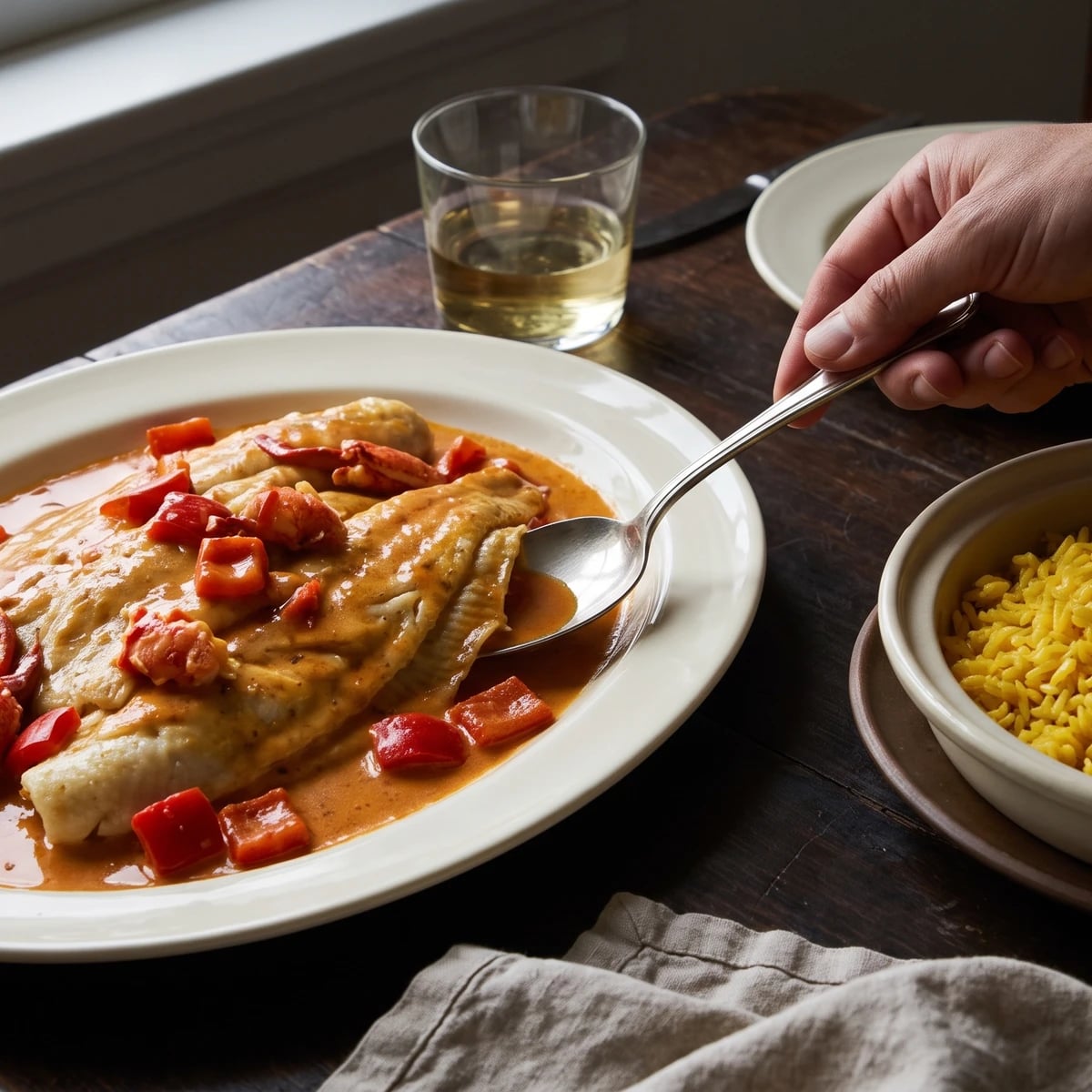
Paprika warms a glossy New-burg cream around tender sole, lobster, and sweet pepper, while saffron pilaff stays proudly separate, a composed dinner-party dish built by one cook without losing its classical balance.

Main Dishes
French
Dinner Party
Special Occasion
30 min
Active Time
40 min cook1 hr 10 min total
Yield4 servings

Filets de Soles Persane (sole fillets with paprika cream, lobster, sweet pepper, and saffron pilaff) teaches the gentle handling of a liaison, the yolk-and-cream thickening that gives New-burg sauce its satin body. The one true thing to know before touching the pan is this: once the yolks enter, the sauce must never boil. Heat gives the liaison its gloss, but too much turns silk into scrambled egg.

The old entry could simply direct the brigade to prepare the fillets à la New-burg because it assumed a saucier at the reduction pan, fish stock never off the fire, and another pair of hands minding the pilaff. At home, a wide sauté pan, a covered saucepan, and a good prepared fish stock carry the same intent. No salamander belongs here because nothing is gratinéed; the sauce should remain glossy, not browned. I have collapsed the brigade handoffs into one deliberate sequence and scaled the book's ounce of capsicum to 0.4 ounce (11 grams) for four servings. The New-burg liaison, lobster, paprika, and separately served saffron pilaff remain untouched in spirit.

The pilaff waits comfortably while the sole cooks, so make it first. Then reduce the cuisson, the strained poaching liquor, before adding the cream, because reduction builds the sauce and cannot be rushed after the yolks go in. That order is the dish. One cook, one stove, one evening.

Filets de Soles Persane belongs to the cosmopolitan grand-kitchen repertory of Paris, where foreign-style titles often described a palette of seasonings rather than a faithful regional dish. New-burg entered French practice from an American lobster preparation, and here its cream-and-yolk liaison is carried onto sole, warmed with paprika and diced capsicum. The title Persane points chiefly to the saffron pilaff served apart; it should not be mistaken for an Iranian household preparation.

The technique, the tradition, and the story behind every dish.

Discover Culinary Explorer

Ingredients

skinless sole fillets

Quantity

8, about 1½ pounds (680 g) total

fine sea salt

Quantity

1½ teaspoons (7.5 ml / 9 g)

divided

ground white pepper

Quantity

¼ teaspoon (1.25 ml / 0.5 g)

unsalted butter

Quantity

5 tablespoons (75 ml / 71 g)

divided

dry white wine

Quantity

½ cup (120 ml / 120 g)

low-sodium fish stock

Quantity

¾ cup (180 ml / 180 g)

heavy cream

Quantity

1 cup (240 ml / 238 g)

kept cold

sweet paprika

Quantity

1 teaspoon (5 ml / 2 g)

not smoked

large egg yolks

Quantity

2

Madeira

Quantity

2 tablespoons (30 ml / 30 g)

cooked lobster meat

Quantity

½ cup (120 ml / 85 g)

cut into generous pieces

drained roasted red capsicum

Quantity

1½ tablespoons (22.5 ml / 11 g)

cut into large dice

long-grain white rice

Quantity

1 cup (240 ml / 190 g)

small shallot

Quantity

1, about ¼ cup (60 ml / 40 g)

finely chopped

low-sodium chicken stock

Quantity

1½ cups (360 ml / 360 g)

saffron threads

Quantity

¼ teaspoon (1.25 ml / 0.15 g)

bay leaf

Quantity

1

Equipment Needed

  • 12-inch (30 cm) wide sauté pan with lid
  • 2-quart (2-liter) saucepan with a tight-fitting lid
  • Fine-mesh sieve
  • Whisk
  • Warmed oval serving platter

Instructions

  1. 1

    Cook the saffron pilaff

    Rinse the rice until the water runs nearly clear, then drain it thoroughly. Warm the chicken stock and pour 2 tablespoons of it over the saffron; leave the threads to bloom for 5 minutes. Melt 2 tablespoons of the butter in a 2-quart saucepan over gentle heat, add the shallot, and cook without colouring until translucent. Add the rice and stir for 2 minutes, until the grains look polished and smell faintly nutty. Pour in the remaining stock and the saffron infusion, add the bay leaf and ½ teaspoon of the salt, then bring to a simmer. Cover tightly, lower the heat, and cook for 15 minutes. Take the pan off the heat and leave it covered for 10 minutes. If the rice is still firm, sprinkle in 2 tablespoons of hot water, cover, and return it to the lowest heat for 3 minutes. Fluff with a fork and keep covered. The pilaff waits; the sole does not.

    The rice is served in its own dish, never underneath the sole. Keeping it apart preserves the dry, separate grains and prevents them from swallowing the New-burg sauce.
  2. 2

    Poach the sole gently

    Pat the fillets completely dry. Fold each thin fillet in half with the skinned side inward, or roll it loosely if it is very long. Rub a wide sauté pan with 1 tablespoon of the butter, arrange the fillets in a single snug layer, and season with ¾ teaspoon of the salt and the white pepper. Pour the wine and fish stock around the fish, bring the liquid only to a bare tremble, then cover and poach for 5 to 7 minutes. The fillets are ready when their centres have turned pearly and yield under light pressure. A hard boil tightens sole in moments, so lower the heat immediately if the liquid grows lively. Lift the fillets carefully onto a warmed oval platter, cover loosely with parchment, and keep them near the stove.

  3. 3

    Reduce the cuisson

    Strain the cuisson, the poaching liquor, through a fine sieve. Add any liquid collected beneath the resting sole, wipe the sauté pan clean, and return the cuisson to it. Boil briskly until reduced to ½ cup. Hold back 2 tablespoons of the cold cream, then stir the rest into the reduction with the paprika. Simmer gently until the sauce lightly coats the back of a spoon, about 5 minutes. Do all the reducing now. Once the liaison enters, boiling is no longer available to you; if the sauce is still thin, keep simmering before moving to the next step.

  4. 4

    Finish the New-burg liaison

    Whisk the egg yolks and Madeira together in a bowl. Slowly whisk in about ½ cup of the hot paprika cream, then return this tempered liaison to the pan. Set the pan over the gentlest heat and stir constantly until the sauce becomes glossy and coats the spoon in an even film. Do not let it boil. Take it off the heat, fold in the lobster and diced capsicum, and leave them in the sauce for 2 minutes, just long enough to warm. Whisk in the remaining 2 tablespoons of butter. If the sauce turns grainy or begins to split, stop the heat at once. Ça se rattrape: whisk the reserved cold cream in a clean bowl, then add the troubled sauce one spoonful at a time until smooth, straining it afterward if any cooked flecks remain.

  5. 5

    Sauce and serve

    Uncover the sole and spoon the New-burg sauce over the fillets, distributing the lobster and large dice of capsicum generously rather than hiding them beneath the fish. If the sauce has tightened while waiting, loosen it off the heat with a teaspoon or two of hot water; never return it to a boil. Remove the bay leaf from the pilaff, fluff the grains once more, and send the rice to the table in a separate warmed bowl. Serve at once. À table!

Chef Tips

  • Dover sole gives the finest texture, but lemon sole or thin flounder fillets are honest home substitutes. Choose fillets of even thickness so they finish together; a thick piece of cod belongs to another preparation.
  • Use sweet paprika, never smoked paprika. The seasoning should warm the cream and tint it softly, not make the sauce taste of a smokehouse.
  • Capsicum here means a mild red sweet pepper, not a hot chile. A well-drained jarred pimento has the tender texture the sauce wants and is the classical pantry's sensible answer when fresh peppers are tired.
  • Good prepared fish stock is useful here. If only bottled clam juice is available, dilute it with an equal amount of water and measure the required quantity from that mixture; undiluted clam juice can make the reduction fiercely salty.
  • The lobster is warmed, not recooked. Add it only after the liaison thickens or its delicate pieces will contract and become cottony.
  • Pour a dry white Burgundy or another firm, mineral Chardonnay. The wine needs enough acidity to meet the cream without trampling the saffron.

Advance Preparation

  • The shallot, lobster, and capsicum can be cut up to one day ahead and kept separately covered in the refrigerator.
  • The pilaff may be finished about 20 minutes before the fish is poached. Leave it covered off the heat, then fluff it immediately before serving.
  • The strained cuisson can be reduced and combined with the cream and paprika up to 2 hours ahead. Reheat it gently before adding the yolk liaison, lobster, capsicum, and final butter. Do not finish the liaison in advance because reheating it invites curdling.
  • Poach the sole only when the table is nearly ready. Its fine flesh does not improve by waiting or reheating.

Frequently Asked Questions

Nutrition Information

1 serving (about 400g)

Calories
715 calories
Total Fat
41 g
Saturated Fat
24 g
Trans Fat
1 g
Unsaturated Fat
15 g
Cholesterol
310 mg
Sodium
1230 mg
Total Carbohydrates
44 g
Dietary Fiber
1 g
Sugars
3 g
Protein
42 g

Note: Chef personas and recipes are created with AI assistance. Cook with care: follow safe food-handling practices, check doneness with a thermometer when needed, and adapt for allergies and your kitchen.

Where cooking meets culture.

Culinary guides, cultural storytelling, and the editorial depth that makes cooking meaningful.

Discover Culinary Explorer

More from Fish - Fillets of Sole

Browse the full collection