
Chef Juliette
John Dory (St. Pierre)
John Dory has the delicacy of sole and the firmness of turbot. A light flouring, a quick butter sauté, and nut-brown beurre noisette show exactly why looks never mattered.
A cooking platform built around craft, culture, and the stories behind what we eat.
Created by Chef Juliette
Based on No. 889, Filets de Soles Nelson, from Le Guide Culinaire (1907) by Auguste Escoffier
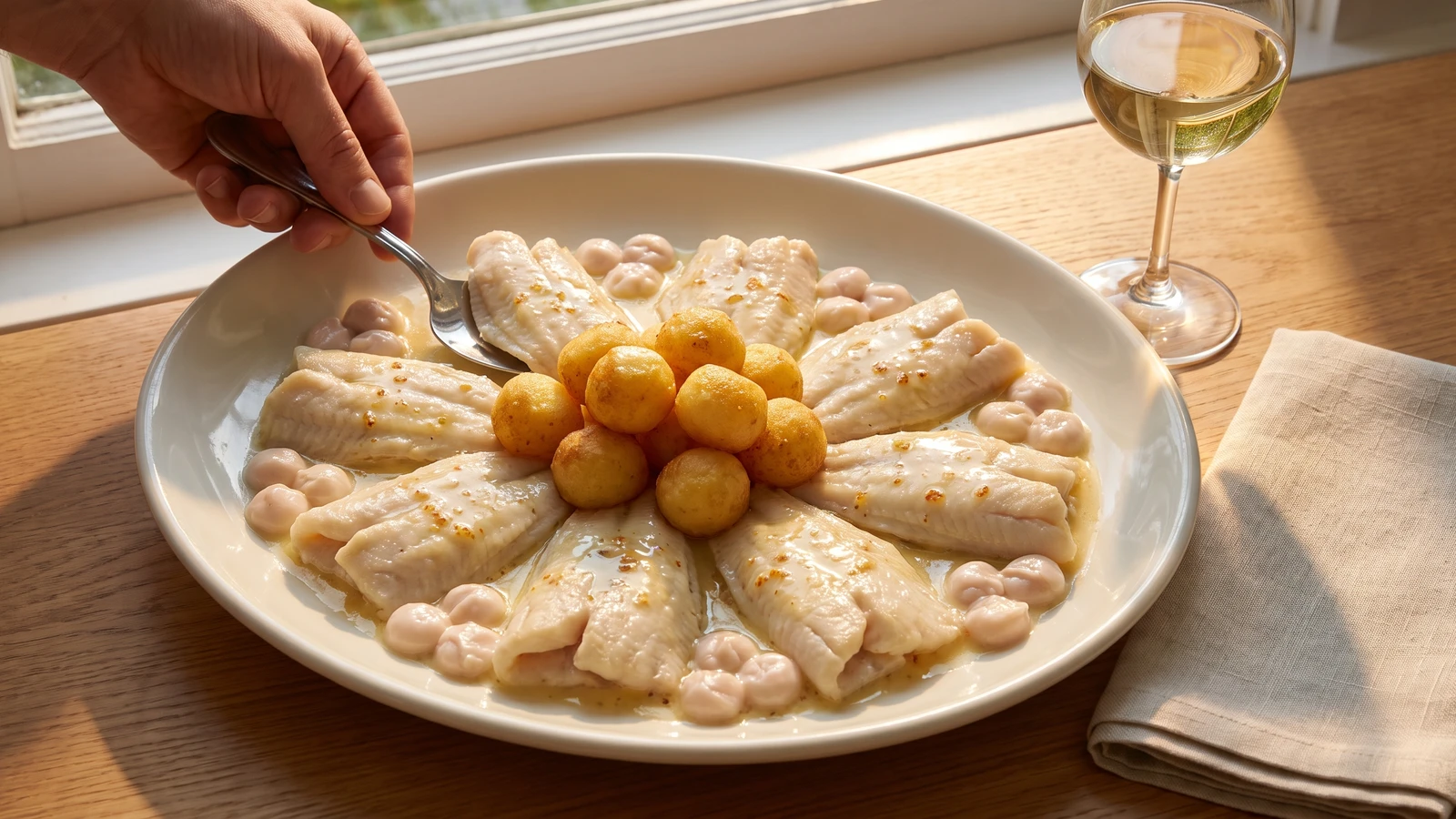
Folded sole, delicate fish fumet, and an ivory white-wine sauce meet beneath a fast golden glaze, with butter-browned potato balls and poached milt completing the generous Nelson arrangement.
Filets de Soles Nelson (sole fillets glazed with white-wine sauce) teaches the timing of a composed fish dish. The one true thing to know before touching a pan is this: the quick glaze is a finish, not a second cooking. The sole must remain tender beneath its ivory sauce, the potato balls lightly browned, and the poached milt delicate rather than firm.
The original entry assumed a saucier on staff, fish stock never off the fire, a salamander already hot, and enough hands to poach, sauce, brown, and garnish at once. For four at home, a concentrated fish fumet, two saucepans, a wide sauté pan, and a fully heated broiler do the same work. Fresh cod milt gives the unspecified milt an identifiable home equivalent; the species is named, but its classical function remains unchanged. Separate holding pans and extra hands were brigade scaffolding, so they can go. The folded poach, white-wine sauce, butter-cooked potato balls, milt, and fast glaze are the dish, so they stay.
Have the sauce nappant, thick enough to cling in an even coat, before the sole leaves its poaching liquor. If the sauce slides from the fish, reduce it before glazing. Ça se rattrape. Once the platter goes beneath the broiler, count seconds, not minutes.
Filets de Soles Nelson belongs to the Parisian classical table, where named sole garnitures organized fish, sauce, potatoes, and offal into a precise whole rather than pointing to a province. Nelson is a menu-name honorific, not a regional recipe, and the arrangement carries the identity: folded fillets in white-wine sauce, a central pyramid of browned potato balls, and milt around the rim. The surprising garnish is laitance, milt or soft roe from male fish, a prized ingredient whose delicacy and perishability pushed it out of many home markets even though its gentle poaching technique remains entirely usable.
Quantity
8 fillets (about 24 oz / 680 g total)
pin bones removed
Quantity
1¼ teaspoons (6 ml / 7 g)
divided
Quantity
¼ teaspoon (1 ml / 0.5 g)
Quantity
10 tablespoons (150 ml / 142 g)
divided
Quantity
3½ cups (840 ml / 840 g)
preferably unsalted
Quantity
1 cup (240 ml / 238 g)
Quantity
2 tablespoons (30 ml / 16 g)
Quantity
½ cup (120 ml / 120 g)
Quantity
1½ pounds / 680 g
peeled
Quantity
8 ounces / 225 g
membranes intact
| Ingredient | Quantity |
|---|---|
| skinless sole filletspin bones removed | 8 fillets (about 24 oz / 680 g total) |
| fine sea saltdivided | 1¼ teaspoons (6 ml / 7 g) |
| finely ground white pepper | ¼ teaspoon (1 ml / 0.5 g) |
| unsalted butterdivided | 10 tablespoons (150 ml / 142 g) |
| fish fumetpreferably unsalted | 3½ cups (840 ml / 840 g) |
| dry white wine | 1 cup (240 ml / 238 g) |
| all-purpose flour | 2 tablespoons (30 ml / 16 g) |
| heavy cream | ½ cup (120 ml / 120 g) |
| medium waxy potatoespeeled | 1½ pounds / 680 g |
| fresh food-grade cod milt (soft roe)membranes intact | 8 ounces / 225 g |
Use a 1-inch Parisienne scoop or melon baller to cut 24 to 28 neat balls from the peeled potatoes. Keep them in cold water while you work so their surfaces don't discolor. Save the trimmings for soup or a purée; waste is not part of the classical canon. Rinse the finished balls until the water runs clear, then leave them submerged until the butter is ready.
Melt 5 tablespoons of the butter gently in a wide skillet. Skim away the foam and pour the clear butterfat into a clean pan, leaving the milky sediment behind. Dry the potato balls thoroughly, add them in one layer with ¼ teaspoon of the salt, and cook over medium-low heat for 18 to 24 minutes, turning often, until a knife enters the centres without resistance and every side is light brown. If they color before they soften, lower the heat and cover the pan briefly. If the butter darkens, move the potatoes into a clean pan with the remaining clear butterfat. Hold them off the heat and rewarm them just before serving.
Combine the wine with 1 cup of the fish fumet in a small saucepan and boil steadily until reduced to about ¾ cup. In a second saucepan, melt 2 tablespoons of butter without coloring it, stir in the flour, and cook for 2 minutes to make a roux blanc, a white roux. Whisk in the hot reduction gradually, making each addition smooth before adding the next, then whisk in the cream. Simmer gently for 4 to 5 minutes, whisking, until the sauce is nappant and leaves a clear trail when you draw a finger across the coated back of a spoon. If lumps form, take the pan off the heat, whisk firmly, and pass the sauce through a fine sieve. Keep it covered and barely warm.
Examine the milt and remove any loose blood vessels without piercing the enclosing membranes. Bring 1 cup of the fish fumet to the barest tremble in a small pan, season with a pinch of salt, and slide in the milt. Cover with a round of parchment and poach gently for 6 to 10 minutes, depending on thickness, until opaque, delicately firm, and at least 145°F / 63°C at the centre. Boiling makes milt grainy and can burst the membranes. If one splits, don't stir the pan; lift the pieces carefully with a slotted spoon. Hold the milt in a few spoonfuls of its liquor.
Set an oven rack about 6 inches below the broiler and heat the broiler fully. Pat the sole dry, season with the remaining salt and the white pepper, then fold each fillet into three: bring the thin tail inward and fold the thicker end over it, keeping the former skin side inside. Butter a 12-inch sauté pan with 1 tablespoon of butter and arrange the fillets seam-side down in one layer. Add the remaining 1½ cups fish fumet, cover the fish closely with parchment, and bring the liquid just to a tremble. Lower the heat and poach for 5 to 8 minutes, until the folds are barely opaque and register about 140°F / 60°C; the glaze will finish them. Transfer the fillets carefully to a warm, broiler-safe oval platter and strain the poaching liquor.
Return the white-wine sauce to gentle heat and whisk in ½ cup of the strained sole poaching liquor. Simmer until the sauce returns to a nappant consistency, tasting only now for salt because the fumet has concentrated. Take the pan off the heat and monter au beurre, whisk in the remaining 2 tablespoons of cold butter a little at a time until the sauce gleams. Don't boil it after the butter goes in. If the sauce turns greasy, put 1 tablespoon of cool fumet in a clean pan and whisk in the broken sauce one spoonful at a time. Ça se rattrape.
Arrange the folded fillets in a close circle on the platter and spoon over enough white-wine sauce to cover each one completely. If the coating slides away and exposes the fish, stop and return the sauce to the pan for another 30 seconds of reduction. Set the platter beneath the fully heated broiler and watch without looking away, glazing for 20 to 45 seconds, just until the sauce swells and catches tiny pale-gold freckles. This is a finish, not a second cooking. Rewarm the potato balls and milt, stack the potatoes into a generous pyramid at the centre, and arrange the well-drained milt around the fillets. Serve the remaining sauce separately. À table!
1 serving (about 500g)
Culinary guides, cultural storytelling, and the editorial depth that makes cooking meaningful.
Discover Culinary ExplorerChef Juliette
John Dory has the delicacy of sole and the firmness of turbot. A light flouring, a quick butter sauté, and nut-brown beurre noisette show exactly why looks never mattered.

Chef Juliette
Fresh haddock proves its delicacy in the meunière pan: a fine flour crust, moist pearly flakes, and beurre noisette sharpened with lemon and parsley, ready from one skillet in half an hour.

Chef Juliette
Éperlans à l’Anglaise turns small fish into a lesson in disciplined coating: boned smelts under a close, crisp crumb, pan-fried in clarified butter and finished with bright, half-melted maître d’hôtel butter.

Chef Juliette
Tiny smelts, shallot, mushrooms, white wine, gratin sauce, and fine bread raspings meet a fierce oven, where the fish must turn tender in the same breath the buttered crust bronzes.