
Chef Juliette
John Dory (St. Pierre)
John Dory has the delicacy of sole and the firmness of turbot. A light flouring, a quick butter sauté, and nut-brown beurre noisette show exactly why looks never mattered.
A cooking platform built around craft, culture, and the stories behind what we eat.
Created by Chef Juliette
Based on No. 880, Filets de Soles Lady Egmont, from Le Guide Culinaire (1907) by Auguste Escoffier
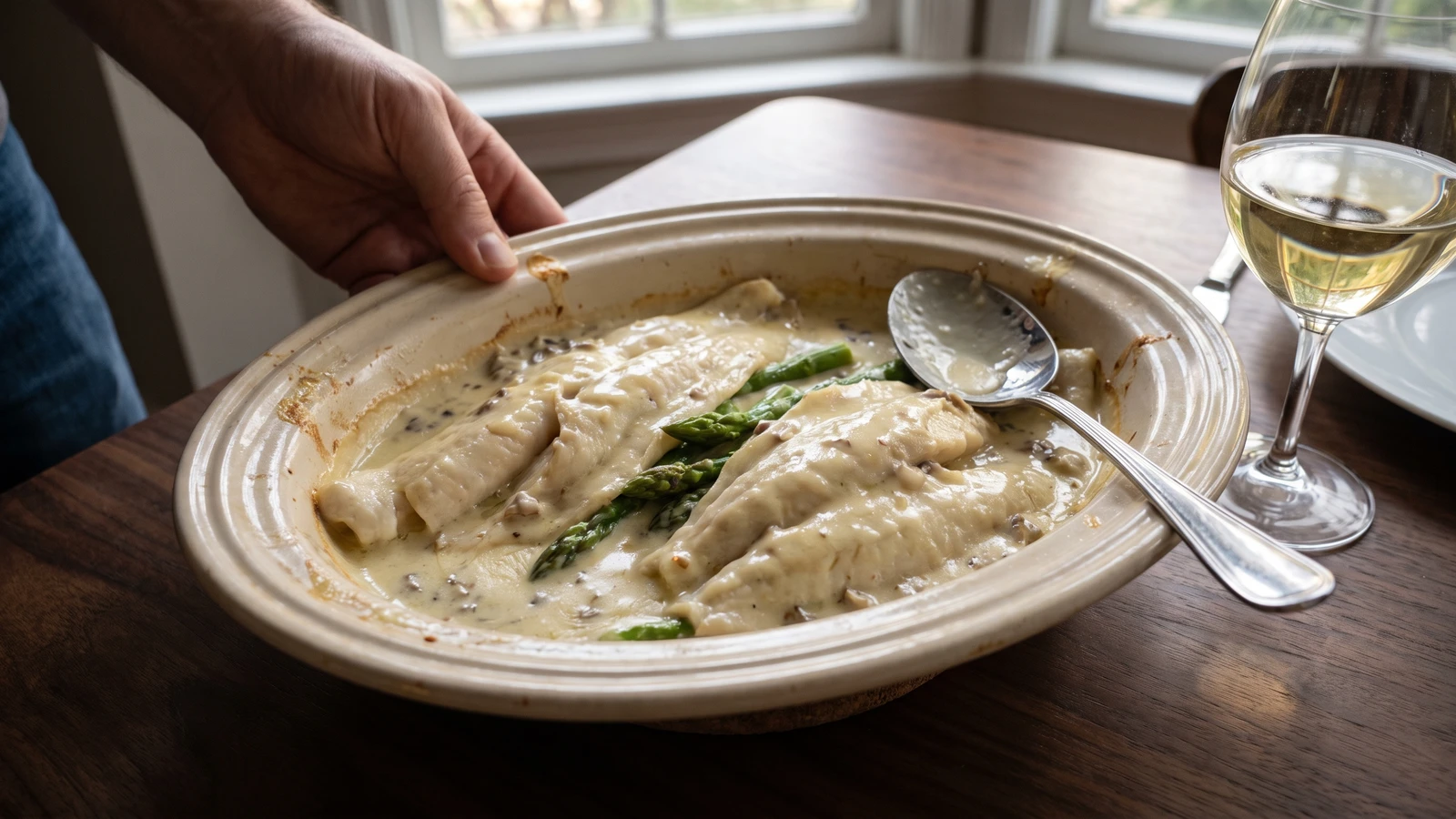
Delicate sole, folded and poached in fumet, then glazed beneath a glossy cream-and-butter sauce with minced mushrooms and warm asparagus tips. The lesson is simple: reduce first, enrich second, and never bake the fish twice.
Filets de Soles Lady Egmont (folded sole fillets glazed with mushrooms, asparagus, and cream) teaches one exact lesson: reduce before you enrich. The poaching fumet and mushroom liquor must lose half their volume before the butter and cream enter; otherwise the sauce is pale, loose, and unable to cling. Get that reduction right and the dish arrives pearly, ivory, green-tipped, and glossy beneath its quick glaze.
The original assumed a poissonnier tending the fish, a saucier on staff, a stockpot never off the fire, brigade portions held in sequence, and a salamander fierce enough to color sauce in seconds. At home, use eight fillets for four, fine fumet already prepared, one broiler-safe earthenware dish, and the broiler at full heat. The divided labor and holding pots were scaffolding, so they go; the folded fillets, freshly cooked asparagus, exact reduction, real butter and cream, and last-second glaze are the dish, so they stay. One cook, one stove, one evening.
Work in order because poached sole won't improve while it waits: asparagus first, mushrooms next, fish last, then reduction, sauce, and glaze without interruption. The step that matters most is measuring the combined liquor and stopping its reduction at exactly half.
Filets de Soles Lady Egmont belongs to the named-garnish repertoire of Parisian grande cuisine, where delicate flatfish was folded, poached, sauced, and glazed to order. Its English title does not make it a British regional preparation; French grand kitchens commonly named composed dishes for titled patrons while keeping the method firmly within their own canon. The dish passed readily to bourgeois dinner tables because its essential sequence, poach, reduce, enrich, and glaze, needs attention rather than a brigade.
Quantity
8, about 3 ounces (85 g) each
Quantity
6 tablespoons (90 ml / 90 g)
Quantity
1/2 cup (120 ml / 57 g)
well cleaned and very finely minced
Quantity
1 tablespoon (15 ml / 14 g)
Quantity
2 teaspoons (10 ml / 10 g)
Quantity
1/4 cup (60 ml / 55 g)
trimmed
Quantity
1/4 cup (60 ml / 60 g)
Quantity
4 tablespoons (60 ml / 57 g)
cubed
Quantity
1 teaspoon (5 ml / 6 g), divided, plus more for blanching
Quantity
1/4 teaspoon (1.25 ml / 0.6 g)
| Ingredient | Quantity |
|---|---|
| skinless sole fillets | 8, about 3 ounces (85 g) each |
| fine fish fumet | 6 tablespoons (90 ml / 90 g) |
| button mushroomswell cleaned and very finely minced | 1/2 cup (120 ml / 57 g) |
| unsalted butter for the mushrooms | 1 tablespoon (15 ml / 14 g) |
| fresh lemon juice | 2 teaspoons (10 ml / 10 g) |
| asparagus tipstrimmed | 1/4 cup (60 ml / 55 g) |
| heavy cream | 1/4 cup (60 ml / 60 g) |
| cold unsalted butter for the saucecubed | 4 tablespoons (60 ml / 57 g) |
| fine sea salt | 1 teaspoon (5 ml / 6 g), divided, plus more for blanching |
| finely ground white pepper | 1/4 teaspoon (1.25 ml / 0.6 g) |
Position an oven rack about 6 inches (15 cm) below the broiler and heat the oven to 375°F (190°C). Bring a small saucepan of well-salted water to a boil, add the asparagus tips, and cook for 1 to 2 minutes, until brilliant green and barely tender. Drain them thoroughly and keep them warm under a loose cover; do not cool them in water, because the original garnish depends on asparagus that reaches the sauce hot and dry.
Melt the tablespoon of butter in a small skillet over medium-high heat. Add the minced mushrooms, lemon juice, a pinch of the salt, and half the white pepper. Cook briskly for 2 to 3 minutes, stirring, until the mushrooms are tender and glossy but not browned. Tip them into a fine sieve set over a bowl and capture every drop of their buttery cooking liquor. Keep the mushrooms warm.
Season the sole lightly with the remaining salt and pepper. Fold each fillet with its skinned side inward, tucking the thin tail end beneath so every parcel has an even thickness, then arrange the fillets snugly in a 2-quart (2-liter) broiler-safe earthenware gratin dish. Warm the fumet until just below a simmer and pour it around, not over, the fish. Cover the dish tightly with parchment and foil, then oven-poach for 7 to 10 minutes. The edges should be opaque and the centers pearly but no longer translucent; the thickest fold should reach about 140°F (60°C), with the final glaze carrying it to 145°F (63°C).
Switch the oven to its highest broiler setting. Draw the poaching liquor from the gratin dish into a heatproof measuring cup, keeping the folded fillets covered and warm. Add the reserved mushroom cooking liquor and note the combined volume, then pour it into the clean saucepan. Boil briskly until exactly half remains, usually 3 to 5 minutes. This réduction, boiling down to concentrate flavor, is the spine of the sauce. If you reduce too far, add enough fumet or water to restore the half measure. Ça se rattrape.
Lower the heat, add the cream to the reduced liquor, and let it bubble gently for 30 seconds. Remove the pan from the heat and whisk in the cold butter a few cubes at a time until the sauce is smooth, ivory, and glossy. This is monter au beurre, finishing the sauce by emulsifying it with butter. Fold in the warm mushrooms and asparagus tips without crushing them. If the sauce turns oily, set the pan over a bowl of cool water and whisk in 1 teaspoon of cold water until it comes together. Ça se rattrape. Once mounted, the sauce must not boil.
Spoon the sauce and garnish evenly over the folded sole. Set the gratin dish beneath the fierce broiler for 30 to 60 seconds, watching without looking away, until the sauce gleams, trembles at the rim, and takes a few pale-gold freckles. The broiler is glazing the sauce, not cooking the fish again. If an oily ring appears, pull the dish immediately, spoon the sauce back into the pan, whisk in a teaspoon of cold water off the heat, and recoat the fillets. Bring the earthenware dish straight to the table. À table!
1 serving (about 210g)
Culinary guides, cultural storytelling, and the editorial depth that makes cooking meaningful.
Discover Culinary ExplorerChef Juliette
John Dory has the delicacy of sole and the firmness of turbot. A light flouring, a quick butter sauté, and nut-brown beurre noisette show exactly why looks never mattered.

Chef Juliette
Fresh haddock proves its delicacy in the meunière pan: a fine flour crust, moist pearly flakes, and beurre noisette sharpened with lemon and parsley, ready from one skillet in half an hour.

Chef Juliette
Éperlans à l’Anglaise turns small fish into a lesson in disciplined coating: boned smelts under a close, crisp crumb, pan-fried in clarified butter and finished with bright, half-melted maître d’hôtel butter.

Chef Juliette
Tiny smelts, shallot, mushrooms, white wine, gratin sauce, and fine bread raspings meet a fierce oven, where the fish must turn tender in the same breath the buttered crust bronzes.