
Chef Juliette
Filets de Soles Américaine
Folded sole, barely poached in fumet, circles lobster beneath a gleaming brandy-and-tomato shellfish sauce. The sauce is the whole dish, and gentle heat is the lesson.
A cooking platform built around craft, culture, and the stories behind what we eat.
Created by Chef Juliette
Based on No. 872, Filets de Soles aux Crevettes, from Le Guide Culinaire (1907) by Auguste Escoffier
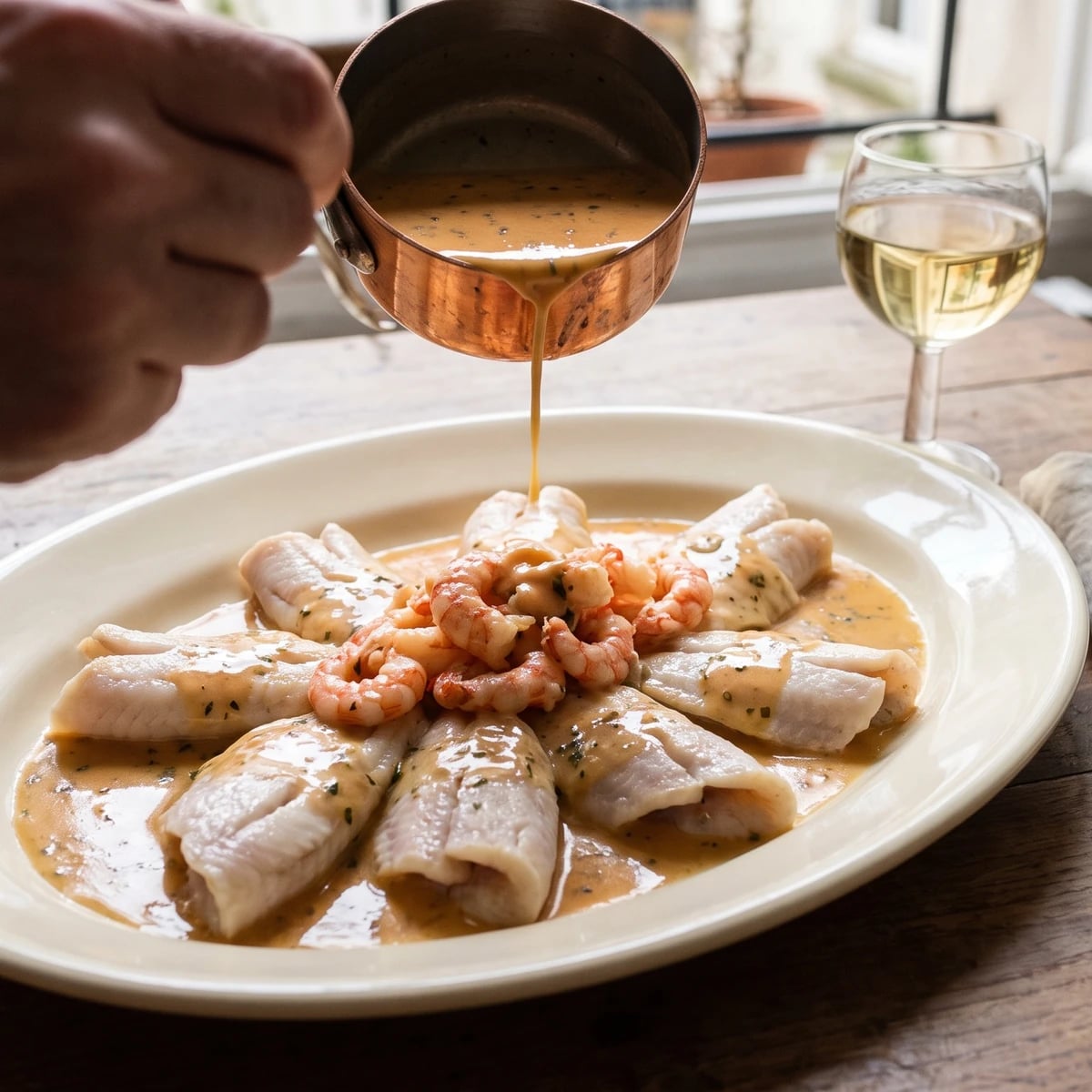
Filets de Soles aux Crevettes teaches the gentlest kind of control: folded sole poached below a simmer, hot shrimp at its center, and a glossy sauce built from the shells that coats without smothering.
Filets de Soles aux Crevettes (folded sole fillets with shrimp) teaches one decisive lesson: poaching is controlled warmth, not boiling. The fumet, a concentrated fish essence, should barely tremble around the folded fish. Once bubbles break across the surface, delicate sole tightens before you can ask it back. Keep the liquid below a simmer and the fillets remain pearly, moist, and tender enough to part under a fork.
The original entry assumed a saucier holding shrimp sauce, fish fumet never off the fire, an oval platter already warm, and a salamander ready for dishes that needed color. This one does not. The salamander stays cold because the sauce should gleam ivory-coral, not brown. At home, the shells from the specified shrimp garnish flavor one small saucepan of sauce while the fillets poach in one wide pan. The brigade's holding and handoffs are scaffolding and can go; the folded fillets, fumet poach, one ounce of hot shelled tails, and shrimp sauce are the dish and stay exactly where the book puts them. One cook, one stove, one evening.
The finished platter is quiet but generous: an oval of pale folded sole, tiny pink shrimp in the middle, and enough glossy sauce to coat every fillet without burying its shape. Make the sauce first so it waits for the fish, then give your full attention to the poach. That barely trembling fumet is the step that decides everything.
Filets de Soles aux Crevettes belongs to the Parisian classical table, fed by the Channel and Atlantic fish markets that sent fine sole and small shrimp inland to cooks who prized them for quick poaching and delicate sauces. The preparation moved from the fish market into the grand kitchen by division of labor: fillets at the fish station, fumet from the stockpot, and a finished shrimp sauce from the saucier met only at service. Aux crevettes does not mean the fish is stuffed with shrimp; the book makes the distinction plain by placing one ounce of hot tails in the center and carrying the remaining shrimp character in the sauce.
Quantity
8 fillets (about 24 oz / 680 g total)
pin bones removed
Quantity
3 oz (85 g), yielding 1 oz (28 g) shelled tails
peeled; shells reserved
Quantity
2½ cups (600 ml / 600 g)
Quantity
4 tablespoons (60 ml / 57 g)
divided; final tablespoon chilled
Quantity
2 tablespoons (30 ml / 16 g)
Quantity
½ cup (120 ml / 120 g)
Quantity
½ teaspoon (2.5 ml / 3 g)
Quantity
⅛ teaspoon (0.6 ml / 0.25 g)
| Ingredient | Quantity |
|---|---|
| skinless sole filletspin bones removed | 8 fillets (about 24 oz / 680 g total) |
| whole cooked small brown shrimppeeled; shells reserved | 3 oz (85 g), yielding 1 oz (28 g) shelled tails |
| fish fumet | 2½ cups (600 ml / 600 g) |
| unsalted butterdivided; final tablespoon chilled | 4 tablespoons (60 ml / 57 g) |
| all-purpose flour | 2 tablespoons (30 ml / 16 g) |
| heavy cream | ½ cup (120 ml / 120 g) |
| fine sea salt | ½ teaspoon (2.5 ml / 3 g) |
| ground white pepper | ⅛ teaspoon (0.6 ml / 0.25 g) |
Peel the small shrimp carefully, keeping the shells for the sauce. Measure exactly 1 oz (28 g) of shelled tails, cover them, and keep them chilled until the final warming. The book intends these tails as a concentrated garnish in the center of the platter, not as a second portion of seafood.
Melt 2 tablespoons of the butter in a small saucepan over medium-low heat. Add the reserved shrimp shells and stir for 2 minutes, pressing them gently with a wooden spoon until the butter smells distinctly of shrimp without taking brown color. Stir in the flour and cook for 1 minute to make a pale roux, the butter-and-flour base. Gradually whisk in ¾ cup (180 ml) of the fish fumet, followed by the cream, adding each splash only after the last has become smooth. Hold the sauce at a bare simmer for 5 minutes, then pass it through a fine sieve into a clean saucepan and cover it off the heat. If the roux seizes when the liquid enters, stop pouring, take the pan off the heat, and whisk it smooth with another spoonful of fumet before continuing. Ça se rattrape.
Butter a snug 11- to 12-inch (28- to 30-cm) lidded sauté pan with 1 tablespoon of the butter. Lay the sole fillets skinned side up and season them evenly with the salt and white pepper. Fold the tapered half of each fillet toward its thicker end so the former skin sides meet inside and the smooth surface faces outward. Arrange the folded fillets in one close layer without overlapping. Folding gives each delicate fillet enough thickness to poach evenly and hold its shape on the platter.
Pour 1½ cups (360 ml) of the remaining fish fumet around the fillets, adding a little more only if needed to reach about halfway up their sides. Press a round of parchment directly over the fish and cover the pan. Warm it gradually over medium-low heat until the liquid trembles at the edge, then lower the heat and poach for 5 to 8 minutes. The fumet must not boil. If bubbles begin breaking across the surface, lift the pan off the heat, uncover it for 30 seconds, and resume over the lowest flame. Ça se rattrape if you catch it before the fillets tighten. The fish is ready when the folds are opaque, part gently under light pressure, and reach 140°F (60°C); they will carry to 145°F (63°C) while the sauce is finished. Lift the fillets carefully, let each drain for a moment, and arrange them in an oval on a warmed serving platter, leaving the center open. Cover lightly with the parchment.
Whisk ¼ cup (60 ml) of the hot poaching fumet into the shrimp sauce and return it to a bare simmer. Reduce only until it reaches nappant, a coating consistency that leaves an even veil on the back of a spoon. If it is too thick, loosen it spoonful by spoonful with reserved fumet; if it is thin, give it another minute of gentle reduction. Add the shrimp tails and warm them for 30 to 45 seconds, then lift them into the open center of the oval platter. Take the sauce off the heat and monter au beurre, finishing it by whisking in the final cold tablespoon of butter. If oily beads appear, keep the pan off the heat and whisk in a teaspoon of cool fumet until the sauce comes together. Coat the fillets and the hot shrimp generously, letting the sauce pool naturally around them. Serve at once. À table!
1 serving (about 300g)
Culinary guides, cultural storytelling, and the editorial depth that makes cooking meaningful.
Discover Culinary Explorer
Chef Juliette
Folded sole, barely poached in fumet, circles lobster beneath a gleaming brandy-and-tomato shellfish sauce. The sauce is the whole dish, and gentle heat is the lesson.

Chef Juliette
A fine à l'anglaise crust, set the instant it touches hot clarified butter, protects tender sole before maître-d'hôtel butter melts across the ridges. The lesson is heat first, gentle frying second.

Chef Juliette
Pepper-filled sole paupiettes rise over butter-stewed tomatoes, capsicum risotto, and crisp aubergine, all glossed with lightly browned butter. The lesson is control: keep every element distinct and never let the poach boil.

Chef Juliette
Filets de Soles Caprice turns restraint into surprise: fine-crumbed sole grilled light gold, buttered banana laid over each fillet, and mustard-bright Sauce Robert sent separately so every bite balances sweet, savory, and sharp.